Philip Booth

If you want a lesson in how not to run an economy, take the Eurostar

From our UK edition

For the last five years, politicians of all shades have been banging on about how we should adopt this or that aspect of German economic policy. George Osborne argued in 2011: ‘We want to learn the lessons of the successful Mittelstand model, which has operated in Germany for many decades.’ Only a few weeks ago, Vince Cable argued: ‘Britain has not been as good as competitors like Germany in turning ideas into wealth creation.’ The German economy seems to be widely admired, despite lagging behind Britain’s for nearly a generation. It is true that Germany had a better post-crash period than the UK, but its financial sector was smaller and many of its problems were hidden from view.

We need to reform pensions – here are some ideas

From our UK edition

The government is facing a fiscal crisis. In the face of that crisis David Cameron has promised to continue to raise pensions in real terms. The biggest item of welfare spending – it makes up around half – is therefore set to get bigger. Indeed, over the next 50 years, pensions spending will rise by £330 billion (in today’s prices) partly because of an ageing population, but also because of the coalition’s populism. It's likely that the only safety valve left in the system – raising the state pension age – will be used more and more by the government to balance the books.

Why meddling with A-levels won’t work

From our UK edition

Conservatives will, no doubt, welcome the government’s announcement about A-levels today. Modules will be abolished. We will return to one tough exam at the end of the two years of study. Life will go back to the golden era of the 1970s when the top people got As and Bs and everybody else got a random selection of C-F because they struggled to understand the questions. It is true that the old system had some merits. It was especially good for selecting the brilliant from the very good. However, in its latter days, for the vast majority of people taking A-levels, the system did not work. The current modular system has many advantages.

G4S’ failure does not destroy the argument for outsourcing

From our UK edition

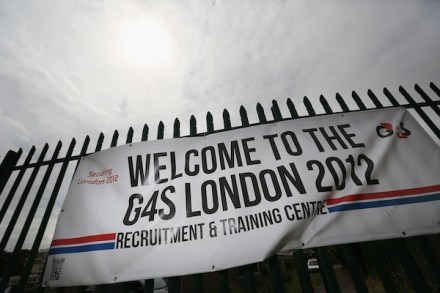
The left are having a field day in traducing the concept of contracting-out as if, somehow, the failure of G4S to deliver its Olympic contract was some kind of slam dunk. It is curious that one does not hear the same voices raised against the use of public sector in-house teams in relation to the queues at Heathrow airport's immigration desks. In many senses, the obvious failure of contractors in situations such as the G4S Olympic contract, and in the welfare-to-work schemes, is a sign of the success of the whole idea. When government services provided by in-house teams fail, non-delivery is brushed under the carpet. Poorly performing schools linger forever; disorderly prisons fester; job centres do not get people back into work; and so on.

There is no reason to raise VAT

From our UK edition

It is very clear that the government cannot carry on borrowing at current rates and the coalition’s proposals for reducing government borrowing are prudent. However, today’s VAT rise is unnecessary. As has been said before, we did not get into this situation because the government taxes us too little. Ever since Gordon Brown abandoned his self-imposed restraint in 2000, government spending, financed mainly by stealth taxes and increased borrowing, has expanded rapidly to its current level of over 50 percent of national income. As such the whole of the balance of fiscal adjustment should come through spending cuts. The coalition’s spending reductions have reflected political expediency, not sound economics.

A long way to go

From our UK edition

George Osborne has probably done enough to ensure that the public finances are back on track and that the national debt will not run out of control.   He has, however, taken only the first step on the road to reducing the size of the state. The government will spend the same proportion of national income in 2015 as it did in 2007. In other words, the size of the state will be no smaller when David Cameron goes to the country than when Gordon Brown left the Treasury.   Much more could have been done and low-hanging fruit has been left on the tree. Child benefit should have been scrapped for 16-19 year olds. Universal payments to pensioners (winter-fuel allowance, free TV licences and free bus travel) and the aid budget have been left untouched or increased.