Uk politics

The post-GDP sleeve-rolling begins

From our UK edition

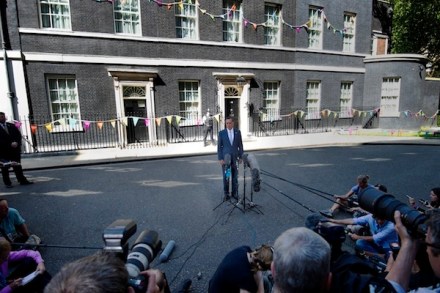
David Cameron is using the Olympics today to strike a more upbeat tone after yesterday's GDP gloom. The Prime Minister is speaking at 10am at a global investment conference to pitch for business from 180 chief executives from around the world. Cameron will tell the conference that he is 'determined that Britain will be on of the great success stories' in rebuilding its economy, and will say: 'There will be no more passionate supporter of Team GB than me. But I've got a job to do this summer. And a big part of that job is to get behind British business… and do everything I can to help secure the trade and investment that will help get the world back to sustained, global growth.

The straightforward solution for mental health treatment

From our UK edition

Yesterday Nick Clegg published an ‘implementation framework’ for the government’s  mental health strategy. This follows his announcement in February 2011 of a ‘No Health without Mental Health’ policy, which has not been delivered and is now fragmenting under the changes being implemented to the commissioning structure of the health service. I have a special interest in this subject. About four years ago the failure of both the NHS and the private sector to deliver moderately competent mental health treatment (to me) nearly killed me; I was very ill with complex PTSD.

The work experience Chancellor

From our UK edition

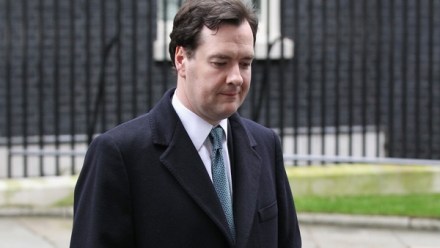
Lord Oakeshott has just sparked some outrage by arguing on the World at One that George Osborne, who he described as a 'Chancellor on work experience' should be replaced by Vince Cable. He said: 'I do think that George Osborne, he's got no business experience, he's never worked outside politics, and you know, he's doing surprisingly well for a Chancellor on work experience, but really in a torrid time like this I think we do need the absolute best people available.' A now-backbench Lib Dem peer announcing he would like to see a Lib Dem leading the Treasury team isn't exactly the most surprising revelation. But what was interesting was the way Danny Alexander, who appeared a few minutes later on the programme, handled Oakeshott's suggestion.

Olympic strike averted

From our UK edition

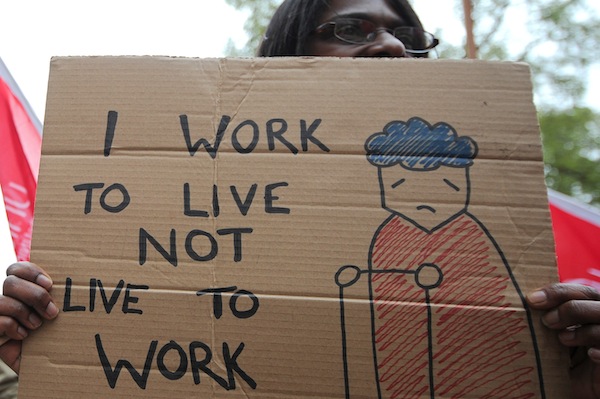
The PCS decision to call off the strike scheduled for tomorrow lessens the chances of a logistical nightmare of a start to the Olympics. It also means that the government’s challenge to the strike won’t be heard in court. Both sides are claiming victory in the dispute. Government sources are claiming that the union has backed down in the face of public opposition to an Olympic strike and the union is saying that it has won a promise that a certain number of new posts will be created. But the mere fact that this strike almost happened on such a low turnout will strengthen the hand of those in government who are pushing for a minimum threshold strike law. There is a feeling on the Tory side of government that they now have permission to move on this matter.

GDP figures show the economy needs fundamental reform

From our UK edition

Today’s GDP figures are far worse than expected. They mean that the economy has now shrunk for three consecutive quarters. The figures have destroyed the optimism created by the fact that employment and tax revenues are rising. Politically, these figures are undoubtedly a blow to the coalition. Labour is out trying to pin the blame for the continuing recession on the government’s economic policy. The Treasury is countering that the figures confirm that ‘the country has deep rooted economic problems’. In a sign, though, of how serious the GDP fall is, the government is conspicuously avoiding suggesting any external reasons for it — such as the Eurozone crisis, the weather etc. What is clear is that the economy needs fundamental reform.

GDP down 0.7% in Q2

From our UK edition

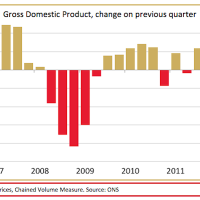
The ONS's first estimate of GDP in Q2 of 2012 shows a 0.7 per cent fall on Q1. It's worth remembering that this is just a preliminary estimate and subject to revision later, but that's a very big drop — the largest since the beginning of 2009 — driven largely by a big 5.2 per cent contraction in the construction sector. The ONS does point out that the extra Jubilee bank holiday will have hurt the economy, as will the record rainfall in April and June — but don't expect Osborne to highlight this, for fear of a repeat of the ridicule he experienced for pointing to snow and the royal wedding in the past. The latest drop means that GDP has fallen by a total of around 1.

The blue vs yellow fight to make green policy

From our UK edition

Ed Davey has managed to win his first major battle as Energy Secretary - against the might of the Treasury, no less. James blogged earlier in the week that the battle between Lib Dem and Tory on cutting subsidies for onshore wind generation would be a test of how well the coalition is actually working, and this morning's report in the Financial Times that George Osborne and Davey have managed to find a compromise is an illustration of that partnership in action. The newspaper reports that the dispute became so heated that Nick Clegg and David Cameron intervened to hammer down a final agreement.

Back to tax basics

From our UK edition

David Gauke was only elected in 2005, but it's impossible that he can't remember the Back to Basics campaign, and how well that moral campaign worked out for the Conservative Party. Its 1993 launch precipitated revelations of all kinds of non-traditional behaviour in the party, from affairs to cash for questions. Had the Exchequer Secretary who bears the outstanding achievement of being named Tax Personality of the Year thought about the damningly long list of revelations that the Major government had to endure, he might have thought twice before declaring that it was 'morally wrong' to pay your plumber or cleaner cash-in-hand.

Measuring well-being: a tough but important job

From our UK edition

'If you treasure it, measure it.' So Gus O'Donnell said when addressing the All Party Parliamentary Group on Wellbeing Economics in November. Well, the government has decided it treasures our well-being, and so is determined to measure it. It's an incredibly tricky task — as I've noted before — but it's a significant step forward that the Office for National Statistics has at least begun to try, and has finally started collecting a wealth of well-being data. In April, the ONS began asking people four questions to measure their subjective well-being on a scale of one to ten: Overall, how satisfied are you with your life nowadays? Overall, to what extent do you feel the things you do in your life are worthwhile? Overall, how happy did you feel yesterday?

Tony Blair’s legacy on tackling extremism

From our UK edition

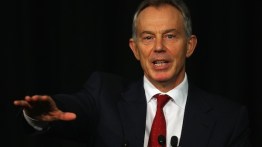
It may be unpopular to say, but there is reason to be charitable to Tony Blair and his latest warnings about Islamist extremism. The former Prime Minister gave afascinating interview to Charles Moore in yesterday’s Telegraph where, inter alia, he talks about the challenge of militant Islam. 'The West is asleep on this issue,' he tells Moore. Blair has been more vocal and unequivocal on the issue than almost any other politician in recent years. He notes that the success of his Africa Governance Initiative faces 'this threat above all others'. Failed states in the Horn of Africa have accentuated this, while one of the unintended consequences of the Libyan revolution has been to strengthen Islamist militants in northern Mali – an area the size of France.

1,200 extra troops to calm Olympic concerns

From our UK edition

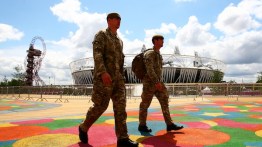
Ministers held their daily Cobra meeting this morning to check the progress of the Olympic preparations, with just three days before the opening ceremony. Following the meeting, Jeremy Hunt released a statement - about 15 minutes after the Crown Prosecution Service announced the latest charges in its phone hacking investigation - which started by describing how London 2012 'remains very much on track'. The statement continued to describe the arrival of the athletes, praise for the organisation of the Games from International Olympic Committee president Jacques Rogge, and the rising numbers of staff provided by beleaguered security firm G4S.

Why Miliband doesn’t need to agree with Nick

From our UK edition

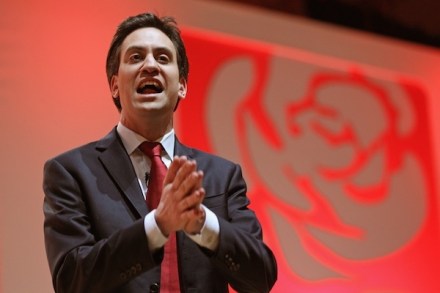
Ed Miliband's comments in the Independent today were clearly based on the assumption that Nick Clegg will not be around if and when it comes to negotiating a possible Lib-Lab coalition in 2015. Vince Cable has already thrown his fedora into the ring to be the next Liberal Democrat leader, and Miliband backed the calls for a change of chief in his interview today. 'I would find it difficult to work with him,' he said, when asked about Clegg. Clegg cannot go from being Deputy Prime Minister in one government to Deputy Prime Minister in the next: it would look ridiculous. A coalition with Labour would also not suit Clegg's own political leanings, which makes Cable's not-so-covert bid all the more plausible.

Briefing: HSBC, money laundering and Lord Green

From our UK edition

What's HSBC done wrong? Put simply, HSBC was not rigorous enough in preventing money laundering through its banks. Last week, the United States Senate's Permanent Subcommittee on Investigations released a damning report finding that HSBC had 'exposed the US financial system to a wide array of money laundering, drug trafficking, and terrorist financing risks due to poor anti-money laundering controls'. In particular, the committee criticised the way HSBC treated its Mexican arm.

The caveats to nil Zil lane usage for ministers

From our UK edition

How many ministers will be using the Zil - sorry, Games - Lanes during the Olympics? The Prime Minister's official spokesman said this morning that the lanes would be used on a flexible basis, and that ministers would stick to public transport. 'The approach is that where possible they will use public transport,' he said, but he added that 'operational or security reasons' might mean ministers are forced to use the lanes. 'Operational' and 'security' offer a conveniently wide range of situations in which someone might have cause to hop in the ministerial car and zoom down a clear road,  including the tube being too rammed with tourists for a minister to make his or her meeting on time.

The Treasury sides with the consumer over climate policy

From our UK edition

Tim Yeo is now posing as a friend of the consumer. Launching the latest report from the Energy and Climate Change Committee this morning, he attacked the Treasury for ‘refusing to back new contracts to deliver investment in nuclear, wind, wave and carbon capture and storage’. The report argues that could ‘impose unnecessary costs on consumers’. The basic logic of his claim is this: investments are more expensive when they are riskier. Investors expect to be compensated for the risks being taken with their money. If the Government offers guarantees that reduce the amount of risk energy companies run by investing in expensive sources of energy like offshore wind, then those firms can invest at a lower cost.

The new rebel PPS

From our UK edition

Tim Montgomerie has some excellent intelligence on ConHome this morning that Francis Maude is about to gain a new PPS. The Cabinet Office Minister's former aide was Angie Bray, who was sacked after voting against the government at the second reading of the House of Lords Reform Bill. But Maude's replacement PPS, Stuart Andrew, is also a rebel. He was one of the 81 who defied the three-line whip in the autumn to vote for a backbench motion calling for a referendum on Britain's relationship with the European Union. As Tim points out on his blog, this is a sign that rebels might still have a hope of a job in the forthcoming reshuffle.

The UK Border Agency’s Bermuda Triangle

From our UK edition

Bringing the UK Border Agency to heel has been one of the mammoth tasks facing ministers since the coalition formed. Ministers have recently been rather keen to suggest that backlogs in claims and migrants disappearing without a trace were coming under control - Immigration Minister Damian Green said at the start of this month that 'we have gripped it and dealt with' the problem of people overstaying their visa, for instance.

More smoke from the Libor fire

From our UK edition

A new cache of emails released today by the Bank of England reveal its deputy governor Paul Tucker was warned that it was 'plausible' that Libor rates were being 'influenced by commercial incentives'. Tucker insisted in his appearance before the Treasury Select Committee that he and colleagues 'thought it was a malfunctioning market, not a dishonest one'. But an email sent by an unnamed official to Mr Tucker on 22 May 2008 points to a possible manipulation of Libor.