Uk politics

Cameron’s leadership is bruised by Lords rebellion

From our UK edition

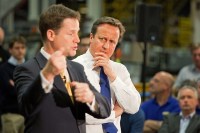
'Shouldn't we just go home?' the SNP's Pete Wishart asked Sir George Young this evening after the Leader of the House revealed the government was dropping its programme motion on the House of Lords. 'You know it's all over. They know it's all over,' he added. But they didn't go home, and the Commons has just voted in favour of the second reading 462 votes to 162. Early reports suggest that there were 86 Conservative MPs who defied the whip, which would make this the biggest rebellion in this parliament. Nick Clegg paused from trying very hard not to grimace on the front bench to cheer as Mark Harper told the chamber shortly before the division that this legislation belonged to the coalition. But the speeches from MPs throughout the evening gave a very different message.

Diamond’s ‘complete lack of candour’

From our UK edition

Bob Diamond could be rather too busy in the next few weeks to enjoy the £2 million salary and pension entitlement that he will still collect from Barclays despite waiving £20 million in bonuses. The Treasury Select Committee may well recall the former Barclays chief executive to explain what chair Andrew Tyrie called a 'complete lack of candour to Parliament'. The bank's chair Marcus Agius revealed to the committee this morning that the fatal blow to Diamond's career was dealt by Sir Mervyn King, who told the Barclays board that Diamond no longer commanded the confidence of the regulators. But there remain questions about the veracity of some of Diamond's evidence, which centre around a letter from Financial Services Authority chairman Lord Turner to Agius.

GOD draws near to Bank of England job

From our UK edition

Paul Tucker rather drove a steamroller over his hopes to be the next Bank of England Governor during his testimony to the Treasury Select Committee yesterday. We said on Coffee House last night that the suggestion that Tucker and co discussed a possible manipulation of Libor as far back as 2007 had seriously wounded his bid - although Tucker argued that he 'thought it was a malfunctioning market, not a dishonest one'. Paddy Power agreed that Tucker was in trouble - and has duly lengthened the odds against Tucker getting the job. Before his appearance, he was 6/4, but those odds are now 5/2.  The new favourite for the job, according to Paddy Power, is not Lord Turner, but Gus O'Donnell, who currently has odds of 15/8, while Turner is on 7/2.

J’accuse backfires

From our UK edition

Andrea Leadsom seems to have backed down a little from last night's suggestion that George Osborne 'should apologise' for saying that Ed Balls had 'questions to answer' about Libor. This morning, perhaps after a cheery morning phone call from someone at CCHQ, she took to the airwaves to clarify what she had said:  'Look, I was talking about a very specific point last night, which is the extent to which the Labour party may have leaned on the Bank of England, which Paul Tucker completely refuted. I want to be very clear here: this is an inquiry about the banks’ behaviour, and Ed Balls still has a huge amount to answer for about his time in office during the last parliament, when the tripartite regime absolutely failed us and allowed the banks to get into this mess.

Lords reform is in the long grass

From our UK edition

The look on Nick Clegg’s face as he entered the chamber to hear Sir George Young announce the withdrawal of the programme motion said it all. The Deputy Prime Minister knows that Lords reform is now in the long grass and it will only come out of there if either the Tory rebels back down or Labour agree to a programme motion, both of which are unlikely scenarios. Source close to Nick Clegg say that the Prime Minister informed the Deputy Prime Minister today that he needed more time to build consensus on his own side. The public plan is now to try for a programme motion again in the autumn. But I understand that this is dependent on the Tory rebellion crumbling, or at least reducing in size — something that seems unlikely at present.

The Osborne/Balls stalemate

From our UK edition

George Osborne and Ed Balls are now locked into something of a staring match over the Libor scandal, with one waiting for the other to flinch. After Paul Tucker's evidence to the Treasury Select Committee yesterday cleared the Shadow Chancellor and his ministerial colleagues in the Labour government of leaning on the Bank of England, Balls demanded an apology from Osborne for his comments to the Spectator. Andrea Leadsom, one of the members of the committee, saw enough in Tucker's testimony to publicly call for an apology. This is significant because Leadsom is not the sort of MP who openly briefs against her bosses. She may have a slightly rebellious streak over Europe, but she's no Nadine Dorries when it comes to making pronouncements on the Government.

Yellow dove down

From our UK edition

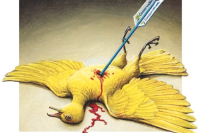
The Lib Dem dove has been shot by a well-aimed Tory arrow tonight, and you can bet that more than a few of Nick Clegg’s allies will feel deeply betrayed. The Lib Dems walked on the coals of the tuition fee rises, and for what? The Tory leadership cannot really claim to be giving its full backing to Lords reform. Yes, William Hague was sent on the radio this morning – in theory to urge obedience over the reform. But when the Foreign Secretary started laughing you had the feeling that he did not quite take his mission very seriously. Every Tory MP knows that the whips have given mixed messages, and did not tell them that there was no way back if they rebelled. You can't send the majority of your backbenchers to Siberia.

‘Unprecedented’ sanctions could still be powerless

From our UK edition

Are sanctions among the most pointless tools in contemporary diplomacy? That certainly seems to be the case in Syria where sanctions have been in place against the Assad regime ever since he launched a brutal crackdown against his own people 16 months ago. Last week, Wikileaks began releasing a massive tranche of emails from Assad’s inner circle which will make uncomfortable reading for many companies in the West. They reveal that in May 2011 a subsidiary of Finmeccanica, the Italian defence manufacturer, sold over £30 million worth of equipment to the Syrian government just when an EU trade embargo was being placed on the regime.

Charlotte Leslie becomes the latest 2010 MP to oppose Lords reform

From our UK edition

Charlotte Leslie becomes the latest star of the 2010 intake to come out against the coalition’s version of Lords reforms. Explaining her decision, she emphasised to The Spectator her concerns that while the new Lords would be elected ‘they would not carry the great benefit of democracy, accountability'. As Leslie points out, this means that a Lord ‘could get elected on a myriad of populist promises, then fail to honour any of them'. She also has worries about the loss of expert knowledge from the chamber when it is elected. But her objections are, perhaps, best summed up by her attack on the argument that Tories should vote Lords reform through for the sake of the coalition: 'This is not about our inter-relationship in the next 800 or so days to come.

Is the Work Programme working?

From our UK edition

School and welfare reform are the signature missions of David Cameron’s government – but is welfare going wrong? Labour is crowing that today’s figures from the Work and Pensions department on welfare-to-work show it’s a failure. I’ve just come back from a DWP briefing with Chris Grayling, the minister responsible, and thought Coffee Housers would be interested in his take. It was Labour who first involved private companies into welfare-to-work, and the coalition has continued it – but pressed the reset button. Their scheme is called the Work Programme, the largest welfare-to-work programme on the planet with 750,000 clients. It means the government pays a £4,000 fee to a company that can place someone with a job for 18 months.

What Labour did next on banking

From our UK edition

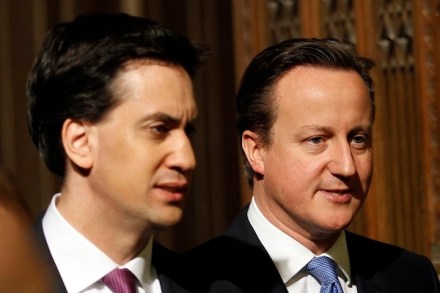
When Ed Miliband gave his speech to Labour's autumn conference last year, he rather tied himself in knots about how to end predatory capitalism. The Labour leader was trying to make it clear that he would stand up to vested interests, but the message was lost under a row about whether he was pro- or anti-business. Today Miliband managed to put that speech into context a little more, by announcing Labour's plans to change the culture of banking in this country. Instead of predator banks, he wants 'stewardship banking', which builds 'a long-term, trusted relationship with their customer' and serves the real economy as well as the industry itself.

Shots in the arm for the economy

From our UK edition

There's an interesting paper out from a number of members of the Conservative Free Enterprise Group this morning. The report, called Policy Bites: Seven Shots in the Arm of Britain, makes these seven recommendations for reforming the economy: 1. Over 65s still in work should continue to pay National Insurance contributions on their earned income to fund NIC holidays for young low-paid workers. 2. Exempt businesses with up to three employees and less than £75,000 annual turnover from employment regulation. 3. Reform the Treasury to place greater emphasis on supply-side reform. 4. Give planning permission for a third and fourth runway at Heathrow. 5. Create a new Ministry of Infrastructure covering transport, communications and utilities. 6.

Tucker denies Labour leant on Bank over Libor

From our UK edition

So Labour ministers did not 'lean on' the Bank of England to encourage lowballing of Libor rates, according to Paul Tucker. The Deputy Governor of the Bank told the Treasury Select Committee this afternoon that he had held conversations with officials about how able Barclays was to fund its operations. This is the exchange between Pat McFadden and Mr Tucker. McFadden asked whether any minister had tried to 'lean on' him over Libor: 'Absolutely not.' Asked whether Shriti Vadera had leant on him: 'I don't think that I spoke to Shriti Vadera throughout this whole process.' Ed Balls? 'No' Other ministers?

Is Lords reform heading for a slow or quick death?

From our UK edition

At the end of last week, Number 10 was optimistic that it and the whips were having some success in limiting the rebellion on the Lords. Some were even suggesting that the vote on the programme motion was winnable, after all. But that feeling has evaporated this morning. First, the weekend ring round by various senior figures did not meet with great success. Second, the 'dear colleague' letter signed by 74 MPs means that the programme motion is now pretty much certain to be defeated. Indeed, the rebels number considerably more than 74 when you include the PPSs who are planning to vote against it, the backbench opponents trying to fly under the radar and the Chairman of the 1922 Committee Graham Brady, who is also opposed but has not signed the letter.

Tucker’s down on his luck

From our UK edition

'This doesn't look good, Mr Tucker.' Andrew Tyrie made this observation towards the end of his Treasury Select Committee's evidence session with Bank of England Deputy Governor Paul Tucker. He was talking about the minutes of a meeting in 2007 which suggested Tucker was aware of the lowballing of Libor, but he might as well have been summing up the witness's hopes of taking the reins as the Bank's next Governor. Tucker insisted he was not aware that lowballing was taking place, but the minutes themselves said: 'Several group members thought that Libor fixings had been lower than actual traded interbank rates through the period of stress.' John Mann leapt on this, saying the minutes quite clearly referred to 'people submitting returns below what in fact were the traded rates'.

Clegg takes a hammering over Lords reforms

From our UK edition

Nick Clegg was standing at the despatch box to move the second reading of the coalition’s Lords reform bill. But the reception he got was reminiscent of what used to happen to Lib Dem leaders at PMQs. He was barracked mercilessly by both Labour and Tory benches while his own benches remained oddly silent, only one of his MPs intervened on his behalf.   Watching the Tory benches during Clegg’s speech it was hard not to imagine a considerable rebellion tomorrow night. At one point, the interventions were coming in so thick and fast that Clegg appeared to be almost ducking at the despatch box. The Tories seemed to be relishing the trouble that the Deputy Prime Minister was in. Even as sober a figure as Malcolm Rifkind was chuckling at one point.

Prevent strategy still needs political will

From our UK edition

West Midlands Police have just announced seven arrests as part of an investigation into alleged terrorist activity. This follows the detention of six individuals on similar charges across London yesterday. Together, they reveal just how active the Islamist network in the UK remains and the potency of its ongoing threat. One of those arrested in London yesterday, a convert, Richard Dart (also known as Salahuddin al-Britani) first came to prominence last year when his step-brother featured him in a documentary called ‘My brother the Islamist’. It offered a rare observational view on the inability of one family to comprehend the militancy and millenarianism of their son.

Lib Dems push the boundaries

From our UK edition

That the Liberal Democrats might try to scupper the boundary reforms if they don't get their way on Lords reform has been the talk of the tearooms in Westminster for months. But today the threat comes to the fore as Nick Clegg's departing head of strategy Richard Reeves warns the Independent that there will be 'consequences' if Tory MPs try to block reform of the upper chamber by voting down the Government's programme motion for debating the legislation. This is what he told the newspaper: 'There would be broader consequences for the Government's programme, particularly around political and parliamentary reform. The idea that a failure to deliver a government commitment on Lords reform would be consequence-free is for the birds.