Uk politics

The government needs to make cycling safer, and so do we all

From our UK edition

In the last week alone by winning Olympic gold and through his victory in the Tour de France, Bradley Wiggins has single-handedly raised the profile of cycling in this country. Now our government needs to get further behind cycling and pump more money into our infrastructure and make safety improvements to promote our most efficient form of transport. Cycling is a relatively safe, environmentally-friendly activity for all ages and thankfully serious accidents are low in relation to the millions of journeys taken by cyclists. But there is more we can do to give cyclists greater protection on our roads.

The restless Tory family

From our UK edition

Today’s YouGov poll is the latest Boris talking point. For what it is worth, it shows that the idea of Boris as leader reduces the Labour lead from six points to one. It is the first polling evidence we’ve seen that suggests the Tories would do better nationally under Boris. The Boris speculation has now reached such a level that nervous Liberal Democrats are calling up asking whether they should start taking it seriously and sotto voce inquiring as to how the Tories replace their leaders. All of this is, in many ways, hugely premature. Boris isn’t even an MP and there’s a massive difference between Tory backbenchers wondering after a drink or two about whether Boris might be a bet than Cameron and actually deciding to back him.

Training does not make the best teachers

From our UK edition

None of us would accept being treated by a doctor or by a nurse who hadn’t had extensive training, nor would we want legal advice from someone who hadn’t been through law school. Nor would we be comfortable with our company accounts being managed or audited by anyone not trained to a high level in accountancy. So why should we accept teachers coming into our schools who haven’t been properly professionally taught how to teach in a college or university? Schooling is a once-in-a-lifetime opportunity, and poor teachers, as research shows, destroy life chances. How can we play dice with our children’s lives?

Boris puts the bubbles back into his campaign champagne

From our UK edition

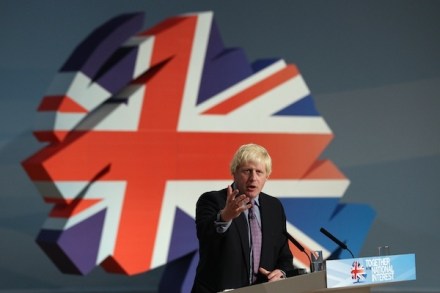
After Boris’s re-election as London mayor, his departing aide Guto Harri complained that the dry but effective campaign had rather taken the ‘bubbles out of the champagne'. Well, the Olympics is certainly putting them back in. Boris keeps taking opportunities that no other politician would dare to—the zip wire ride today being the latest, and most dramatic, example. The question is where does all this end, is it all just Olympics hi-jinks that will be forgotten when the flame leaves Stratford or is it just the next stage of the Boris for PM campaign? In my column in the magazine tomorrow, I say that it does seem to be more the latter than the former. Certainly, the attitude of Tory MPs to the thought of Boris as PM seems to be changing.

The house price slide continues

From our UK edition

Hidden behind today’s gushing Olympic headlines lies more disappointing economic news. Nationwide’s latest House Price Index release today shows that house prices are continuing to fall, with a 0.7 per cent decline in July. As the graph below shows, the fall in prices is a continuation of a trend that began when the country re-entered recession earlier this year: The latest figures put prices down 13 per cent on their 2007 peak and 2.6 per cent lower than this time last year. Last year the average house price was £168,731: now it is £164,389. But if you look at these trends in an international context, Britain's prices appear relatively resilient.

Cameron’s reshuffle quandary

From our UK edition

One can see why the idea of Iain Duncan Smith as Justice Secretary appeals to some in Tory high command, as the Daily Mail reveals this morning. The former leader is one of the few people who could square the party to a policy that treated rehabilitation as the main aim of the penal system. I expect, though, that IDS himself would not be keen on the move. But this story does illustrate one of the biggest problems that Cameron will face with his reshuffle, how to make room at the top. Among Tory ministers, there promises to be very little movement in the higher echelons of government. The Chancellor, the Foreign Secretary and the Home Secretary will all stay where they are.

ONS blunder lets ministers blame falling real incomes on immigration

From our UK edition

Yesterday the ONS published a report showing average disposable incomes at their lowest level since 2003. This is difficult news for ministers: as Isabel pointed out, concerns about the cost of living – stagnant wages and rising prices – are one of the main reasons given by voters in recent polls for turning away from the Conservatives. Imagine, then, how pleased ministers must have been when they saw that the ONS had thrown them a lifeline: the chance to blame it all on immigration. The ONS report discusses the effects of wages and prices, and then adds that ‘finally, sustained population growth led to incomes being spread across a greater number of people, and therefore further reduced the growth of actual income per head over the period’.

Osborne’s policy gymnastics

From our UK edition

It's been a few weeks at least since George Osborne's last U-turn, so it must be time for another one, mustn't it? Today's launch of the Funding for Lending Scheme is being hailed as another change of course from the Chancellor as it signals the slow death of the National Loan Guarantee Scheme. The Sun's editorial this morning compared George Osborne to a gymnast, and said he was the 'master of the U-turn'. The NLGS has only lent £2.5bn of the £20bn that it was allocated so far for small and medium businesses, and the FLS, which allows banks and other financial institutions to borrow at below market rates, is expected to supersede it.

Immigration and the cost of living

From our UK edition

The average disposable income is at its lowest point since 2003, according to figures released this afternoon by the Office for National Statistics. The statistics for the first quarter of this year show that take home income was an average of £273 a week, while real incomes per head fell by 0.6 per cent to £4,444 in Q1, which is the lowest since 2005. The ONS points to rising prices as the primary cause of these falls, and there are obvious points to be made here about the cost of living. It's currently one of the major reasons voters are giving for turning away from the Conservative party, and Labour's Chris Leslie has already used the ONS' stats to attack the government's tax and benefits policies.

Court rejects Qatada’s bid for freedom

From our UK edition

Abu Qatada has just lost his bid in the High Court to be released from prison immediately. He had tried to argue that it was a breach of his human rights to be held in prison ahead of the court hearing in October which will decide whether he should be deported to Jordan to face terror charges. But at today's hearing, Lord Justice Hughes and Mr Justice Silber dismissed the radical cleric's application for a judicial review. This is obviously a relief for the government right now as Qatada was pressing for release with immediate effect, which would have meant he was a free man during the Olympics when security and intelligence services are already stretched.

A not-entirely-comprehensive spending review

From our UK edition

There are more rumblings this morning on the shape of the next comprehensive spending review, this time at grassroots level within the Liberal Democrats. The Times reports threats from former Lib Dem MP Evan Harris that any attempt to sign up to a traditional spending review will trigger an emergency motion at the party's autumn conference. The leadership is already well aware of this issue: I blogged last week that a senior party figure had told me that the £10 billion of welfare cuts that George Osborne has predicted are necessary over the next spending review period are 'just not going to happen'. Clegg and co know that the Lib Dem grassroots will not weather another round of welfare cuts when they already feel their MPs have had to bend over backwards for the first set.

London, the Olympic ghost town

From our UK edition

London is quieter than usual this week in spite of the Olympics, with many commuters staying at home or fleeing the country while the Games take place. That's a good thing for the transport system - clearly Justine Greening and Francis Maude's 'remoding' advice had its desired effect - but retailers and tourist attractions are reporting a lower-than-usual footfall as a result. The Financial Times reports that the 100,000 Olympic visitors lags behind the 300,000 typically expected in the capital, with the Association of Leading Visitor Attractions pointing to a drop of up to 35 per cent in tourists.

Borismania takes hold

From our UK edition

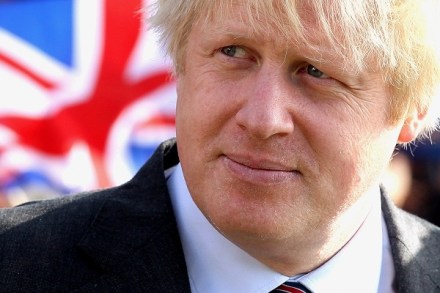
Boris Johnson has had a fantastic few days. On Thursday he drove a crowd in Hyde Park wild with his Mitt Romney banter. On Saturday he charmed the public with his thoughts on the Olympic opening ceremony ('People say it was all leftie stuff. That is nonsense. I'm a Conservative and I had hot tears of patriotic pride from the beginning. I was blubbing like Andy Murray.') Today, in between talking about glistening otters (which in itself is a feat: a politician getting away with talking about how wonderful it is to see semi-naked women in central London and not sounding like a dirty old man), he has emerged as ConHome readers' hot choice to lead the Tory party after David Cameron.

The government has little power over the empty seats scandal

From our UK edition

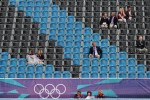
The papers today are full of empty seats at the Olympics. This morning, a Downing Street spokeswoman tried to take a glass-half-full approach, saying the empty seats were 'disappointing', but adding that the Prime Minister was 'satisfied' that Locog was working to resolve the issue. Locog carried out a review at the weekend which found that the seats were in accredited areas rather than those allocated to sponsors. The accredited areas are set aside for 'members of the Olympic family', an unpleasant phrase that denotes representatives of the IOC and of the sporting federations,  as well as coaches, athletes and athletes' families.

Green Party Candidate: Give me more money!

From our UK edition

As a slogan, 'give me more money' is an unlikely election winner. Nevertheless, Peter Cranie came close to trying it at the hustings for the leadership of the Green Party in Manchester on Friday. At the start of the above clip, a member of the audience asked what wage the contenders would take. Pippa Bartolotti purred that she wanted the Greens to spend party funds on campaigns not individuals – a sentiment to win elections with. But then it was easy for Ms Bartolotti to be selfless because she had a career in business before going into politics. Cranie was more cautious. He explained that he earned £29,000 as a lecturer. If he became the Greens’ leader outside Westminster he would have to give up his job.

Judo diplomacy

From our UK edition

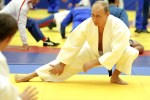
While the ladies' beach volleyball is exciting Boris ‘glistening otters’ Johnson and the peeking Prime Minister, another event could be about to get very political. President Putin is set to arrive in town on Thursday: yes there will be bilateral meetings, but he’s really here for the judo. At a time when UK/Russian relations are particularly low, one Russian Embassy source jokes that perhaps diplomacy should be a little more hands on and that Putin should challenge fellow judo fan William Hague to a match. Sadly this will remain a pipe-dream, which is just as well - we would not want Hague’s old judo partner - Lord Sebastian Coe - to get jealous.

Planning reform is an easy way of helping the economy

From our UK edition

'Desperate Treasury to water down planning laws,’ blasts the Telegraph today, making it quite clear that it’ll oppose any effort by the government to return to planning reform. Those Tories who were uncomfortable with the original proposals are also making clear that they haven’t changed their position. The new national planning policy framework was announced this spring. Those who helped craft this compromise are privately stressing that it is simply too early to tell whether further changes are needed. But I still think there is a good chance that the Treasury will push for more planning reform this autumn. First, it is something that it genuinely believes would help the economy, and the particularly hard hit construction sector, in both the short and the long term.