Uk politics

Tensions over housebuilding plans

This morning's big housebuilding announcement was aimed at unblocking obstacles in the planning system to get development of new homes and extensions going. But it hasn't unblocked tensions within the government. The main controversy is over whether to relax the quotas for affordable housing within each new development, and The Times reports that Nick Clegg and Eric Pickles were at loggerheads with George Osborne over the idea. This morning, Downing Street announced that developers can bypass a council's affordable housing requirements if they feel they make a site commercially unviable. The claim is that this will release 75,000 new homes currently stuck behind this barrier.

Is it payback time for the public sector?

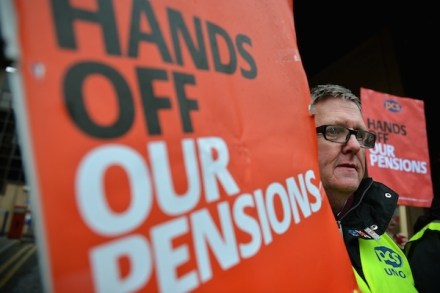
What’s next in David Cameron’s intray? If he’s feeling butch and fancies a fight, he might want to consider bringing public sector pay and pensions into line with the private sector. Policy Exchange believes aligning public sector pay would save £6.3 billion in public spending and create up to 288,000 new jobs. Its report, Local Pay, Local Growth, which it published yesterday, points out that the average ‘premium’ for public sector workers is now seven per cent higher than workers doing similar jobs in the private sector. In some parts of the country, that premium rises to as much as 25 per cent. The think tank argues this is unfair, and that the money could be better spent tackling local unemployment.

Saving the children? Another child poverty report misses the bigger picture

Yesterday’s reshuffle isn’t the only story in town. Save the Children, a global charity, has today started to fundraise for children in Britain whom it says are affected by the government’s cuts. It is now run by Justin Forsyth, an ex-aide to Gordon Brown, who will have understood the political implications of the research: that coalition policies are making child poverty worse. The problem is that this analysis mistakes the nature of poverty in Britain, and – worst of all – the ways of alleviating that poverty. The root problem is a confusion of low income as a cause of these issues, rather than the symptom of wider social failings it often represents. This basic failure has characterised political programmes and grand government schemes for years.

Ignoring struggling families will be politically costly

More bad news for Britain’s families: new research shows that the cost of bringing up a child is an eye-watering £143,000. This piles more pressure on a government that already knows it has to do better to show it’s on the side of families struggling to make ends meet. Based on what parents say is essential, our report shows the minimum required to raise a child until the age of 18 today is £143,000 (including housing and childcare costs), which averages out at about £150 a week. The report also reveals that this cost is rising faster than inflation. The rising price of food, water and fuel contribute to this but it is the high cost of childcare in the UK that is the most significant driver of this above-inflation increase.

How Cameron made ministers cry

David Cameron has always nurtured a deep dislike of reshuffles, and the last week won’t have helped. The result might strengthen the government; but the process was as ghastly as the Prime Minister expected. He sought to be gentlemanly about things, publicising the promoted while granting the demoted privacy. Even so, I understand, three ministers burst into tears in front of him when he was delivering the bad news. Lady Warsi was so cross about being stripped of the party chairmanship that she went home to Yorkshire and carried on negotiations from there. Some ministers even succeeded in staying put when the Prime Minister would have liked them to move. On Monday afternoon, he asked Iain Duncan Smith to consider switching jobs.

A ritualised dust-up for PMQs

Broom broom. That was the noise that PMQs made today. Britain’s ebullient car sector is the only sliver of happiness the government can glean from our wimpering, faltering, flat-lining economy. And Cameron brought up the broom-brooms as soon as he possibly could. First he had to deal with Ed Miliband who started the session with one of those casual, chatty questions which are designed to make the PM look like a berk by quoting his words back to his face. ‘After two and half years in government,’ Ed began, ‘the PM returned from his break and said he now realises it’s time to cut through the dither. What did he have in mind?’ Beautifully barbed. But Cameron returned strongly. ‘He’s had all summer to think of a question.

Boris refuses to rule out fighting by-election over Heathrow

As James remarked earlier, the Cameron vs Boris subtext of the row over expanding Heathrow is going to run and run. Boris managed to fulfil that prediction almost immediately by announcing on the World at One that he will lead a campaign against a third runway. 'You bet, you bet I will, yes,' he said. As well as using a new Borisism, 'fudgerama', to describe the way the Prime Minister was handling the issue, Boris did not rule out the possibility that he might resign to trigger a by-election if the government U-turned. Shaun Ley asked: 'If the opportunity arose, would you be prepared to fight a parliamentary by-election on that?' Boris replied, rather hesitantly: 'My job is to follow the interests of the people of London.

David Cameron is right to challenge NIMBYism

The planning debate has reared its head again, and this time it’s personal. David Cameron is now calling on people to stop their ‘familiar cry’ of opposition to new housing so that he could end the ‘dithering’ and get homes built. Fraser Nelson called this ‘taking aim’ at NIMBYs, and we believe the Prime Minister was right to do so. The principle of doing something to help the current generation who, even if they work and save hard, remain almost completely priced out of the housing market often gets nodding agreement.

The exciting new sub-committee on the block

Downing Street is very keen to emphasise that the key theme of this reshuffle is 'implementation'. It's an exciting word, I know, but the excitement has just ratcheted up a notch with the creation of a new sub-committee called the Growth Implementation Committee. The GIC will sit under the economic affairs committee and will be chaired by the Chancellor (who also chairs the economic affairs committee). His deputy chair will be Vince Cable, which the Business Secretary will probably not appreciate, except when the Chancellor is away and he is able to take over. It will also include some of the faces of the reshuffle: David Laws will be a member, as will Ken Clarke in his new roving economic brief in the Cabinet Office.

How oil companies could be inflating petrol prices

Conservative backbencher (and thank goodness he remains on the backbench, where he seems to wield an impressive level of influence) Robert Halfon has continued digging away at fuel prices over the summer, and this morning he has another victory to report. The Office of Fair Trading has agreed to examine whether it should investigate oil companies for price-fixing and market manipulation. Halfon has spent the summer compiling a hefty dossier which he says shows how oil companies are charging motorists more than they should.

Reshuffle row on Heathrow takes off

Though the reshuffle, which continues today, saw very little movement at the top of the government, fans of the changes believe the Prime Minister still managed to remove one large obstacle to growth by taking the two women - Justine Greening and Theresa Villiers - opposed to a third runway at Heathrow out of the Transport department. Tory MPs I spoke to yesterday know that this will be one of the big rows of the autumn, as the commission examining aviation capacity gets to work. Some believe the government should get on with the decision, upset a few MPs whose constituencies are affected (including Vince Cable, who will be more than simply upset if there is a move towards a third runway), but reap the long term benefits of more capacity.

Reshuffle: the full list of jobs

Prime Minister, First Lord of the Treasury and Minister for the Civil Service Rt Hon David Cameron MP Deputy Prime Minister, Lord President of the Council (with special responsibility for political and constitutional reform) Rt Hon Nick Clegg MP Foreign and Commonwealth Office First Secretary of State, Secretary of State for Foreign and Commonwealth Affairs – Rt Hon William Hague MP Senior Minister of State – Rt Hon Baroness Warsi (jointly with the Department for Communities and Local Government) Minister of State – Rt Hon David Lidington MP Minister of State – Rt Hon Hugo Swire MP Minister of State (Trade and Investment) – Lord Green of Hurstpierpoint (jointly with the Department for Business, Innovation and Skills)* Parliamentary Under Secretary of Stat.

Revealed: the victims of Osborne’s latest green belt assault

David Cameron's choice of Nick Boles as the new planning minister sends a clear signal that he is serious about planning reform. The founder of Policy Exchange is a close confidante of the Prime Minister and has been trusted with reforms that have been attempted once and damaged Cameron's reputation. If the Chancellor is the winner from relaxed development regulations — which will be a core part of his Economic Development Bill next month — then his party stand to be the losers. The Campaign to Protect Rural England is already gearing up for a second battle: 'If planning restrictions are relaxed, you’re not going to get any increase in the overall number of houses being built.

Ken Clarke: A Political Giant Mistreated by his Youngers and Lessers – Spectator Blogs

Say this for David Cameron's autumn reshuffle: it hasn't unravelled as quickly or spectacularly as George Osborne's last budget. Hurray for that. But nor has it been deemed a grand success. See Telegraph writers here, here and here for evidence of that. If you want to make a difference - that is, if you wish the general public to sit up and think, By Jove, he's finally got it - you need to defenestrate an admiral or two. A reshuffle that leaves the Great Offices of State as they were cannot pass that test. Which means, I'm afraid, that only sacking George Osborne would have made this a memorable reshuffle. Like Tony Blair before him, Cameron may yet regret not dealing with his Chancellor.

I Think Paul Krugman is Mistaken – Spectator Blogs

The great sage - once described to me by someone who attended a (highly) derivative speech he made on the Scottish economy as Woody Allen with statistics and no jokes - blogs that George Osborne is "Britain's Paul Ryan". Remarkably, this seems unfair on both Mr Osborne and Mr Ryan. Anyway, Krugman writes: Osborne’s big idea was that Britain should turn to fiscal austerity now now now, even though the economy remained deeply depressed; it would all work out, he insisted, because the confidence fairy would come to the rescue. Never mind those whining Keynesians who said that premature austerity would send Britain into a double-dip recession.

Boris seizes the reshuffle day

Reshuffles always leave a pile of bruised, vulnerable ex-ministers waiting for someone to come along, pick them up and make them feel loved again. This year, that person is Boris Johnson, who can make good use of those leaving the government as allies within Parliament. This is why he popped up so quickly today to attack the decision to move Justine Greening. He said: 'There can be only one reason to move her - and that is to expand Heathrow Airport. It is simply mad to build a new runway in the middle of west London. Nearly a third of the victims of aircraft noise in the whole of Europe live in the vicinity of Heathrow. 'Now it is clear that the Government wants to ditch its promises and send yet more planes over central London.

The Downing Street reshuffle

It is not just ministers who are being moved around today: the Downing Street operation is also changing around. Though the people involved in these moves are less well-known than Cabinet ministers, in modern-day government — with its centralization of power in Number 10 — they are almost as important and in some cases more so. Oliver Dowden, who currently links up Number 10 and CCHQ, is becoming deputy Chief of Staff. I’m told that Dowden, widely regarded as one of the most able operators in the Conservative party, will have a particular emphasis on ensuring that domestic policy is driven through the government machine.