Uk politics

A storm of nonsense: gay marriage opponents lose their wits – Spectator Blogs

My word, the latest kerfuffle over gay marriage runs the gamut from dumb to dumber. Here, for instance, is Cristina Odone: He may get away with bullying a great many – perhaps the majority – into accepting his proposals. But in doing so Cameron will create a less liberal and tolerant society. Those who have held fast to their principles, will have to accept what the majority wants. But will the majority respect what the minority believes in? Not in Cameron's Britain, they won't. The moment the vicar or priest refuses to celebrate a gay marriage in their church, the aggrieved couple will see them in court — in Strasbourg.

No 10 insists churches are protected under gay marriage plans

The government may be forced to explain its plans for gay marriage in the House of Commons today if an urgent question is granted. Chief among the questions from backbenchers will be the consequences for religious institutions that continue to oppose the idea and do not want to conduct such ceremonies. There are some Tory MPs who are viscerally opposed to the idea of gay marriage in any form, but others are wavering and need reassurance that they will not vote for something which leads to the situation where a vicar is forced as a result of a European Court judgement to conduct a same sex marriage against their will.

Tim Loughton attacks coalition’s failure to support married couples

Tim Loughton was one of the surprise sackings in September's reshuffle: he was an able minister who knew his portfolio very well indeed. He's evidently reluctant to let that ability go to waste, and has already made interventions on child protection and benefit cuts. His speech later today for the Centre for Social Justice hits the nail on the head of a big Tory problem: marriage. Loughton isn't joining some of his colleagues in attacking gay marriage specifically, but rather the Conservative party's failure to reintroduce tax breaks for married couples. He has written of his dissatisfaction that the Autumn Statement contained no such measures in the Telegraph today: Family matters to Mr Cameron and to the Conservative Party. I hope that family still matters to this Government.

Drugs report looks destined to languish on ministers’ shelves

The Home Affairs Select Committee spent a year on its drugs inquiry, and its hefty report is finally published today. During the inquiry, MPs heard from charities, ministers, and Russell Brand, who called committee member Michael Ellis his 'mate' during evidence. But the committee members haven't had such a matey response from ministers. The Home Office has already made clear that it doesn't believe the 'Drugs: Breaking the Cycle' report's central recommendations need to be enacted. The committee wanted a Royal Commission to 'consider the best ways of tackling drugs policy in an increasingly globalised world'. It also suggested that decriminalisation 'merits significantly closer consideration', the idea that has unsurprisingly received the most attention in the press this morning.

The only Labour business supporter that Chuka Umunna can name is a Labour peer

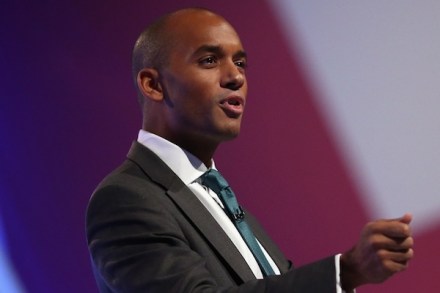
Chuka Umunna’s interview on The Sunday Politics today highlighted several of the problems facing the Labour party. When Andrew Neil pressed him on whether he could name any heads of big companies backing Labour, the shadow Business Secretary could only name a Labour peer who the party ennobled in 1998. Here’s the exchange: AN: Tony Blair said that Labour can’t go into the next election without the support of a single chief executive from a big company. Can you name the boss of a big major company who’s backing Labour? CU: The Chairman of ASOS who is Waheed Alli. He has backed the Labour Party. AN: Is that a public company on the FTSE? CU: I’m not sure that ASOS is listed. It may be or it may be just outside the FTSE 100. AN: Any others? Any others?

Tory MP in battle with ministers over ‘snooping bill’ safeguards

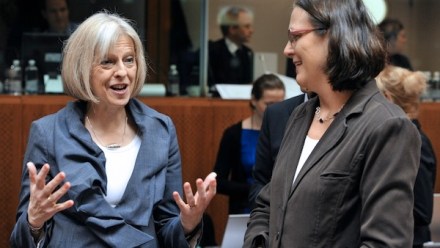
Coffee House has learned that a Tory MP is engaged in a fight with the Home Office on safeguards for its proposed 'snooping bill'. The fate of the Draft Communications Data Bill could be decided on Tuesday when a cross-party committee reports back on the legislation. Nick Clegg is already reported to be considering dropping the Liberal Democrats' support for the Bill, and the joint committee's report is expected to take a negative view of the proposals. One Liberal Democrat member, Lord Strasburger, told Home Secretary Theresa May that the proposals for monitoring internet users' records were a 'honeypot for casual hackers, blackmailers, criminals large and small from around the world, and foreign states'.

Will he, won’t he? Ed Miliband makes noises about benefits war

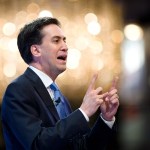
Ed Miliband is ready to wage war with David Cameron and George Osborne over the Welfare Uprating Bill, which will see benefits rise by 1 per cent a year, rather than in line with inflation. The Labour leader has been talking tough in the papers this morning, with a piece in the Sunday Mirror in which he says: 'We should be tough on the minority who can work and try to avoid responsibility. But there comes a moment when a government is exposed for who they are. That happened to David Cameron and George Osborne this week. 'They showed they are not fit to govern because they played political games with people's livelihoods. They said they were cutting benefits for the next three years and the mood music was that it was a way to punish the 'shirkers and scroungers'.

Starbucks protests: We need political power to reform the tax system

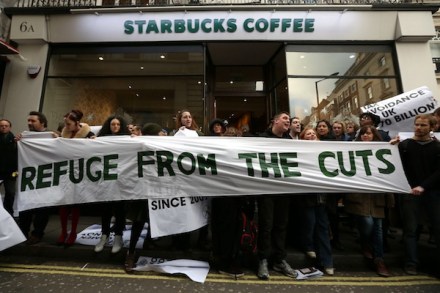
UK Uncut is holding its day of action against Starbucks today, with more than 40 demonstrations across the country in the chain's coffee shops. The group's sit-ins aim to highlight the chain's tax avoidance strategy which has led to it paying just £8.5m in corporation tax since 1998, despite sales of £3bn in the UK. While it's not a bad thing that tax avoidance is moving up the agenda, there are probably more fruitful ways that those irritated by tax avoidance can spend their time, rather than making life a bit awkward for some poor barista who has no involvement in their employer's tax affairs.

Jeremy Heywood, just call him very influential

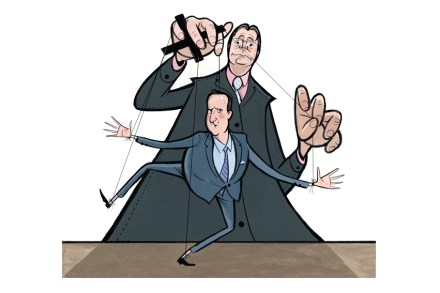
The main topic of conversation in Whitehall today has been The Guardian’s profile of the Cabinet Secretary Sir Jeremy Heywood. One particular passage has raised some eyebrows in several ministerial offices: He believes, they say, that reports of his power are overstated and the very suggestion that he might be making decisions on behalf of politicians makes him "cringe". He prefers to describe himself, they say, as simply very influential. Heywood, and this irritates some in Number 10, briefs journalists personally. He is known to be particularly concerned about his image. I’m told that after The Spectator cover depicting him as the PM’s puppet-master, there was much discussion over what should be done to finesse things.

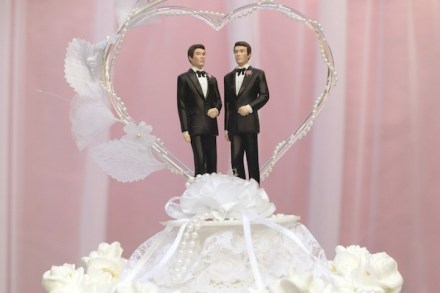
David Cameron backs gay marriages in church

This week marks seven years since David Cameron was elected leader of the Conservative party, and he has celebrated the occasion by making an announcement that will certainly keep things lively among his MPs and grassroots. Joe Murphy reports in the Standard today that he will allow religious groups to host same-sex weddings in their places of worship. The Prime Minister made clear this lunchtime that he would allow a free vote, appearing on the lunchtime news to say: 'I'm a massive supporter of marriage and I don't want gay people to be excluded from a great institution. But let me be absolutely 100% clear, if there is any church or any synagogue or any mosque that doesn't want to have a gay marriage it will not, absolutely must not, be forced to hold it.

Do teaching unions not trust head teachers?

Michael Gove had a very good autumn statement: not only did he get £1bn for new free schools and academies, but he also got performance-related pay for teachers. Gone will be the days of automatic rises and pay based on length of time served, replaced by rises based on merit as in many other professions. As James notes in his column this week, accepting the recommendations of the School Teachers' Review Body is a 'full-bore assault on union power'. So, unsurprisingly, the unions are terribly upset by the change. Chris Keates, general secretary of the NASUWT, released this response: 'The war on teachers waged by the Coalition government continues. The value of a national pay framework has been recognised by other pay review bodies but the STRB appears to be seriously out of step.

Number 10 coy on Royal Charter proposal for press regulation

Newspaper editors are under pressure to come up with a new system of press regulation that works, and the Prime Minister is under pressure to show that he is taking the need for a new system seriously, rather than just bowing down to media bosses. So is a Royal Charter the solution that would ensure the new press watchdog would remain independent of and tough on the newspapers? Reports have surfaced in the press that Oliver Letwin is mulling over the idea as a way of avoiding statutory underpinning while giving assurances about the new regime. The Economist reports: 'Oliver Letwin, the minister in charge of squaring this awkward circle, has suggested that another upstanding body could verify the new set-up, without resorting to statute.

Osborne’s ghost of Christmas future

There was plenty to welcome in George Osborne’s budget, from the proposed corporation tax cut to scrapping the 3p fuel duty rise. But to read Jonathan’s seven-graph summary is to realise that Osborne's 2010 plan is not now enough. I look at this in my Telegraph column today. Here's a festive summary of my pain points:- Osbrownism - the ghost of Christmas Present  Osborne’s words – tough on deficit, dealing with debt – are very encouraging. The figures: not so much. The main features of Osborne’s plan are identical to the Brown plan he inherited.

For the Autumn Statement, stability: for the mid-term review, ambition

After months of squabbling and not-so-civil war, the coalition now appears to be functioning again. This is one immediate consequence of George Osborne’s Autumn Statement. The Chancellor was allowed to present a package to the House that had not been leaked earlier by coalition partners in an act of preemptive spin. This matters not only for the orderly proceeding of affairs of state but also because the Autumn Statement was the first of a two-part coalition effort to seize the political initiative. The second will come in the new year with the publication of its mid-term review. Time is running out for further radical reform. The Autumn Statement was limited in its ambitions, and the mid-term review will be the last chance.

Eric Pickles and the looming Tory split over the ECHR

Eric Pickles is one of the few characters in contemporary British politics. In an interview with The Spectator this week, he chides Vince Cable for not deregulating enough, admits that he gets ‘occasionally irked’ by George Osborne’s impatience on policy, and reveals that ‘‘I was asked by a senior member of the government, two weeks after the National Planning Framework had come into being, why it hadn’t worked.’ But Pickles also gives us a glimpse of a coming Tory split. He says that it is ‘ridiculous’ that individuals can appeal their cases all the way to the European Court of Human Rights in Strasbourg. He wants to stop this, which would require Britain leaving the jurisdiction of the court.

The strivers vs scroungers battleground

Welfare will be one of the key battlegrounds at the next general election, and George Osborne's Welfare Uprating Bill will certainly be one way the Conservative party can prod Labour on what is a hugely awkward policy issue for the party. It accelerates the internal debate about how Labour can appeal to the electorate on the issue of welfare while staying true to its own core beliefs, and, Tory strategists hope, will cause some ructions. While the party appeared united in Manchester at its autumn conference in September, it faces hard times ahead as it tries to answer some of the big questions about what a Labour welfare state would look like.

Ugandan Asians are part of Britain’s secret weapon for success

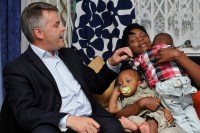
Few people who were alive 40 years ago will forget the scenes of thousands of Ugandan Asians arriving in Britain after being expelled from their country by dictator Idi Amin. Between 1972 and 1973, nearly 40,000 Ugandan Asians came here. Many originated in India and had British overseas passports, and the then Prime Minister Edward Heath said our country had a moral duty to help them. Amin had forced them to leave everything. But he could not make them relinquish their skills, their determination and their resilience - all of which they brought here in abundance. So 40 years later we are not commemorating the terrible circumstances of their departure from Uganda; we are celebrating the enormous contribution they have made to the UK.