Uk politics

Maria Miller’s Leveson threat

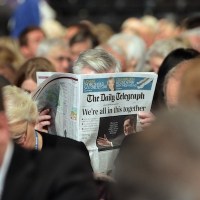
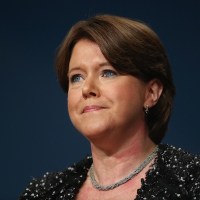
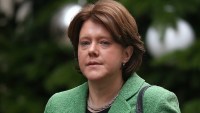
Journalists don't normally reveal their conversations with special advisers to ministers, no matter how grumpy they are about a forthcoming story. So it is significant that the Telegraph has chosen to disclose a warning from Maria Miller's adviser Joanna Hindley about the minister's connection to press regulation when reporters were preparing a story on her expenses claims. This is the key passage: When a reporter approached Mrs Miller’s office last Thursday, her special adviser, Joanna Hindley, pointed out that the Editor of The Telegraph was involved in meetings with the Prime Minister and the Culture Secretary over implementing the recommendations made by Lord Justice Leveson.

Tory minister says yes to EU and no to immigration to win at 2015

David Cameron's Conservative modernisation agenda is struggling. Several of today's front pages highlight how traditional Tory issues — immigration and family values — have returned to the centre stage. And many of Cameron's attempts to modernise his party on big issues (climate change, green energy, gay marriage, HS2) have met with a negative responses. How can he retool his modus operandi to win a Tory a majority at the next general election? Policing and ex-immigration minister Damian Green has a few suggestions. In a speech he will give to Bright Blue this evening, Green suggests Cameron's modernising agenda is not yet an ex-agenda, and can still be refashioned to work in 2015.

Maria Miller holds gay marriage briefing to reassure nervous Tory MPs

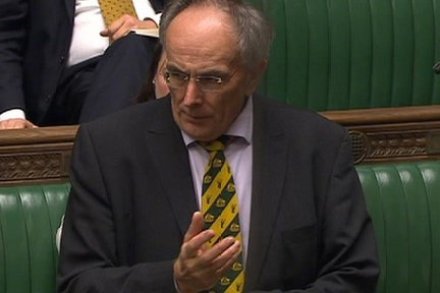
After giving her statement to the House of Commons on the government's plans for gay marriage, Maria Miller held a meeting with Tory MPs. I understand that the meeting was a question-and-answer session designed to help reassure Tories about the 'quadruple lock'. It was well-attended, although apparently the Secretary of State was around 25 minutes late, which meant Peter Bone left early to make another appointment. This was immediately interpreted as a walkout in protest from Bone, who is one of the more vocal opponents of the legislation. I spoke to Bone this evening, who said 'I wasn't storming out: it was a private Q&A meeting with Maria Miller who was 25 minutes late'. But even though he didn't storm out, Bone is still not happy or reassured by today's announcements.

David Cameron defends secret courts

It was striking that at today’s liaison committee session the Treasury Select Committee chairman chose not to ask the Prime Minister about the economy but the secret courts bill. In what were the tensest exchanges of the 90 minutes, Tyrie questioned whether secret courts were necessary while Cameron asked Tyrie to think what he would do in his position. Cameron kept stressing that the government was not making any existing proceedings secret but trying to find a way to have cases heard that can’t be at the moment. Tyrie’s vocal opposition, though, is further evidence that this bill isn’t out of the woods yet. Given that the terms of it were essentially thrashed out between Cameron and Clegg, I’d be surprised if Lib Dem MPs turned against it.

Today’s easy question: Why won’t minorities support right-wing parties? – Spectator Blogs

I'm afraid that I can't help but feel some of the comments left responding to this post go some way towards answering a question Daniel Hannan asked recently: why do right-wing parties struggle to win support from immigrants? After all, and as Mr Hannan notes, emigration is an entrepreneurial act and immigrants tend to be thrifty, hard-working types. This should, all things being equal, be fertile territory for conservatives. Except, as we know, not all things are equal and they're certainly not equal in this case. The truth of the matter is that the conservative movement - whether in the United Kingdom or the United States - still has a race problem.

Make up your mind on shale gas, fracking chief tells government

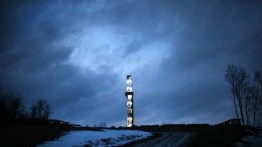
The head of the company seeking to exploit shale gas reserves in Lancashire today pleaded with the government to make up its mind about the future of the unconventional energy source. Giving evidence to the Energy and Climate Change Select Committee this morning, Francis Egan, chief executive of Cuadrilla, said his company was desperate to get the go-ahead to explore how much shale gas was available in the area around Blackpool. Sounding a little exasperated, he told the committee: 'We'll give you the data as soon as you let us start. We know the geology is good, we know the gas is there, and we know it's a mile thick. In fact, we haven't even reached the bottom. The geology is good, but we need to establish flow rates.

Maria Miller unveils ‘quadruple lock’ to protect churches from gay marriage court actions

Maria Miller sought to assuage the fears of her backbench colleagues about the government's plans for gay marriage today by announcing a 'quadruple lock' to prevent any religious leader being forced into conducting a same-sex wedding against their will. Her statement to the House of Commons was particularly focused on concerns about the effect on the Church of England, which has said it does not want to marry gay couples. The quadruple lock consists of the following measures: 1. The legislation states that neither religious organisations as a whole nor individual ministers will be forced to hold same-sex weddings on their premises. 2. Miller will amend the Equalities Act so that no discrimination claims can be brought against religious organisations who refuse to conduct gay marriages.

Ed Balls says Labour will oppose the Welfare Uprating Bill

Ed Balls gave the clearest indication yet today that his party would vote against the government's plans to cap benefit rises to 1 per cent rather than in line with inflation. Speaking at Treasury Questions, the Shadow Chancellor said: 'It's important for members on both sides of the House know the answers to the questions I asked the Chancellor. First of all, 60 per cent of families hit by his tax and benefit changes are in work. And according to the IFS, as a result of the Autumn Statement measures, a working family, the average one earner couple will be £534 a year worse off by 2015, a working family worse off.

The Census demonstrates the importance – and benefits – of immigration – Spectator Blogs

I suppose the confirmation that 13 per cent of the present population of England and Wales were born overseas will be the cause of some eye-brow raising and much spluttering from the usual suspects. It's too late to repel the foreign hordes. They are inside the castle already. Some 7.5 million people born overseas now live in England and Wales (but mainly England). Lucky old England, says I. Immigrants are drawn to and then help create economic prosperity. It is not, I suspect, a coincidence that depressed parts of northern England are also often those parts with the fewest numbers of foreign-born inhabitants. This makes sense: why would you leave Poland to claim benefits in Sunderland? No, you go where the work is.

Scottish Independence and Europe: Who does this Barroso guy think he is? – Spectator Blogs

Today's Think Scotland column takes a gander at the rumpus over an independent Scotland's accession to the EU. Until recently the SNP promised that said accession would be automatic. Now it's simply "common-sense".  This is because Jose Manuel Barroso, the Spanish Iberian agent* at the heart of the EU Commission, has made an awkward intervention. Scotland would, he says, not be an automatic member of the club at all. Intuitively this is obvious just as Scotland would not be an automatic member of the United Nations. It would have to apply. Once it applied it's application would most probably be accepted. There are few plausible grounds upon which to reject it. With regard to Brussels, however, the truth is that no-one quite knows precisely what would happen.

Home Office minister: We can change snooping bill quickly

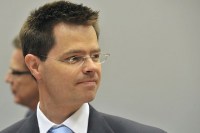
After Nick Clegg and Labour rejected the draft Communications Data Bill, Home Office minister James Brokenshire appeared on the Today programme to explain that while the Home Office accepts the 'substance' of the joint committee's report, he believes it won't take too long to redraft it. He said: 'We believe that the changes that meet the substance of these recommendations can be met in a reasonably short order, but in saying that what I am clear is that we know that we need to work this through with the coalition.' He pointed out, rightly, that the committee was clear that there was a need for the legislation, but that there were concerns about the balance between collecting data and individual privacy.

Communication problems: Back to drawing board for controversial snooping bill

The joint committee examining the controversial draft Communications Data Bill has reported back, and it's not good news. The report's damning findings about the draft legislation from the Home Office has led Deputy Prime Minister Nick Clegg to call for it to be redrafted, and a hostile Tory MP to describe the plans to monitor internet users' activities as 'on life support'. The committee said: 'Our overall conclusion is that there is a case for legislation which will provide the law enforcement authorities with some further access to communications data, but that the current draft Bill is too sweeping, and goes further than it need or should.

The government and the European Court of Human Rights are on a collision course over prisoner votes

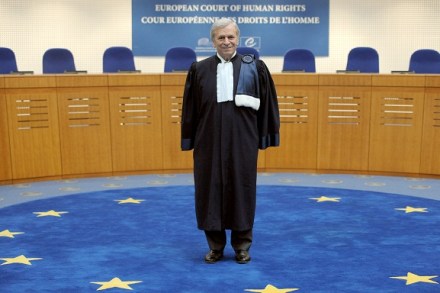
A showdown between the government and the European Court of Human Rights over prisoner votes drew that bit closer today. The government hoped that having parliament vote to uphold a blanket ban on prisoners voting would buy it some time, as the European Court of Human Rights would then have to start examining the issue all over again. But that hope was dashed today when the Council of Europe declared that a blanket ban 'cannot be considered compatible with the European Convention on Human Rights'. It also said that it expected to return to this case in September 2013. I expect parliament will still vote for the blanket ban, if it is given the option, meaning that parliament—which is sovereign in this country—and the court will be in conflict.

Commons shadow boxing on gay marriage

Today’s urgent question on gay marriage was largely shadow boxing for the statement on it, which has now been brought forward to tomorrow. Maria Miller insisted that the chance of a legal challenge to try and forces churches that don’t want to marry gay couples to do so was negligible. But Cameron’s comments about allowing those religious demoninations that want to marry gay couples to do so, led to Edward Leigh calling for another consultation on this issue. Interestingly, just before the urgent question started John Randall, the Conservative Chief Whip, and Greg Hands, another member of the whips office arrived in the chamber. The Tory questions on the issue were fairly evenly split between those in favour of same-sex marriage and those opposed.

David Cameron: It’s our fault voters don’t understand why austerity is necessary

David Cameron paid a rare visit to those hacks that lurk in the Commons press gallery for lunch today. In between cracking jokes about how 'as you know, I have very little control over what Boris does', and tantalising us with references to his EU speech, which is coming 'soon', the Prime Minister made an interesting admission about the way his government is communicating with voters about the difficulties in the economy: 'They are not expecting miracles. I think what people hear is a rather hard, technocratic message. They are not hearing - in fact, this is our fault - they are not hearing enough about why this matters and who this is for.' He did say that the Autumn Statement did demonstrate that the government was on voters' side, with its measures on fuel and personal tax allowances.

The War on Drugs is as pointless as it is immoral; obviously it must continue. – Spectator Blogs

Like Tom Chivers I'd not planned to write anything about the latest suggestion our drug laws are sufficiently confused, antiquated and beyond parody that at some point it might be worth reconsidering them. It's not that I've tired of reform, rather that I've pretty much tired of making the case for reform. I have precisely zero expectation that this Prime Minister, who once seemed unusually sane on drug issues, will fulfill the naive and youthful promise he showed on the opposition benches. But then, like the redoubtable Mr Chivers, I saw Thomas Pascoe's views on the matter and found myself sufficiently provoked by his argument that I was stirred to action once more.

Attorney General to reject warnings of gay marriage legal challenge

I understand that when the gay marriage bill is published, the Attorney General will make clear that the chance of a legal challenge at the European Court of Human Rights to religious institutions that don’t want to marry gay couples is ‘negligible’.  As Isabel says, what wavering Tory MPs think of this legal opinion will be key to determining how they vote. The debate inside the Tory parliamentary party about this issue is becoming increasingly rancorous. There’s real fury among some MPs about the language being used by some of the opponents of same-sex marriage. David TC Davies decision to opine on whether parents want gay children has infuriated many MPs.

Labour could force vote on draft Leveson bill

Labour will discuss its draft Leveson Bill with the Conservatives and Liberal Democrats at the next tranche of cross-party talks on Thursday. The Bill (which you can read here) is short and sweet, replacing Ofcom as the regulatory backstop recommended by Leveson with a panel headed by the Lord Chief Justice, and a press regulator called the Press Standards Trust. The party hopes to use the Bill as the basis of discussion for Thursday's talks, and has sent it to Culture Secretary Maria Miller, as well as Tory MPs who are spearheading calls within their party for statutory underpinning of press regulation including George Eustice, and Lord Wallace, who has been attending the cross-party talks on behalf of the Liberal Democrats.