Uk politics

Thwarting Brexit probably won’t stop Brexit

From our UK edition

What if they succeed in thwarting Brexit? The odds seem weighted against Boris Johnson delivering his do-or-die (-in-a-ditch) promise to get the UK out of the EU by Halloween. The Benn Act has tied the government’s hands so there is no need for Brussels to budge. Donald Tusk can wait until Johnson cracks and complies, or until the Remain Parliament ousts him and installs a prime minister who will hold a second referendum or revoke Article 50 altogether.  Because MPs have no commonly agreed position, we can’t be sure which eventuality we’re heading for, but we can agree that Britain’s membership continuing on November 1 would represent a big defeat for the Prime Minister, his government and the Brexit movement.

Boris Johnson takes on Extinction Rebellion at book launch

From our UK edition

To the launch of the final volume of Charles Moore's biography of Margaret Thatcher at Banqueting House. A mix of cabinet ministers, government aides and hacks descended on the Policy Exchange bash to hear both Moore and Boris Johnson speak. With the climate change Extinction Rebellion protests shutting down Whitehall, a number of ministers arrived via an underground tunnel to minimise disruption. Taking to the stage to pay credit to his former boss Charles Moore for his work on the biography, the Prime Minister said that he had been advised against attending by his own team: 'I am afraid that the security people didn’t want me to come along tonight because they said the road was full of uncooperative crusties and protesters of all kinds littering the road.

Scottish court: ‘no doubt’ that Boris will abide by law on Brexit extension

From our UK edition

Is Boris Johnson on course to request an Article 50 extension within the fortnight? The Court of Session, Scotland's highest court, has today dismissed a legal effort to force Johnson to comply with the law (dubbed 'surrender act' in No. 10) aimed at making the government seek a Brexit extension in the event of a no deal. Only the reason the judge in question ruled that there was no need for 'coercive orders' against the UK government is that he said there could be 'no doubt' that the prime minister had already agreed to abide by the law – after government documents submitted to the Court of Session said the prime minister would send a letter asking for an extension to Article 50 if he fails to secure a new agreement with Brussels by 19 October.

Can Boris Johnson survive if he breaks his Brexit promise?

From our UK edition

It gives me no pleasure to report this of my former Daily Telegraph colleague, but some people who know Boris Johnson don’t trust him. Whatever the Prime Minister’s other virtues, he is not seen by some acquaintances as a man who will always keep his word, who always does the things he says he will do. Polls appear to suggest that the public isn’t much more impressed with Johnson’s integrity. YouGov reckons just 24 per cent see him as “trustworthy” and the same proportion rate him as “honest”.

An inheritance tax cut would backfire on the Tories

From our UK edition

Just when you thought that the Tories were getting into a position where they might be capable of winning the formerly Labour-leaning seats in the Midlands and the North – which they will need to snatch in order to survive after next election – along comes a minister to chuck a spanner in the electoral works.  Housing minister Robert Jenrick has suggested that the government might be minded to cut or even abolish inheritance tax, complaining about its ‘fundamental unfairness’ and claiming that it amounted to ‘paying tax twice’. Disturbingly, Sajid Javid also made a hint about cutting inheritance tax at Tory conference, suggesting that it might be emerging party policy.

Why Boris Johnson’s Brexit offer is probably dead

From our UK edition

The word habitually used by EU negotiators to characterise Boris Johnson's Brexit offer is "uncertainty". They talk of "uncertainty" about how the new customs border on the island of Ireland would work, about whether all the necessary checks could really take place away from the border. They say there is "uncertainty" about whether this new customs border would undermine the principle of sustaining an all-island economy. They talk about "uncertainty" around the VAT regime for Northern Ireland and the EU. They talk about "uncertainty" about the operation of the single market for goods and food on the island of Ireland, and the proposed new checks on goods and food flowing back and forth between Northern Ireland and the Republic.

Watch: Jennifer Arcuri refuses to deny Boris Johnson affair six times

From our UK edition

Jennifer Arcuri has just broken her silence on the nature of her relationship with Boris Johnson. When quizzed on whether she had an affair with the future PM by Piers Morgan on Good Morning Britain, Arcuri refused to deny it six times. Instead she told Morgan: “I’m not going to be put in a position where you weaponise my answer...What a bunch of churlish little guttersnipes”   Mr S doesn't think this story will be going away anytime soon...

Is a Brexit deal now off the table?

From our UK edition

Is a Brexit deal agreed before October 31st a realistic possibility? Technically talks between the UK and EU are ongoing – with Emmanuel Macron saying the EU will decide by the end of the week whether a Brexit deal is possible. Meanwhile, the weekend papers have been filled with op-eds from government ministers on the need for both Brussels and MPs to get behind Boris Johnson's proposed Brexit deal. However, while Johnson appears to have made some progress with the latter group (a mix of MPs from across the spectrum have suggested they could vote for the proposal), the mood music in Brussels is gloomy. The differences between the two sides remain great.

Boris Johnson will have to win a majority to get the EU to engage with his Brexit plan

From our UK edition

The Brexit talks between the UK and the EU are making very little progress. Number 10 say that there is the ‘potential for some meetings next week’. But, as I say in The Sun this morning, there is little optimism about what will come from them. There is doubt as to whether the process will even make it into the tunnel, the EU’s term for intensive serious negotiations. One Number 10 source tells me, ‘Not going to get into the tunnel without more compromise but we’re getting to the limit of what we can do.’ There are two essential problems. The first is that Theresa May gave away so much with the original backstop.

What Michael Gove really said at the German embassy

From our UK edition

In the magazine cover piece this week I describe how institutions as well as individuals are having a hard time making it through this deranging age. Bishops call for restraint but then have outbursts of ungodly anger. MPs and peers talk about the need for civility and then are found jabbering like street-corner lunatics. But something that happened yesterday evening provides almost a case-study of the era. There is no reason why most people should have heard of Peter Neumann. A minor left-wing pundit, he is currently a professor of ‘security studies’ at King’s College London. As it happens, King’s is fast-becoming a home for insignificant polemicists masquerading as academics. But perhaps that is a subject for another occasion.

Is Boris really going to ask for a Brexit extension?

From our UK edition

Boris Johnson will seek an extension to Article 50 if there is no Brexit deal by 19 October, documents read out in court today have revealed. This contradicts the Prime Minister's assertion that he would rather be 'dead in a ditch' than delay Britain leaving to after the current deadline of 31 October. So what's going on? The revelation comes in the government's written case for a hearing on whether the Prime Minister will be in contempt of court if he doesn't send the letter to the European Union asking for the extension which he is mandated to do by the Benn Act. The document says that 'he cannot act so as to prevent the letter requesting the specified extension in the Act from being sent.

Rory Stewart stands down – but says he’s staying in politics ‘in another part of the country’

From our UK edition

Rory Stewart has announced that he will not be re-standing as an MP at the next election and that he is also resigning his membership of the Conservative party. That Stewart is going underlines how much things have changed in the party since the leadership election. He was one of the contenders, and stayed in that contest far longer than many had expected. Having pitched to lead the party, he has now left it just months later. And he is not the first to leave: Sam Gyimah defected to the Liberal Democrats after having the Conservative whip removed, though Gyimah was never considered a serious contender in the race (in fact his entry into it was what prompted the party to tighten up its rules as there were so many candidates who clearly didn't stand a chance).

Green MEP: Boris’s proposal is no good…but I haven’t read it

From our UK edition

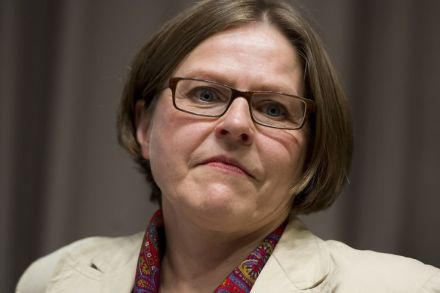
Vice President of the European Parliament Heidi Hautala has made her mind up about Boris Johnson's Brexit proposal: it's no good. The Finnish MEP said 'it’s not a very serious proposal'. But has she actually read the Prime Minister's letter to Jean-Claude Juncker? Err, no. 'But I am more or less aware of the proposal,' she said. Unsurprisingly Hautala got short shrift from Iain Dale, who was interviewing her on LBC. 'Can I suggest you actually read the letter? It does contain detailed proposals, it protects the integrity of the single market,' he told her.

Why the Tories are talking tough on crime

From our UK edition

Although Brexit remains the top of the news agenda, the Conservatives believe they will need to talk about more than just leaving the EU if they are to triumph in an early election. Boris Johnson used his conference speech to push a domestic agenda beyond Brexit. The areas he focussed on were the same ones that Downing Street has repeatedly pushed since the summer: the NHS, law and order, education and investment in the north.

‘You get to the stage where you are afraid to go home.’ MP reveals her experience of domestic abuse

From our UK edition

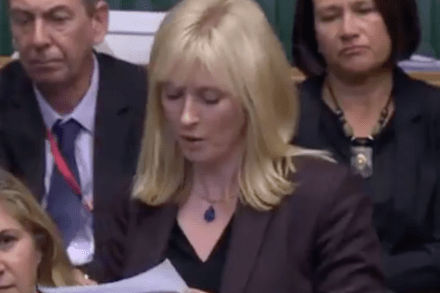
In a first for Parliament, an MP has spoken openly and in detail about her experience of being abused emotionally and sexually by her partner. In an incredibly emotional speech, Rosie Duffield, the Labour MP for Canterbury, told the Chamber about a relationship which started so promisingly but which was in fact a controlling one, full of rage and fear. She spoke of how her partner continued to tell her that he adored her, that she was all his, even as she was trying to work out how to leave, timing his morning showers so that she could quietly steal his keys and get him locked out of their home. Her hands shook and a doughnut of colleagues sat around her - as they so often do on all sides of the House when they know a member is about to tell their own traumatic story - to support her.

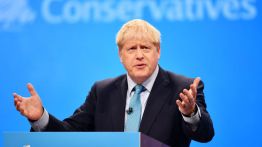
Why did Boris Johnson bother giving his conference speech at all?

From our UK edition

What was the point of Boris Johnson's speech? It didn't contain any announcements for Tory activists to clutch as they left the hall. Details of his proposals to resolve the Brexit stand-off were missing, and will instead be unveiled to parliament later today. It even finished on a strangely low-energy note, rather as if Johnson had ended up emulating the electric cars he had been praising by running out of battery sooner than expected. Yes, there were jokes, but many of them, particularly his fish-themed mocking of Alex Salmond and Nicola Sturgeon, have turned up in conference speeches of years gone by. So why bother? Before he appeared to run out of energy, Johnson was giving a tub-thumping election rally speech, which the members loved.

Boris Johnson’s threat to MPs and the EU: ‘Back me or sack me’

From our UK edition

In setting the scene for Boris Johnson's first and potentially historic speech as Prime Minister to Tory party conference, Downing Street made two statements that sounded a lot like threats, both to EU leaders and to opposition MPs. In tearing up the 2107 Joint Report that underlies the so-called backstop to keep open the border on the island of Ireland – that foundation of the Brexit deal agreed by Theresa May and ditched by Johnson – Downing Street said "officials have made it clear that if Brussels does not engage with the offer...then this government will not negotiate further until we have left the EU".

Tony Abbott: My heart leapt when Boris Johnson became prime minister

From our UK edition

If Britain is to be a free country, the difficulties of leaving simply have to be faced. Now, I know that many people here in Britain think that these are daunting times, but surely they are also stirring times ,because yet again a great country is grasping for freedom. If I can say one thing above all, it is that if there is any country on earth that should be capable of standing on its own two feet, it's Britain. The mother of parliaments, the world's common language and the industrial revolution, three of the greatest gifts to the modern world. So I just want to make a few fundamental points. The first point I make, is that it was possible to be a remainer before the democratic vote was taken, but it is not possible to be a remainer today if you also want to be a democrat.

Why is the EU obsessed with forcing regulatory alignment on Britain?

From our UK edition

I still don’t quite understand the position of some ardent Remain supporters. I do not understand why allowing the UK to leave, and then starting up a campaign to rejoin was rejected. After all, that is what the last line of Article 50 invites the state to do by invoking the process in Article 49 (the process to re-join). Doing so would allow Britain to honour the democratic vote, which, contra to common perception, is what a lot of genuine believers in the EU themselves want us to do. It would end the word ‘remainer’ entirely. A word now unfortunately synonymous with a very negative campaign and a dark time in our national history. It would free fresh faces to make a wholly new argument about the merits of EU membership.