Uk politics

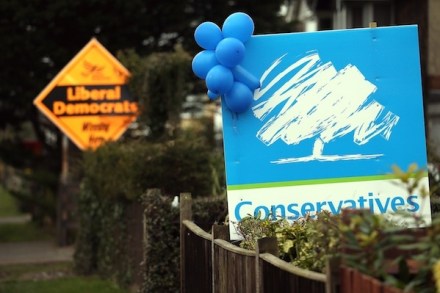
‘We called quite a few dead people’: How the Tories’ lack of data let them down in Eastleigh

From our UK edition

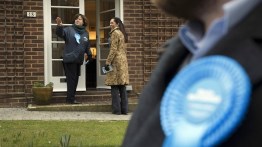
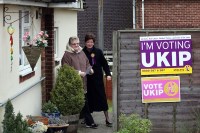
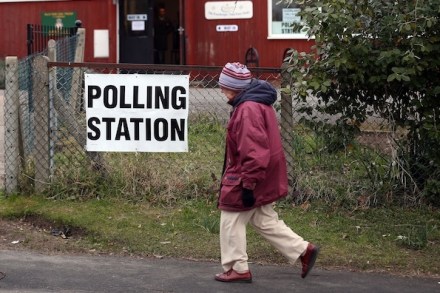
At 9.15pm, with 45 minutes until polls closed in the Eastleigh by-election, the ‘get out the vote’ telephone operation at Conservative Central Headquarters stopped. As one fellow volunteer put it, it was so late in the day that we were just 'pissing people off'. Having been there all day, I’d had that feeling for several hours, as voter after voter spoke of the harassment they had received during the Eastleigh campaign from all of the major parties. By the early evening we were calling people who not only had received several calls already that day to remind them to vote, as well as one or two visits to their doorstep, but these poor voters had sent in their ballots by post, and had told everyone that.

The Tory branch of the National Union of Ministers says cut welfare, not our budgets

From our UK edition

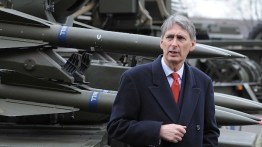
Philip Hammond is a cautious and loyal politician. He is not a boat rocker. This is what makes his interviews in the Telegraph and The Sun today so noteworthy. He would not have started conducting spending negotiations in public unless he felt he had to and that he had a chance of success. Hammond tells The Sun his case is this, ‘You take half a percent out of the welfare budget, you’ve solved the problem in defence — HALF a percent. There is a body of opinion within Cabinet that believes we have to look at the welfare budget again.’ In truth, the argument about the 2015-16 spending round is not a conventional spending row: it isn’t the Ministry of Defence versus the Treasury.

Is David Cameron about to drop minimum alcohol pricing?

From our UK edition

James Chapman reports today that plans for a minimum unit price for alcohol are set to be dropped. This is welcome news. The policy always promised to simply drive up the price of drink, penalising all drinkers, while doing little about public drunkenness or binge drinking. The Mail says that the plan has fallen out of favour because of the government’s new emphasis on the cost of living. It is dawning on everyone that that hugely increasing the price of people’s pleasures at a time of falling real incomes is not a sensible political move. Although, the question remains of whether David Cameron will be prepared to fully abandon a policy that has been a personal priority of his. Tory MPs will be cheered by this move.

Eastleigh result: the Tories aren’t panicking, but that doesn’t mean they won’t

From our UK edition

Don't panic, don't panic! But are the Tories actually panicking about the Eastleigh result? Coffee House readers will have seen Stewart Jackson's call on the government to get more robust on Romanian and Bulgarian migrants, and Gavin Barwell's plea to his colleagues to stay calm. But backbenchers aren't really flapping their arms in terror today, other than taking positions we've already heard them take. Even backbenchers who really don't like David Cameron are clear that even though coming third is 'deeply disappointing', it's not a catalyst for disaster right now. But that doesn't mean Cameron's opponents don't have some sort of vision of how the next few months could pan out.

Eastleigh by-election: Four points from Ashcroft’s exit poll

From our UK edition

The result might be in, but that doesn't mean there's nothing useful polls can tell us about the Eastleigh by-election. What swayed the voters? Why did they vote as they did? And — perhaps of most interest — how might they vote next time? Yesterday, Lord Ashcroft's polling operation phoned 760 Eastleigh residents, 654 of whom had voted in the by-election. All sorts of warning labels need slapping across the figures: they aren't weighted, so are subject to a much higher risk of selection bias than other polls, and even if the sample were representative and random, the margin of error would be 3.5 points (and higher for subsets of those 760 respondents). But here are a few interesting nuggets from the data: 1. The Lib Dems won the ground game.

Don’t panic: the Tories can do better than Eastleigh

From our UK edition

There’s no disguising the fact that last night’s result was a very disappointing one for Conservatives. There were three small crumbs of comfort. First, the poor performance of Labour, our only realistic rivals in terms of winning the next Election. The opinion polls say Labour are doing 12 or 13 percentage points better than they did at the last Election, but on the ground in Eastleigh they increased their share of the vote by just 0.22 per cent. In the 1994 Eastleigh by-election, held before Tony Blair was elected Leader, Labour came second with 27.6% of the vote.  Yesterday, they managed fourth place with just 9.

Eastleigh by-election: a bad day for Labour too

From our UK edition

While the Tories are taking a public beating for their performance in Eastleigh, Labour also have little to be proud of. Despite the party currently floating around 11 points ahead of the Tories in the national polls, they only managed to add 0.2 points to their 2010 general election result and came in fourth place. Their candidate John O'Farrell blames voters being anti-politics, not anti-Labour. Either way, the result is disappointing for Ed Miliband. Although it was unlikely Labour would ever take the seat, the party still threw its weight behind a full campaign. Lord Ashcroft’s latest polling suggests Labour were putting in similar effort to the main contenders.

If David Cameron is serious about losing the next election he’ll cuddle-up to UKIP

From our UK edition

OK. Remember this: by-elections are always liable to be interpreted too keenly. Elections often fought on local issues then have their results scrutinised as though the election was a miniature general election. It isn't. People who should know better this morning are forgetting that. You know what else matters? The candidate. They matter much more at a by-election than they do in a general election. The Tory candidate Maria Hutchings might have won Eastleigh in a general election. But a by-election brings greater scrutiny. A good number of voters are minded to pick the best candidate. I suspect few of those voters endorsed Ms Hutchings.

Fag break Britain: four answers to Britain’s productivity puzzle

From our UK edition

Jobs are being created in Britain, but the economy isn't growing. In the last year, the number of people in work rose by 2 per cent, but economic output rose by just 0.3 per cent. As the below graph shows, employment is now 0.7 per cent above its pre-recession peak, whereas GDP is still 3 per cent below it. This adds up to a big drop in productivity. Output per worker is now 3.8 per cent below its 2008 Q1 level, and 13.3 per cent lower than it would be if the pre-recession trend had continued. In a piece for this week's issue, The Spectator's business editor Martin Vander Weyer points out that this slump is 'the equivalent of an extra five-minute fag break outside the fire exit for every employee, every hour'. (On the latest figures, it's more like an eight-minute break.

Eastleigh by-election: The Tories are suffering for gay marriage, and need to focus on migrants and a cost of living budget

From our UK edition

It would be churlish to suggest that the Eastleigh by-election is 'disastrous', but coming third in a seat we polled almost 40 per cent in the general election is not good by anyone's measure. This is the price that has to be paid for gay marriage because of the drastic unpopularity of it with activists and supporters, who have been less inclined to get out and campaign on the streets because of it. The issue has been a direct recruiting seargeant for UKIP, and there's anecdotal evidence across the country for UKIP. There are two main lessons for me from this result. The first is that the government has to deal with the specific issue of Romanian and Bulgarian immigration as this was a key part of UKIP's campaign.

Move to the right? The Tories need to worry about anti-politics voters too

From our UK edition

So in the end Eastleigh went for the 'crisis for Cameron' option by putting the Tories in third behind UKIP. For those opponents of the Prime Minister, last night's result represents a line through another one of their 'five key tests' for his leadership. I understand that those close to Adam Afriyie already expect the backbencher to make a number of interventions over the next few months which they hope will cement him as a serious voice speaking out against the Tory leadership, and even those who aren't are mulling over how the party should change its strategy. The inevitable reaction, and one every commentator and opposition MP is just waiting to happen, is that a rump of backbenchers press the Prime Minister to move the party further to the Right.

Lib Dems hold Eastleigh as UKIP force Tories into third

From our UK edition

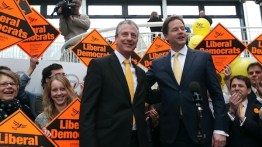
It was a successful night for the Liberal Democrats in Eastleigh and a disastrous one for the Tories. The Liberal Democrats held on with a majority a touch over 1,700. While the Tories came third, polling more than a thousand votes behind UKIP who surged in to second place. Labour had nothing to cheer either, coming a poor fourth—a result that makes it hard for Ed Miliband to claim they are a ‘one nation’ party. There’ll be three immediate political consequences of this result. First, Nick Clegg’s position is strengthened. Holding the seat with a majority of more than a thousand, demonstrates that the Liberal Democrats are not in the dire position that the national polls suggest.

Eastleigh by-election live blog

From our UK edition

12am: The word from the count is the Liberal Democrats have held Eastleigh. Intriguingly, the Liberal Democrats think UKIP have taken second. Labour appear set for a poor fourth. If the Tories have come third with the Lib Dems holding the seat, David Cameron's Tory critics will have a field-day tomorrow. 12.20am A source at the count tells Coffee House that UKIP appear to have won more votes today than any other party. But the Liberal Democrats will win thanks to their huge lead on postal votes 12.50am Tim Farron is trying to play down expectations. But revealingly he says that a Lib Dem win would be a game changer and boost their Budget bargaining power. 1am Sense from Eastleigh is that the Lib Dem majority tonight will be in the thousands not hundreds 1.

Eastleigh: the different results and what they’d mean

From our UK edition

So now that the polls have closed in Eastleigh, here are the likely scenarios for tonight's Eastleigh by-election result, and what each combination will mean: A) 1. Tories 2. Liberal Democrats 3. UKIP It's stating the obvious that this is the best outcome for David Cameron, showing that the Tories can win in those target Lib Dem seats, and that they can beat a confident UKIP, no matter what grumpy backbenchers say. But it's a disaster for Nick Clegg: in fact, any scenario other than victory is a disaster for Nick Clegg. For Nigel Farage, coming third when his party has been so confident, particularly in the last 24 hours, about a surge in support, will be a dampener, but it will also confirm that he was right to not have stood himself and face a second defeat in the same constituency.

The Lib Dems are paying the price for their time in opposition

From our UK edition

The Liberal Democrats have been beset by scandal in government. First there was the resignation of David Laws. Then there was the whole Chris Huhne business. And now there’s Lord Rennard and his alleged activities and the question of what the party hierarchy knew about them. But one thing unites all these stories: they all happened when the Liberal Democrats were in opposition. Indeed, no Liberal Democrat has yet had to resign for anything they’ve done in government. Their problem, as I say in the magazine this week, is that they are now paying the price for all the things they did when there was very little scrutiny on them. I doubt that either Labour or the Tories would have got away with an election pledge which was so clearly unafforadable as the tuition fees one.

Dealing with ‘inappropriate behaviour’

From our UK edition

How should you deal with lechery? In this week's Spectator, Rod Liddle and Hugo Rifkind detail two instances of 'inappropriate behaviour' they either watched or, in Hugo's case, personally encountered. Rod describes the vocal response of one BBC production assistant to the appearance of a 'well-lubricated' reporter's hand on her inner thigh.

Lib Dems prepare for conference showdown on secret courts

From our UK edition

Ken Clarke tabled a series of amendments to the Justice and Security Bill last night, aimed at getting the legislation through the Commons when it reaches Report Stage next week. This is the 'secret courts' bill, the one that has upset a group of Tory MPs, the Lib Dem grassroots (and, to a lesser extent, their parliamentarians), the Joint Committee on Human Rights and the Daily Mail. The changes are quite technical, but government sources insist that they should be sufficient to satisfy the critics. They are as follows: Claimants can apply for a secret hearing for material they don't hold themselves. The judge in the case must be satisfied that the government has considered whether to make a claim for public interest immunity before applying for a secret hearing.

Falling net migration: A trap for future governments?

From our UK edition

Today’s migration statistics show a marked decline in net migration to the UK (down 34 per cent to 163,000 in the year to June 2012). Although this still leaves the Government some way off their target of reducing net migration to less than 100,000 by 2015, ministers will be pleased to be able to say that things are, in their terms, moving in the right direction. But there is a catch, and the simple maths of net migration mean that the current Government may be, wittingly or unwittingly, laying a trap for themselves, or for a future one. Net migration is the difference between immigration and emigration.  So net migration rises if immigration goes up, or if emigration goes down; and falls if immigration goes down, or if emigration goes up.