Simon Hart

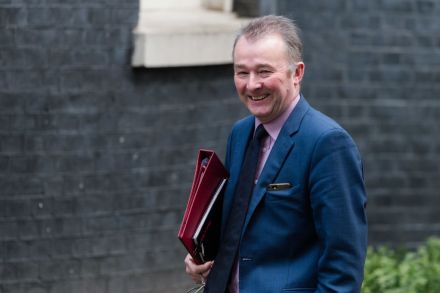
Simon Hart is the MP for Carmarthen West and South Pembrokeshire and the Secretary of State for Wales.

How the Whips’ office really works

From our UK edition

35 min listen

Simon Hart joins James Heale to talk about his new book Ungovernable: The Political Diaries of a Chief Whip. Having stepped down at the 2024 election, Simon has become the first former Chief Whip to publish his diaries. What are his reflections on the Conservatives' time in office? Simon explains why his decision to resign under Boris Johnson was so difficult, why the Rwanda vote under Rishi Sunak was their finest hour, and why the Whips' office is really the government's HR department. Just how Ungovernable was the Tory Party? Produced by Patrick Gibbons.

For too long the Union has been taken for granted

From our UK edition

Last month, Boris Johnson marked one year as Prime Minister. He did so not by making a speech from Downing Street but instead by travelling north to Orkney in Scotland. Those few days also saw a historic cabinet meeting, focused solely on strengthening the Union, a sign of the government’s commitment to the centuries-old family of nations that makes up the United Kingdom. There are those who may wonder why the Prime Minister feels the need to spell out this commitment. Surely the UK has been bound together in a common cause during the Covid crisis? The numerous Treasury intervention schemes, Ministry of Defence field hospital, sharing of data – the UK government and its devolved partners have been forced to work together for the first time in more than 20 years.

How the rural vote could decide the Conservative leadership race

From our UK edition

As I passed the Momentum rally in Parliament Square last week, I was reminded of the last time there was such a packed demonstration on Parliament's doorstep. There might not be a huge crossover between Jeremy Corbyn's supporters and Countryside Alliance members, but both groups seem equally passionate.  Huge numbers of rural people protested against the last Labour government for a whole host of reasons, triggered by the bill to ban hunting. The largest demonstration brought over 400,000 people to London and our opponents had no response other than to poll the marchers, find that over 80% of them supported the Conservatives and argue that their protest could therefore be ignored by Labour politicians.

Pandering to animal rights extremists will get MPs rejected, not elected

From our UK edition

The reasons why England and Wales voted so convincingly for a Conservative Government on Thursday will be debated forever, but one of the most obvious is the complete rejection of both Labour and Liberal Democrats in any constituency that has a hint of the countryside about it. This is graphically illustrated by the post-election constituency map. Actually, suggesting that the voters rejected those parties is probably the wrong way round. The truth is that those parties have rejected rural voters.

Why the Hunting Act is still dividing opinions ten years on

From our UK edition

Most weeks there is a demonstration of some sort in Parliament Square. I can hear the noise from my office and occasionally read the odd banner or two. Some are confusing, occasionally amusing, often serious, but always important to the supporters. Most make me think a bit about the cause being championed. But each one reminds me of the time when it was me out there. Me and thousands of others trying in the only way we could to attract the attention of the then Labour Government and divert it from its hostile attack on the countryside and hunting in particular. Here in London we marched in record numbers, but few remember that we did the same in Edinburgh, Cardiff, Exeter, Norwich, Birmingham, Brighton and Bournemouth.

The hunting debate returns – and with it, the chance to strengthen the rural vote

From our UK edition

So hunting returns to the front page of the Telegraph, just like old times. But today provides an intriguing variation on the norm. Instead of Tories calling on the Prime Minister to scrap the Act (my preferred route) we have Lib Dems and Plaid Cymru leading calls to make some relatively minor changes in the light of a new study into the Hunting Act's failings. The detail is simple, if a little dull. At the moment farmers can only use two dogs to locate and flush a fox into the open so it can be shot to protect his livestock. The research shows that if you use two dogs instead of more you will find half as many foxes and chase those foxes for twice as long before you can shoot them.

Are campaigners using the criminal justice system to pursue their political agendas?

From our UK edition

Late last year a Judge in Oxford Magistrates' court questioned the RSPCA for running up a legal bill of a third of a million pounds on a low-level case when the defendant’s costs were £35,000. This prompted me to ask some questions about private prosecutions and the RSPCA’s prolific use of them through the formal route of parliamentary questions and a debate in Westminster Hall. It has become worryingly clear that no-one, including the Government, has any idea what is going on. Private prosecutions might be funded privately (although even this comes with caveats), but they take place in the criminal courts so surely the Government would know how many such prosecutions take place, what the outcomes were, and what cost the taxpayer was left to meet? I was wrong.

As the most persistent private prosecutor, the RSPCA has questions to answer

From our UK edition

Parliament debating how laws are prosecuted is not a rare event, unless that is, MPs are pondering the role of the country’s most persistent private prosecutor. Alongside its role as a prosecutor, the RSPCA also campaigns for new legislation and changes to the existing laws it is prosecuting under what seems like an increasingly radical agenda. That is why I have sponsored a debate today about their role as a prosecutor to which the Attorney General will respond. This debate is not about the 95 per cent of the RSPCA’s work directly protecting animals which we all support and applaud, indeed I was a member of the RSPCA for many years.