Uk politics

No more radical reforms, please, we’ve pushed our MPs too far

From our UK edition

Nick Clegg is frustrated. He told callers on LBC this morning that 'one of the most frustrating dilemmas that we have face in government is that we have thrown a barrage of initiatives at this problem to get the construction sector and house-building sector moving, it just takes longer than, I think, you or I would probably like.' He did suggest that 'we will, over the coming years, see a real step change, but where I share frustration with you is it takes so long to translate these new devices for getting house-building going into shovels and spades being put into the ground'. But what might be even more frustrating is that this 'barrage of initiatives' might not deliver the number of homes that Clegg and Co hope for, even when that 'step change' does take place.

Labour is being forced to talk about ‘good borrowing’ before it is ready

From our UK edition

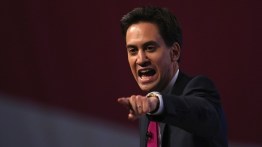
It's not a case of will they, won't they when it comes to whether Labour would borrow more, but will they admit it and try to sell this plan to voters? In the past few days, we've seen the party trying to work this out in public. Ed Miliband, in his awkward World at One interview, knew that saying 'yes, we'd borrow more to fund the VAT cut' would provoke triumphant howls from his opponents, and so ended up nervously jabbering away as Martha Kearney asked the same question over and over again. But yesterday he told Daybreak that 'I am clear about this: a temporary cut in VAT, as we are proposing, would lead to a temporary rise in borrowing'. He added that 'I suppose I felt it was rather a commonplace' to make that clear the first time around.

Ministers nudge policy unit into private sector

From our UK edition

The government's 'nudge unit' has always been regarded as radical - or a bit wacky, depending on your outlook - and now this Cabinet Office division, officially known as the Behavioural Insights Team, is getting a bit more radical. It's going into the private sector. A source close to Cabinet Office Minister Francis Maude says the government is looking for a commercial partner for a joint venture in which the unit would become a profit-making enterprise: 'As a mutual they will combine the benefits of private-sector experience and investment with the innovation and commitment from staff leadership. This accelerates our drive to make public assets pay their way.

Exclusive: whips ask ministerial aides to snoop on their bosses

From our UK edition

Not wanting to heap worries onto the Prime Minister when he's just about found harmony with his party, but as well as the underused backbenchers I mentioned this morning, he might want to think about his party's PPSs as well. Some of them feel they were offered their jobs with the promise that the role would become 'turbo-charged', but haven't found the reality quite so glamorous. I hear that the last meeting Downing Street held for ministerial aides didn't cheer many of them up.

This Britain: Maria Miller confuses economics with pleasure and beauty.

From our UK edition

Is it possible for a government minister to give a speech that is not a "keynote address"? That was my first thought upon reading Maria Miller's speech at the British Museum last week. My second thought was remembering the old saw that any time a government minister talks about "culture" it is sensible to reach for your Browning.  Thirdly, I recalled that Maria Miller is the kind of Commissar whose officials think it sensible to threaten journalists. So I suppose that I was predisposed to think poorly of her speech on the economic importance of the arts. Well, it was still a rotten speech that lived-down to these low expectations.

The British workforce needs skills to compete, not a race to the bottom

From our UK edition

When J.B. Priestley visited Stoke-on-Trent on his 1934 ‘English Journey,’ he tried his hand throwing a vase at the Wedgwood factory in Etruria. It is fair to say, he lacked the skills. After a lot of jokes about ‘jollying’ and ‘jiggering’ and watching his vase flop back into clay, Priestley praised the craftsmen ‘doing something that they can do better than anybody else, and they know it ... Here is the supreme triumph of man’s creative thumb.’ Well, times have changed, but the way in which opinion formers think about skills has failed to move on much from Priestley. Of course, craft and artisanal skills remain essential to industries like the potteries, but the broader British workforce deserves a modern skills settlement.

No 10’s outreach programme mustn’t leave underused MPs scratching their heads

From our UK edition

David Cameron is really trying to reach out to his party at the moment. The announcements of a policy board of MPs and a policy chief who is also an MP were intended to show that it's not just the inner circle that calls the shots. Jo Johnson appears to have received a bigger promotion than initially announced: today's Sun reports he's not just leading on policy, he's also taking over from Oliver Letwin in writing the manifesto. But appointing Chris Lockwood to the policy unit has added to the impression that the PM really trusts his friends and those who hail from the same social circle. He did, after all, name this journalist as one of his friends in evidence to the Leveson Inquiry. It is an unfair impression: a proper look at the policy board reveals MPs from a range of backgrounds.

Chris Lockwood to join new Number 10 policy unit

From our UK edition

[caption id="attachment_8508921" align="alignright" width="140"] Chris Lockwood[/caption] Downing Street has pulled off a coup with the recruitment of Chris Lockwood, the US editor of The Economist, to the new Downing Street policy unit. Lockwood is one of the brightest and most insightful people in journalism and one imagines that he wouldn’t have left a prime perch at The Economist if he did not think that the new Policy Unit will have real heft. Lockwood is close to Cameron: he was one of the six journalists that the Prime Minister listed as a personal friend in his evidence to Leveson. In 1993, as reported in the Elliott and Hanning biography of Cameron, Lockwood was part of a group that went on a villa holiday to Italy with Cameron and Samantha Sheffield, as she then was.

Local elections: Tory leadership prepares MPs for the worst

From our UK edition

The Tory leadership is getting increasingly nervous that the party isn’t sufficiently braced for bad local election results this Thursday. They’re worried that too many MPs assume the party won’t lose much more than 300 seats. The problem is that, for understandable reasons, MPs are treating all of CCHQ’s dire predictions — one source there is talking about 750 loses if the UKIP wave doesn’t break — merely as expectations management. In an attempt to persuade people of how bad the results could be, senior figures have taken to showing people this bar graph and map which illustrate the Tories’ current dominance. Their argument is that there is only way they can go from here, and that’s down.

Ed Miliband’s Coldplay bid to voters

From our UK edition

Whether you like Ed Miliband's latest party political broadcast depends very much on whether you're the sort of person who openly weeps while listening to Coldplay. It's got plenty of the Chris Martin playing Wembley factor: emotional piano music, people saying things like 'please, give people some hope', and the Labour leader leaning comfortingly against luggage racks, nodding knowingly. He talks about 'a country that comes together, a country that joins together, a country that works together', and even employs a 'yes, we can!' theme. But what do we learn about what Labour is going to do to address this hunger for hope?

How a TARDIS could help the police

From our UK edition

If we had a time machine and could take a stroll down our local high street twenty years ago, we’d discover a place alive with activity. As well as shoppers hunting through famous outfits such as Woolworths, JJB Sports and Comet, we might see queues snaking at the local bank branch, someone waiting their turn outside the telephone box and couples scouring the travel agents’ window for a last minute, cut-price deal. Today, it’s a different story. We can browse the entire planet’s products on our phones, make an Amazon purchase with the swipe of a finger and track our order online with precision. We can drive to out-of-town shopping malls or supermarkets where we can park, stay dry and get everything we need all in one trip.

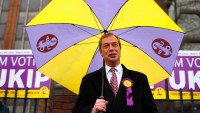
Voters hold Ukip to a different standard: there is no point in attacking their people or their policies

From our UK edition

Some of the coverage of the background and views of UKIP local election candidates has been met with a glee born of a belief that it might be the silver bullet to puncture the party's recent rise in support. I have an intrinsic suspicion that this will prove not to be so. Last night I was away from news and twitter. Before reading the papers in any detail I sent a tweet saying: 'Attacking UKIP over policy or people won't work. Genuinely responding to legitimate concerns of people tempted by them may well do.' I later read Lord Ashcroft’s perceptive observations that sum up my own views precisely.

Ministers burrow under the ring-fences for spending review

From our UK edition

Bids for the 2015/16 spending review will land on George Osborne's desk today from Secretaries of State across Whitehall. Some, like Iain Duncan Smith and Patrick McLoughlin, are signed up to the idea that their departments need further cuts. McLoughlin, as a former chief whip, prefers to avoid conflict, while Duncan Smith has made it known for some time that he'd like a bit of conflict with the Lib Dems over his budget, with a number of cuts sitting ready on his desk if only Nick Clegg and colleagues backed down on their refusal to touch Work and Pensions spending again.

Godfrey Bloom, women in the workplace, and the UKIP vote

From our UK edition

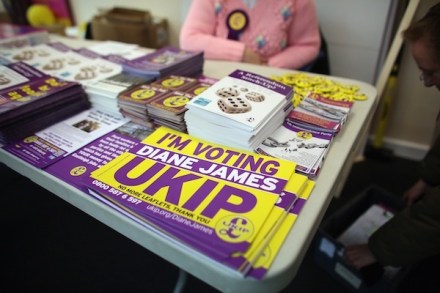
If UKIP thinks it is the victim of a smear campaign in the run-up to the local elections, then it needs to have a little think about whether the chief smearers hail from UKIP HQ itself, or CCHQ, as Paul Nuttall claimed they did when he appeared on the Sunday Politics earlier today. This evening, one of its internal smearers took to the airwaves to remind voters of a few other interesting aspects of the party's character. Godfrey Bloom, the party's MEP for Yorkshire and the Humber, gave John Pienaar an interview on his show this evening in which he reiterated his belief that businesses shouldn't employ women of a childbearing age.

Nick Clegg: No one has proposed to me that the UK should leave the European Court of Human Rights

From our UK edition

In a detailed interview on the Sunday Politics, Nick Clegg claimed that neither the Home Secretary nor Downing Street have ever proposed to him that Britain should temporarily leave the European Court of Human Rights so that it can deport Abu Qatada. Clegg was adamant that ‘no one has put a proposal to me.’ Under questioning from Andrew Neil, Clegg defended his decision to block any communications data legislation in the Queen’s Speech. He maintained that the proposals were ‘neither workable nor proportionate.’ Clegg conceded that the UKIP offer was ‘very seductive’ to voters. But he then attacked them for their flat tax proposal.

IDS highlights contradiction of pensioner perks as spending review deadline looms

From our UK edition

It isn't the first time that ministers have suggested wealthy pensioners might want to hand their universal benefits over to those who really need it, but Iain Duncan Smith's proposal in today's Sunday Telegraph that those who don't need their winter fuel allowances, bus passes or TV licences could hand them back voluntarily has an interesting political context. Tomorrow is the deadline for bids for the next Spending Review, and though ministers across the Coalition have argued that the government must look again at universal benefits for pensioners in order to be fair, David Cameron has stood his ground.

‘Please don’t mention Margaret Thatcher when you write to me’

From our UK edition

‘Arthur Negus’ — Tony Bray — is the only one of Margaret Thatcher’s early loves still alive, though sadly he is now in poor health. Once I had tracked him down, I found him happy to speak about those distant days at the end of the war when he danced with the future prime minister. But he was extremely anxious — 60 years later — that his wife (who is now dead) should not know of my inquiries. ‘If you ring up, please say nothing of your purpose,’ he said, ‘and if you write, please don’t do so in a Daily Telegraph envelope.’ When he married his wife, a couple of years after the relationship had ended, a similar sense of honour induced him to destroy all Margaret’s letters to him.