Uk politics

English patriotism is one of the overlooked reasons for UKIP’s rise

From our UK edition

What can account for UKIP’s remarkable surge in support in these elections? The conventional wisdom is that UKIP is now the ‘go to’ party for protest voters. Angry over Europe and immigration? Vote UKIP. Fear for your job and the future of the economy? Vote UKIP. Feel the main parties are ‘all the same’, run by metropolitan elites who don’t know how ordinary people live? Vote UKIP. There is doubtless something in all of the above, but there is perhaps another explanation – overlooked until now - for UKIP’s rise: the growing tide of English patriotism. Earlier in the year, figures from the 2011 census showed there had been a dramatic strengthening of English national identity in the last decade.

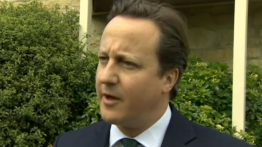
David Cameron: ‘It’s no good insulting a political party that people have chosen to vote for’

From our UK edition

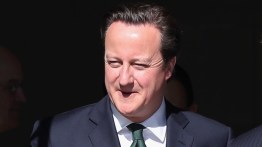
As we revealed on Coffee House earlier, David Cameron has now distanced himself from the 'fruitcake' characterisation of UKIP that he's employed in the past. Here's what he said: Cameron: Well I think there are major lessons for the major political parties, for the Conservatives, I understand why some people who've supported us before didn't support us again, they want us to do even more to work for hardworking people to sort out the issues they care about, more to help with the cost of living, more to turn the economy round, more to get immigration down, to sort out the welfare system. They will be our focus, they are our focus, but we have got to do more. Interviewer: You once called UKIP fruitcakes, do you still stand by that?

Sources tell Coffee House Cameron will mark an end to ‘fruitcakes’ name-calling

From our UK edition

We could see a further tightening of the reconciliatory line that the Tories seem to be adopting on UKIP when the PM gives his response to the local elections later today. I hear from very well-placed sources in the Tory party that David Cameron plans to mark an end to the name-calling, acknowledging that it is time to take seriously the concerns of those who decided to vote UKIP yesterday. The Tory lines to take - reported by Guido - include this quote: 'Of course we understand why some people didn't vote for us - we need to focus even more on the things that matter to hardworking people: turning the economy around, fixing welfare, helping with the cost of living and controlling immigration.

Lib Dems try to avoid their own local election jitters

From our UK edition

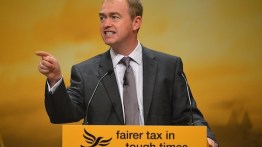
The dominant narrative in the build-up to these local elections has been all about UKIp vs the Tories, with a bit of angst about Labour's southern mission thrown in. The Lib Dems didn't really get a look in. They had moved to a reasonably stable position after romping home in the Eastleigh by-election, but today's results could change that. Their awful showing in South Shields - coming 7th - will shake the party, but so will any surprise big losses. The party has already failed to take control of Somerset County Council, which was one local authority it had focused a great deal of effort on. Sending out Tim Farron to do the expectation management hard work this morning was a good attempt at maintaining party unity.

Welcome to Ukipland: where Nigel Farage’s dreams come true

From our UK edition

‘Where do you expect to do well in these local elections?’ I asked the Ukip spokesman. ‘England!’ he boomed down the phone. On Wednesday afternoon, this seemed typical of Ukip's bullish exuberance but judging by their predicted ‘phenomenal performance’ parts of Britain (like Boston) have become Ukipland overnight. Yesterday, I went to find some real Ukip voters in the Home Counties and discover why they have abandoned the three main parties. Nigel Farage stood in Buckingham at the 2010 general election and received just 17 per cent of the vote against Commons speaker John Bercow.

Tories now see ‘fruitcakes’ and ‘clowns’ as serious voters impatient for change

From our UK edition

We've only had a few results through in the local elections, but already the parties are giving their verdict on the way last night worked for them. One thing to watch today is the development of a Tory line on UKIP. There hasn't been one in the run-up to polling day, but will there be a concerted effort from the Conservative leadership to produce a clear message about what Nigel Farage's success means for the Tories? Grant Shapps certainly managed to stick to the Tinkerbell strategy of trying not to say 'UKIP' or 'Nigel Farage' in his Today programme interview. But he also stuck to the sympathetic portrayal of those who vote UKIP - rather than its candidates and now elected representatives - as people 'impatient for change'. He also told voters 'this is a loud and clear message.

Nigel Farage, the anti-politician

From our UK edition

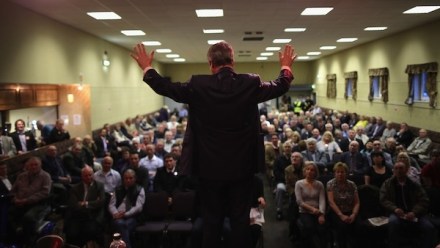
Nigel Farage was in full anti-politics mode this morning on the Today programme. He railed against ‘three frontbenches that look and sound the same’ and ‘haven’t done a proper day’s work in their lives.’ Farage is determined that Ukip be can both a protest party and a party with policies. He wants to offer himself to anyone who is fed up with the established order and wants to stick two fingers up at the main political parties. But he also wants to advance a radical policy prospectus. Interestingly, he said he wasn’t a Tory but he had been a supporter of eighties radicalism. So far, the Farage approach appears to be working; even those in Number 10 expect Ukip to top the poll in the European elections.

Local elections: UKIP’s ‘phenomenal performance’

From our UK edition

What few results there have been so far suggest that UKIP has scored about a quarter of the vote and gained more seats than Labour.  A 'phenomenal performance' says Prof John Curtice. Nigel Farage now looks like the main winner, suggesting that his party is mutating from an EU protest party into a being broader party of the working class. The local elections have nothing to do with the European Union so there's no rational reason that one-in-four voters would chose UKIP — unless they believed the party was addressing their concerns on wider issues. The reason that David Cameron's referendum pledge did not shoot the UKIP fox is that Farage has adopted a broader agenda, and one he has successfully communicated to millions of voters.

The arts, the Ancient Greeks and Maria Miller

From our UK edition

The Culture Secretary, Maria Miller, has said the arts world must make the case for public funding by focusing on its economic, not artistic, value; it must ‘hammer home the value of culture to our economy’. The ancients would have wondered what she was taking about. There was no concept of ‘the arts’ in the ancient world; nor any concept of ‘art’, at least among the Greeks. What we call ‘art’ was, in Aristotle’s definition, ‘the trained ability to make something under the guidance of rational thought’. It was, in other words, craftsmanship. So ‘artists’ were regarded rather as we would regard car mechanics or dentists.

Labour hold South Shields with Ukip 2nd and Lib Dems 7th

From our UK edition

The result is now in from South Shields. As expected, Labour have held the seat. Ukip have come second, with the Tories third and the Liberal Democrats a spectacularly bad seventh. Ukip’s second is more impressive when you consider that they didn’t even stand in the constituency in 2010. It is a sign that they are fast becoming the default protest party across England. Only a handful of county councils are counting overnight, and they are all Tory controlled. But John Curtice, the elections expert, has already told the BBC that Ukip looks like doing as well as the polls suggested. At 12.15am, Ukip is averaging 26% in the BBC’s key wards.

The Tory Tumbrils Begin to Roll for David Cameron

From our UK edition

As I type this, pundits in London are stiffening themselves for the tough task of over-interpreting local election results and projecting wildly unrealistic forecasts for the next general election on the back of a mid-term election in which the electorate is of an entirely different type to that which will vote in 2015. It's a grim job but someone has to do it and it's better that it be done with enthusiasm than with any sense of proportion. Mercifully, my friend and former boss Iain Martin is not one of those types. Be that as it may, however, he has written a column for Friday's Telegraph that is both typically acute and evidence of how the Tory winds no longer blow in David Cameron's favour.

Nigel Farage’s tax flip-flop shows us where he’s trying to take his party

From our UK edition

We might this week have seen some scrutiny of UKIP candidates, but so far we’ve seen little scrutiny of their policies. But the better the party does, the more policy scrutiny it will start to come under. This is what makes UKIP's changing tax policy so interesting. It tells us a lot about where Nigel Farage is trying to take his party. At the last election, UKIP was committed to a flat tax. There is an intellectual purity to this idea - see Allister Heath’s book on the subject - but it is hard to sell to voters as it would result in ‘the rich’ paying a lower rate. After Eastleigh, both the Lib Dems and Labour latched on to it as a way of attacking Farage. They both claimed that the flat tax showed UKIP wasn’t really for the little guy but for the wealthy.

Frank Field interview: Labour needs to do something dramatic to win back its lost working class voters

From our UK edition

There's one government adviser who still feels Steve Hilton's absence very keenly indeed. 'He was always thinking ahead, how do we set the debate rather than endlessly react to it, that was why he was such a delight to work for. All the time he was racing ahead. It was difficult to keep up with him. I just thought he was brilliant, he was just wonderful.' But it's not a Tory MP or spinner who is missing the Prime Minister's 'blue-sky' guru: this adviser is Labour MP Frank Field, appointed by the government when it formed to work with David Cameron on how to tackle poverty. He suspects that it was Hilton's departure that led to the review that he painstakingly compiled gathering dust on a Number 10 shelf, allegedly unread.

The EU Referendum Bill won’t appear in Parliament any time soon

From our UK edition

Some Tories are all aquiver today after the Prime Minister's radio hint yesterday that he might be prepared to introduce an EU referendum bill in this parliament after all. Here are David Cameron's words on yesterday's World at One that are supposed to set your heart pounding: 'I think we need to demonstrate absolutely that we are serious about this referendum; we’ve said we’re going to hold it, we’ve said it’s going to be an in-out referendum, we’ve set a date by which it must be held.

When Michael Heseltine turned up at a Thatcher book signing

From our UK edition

At the launch of my biography of Margaret Thatcher, I was flattered to see Michael and Anne Heseltine joining the signing queue. It was very sporting of him. When they reached me, Anne asked for my inscription, but Michael said he wished his copy to be blank so that he could quickly sell it. I think — unusually for him — that he misunderstands the way this strange market works. The most common question I am asked by audiences about Mrs Thatcher is something to do with Carol and Mark. Did she bring them up successfully? Was she a good mother? etc. The fact that this comes up so often is testimony to the point I make again and again: it was completely different — and very difficult — being the first woman prime minister.

Margaret Thatcher: The Authorized Biography, by Charles Moore, and Not for Turning, by Robin Harris – review

From our UK edition

It is a measure of Lady Thatcher’s standing that her death has been followed not only by the mealy-mouthed compliments from political opponents which are normally forthcoming on such occasions but also by robust denunciations. Nobody would have sung ‘Ding, dong, the Wizard is dead!’ after the deaths of Jim Callaghan, John Major or Alec Douglas-Home. Even the more controversial Harold Wilson got a bland send-off in his obituaries. Ted Heath was asked by a journalist whether it was true that, when he heard of Margaret Thatcher’s eviction from the party leadership, he had exclaimed ‘Rejoice! Rejoice!’. No, he replied, after some deliberation. ‘What I said was “Rejoice! Rejoice! Rejoice!

The Tories have failed to agree a line on UKIP

From our UK edition

David Cameron's refusal to say 'UKIP' on the radio today was rather entertaining, but it does highlight a strange problem that the Conservative party has brought upon itself for these local elections. Here's his exchange with Martha Kearney, which you can listen to below, from 8m 49s in: Cameron: 'My role is to get around the country and I've enjoyed doing it in the last couple of weeks, to get around the country and to talk about the government's policies, local policies, what the Conservatives are doing. I think there is a real appetite for…' Kearney: Is it a strategy, not to say UKIP? Cameron: No, not at all, it's a - but you know, as I say, you only get a limited bandwidth in this life and I'm determined to use my bandwidth to talk about the positive benefits of my party.

On skills, British children have been let down too badly for too long

From our UK edition

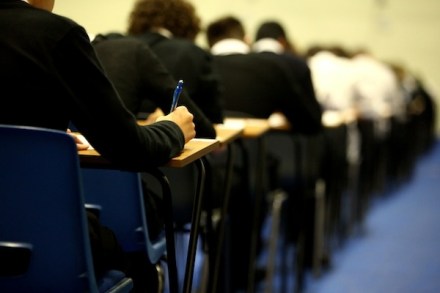
Travel around Britain, and the paradox of our labour market quickly becomes apparent. There are far too many young people out of work, yet employers complain that they can’t get the people they want. That is because, for too long, young people have been denied the experience that employers want. This is what’s known as the ‘skills crisis’ and is one of the greatest problems facing Britain today. It is a problem this government wants to solve. Yes, employment has risen to a record high under the coalition but we’re painfully aware that this is not an end in itself. We want British dole queues to shorten. Look around the world, and other countries - like Japan, Germany and Korea – get it right.