Uk politics

How the Snooping Bill could end up dead in the water – sooner or later

From our UK edition

When Cabinet met this morning, ministers didn't discuss the Communications Data Bill, which the government hopes to get into the forthcoming Queen's Speech. But there is a growing sense in Westminster that it won't make it out of the Commons alive - if it even manages to make it into the Commons. Here are three different scenarios for what could happen to this controversial piece of legislation: 1. The Bill fails to make it into the Queen's Speech. Discussions about the legislative programme for the next parliamentary year are taking place at the moment.
No-one does anti-politics stand-up like Nigel Farage. But what about that tax policy?

From our UK edition

Nigel Farage joined lobby journalists in Parliament for lunch today. Like many of his hustings, it was a box office event, and indeed like many of those campaign trail appearances, he made plenty of the same jokes that those who follow him about have heard many times before such as the one about being married to a foreigner, and about the problem with the Westminster bubble: 'They look the same, they sound the same, God! They're dull! I mean, they are not much fun to be with.' Farage, of course, is fun to be with.

PM and Osborne prefer their ‘own words’ to describe miserable economy

From our UK edition

George Osborne might have used Justin Welby's comments on the problems with the banks this morning as a sign that he has at least one ally out there, but this afternoon, the Prime Minister's official spokesman distanced the government from the Archbishop's use of the word 'depression' to characterise this country's current economic circumstances. He said: 'The Prime Minister agrees with the point the Chancellor of the Exchequer was making when he was asked that question this morning. What the Chancellor said was that he agreed with the Archbishop's analysis that we have a slow and difficult recovery because of the problems in the banking system and those are the problems that need addressing.

Are the SNP’s plans for a currency union a) Expedient, b) Sensible, c) Dangerous or d) All of the Above

From our UK edition

Even if George Osborne is right about the problems of a currency union between an independent Scotland and the rest of the UK he possesses the uncanny knack of being right in such a disagreeable fashion that one's loath to give him any credit at all. Still, as an attack dog he has his uses and he has picked an interesting day - St George's - to come to Scotland to noise up the Jocks. I don't know if the SNP will mind this too much. The nationalist view, I think, is that people will concentrate more on Osborne's manner than on the substance of what he is saying. This may be correct but it is also the case that it does remain possible for something to be said by George Osborne and still have some measure of truth. Even so, the bank note question is a red herring.

Deficit falls by 0.3%… maybe

From our UK edition

George Osborne will be breathing a sigh of relief this morning. The boast he made in his Autumn Statement in December — 'the deficit is coming down this year, and every year of this Parliament' — appears to have held up. But only just. The figures from the ONS today show that the government borrowed £120.9 billion in 2011-12 and £86.2 billion in 2012-13. But that 2012-13 figure is artificially lowered by £28 billion by the Royal Mail pension transfer, and by a further £6.4 billion by the cash transferred to the Treasury from the Bank of England's Asset Purchase Facility. Strip out those two effects and borrowing in 2012-13 was £120.6 billion — still lower than 2011-12, but only by £300 million, or 0.3 per cent.

George Osborne stays in attack mode

From our UK edition

George Osborne is well-known as the 'submarine Chancellor'. But recently he's been out and about a little bit more than we're used to. He went on the attack this month on welfare, and today he made a rare appearance on Radio 4, and then gave a speech on Scotland and the pound. Ahead of today's borrowing figures - which show he's just about squeaked home on his claim that the deficit is coming down every year of this Parliament - he told John Humphrys that the economy was recovering, and discounted the views of the IMF's chief economist Olivier Blanchard, saying: 'That is one voice, one person. The chief economist has a well-known set of views on this, which he has expressed in various forms over several years.

How Michael Heseltine won his first showdown with Margaret Thatcher in government

From our UK edition

The extracts in the Telegraph of Charles Moore’s biography of Margaret Thatcher have confirmed that this will be one of the most important political books of recent times. One of the intriguing things about Thatcher’s premiership is how, for the early years of it, she had to deal with a Cabinet that was not convinced of her policy prescription. This meant that, contrary to the latter image, she could not simply proceed as she wished. (Though, it should be noted that events vindicated Thatcher’s judgment.) Charles Moore reveals in his book that in 1979 Michael Heseltine flatly refused the job of energy secretary. He reports that when Thatcher offered it to him, he replied ‘“No… I’ve been rehearsing environment for three years.

Tory MPs hunt new Labour education shadow

From our UK edition

The other interesting thing about Ed Miliband's personnel 'lurch to the left' last week was that he appointed Tristram Hunt to Labour's shadow education team to replace Karen Buck. If CCHQ was excited about Buck becoming the Labour leader's PPS, then Tory MPs were just as energised today by Hunt's presence on the frontbench at departmental question time. Andrew Rosindell asked a question about the history curriculum. As Michael Gove came to the end of his answer and Rosindell rose to ask his supplementary question, Tory backbencher David Ruffley started to shout 'come on, Tristram!' He repeated his heckling, wiggling his hands in a 'stand-up-for-yourself' gesture.

MPs to push government on plans for new migrants

From our UK edition

MPs will debate the government's preparations for more Bulgarian and Romanian migrants in Westminster Hall today, as another survey suggests that there's no need to get unduly worried about the lifting of transitional controls. Ministers have in recent weeks managed to calm Tory backbenchers down by making announcements regarding restricted access to benefits and housing, but there's still sufficient appetite for this afternoon's debate, led by Mark Pritchard, and a session of the Home Affairs Select Committee tomorrow with the Bulgarian and Romanian Ambassadors and Immigration Minister Mark Harper. Pritchard tells me: 'EU migration and non-EU immigration is of real concern to many communities throughout Britain given the record numbers who entered Britain between 1997-2005.

Number 10 defends Sir Jeremy Heywood’s freelancing

From our UK edition

What is Sir Jeremy Heywood up to? Last week he jointly wrote an article praising Margaret Thatcher which led to a Labour MP accusing him of having 'prostituted his high office'. This week he's revealed to be discussing the behind-the-scenes wranglings in the Cabinet on economic policy. The Times' Sam Coates reports this morning that the Cabinet Secretary revealed to a private meeting of bankers that there were four different positions on growth in the Cabinet.

No, the Tory Detoxification Project is Not Complete.

From our UK edition

There are times, I confess, when I wonder about politicians. They are a rum breed and it still seems possible to rise to quite elevated heights without possessing very much of an idea about anything. Consider the cabinet minister quoted in this Telegraph article: Mr Cameron won the leadership promising to modernise the party, but one Cabinet minister said it should now “move on” to more “traditional” Conservative issues such as welfare reform and immigration control. “The 'toxic’ issue has been neutralised,” the minister said. “Now we can move on to the red meat Conservative issues.

Nurses cannot dismiss calls for reform out of hand

From our UK edition

It's not unusual for a trade union representing its members to resist change, and today the Royal College of Nursing is sticking well and truly to form. Not only has Peter Carter, its chief executive, called the government's plan to put nurses through a year of work as healthcare assistants 'stupid', he has also penned an op-ed for the Guardian in which he appears resistant to the suggestion that the profession needs to consider wholesale reform following the Francis Report. Carter writes: 'For the million or so people working in the NHS, a number of things come with the job: a boom-and-bust budget, growing demand and a high level of public expectation.

How can the Tories work with trade unions?

From our UK edition

In the latest instalment of WWTD? Boris Johnson has called for 'Thatcherite zeal' from the government in standing up to militant trade unions. According to the Sun on Sunday, the Mayor of London wants a turnout threshold of 50 per cent before a strike is legitimate. A group of Tory MPs - including those quoted in today's story - have been pushing for trade union reform for some time. Their argument is that a movement founded to push the rights of the low-paid to the top of the agenda is now more interested in flattering the vanity of its high-paid leaders by pulling unnecessary strikes on low turnouts.

What will Ed Miliband do on spending?

From our UK edition

The political mood has shifted these past few weeks. There’s now, as the Sunday papers demonstrate, far more focus on Labour than there was a couple of months back, something which pleases Number 10 which is confident that Labour is ill-equipped to deal with much scrutiny. Ed Miliband is coming under pressure to be far more specific about what he would do in government. Much of this is being driven by the coalition’s spending review for 2015/16, the results of which will be announced on June 26th. If Labour wins the next election, it’ll be in office when these cuts are being implemented. This leads to the question of whether or not Labour will accept these spending plans.

Ed Miliband needs to talk about 2015, not what he would do now

From our UK edition

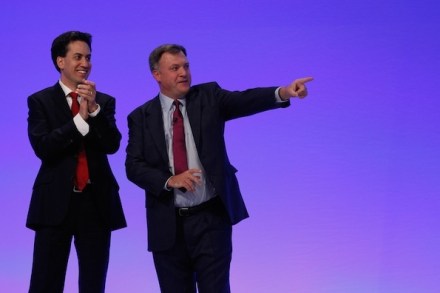
Ed Miliband’s speech to the Scottish Labour conference is another illustration that he intends to depict ‘One Nation Labour’ as the answer to so-called Tory divisiveness. Miliband told the conference: ‘As leader of the Labour Party [I] will never seek to divide our country and say to young person in Inverness or the older worker laid off in Ipswich desperately looking for work, that they are scroungers, skivers or somehow cheating the system.’ But in the context of today’s Independent story about Labour planning to go into the next election committed to higher spending than the Tories, a story which Ed Balls crossly contested on the radio this morning, what struck me about the speech was the way Miliband talked about Labour’s policies.

Fitch downgrades UK credit rating

From our UK edition

Fitch's announcement that it is downgrading the UK's credit rating to AA+ isn't as politically explosive as the downgrade from Moody's in February, as it was inevitable that once one major ratings agency dropped the AAA, the others would follow like dominoes. The bigger story will be when all agencies have dropped the rating. Fitch said this afternoon that the reason for the downgrade was that 'the fiscal space to absorb further adverse economic and financial shocks is no longer consistent with a 'AAA' rating'. The agency forecasts that general government gross debt will peak at 101 per cent of GDP in 2015/16, having previously warned that failure to turn this around and place debt on a downward trajectory towards 90 per cent of GDP would trigger a downgrade.

Tories keen to exploit Labour’s Southern Discomfort in local elections

From our UK edition

David Cameron's local election kick-off speech today notably contained no reference to UKIP, but 12 mentions of Labour. The Conservative leader and his colleagues concerned with campaigns are on a damage-limitation exercise about the party's chances in the local elections, and as well as taking the attack to Labour on the policy front - arguing that the Tories have freed councils from Labour's restrictions, kept council tax down and reduced local government waste - a plank of their strategy involves attacking Labour's prowess in southern council seats. The key phrase which you can expect to hear whenever there is evidence that the Labour campaign is faltering in the south is 'Labour's Southern Discomfort'.

The scattergun Snooping Bill won’t help tackle crime, or protect people

From our UK edition

Over a year ago, the Government proposed to increase the available powers of surveillance – giving authorities the ability to monitor every British citizen’s internet activities. It is claimed that such powers are essential to keep pace with tackling crime and terrorism; even though such proposals were ditched by the last Government. Their plans faced substantial opposition across Parliament, from the public, internet experts and civil liberties groups. Interestingly, the Government’s current plans bear little difference and continue to face similar oppositions. A Joint Committee of both Houses of Parliament, alongside the Intelligence and Security Select Committee conducted pre-legislative scrutiny of the Communications Data Bill.