Uk politics

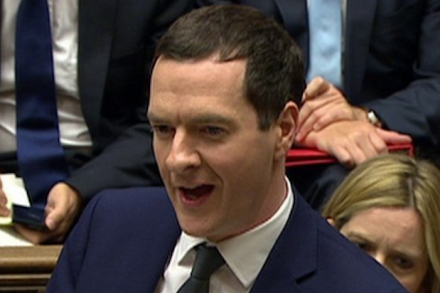
PMQs sketch: He lays roads. He decrees bridges. Is there anything George Osborne can’t do?

From our UK edition

At last it happened. Benn led Labour. Hilary Benn, grandson of a hereditary peer, stood up at PMQs on behalf of the dispossessed. Gravitas was his chosen register. Radicalisation was his chosen theme. His policy: more cash for cops and teacher to discourage Muslims from joining the death-cult. Let’s hope it works. The SNP’s Angus Robertson asked how Sir John Chilcot is proceeding with his slim volume of research into the Iraq war. Who knows? It’s said that Lord Lloyd Webber has already abandoned his ‘Chilcot the Musical’ project because investors couldn’t agree how many years each performance should last. His spokesman, pressed this morning for a deadline, confirmed that the report will appear, ‘before the decade is out.

Osborne’s audition

From our UK edition

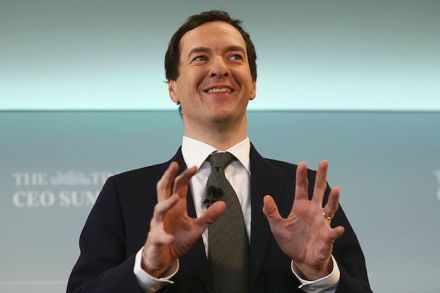
On Wednesday at Noon, George Osborne will rise to respond for the government at Prime Minister’s Questions. The symbolism of this moment won’t be lost on anyone on the Tory benches. It will be the start of Osborne’s audition for the top job. A few years ago, the idea of Osborne as Prime Minister was—as one of his backers puts it—‘a minority taste’. But now, he continues, ‘it is a mainstream assumption’. What has changed things is the economic recovery and the Tories’ surprise election victory, which has vindicated Osborne’s political strategy. Osborne, I argue in the Mail on Sunday, has also become a better politician in recent years; more comfortable in his own skin and in public.

How far will Merkel go on Greece?

From our UK edition

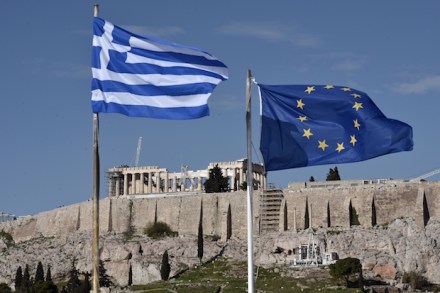
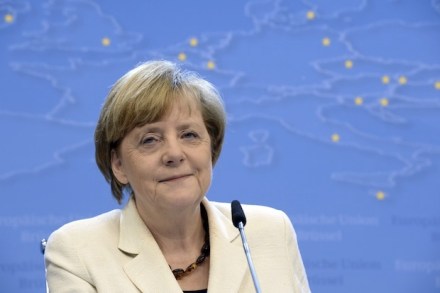
The Greek crisis has been going on for so long now, it is hard to imagine it actually coming to a conclusion. But next week’s meeting of European Finance Ministers is one of the last chances for a deal to be struck. However, there is no sign of an agreement yet. The Financial Times today picks up on German press reports about the German government preparing for Greece leaving the Euro. The Germans have long been convinced that any contagion from Greece leaving the single currency could be contained privately many in Whitehall think that Berlin is far too complacent about this. Now, it appears that Merkel is turning her attention to how Greece could be kept inside the EU if it was, effectively, kicked out of the single currency.

A lot to ask

From our UK edition

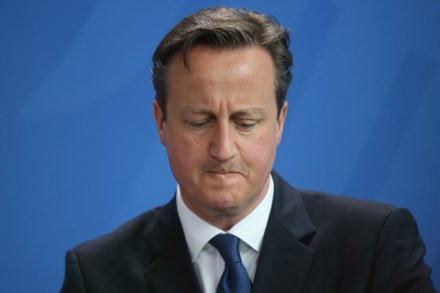
David Cameron is now facing the biggest challenge of his leadership: how to renegotiate Britain’s membership of the EU without destroying his party. His dilemma mirrors the situation of Harold Wilson 40 years ago this month. So far, the old Labour man looks the better strategist. Wilson, who had a majority of three, avoided mass resignations from his cabinet by suspending the convention that members of the government must back its entire programme in public. Of his 23 cabinet ministers, seven joined the campaign for Britain to leave the EU. They didn’t win the argument — but they ensured that the question was properly debated, and settled for many years afterwards. David Cameron need only have followed that example.

Pedant’s revolt

From our UK edition

It used to be that the most annoying thing in academic life was political correctness. But a new irritant now threatens to supplant it: the scourge of correct politicalness. The essence of correct politicalness is to seek to undermine an irrefutable argument by claiming loudly and repetitively to have found an error in it. As with political correctness, which seeks to undermine arguments by declaring the person making them a bigot, correct politicalness originated in the US. But it now has its exponents here, too. Foremost among them is Jonathan Portes. Portes’s career recalls that of the character Kenneth Widmerpool in Anthony Powell’s Dance to the Music of Time.

Cameron’s dark evening of the soul

From our UK edition

At 6.30 p.m. on 7 May, the Camerons invited guests at their home in Oxfordshire into the garden for a drink. Everyone stood on the patio, wrapped up in coats and shawls and drinking wine. They were understandably nervous. The Prime Minister had prepared a resignation statement and read it out to the assembled gathering. The group that huddled together on the patio that day tells us a lot about the qualities which Cameron values in people. Most of them were close to him long before he entered No. 10. Ed Llewellyn, his chief of staff, worked with him at the Conservative Research Department more than 30 years ago. Kate Fall, Llewellyn’s deputy, was one of the first to sign up when Cameron went for the Tory leadership in 2005.

Tory concern about ‘bedroom tax’ grows

From our UK edition

David Cameron’s former speech writer Clare Foges isn’t the only Tory worried about the impact of the so-called 'bedroom tax'. In a column in The Times today, Foges argues that the Conservatives should ‘move on from the bedroom tax. It is not working as had been hoped and will remain a fly in the one-nation ointment. Have a principled mea culpa moment and move on’. I’ve written before that it’s nigh-on impossible to find a Tory who privately thinks that the policy has worked out well, either politically or in terms of the impact it has had on the very vulnerable people it hits. The Tories have said nothing about changing it since returning to government, yet as Foges argues, a ‘principled mea culpa moment’ would allow the party to move on.

The Conservatives’ Heathrow conundrum

From our UK edition

The Tories are facing a Heathrow problem. With Zac Goldsmith joining the race for the London mayoral nomination today, the idea of the Conservatives supporting a Heathrow expansion is becoming harder to envisage. The final recommendation from Howard Davies' Airport Commission is due this summer and the Tories are expected to put it to a vote in the Commons. But what if Davies proposes an expansion of Heathrow — either in the form of a third runway or the Heathrow Hub? Although the Airport Commission's new review into air quality has been interpreted as a sign that Davies is edging towards Gatwick, Heathrow is still on the cards. If the party leadership is faced with a vote on whether to back Davies and Heathrow, they risk a split with their London mayoral candidates.

Zac Goldsmith to run for Mayor of London

From our UK edition

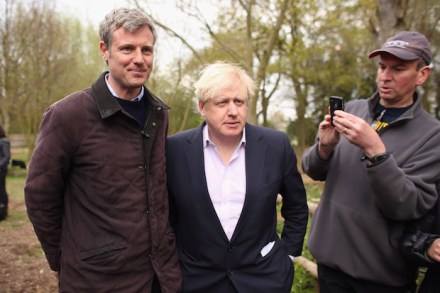
Finally the Conservatives could have a decent and recognisable candidate for Mayor of London. Zac Goldsmith has told the Standard that he wants to put himself forward for the Tory nomination - after a string of senior Conservatives tried to persuade him to do it. So far those interested were either known only within the Tory hierarchy, or keen not to mention that they were Conservatives. Goldsmith has a similar independent brand as Boris Johnson: he has rebelled enough times in the last Parliament to suggest that he would be someone prepared to stand up to the Tory leadership in Westminster to get a good deal for London, which is rather the point of a directly-elected mayor.

Cameron on Europe: the anatomy of a U-turn

From our UK edition

How did David Cameron get into such a mess on Europe so quickly? For those whose heads are still spinning (and this probably includes the Prime Minister) over what on earth just happened to upset the Tory party so much and force Downing Street into a frenzied climbdown, here’s the anatomy of David Cameron’s European U-turn. 4 January 2015 David Cameron says there will not be a free vote on the referendum during an interview with Andrew Marr. Here is the transcript of the Prime Minister’s answers: ANDREW MARR: Would you give cabinet ministers and other Conservatives who want to campaign for an out, the freedom to do so in such a referendum? DAVID CAMERON: Well, there are Conservative Members of Parliament who want the leave the European Union...

Wikipedia reprimands editor who accused Grant Shapps of ‘sock puppet’ edits

From our UK edition

It is probably reasonably cold comfort to him, given he’s already lost his Cabinet job, but Grant Shapps has today seen a Wikipedia administrator who accused him of editing his own page and those of other ministers reprimanded. Wikipedia conducted an investigation, which concluded there was no evidence Shapps was connected to an account called Contribsx which made edits to his profile. It said the administrator in question, who operated under the name ‘Chase me ladies, I’m the Cavalry’ (but whose real name was Richard Symonds), ‘struggled to provide an accurate timeline’ on blocking the account and coverage of the account in the Guardian.

‘Careless talk costs lives’: Cameron angers MPs as he insists he was ‘misinterpreted’ on EU vote

From our UK edition

It’s not clear who David Cameron is trying to annoy more: his party or the press pack following him at the G7 summit in Bavaria. But what is clear, at least in the Prime Minister’s mind, is that he has been misinterpreted on the issue of a free vote in the EU referendum. Not over-interpreted, as Number 10 said this morning. ‘It’s clear to me that what I said yesterday was misinterpreted,’ he said, explaining that he was referring to the renegotiation: ‘I was clearly referring to the process of renegotiation. But the point is this. I have always said what I want is an outcome for Britain that keeps us in a reformed EU. But I have also said we don’t know the outcome of these negotiations, which is why I have always said I rule nothing out.

Liam Fox interview: Tories have to get a free vote on the EU ‘in the end’

From our UK edition

Liam Fox started his political life under a majority Conservative government, and finally he's back under one. He was elected in 1992 after John Major’s surprise election victory, and is enjoying the surprise of his colleagues once again after David Cameron’s surprise win last month. But the former Defence Secretary is not personally enjoying the spoils of majority government: he has not been promoted to a ministerial post, even though there are more spaces free following the exit of the Lib Dems. He was rather stung to have only been offered a lowly minister of state job in the last reshuffle, and turned it down.

Number 10 rows back on EU vote threat

From our UK edition

So after a few hours of outrage in the Tory party, David Cameron's aides have announced that he didn’t say ministers would have to support his stance during the EU referendum or leave government. Number 10 has clarified the Prime Minister’s remarks, saying they only apply to ministers’ stances during the renegotiation, not the period of campaigning leading up to the referendum.

How David Cameron could still avoid a bitter Tory row on Europe without a free vote

From our UK edition

David Cameron’s indication that his ministers will have to follow the position of the government on the EU referendum or leave the government has caused some consternation in his party. David Davis has just warned on the Today programme that the Prime Minister risks ‘turning a decent debate into a bitter argument’, while the newspapers write this up as a very risky move indeed. Cameron told reporters covering the G7 summit in Bavaria that ‘I’ve been very clear. If you want to be part of the government, you have to take the view that we are engaged in an exercise of renegotiation, to have a referendum and that will lead to a successful outcome.

Why so many senior Tories want Zac Goldsmith to run for mayor

From our UK edition

Over the last few weeks, a string of senior Tories have urged Zac Goldsmith to run for Mayor of London. Goldsmith is, as I report in the Mail on Sunday, regarded by the Tory hierarchy as giving the party the best chance of keeping City Hall blue. In a contest that it will be very difficult for the Tories to win, Goldsmith scrambles the race—what other Tory would get Green second preferences? The attraction of Goldsmith is particularly strong as Nick Ferrari, as Daniel Boffey writes in the Observer, is unlikely to throw his hat in the ring.

Why has David Cameron appointed his chum Ed Llewellyn to the Privy Council?

From our UK edition

After the general election, Edward Llewellyn, the Prime Minister’s chief of staff, was made a Privy Councillor. Any member of the Privy Council is addressed as ‘Right Honourable’ and these words well describe Llewellyn’s character, so there is no problem there. But why should an adviser be given this role? If you study the list (which, be warned, takes a long time), you will see that Privy Councillors are almost all MPs (or ex-MPs), peers or judges. This is because they are supposed to be, in some small way, powers in the land, people in their own right, rather than servants of the powerful.

Out’s Farage dilemma

From our UK edition

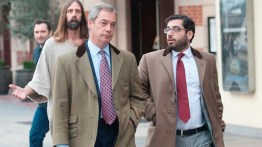
Nigel Farage’s latest intervention—declaring that Ukip is ‘going to take the lead making the case for voting to leave the EU in the referendum—neatly sums up the dilemma facing the Out campaign. On the one hand, there’s a danger that if it doesn’t get moving now then the In campaign will have a massive, and possibly insurmountable, advantage by the time the vote is actually called. On the other, if Out is too closely associated with Ukip then it won’t be able to get the 50.1 percent of the vote that it needs to win the referendum. For while Farage might be quite brilliant at motivating the 13 percent who voted Ukip, he also alienates a lot of people too.

Lord Saatchi’s Medical Innovation Bill is coming back – but it won’t help cancer patients

From our UK edition

What makes for bad legislation? Sometimes it is a lack of scrutiny from a weak opposition and bored backbenchers. Sometimes it’s an attempt by ministers to make a political point and to hell with any real life damage. And sometimes it’s wishful thinking: an assumption that because a bill has identified an awful problem, it is automatically also presenting the perfect solution. Lord Saatchi’s Medical Innovation Bill is heading back to Parliament again, after the Lib Dems managed to block it in the last session. Saatchi was naturally furious that Nick Clegg’s party had refused to sign off on his legislation, and now that the Lib Dems are out of government, he’s trying again.