Uk politics

Chris Bryant interview: Labour has to speak to voters ‘at the end of the line’

From our UK edition

Chris Bryant is haunted by Labour’s general election defeat. He has taken his former colleague Douglas Alexander’s office, and Commons staff have been appearing to collect the former Shadow Foreign Secretary’s computers. ‘They were referring to the computers as “the defeated computers”,’ he says. ‘Politics is quite brutal.’ The defeated computers are a sad symbol of Labour’s loss: Alexander was one of Labour’s many election chiefs, but is now just an ex-MP. But Bryant, who says he did feel in his gut that Labour was going to lose, still seems rather chipper.

Chuka Umunna endorses Liz Kendall for Labour leader

From our UK edition

After pulling out of the Labour leadership contest himself, Chuka Umunna has given his star-studded endorsement to Liz Kendall, along with his leadership team of Emma Reynolds, Stephen Twigg and Jonathan Reynolds. In an article for the New Statesman, Umunna writes: ‘For us, our next leader must get this vision right. On all these big subjects, Liz Kendall has asked the tough questions and started to chart a course to the answers. She has been courageous in challenging conventional wisdom. She has no compunction in moving Labour beyond our comfort zone and is determined to build a team ready to chart a route forward. This is exactly what our party needs and that is why we are nominating her to be the next leader of the Labour Party.

Malcom Bruce defends Alistair Carmichael: ‘lots of people have told lies’

From our UK edition

Alistair Carmichael’s battle to remain an MP is turning into a debate about whether it's acceptable to lie in public office. The SNP are keen to talk the up the notion that Carmichael lied (and got caught) and therefore has to go. On the Today programme, his SNP opponent in Orkney and Shetland Danus Skene focused what Carmichael said when the memo was leaked vs. what has become apparent during the investigation: ‘The issue is not the offence but the cover-up, he did actually lie about this, by claiming at the beginning of April that he didn’t know about this memo until the journalist approached him about this … there is a lie here and that’s the difference between a slightly juvenile mistake.

David Cameron is trying to manage the referendum – and his party – properly

From our UK edition

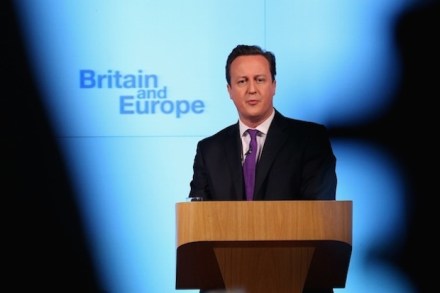
The government’s announcement that EU migrants will not be able to vote in the EU referendum tells us a number of things about the way David Cameron is approaching this vote. Firstly, he’s keen to show everyone that he’s getting on with it - indeed, the Prime Minister seems reinvigorated on all fronts at the moment - and making announcements about the franchise is just one example of that. The second is that Cameron does not want the debate about the referendum to be one of an Establishment stitch-up. Allowing EU citizens to vote would be one way of encouraging such a narrative from certain parts of the ‘Out’ camp. And thirdly, Cameron is keen to preserve party unity as much as he can on an issue that naturally splits his party.

Cameron confident about renegotiation result: but will it please voters?

From our UK edition

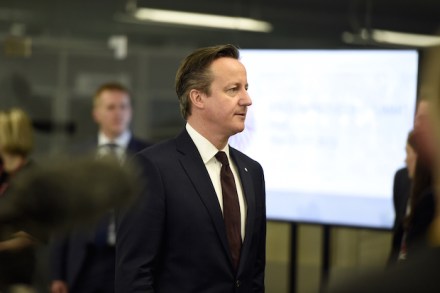
David Cameron was in an extremely confident mood when he addressed the press at the end of today’s EU summit in Riga. He continually joked about journalists needing to write stories about the trials and tribulations of his EU renegotiations over the next couple of years, but those stories not meaning very much at all. ‘My advice would be - a bit like the election, really - wait for the result!’ he said gleefully when asked whether he would get what he wanted from the renegotiation. But he later admitted that ‘I’m not going to say I was met with a sort of wall of love when I arrived.

BBC announces Labour leadership hustings from constituency symbolising party’s failure

From our UK edition

After Harriet Harman announced that Labour would ‘let the public in’ to its leadership contest, the BBC has announced that it will broadcast a hustings with the candidates on 17 June. The programme, which will be broadcast on BBC Two (which might give a clue as to how popular BBC executives think this example of public service broadcasting will be), will be presented by Laura Kuenssberg. The venue is quite instructive. Harman said this week that the contest need to take place in places where Labour wasn’t winning, rather than the party’s strongholds. So the hustings will be broadcast from Nuneaton: the constituency that showed the demise of Labour’s hopes of victory on election night by staying Tory.

Kendall, Cooper and Burnham all have perceived weaknesses to overcome

From our UK edition

Now that Liz Kendall has enough MPs backing her to make it on to the ballot paper for the Labour Party leadership contest, the three main candidates are all starting to think about how to appeal to those party supporters who will vote for the leader. This involves contacting constituency Labour parties, trade union branches and so on in order to canvass. Each of the three main candidates also needs to overcome a key perceived weakness. For Andy Burnham, it is that he is the trade union candidate and just a populist figure of the Left. For Yvette Cooper, it is that her experience which her supporters see as a strength is also an unpalatable link to Labour's past, and also that she needs to set out in greater detail what she believes in.

Germans propose linking the British renegotiation to Eurozone reform

From our UK edition

Wolfgang Schäuble’s decision to link the British renegotiation to changes to the governance of the Eurozone is highly significant. In an interview the German Finance Minister told the Wall Street Journal that he has discussed George Osborne ‘coming to Berlin so that we can think together about how we can combine the British position with the urgent need for a strengthened governance of the eurozone’. Schäuble went on to say that ‘the structure of this currency union will stay fragile as long as its governance isn’t substantially reinforced. Maybe there is a chance to combine both goals’. Schäuble’s comments are the most encouragement that the government has had on the renegotiation front.

Tristram Hunt bows out of Labour leadership race and backs Liz Kendall

From our UK edition

Tristram Hunt is not standing as Labour leader and will instead back Liz Kendall, he finally confirmed at the end of a long speech this morning. The party’s Shadow Education Secretary had some fun forcing hacks to listen to his assessment of Labour’s failure, which took a while, before he announced this, saying: ‘It is clear to me that I do not have sufficient support to be certain that I could run for the leadership myself.. there is a real risk that I might help restrict the choice for the party and that is not a risk that I am prepared to accept.' He complained that other candidates had been working on their campaigns for longer, saying they had 'longer, more established ambitions'.

The Labour leadership checklist

From our UK edition

There seems to be a checklist for Labour leadership hopefuls which all of them are very keen to tick off. When launching a campaign, a candidate must say that their party has just suffered a terrible defeat from which a number of profound lessons must be learned. These lessons all seem to be rather similar, and have led the candidates to say the following things: ‘We didn’t speak enough to aspirational voters’ Mary Creagh: ‘People felt that Labour didn't understand their aspiration to earn money and provide a better life for their family.’ Chuka Umunna (when he was standing): ‘We need to… focus on what is the new agenda that is going to get a Labour government elected in 2020.

Dan Jarvis backs Andy Burnham in Labour leadership contest

From our UK edition

As far as endorsements go, Andy Burnham is winning the Labour leadership contest hands down. He has managed to recruit Dan Jarvis - someone who has gained huge respect and admiration despite the fact no-one knows very much about him - as his latest backer. Jarvis tells the Mirror that Burnham ‘has the strength, experience and character needed to bring our party together and restore Labour’s connection with the British people’. Now, firstly this is a bit of a clue as to where Jarvis’s own politics lie: he’s a little more left wing than someone people who are caught up in his compelling back story may have noted.

Ed Miliband’s fate shows that how you win a leadership contest matters almost as much as winning it in the first place

From our UK edition

Any new party leader needs legitimacy, an acceptance that they won the contest fair and square. Ed Miliband didn’t have this because he lost in two of three sections of Labour’s electoral-college and that meant he couldn’t act decisively in his first 100 days, that crucial period in which the public tend to decide whether a party leader is much cop or not. The worry for Labour is that the next leader might not be seen by some in the party as legitimate either. There are two reasons for this. First of all there is already unease about the tactics that the frontrunners are using to try and keep challengers off the ballot paper, see this story from Patrick Wintour of the Guardian.

Can Tristram Hunt persuade enough MPs to back him for Labour leader?

From our UK edition

The Labour leadership candidates are starting to release lists of names supporting them, with more announcements on the way. So far Yvette Cooper and Andy Burnham, who reckon they have 100 names between them, have been the most vocal about the levels of support, and there is some concern in the party that between them they will make it impossible for a ‘modernising’ candidate like Liz Kendall to accrue the 35 names needed to stand for leader. Other MPs are still considering their position, including Tristram Hunt and Jamie Reed. Hunt is, I understand, still trying to ensure he has enough names.

Harriet Harman: Labour needs to let the public in

From our UK edition

How does the Labour party recover? Harriet Harman set out how it will try to come back from its latest election defeat in a speech this morning which told the party to listen to the customer because the customer is always right. Her basic pitch was that just like a product or a shop or a magazine, it’s more important to work out what people want to buy, rather than what you want to sell or write because your own tastes might not be particularly representative of the market that’s out there. To that end, she told the audience that ‘as we conduct this debate, as we elect our leader and deputy leader, we must have the public in the forefront of our minds. We must let the public in.

What Michael Gove told his civil servants

From our UK edition

Michael Gove has been keeping a relatively low profile since being made Justice Secretary and Lord Chancellor last weekend. I understand that he is keen to master the brief, and particularly the complexities around the creation of a British Bill of Rights, before he starts hitting the TV studios. But an address he gave to staff at the Ministry of Justice on Wednesday gives some clues as to the direction he is heading in. Interestingly Gove didn’t simply declare that the Tories would be scrapping the Human Rights Act. Instead, he said, ‘We’ll be seeking to ensure that human rights are enhanced and preserved by modernising and reforming the framework of rights in this country’.

George Osborne poaches Daily Mail’s political editor

From our UK edition

George Osborne has moved to strengthen his personal, political operation by hiring the political editor of the Daily Mail James Chapman as his director of communications. This beefing up of his media team will be seen in Westminster as a statement of political intent by the Chancellor; it gives him a more formidable operation than any of the other likely contenders for the Tory leadership. I am told that Chapman will be handling communications for Osborne in his role as both Chancellor and First Secretary of State.

Exclusive: Nigel Farage ‘never resigned’ from Ukip in ‘stitch up’

From our UK edition

It has been alleged that Nigel Farage never formally resigned from Ukip as part of what party sources have told the Spectator was a stitch up to avoid a leadership contest. It is claimed that the Ukip leader never wrote a letter to the party’s chairman tendering his resignation. He told the media on Friday that he would write to the party resigning. When it met on Monday, it is said the National Executive Committee had still not received a letter. A source tells me that when someone asked where the letter was, they were told ‘it is being typed out as we speak’. The source says the letter never appeared.

London can be Blue again

From our UK edition

In the midst of a glorious election night for the Conservatives on 7 May, London stubbornly resisted the swing across the rest of the country and went a darker shade of red. Why is that and why does it matter when overall we have a majority Conservative government for the first time in 18 years? The loss of four London seats (including mine) to Labour may have been offset by the high profile gain of Vince Cable Twickenham, and by us retaining Labour’s number one target of Hendon after a spectacular result from Matthew Offord. But to ignore what is going on elsewhere would simply put future working Conservative majorities at risk.

The one thing sadder than an ex-MP

From our UK edition

Tonight at midnight, something will change in Parliament. All the MPs who lost their seats in last week’s elections will have their passes cancelled, to be replaced by a pass giving them more limited access to the Parliamentary estate. They’ve been sneaking through Westminster over the past few days to clear out their offices and make their staff redundant. Some look eerily cheery as they do this. Others scuttle along, avoiding conversation. As the new intake of MPs look up excitedly at the ornate ceilings and take pictures of Big Ben on their phones, swelling a little with excitement and pride, the old MPs keep their eyes fixed firmly down on their shoes as they finish up in the Palace of Westminster.

How Tory ministers could sneak out policies the House of Lords blocked

From our UK edition

Now that we can’t brace ourselves for the SNP ruling over Westminster and the Labour party as we’d been warned (though they still seem to be having a bit of fun), the House of Lords has become the location of potential uprisings against the Tory government. The bulk of Lib Dem and Labour peers, along with a good number of cross benchers, who could work together to defeat a government bill does look rather threatening, though it’s worth remembering that even on a good day, attendance in the Lords isn’t anywhere near 100 per cent, and crossbenchers do tend to pull back rather nervously from anything that they think is too ‘political’. But before big bills start causing rows in the Other Place, there could still be trouble ahead.