Uk politics

The IFS’s verdict on George Osborne’s ‘deeply disappointing’ Budget

From our UK edition

In the March Budget – and, indeed in the Conservative manifesto - we were promised budget balance by 2018-19. That magic moment has now been shifted back a year. In part, that reflects a gentler than planned path for spending cuts, including welfare spending cuts. The gentler path does not however represent a let up in the overall scale of cuts – other than for defence. Spending in unprotected departments (those other than health, overseas aid, schools and, now, defence) will still have fallen by about a third in real terms over the ten years to April 2020. The Budget was certainly not short on measures. The scorecard shows net tax increases of £6.

Summer Budget: Osborne’s £60bn gamble

From our UK edition

The Tories don’t really rate the social housing sector: that much has been clear for a good long time. They fell out a bit over their 2010 reforms to tenancies that abolished the automatic right to a council house for life, and have been scrapping over welfare reforms ever since. In recent weeks, ministers had made it quite clear that given the housing sector protested so much about the impact of the last tranche of benefit cuts, and their dire warnings hadn’t come to fruition, they weren’t going to pay much attention to the opposition to this next round of cuts announced yesterday.

Osborne gets the press he was after on sweetened Budget

From our UK edition

This morning’s front pages are as good as they possibly could be for George Osborne given the scale of the cuts that he unveiled yesterday. The Chancellor has managed to blunt the severity of his Budget, at least in messaging, with his National Living Wage announcement, with even the more sceptical newspapers acknowledging that he didn’t just spend yesterday taking away from Britons. Those sceptical papers first: And then there are a fair few papers who are reasonably impressed:   And the Sun, which went for Osborne with a vengeance after the 2012 Budget, is very happy indeed: Very, very happy....       This is the press that Osborne would have been after: he has sweetened every bitter pill in this Budget.

The return of hunting

From our UK edition

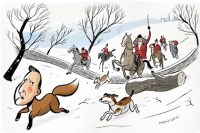
When Bill Clinton was asked if he had ever smoked marijuana he uttered the infamous cop-out that he had smoked it but had not inhaled. David Cameron’s position on hunting has been similar. He cannot deny that he once rode to hounds with his friends in the beautiful English countryside where he spends weekends. But he has never said much about the experience other than it was terribly challenging to stay on the horse. Rather than saying ‘I enjoyed it’, he has always been careful to give the impression that hunting was going on around him, so he did it, and he survived to tell the tale. But he didn’t inhale, so to speak.

Labour’s Budget response: ‘It’s difficult’

From our UK edition

[audioplayer src="http://rss.acast.com/spectatorpolitics/summerbudget2015/media.mp3" title="Fraser Nelson, James Forsyth and Isabel Hardman discuss the Summer Budget"] Listen [/audioplayer]Chris Leslie has just briefed journalists on Labour’s response to the Budget. In summary, it’s all quite difficult. Leslie repeatedly used that word when asked about individual measures such as the benefit cap and public sector pay, while also saying that Labour didn’t want to be a knee-jerk opposition which opposed everything. The key themes of the Labour response are that the changes to tax credits represent what the Shadow Chancellor deems a ‘work penalty’.

The Budget rabbit: A National Living Wage

From our UK edition

[audioplayer src="http://rss.acast.com/spectatorpolitics/summerbudget2015/media.mp3" title="Fraser Nelson, James Forsyth and Isabel Hardman discuss the Summer Budget"] Listen [/audioplayer]The announcement that got the biggest roar of support in today’s Budget was that from 2020 workers over 25 will be paid £9 an hour in a National Living Wage. Tory MPs gasped and cheered, while Harriet Harman gave a response that had the distinct impression of being performed while having a rug pulled from under her feet. The Chancellor described it as a pay rise and part of the Budget theme of security, namely the ‘financial security of lower taxes and new National Living Wage’. But is that a pay rise?

Summer Budget 2015: Full text of George Osborne’s speech

From our UK edition

[audioplayer src="http://rss.acast.com/spectatorpolitics/summerbudget2015/media.mp3" title="Fraser Nelson, James Forsyth and Isabel Hardman discuss the Summer Budget"] Listen [/audioplayer] Mr Deputy Speaker, This is a Budget that puts security first. It’s a Budget that recognises the hard work and sacrifice of the British people over the past 5 years and says: we will not put that at risk, we have a job to do and we’re here to get on with it. This will be a Budget for working people. A Budget that sets out a plan for Britain for the next 5 years to keep moving us from a low wage, high tax, high welfare economy; to the higher wage, lower tax, lower welfare country we intend to create. This is the new settlement.

Summer Budget 2015: What we know so far

From our UK edition

We know that George Osborne’s first Tory majority Budget is going to be big. It will be far bigger than the announcements that have been briefed so far, that’s for sure. What we know so far is as follows. There will be £12bn of welfare cuts, but they will be implemented over three years, rather than two. Those cuts will take in tax credits, including child tax credit, which is expected to be limited to two children, employment support allowance and housing benefit. And the Independent reports that the Chancellor will also replace student maintenance grants with loans. Fraser explains why the Chancellor has changed his timetable on the welfare cuts here.

Tories ‘to slow welfare cuts’ in Budget, reports suggest

From our UK edition

Tomorrow’s Budget is expected to be brutal, with the Conservatives recognising that now is the time to inflict the maximum pain as the party is the furthest it will ever be from the next election. But Sky News reports tonight that one of the most-reported aspects of that brutal Budget, the £12bn of welfare cuts, will be introduced a little more gently than expected. Faisal Islam writes that this is ‘partly because buoyant tax revenues and new Office of Budget Responsibility projections mean the Chancellor can meet his fiscal mandate without making the welfare cuts within two years’.

Tories nervous of EVEL rebellion

From our UK edition

MPs are getting very worked up in this afternoon’s emergency debate on English Votes for English Laws. Depending on which party they’re in, of course, they’re getting worked up about slightly different things. Labour have stick to arguing about the procedure, which is what the debate is supposed to be on, saying that the measure is far to big to be put through using standing orders. The SNP’s objection is primarily that this makes Scottish MPs second class, and secondly that the Tories are trying to create an English parliament in two weeks when they should, as Pete Wishart put it ‘do the work’ in the same way as the Scots did in setting up their parliament.

Ministers aim to make Sunday less ‘miserable’ by relaxing Sunday trading laws

From our UK edition

The latest pre-Budget trail in the newspapers is that the government plans to confront an issue that caused Margaret Thatcher’s only Commons defeat as Prime Minister and further relax Sunday trading laws. Ministers are keen to allow elected mayors and councils the freedoms to relax the laws in their areas. George Osborne said that there is ‘some evidence that transactions for Sunday shopping are actually growing faster than those for Saturday’, while his colleague Anna Soubry said ‘Sunday was the most miserable day of the week’ before people were allowed to shop.

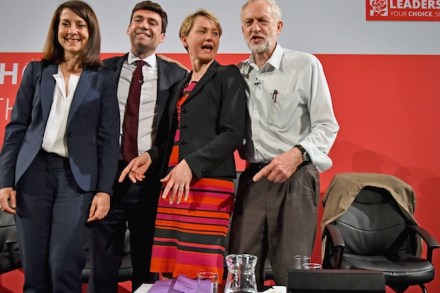
Labour MP: I’m supporting Yvette Cooper because she’s a mother

From our UK edition

How, as a seasoned politician, might you decide who to back in the party’s leadership contest? It might be that you’re swayed by the ministerial experience of one candidate, or perhaps the fierce commitment of another candidate to a policy that you hold very dear. Perhaps it’s because you’re from the same faction in the party, because you’ve been friends for years, or maybe it’s because, as a result of various twists of good fortune and circumstances not entirely under their control, they have children. Apparently, that last is the primary reason that Helen Goodman, a Labour MP who served as a minister when her party was in government, selected Yvette Cooper as her star candidate for Labour leader.

How the trade unions make it more difficult for Labour to win back Ukip voters

From our UK edition

Do unions like Unite want Labour to win the next election? A fair few people, including a number of Labourites, have been asking this question since the union announced its backing for Jeremy Corbyn at the weekend, but it’s a something that those involved in the election campaign were asking as polling day approached, too, for slightly different reasons. The party found that it had a problem with Ukip during the election campaign - and some wise figures like John Healey had been urging the leadership to get to grips with Nigel Farage’s party long before election chiefs actually did do anything.

How can Labour avoid being a useless Opposition in this week’s Budget?

From our UK edition

One of the toughest jobs in politics is responding to a Budget. It’s the job of the leader of the Opposition, and given the Labour Party has still got two months until it elects its chief, that job falls to Harriet Harman as interim leader. Therefore Harman has an even tougher version of one of the toughest jobs in politics, as she has to work out not just how to scrutinise the government’s spending plans, but also how to stop her party having an unpleasant fight over its stances on certain controversial cuts. If a cut is, in Labour’s view, wrong, then it will struggle to make much headway in opposing it if that opposition only starts in a few months’ time once a new leader is in place and they’ve worked out what they want to do.

When will George Osborne commission a war memorial for soldiers?

From our UK edition

We learn today that George Osborne will say in his Budget that he’s using the fines he’s collected from bankers to build a memorial to terror victims. I find this juxtaposition rather odd: why link terrorism to banking? Why not just be honest: that any memorial will be funded from the the same tax pool as everything else? But moreover, I do wonder where this memorial will go.  We’re told that the Chancellor will consult with the relatives of the victims before agreeing a location. These memorials do serve a purpose: they become part of the world our ministers operate in; part of their daily lives. Most politicians will know every memorial in Westminster - who they commemorate, and why. You can see what has given him the idea.

Which way will Greece vote?

From our UK edition

This time tomorrow, we’ll have had the first projections from the Greek referendum. We will have an idea as to whether the country has said Oxi or Nai. At the moment, the polls make the referendum too close to call. Whatever the result, there’ll be no quick deal between Greece and its creditors. But if the Greeks vote Oxi, then the country could be forced out of the Euro by the ECB cutting off assistance to its banks. If that were to happen, then the Eurozone would have to move to integrate very quickly to prevent Portugal, Italy, Spain and even France being pushed towards the Euro exit the next time there’s a fiscal crisis. This would almost certainly require a new EU treaty, which would provide Cameron with quite an opportunity.

Is Cameron ready for his European opportunity?

From our UK edition

Could Greek voters back austerity measures to keep their country in the eurozone this weekend? Today’s papers cover a poll by GPO which put ‘Yes’ on 47.1 per cent and No on 43.2 per cent. This result would see resignations at the top of Syriza, but effectively no Grexit.