Uk politics

Why are politicians trying to boss the BBC around?

From our UK edition

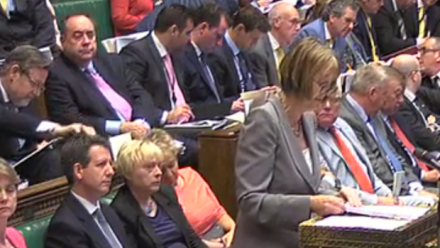
One of the most striking things about the debate in the Commons this afternoon on Britain and International Security was that rather than debate the complexities of intervening in Syria, a lot of MPs were very keen to talk about the name of the terror group the government might take action against. MP after MP from all sides of the House rose to complain about the BBC’s decision not to call the group ‘Daesh’, and started to hatch a powerful plan to gang up on the broadcaster and use ‘Daesh’ anyway, until the corporation relents. Alex Salmond even went so far as to say that ‘we could actually achieve something together’ - not in combating the terror group per se, but at least in getting the BBC to rebrand it. Same difference.

Michael Fallon to urge MPs to think again on strikes in Syria

From our UK edition

Michael Fallon is making the case to MPs today for British airstrikes against Isis in Syria. The Defence Secretary yesterday told the World at One that ‘It is a new parliament and I think Members of Parliament will want to think very carefully about how we best deal with Isil and illogicality of Isil not respecting the borderlines’. He is expected to make a statement at some point today urging MPs to do this thinking, either in the scheduled Commons debate on Britain and International Security, or separately.

Cameron must not let this crisis go to waste

From our UK edition

Few European leaders have been luckier than David Cameron. First he was sent Ed Miliband. Now events in Greece may be about to present him with a solution to the thorniest problem of his second term: how to negotiate a new form of EU membership for Britain that the Tory party can rally behind come the referendum. The Prime Minister’s critics delight in claiming that his European problem is of his own making. Two years ago, he promised a referendum on EU membership before the end of 2017. But he couldn’t have survived without making such a pledge. It was his way of stopping his party arguing about Europe; without it, he could not have gone into the election claiming that he led a united party.

The wrong man

From our UK edition

For the final three years of his 18-year career at Goldman Sachs, Jim O’Neill, the Treasury’s new commercial secretary with responsibility for developing the Northern Powerhouse, served as chairman of Goldman Sachs Asset Management, the company’s least-regarded and most bothersome unit. While two younger executives ran the business, O’Neill was dispatched to faraway conferences to bore audiences of docile suits with his views on whether Nigeria or Malaysia offered a better investment opportunity. When finally in early 2013 he resigned his sinecure, he was not replaced and his title was mothballed. Since then, he has been all but marching up and down Whitehall wearing a sandwich board pleading for a government job.

PMQs Sketch: Airports and angry Nats

From our UK edition

Chooom! Davies has arrived. Sir Howard’s report made a text-book landing on the PM’s desk yesterday afternoon and began taxiing towards Cameron’s in-tray. But the PM hasn’t read it yet. Or so he claimed at PMQs. He therefore avoided any commitment to building a third runway at Heathrow. And his excuse? Wilful ignorance. Seriously? He hasn’t read it? Given the time and cash the damn thing has gobbled up he might have glanced at the executive summary. Sir Howard has worked his way through twenty million smackers reaching a foregone conclusion. His defenders point out that this money was very well spent because Sir Howard pays scrupulous personal attention to every detail of an important commission.

We haven’t had a pan-European war for 70 years. Why is that?

From our UK edition

The EU referendum makes me suspect that the grownups don't know what they're doing. I can see how we got to this point but it seems absurd that something so fundamental should be up - not just  for debate but possibly even - for reversal. It is doubly absurd because David Cameron has said that he will be campaigning - as you would expect of a conservative - for the status quo. So why are you doing this? I mouth at the television, wishing heartily that he would fight his internal party battles on his own time. Bewilderment is, it seems to me, one of the main forces behind this referendum. Some - many - people are bewildered by the EU. Getting your head around it is hard because the organisation is unique: there are no good metaphors for it.

If Greece leaves the Euro, Cameron should start the British renegotiation all over again

From our UK edition

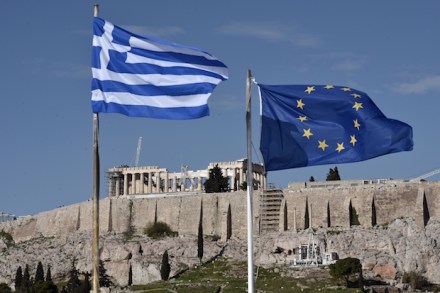
Tonight, it is still not clear how the Greek situation will be resolved. The European Central Bank--which is desperate to avoid being dragged into the politics of this situation--has chosen a middle way on its emergency assistance to Greek banks. It has neither ended it—which would have crashed the whole Greek banking system—nor extended it, which would have enabled the banks to stay open and eased the pressure on the Syriza-led government. Greek banks will definitely be closed tomorrow and probably until the referendum on Sunday. The next big question is what happens on Tuesday when the bailout programme ends and a payment comes due to the IMF which Athens will not be able to make.

Barometer | 25 June 2015

From our UK edition

The spirit of 1945 No one would have been more surprised at the sight of 100,000 people marching in London under the banner ‘End Austerity Now’ and demanding ‘Tories Out’ than Sir Stafford Cripps, President of the Board of Trade and briefly Chancellor of the Exchequer in Attlee’s government. — Hard though it might be to remember now, but austerity was once a proud Labour policy. The rationale of the policy, devised by Cripps, was that by suppressing private consumption, resources could be spent instead on boosting exports. — Any anti-austerity march in 1947 would have been led by the Conservatives, whose slogans of the time included ‘Starve with Strachey’ and ‘Shiver with Shinwell’.

Europe’s great game

From our UK edition

[audioplayer src="http://rss.acast.com/viewfrom22/angelamerkel-sburden/media.mp3" title="Fredrik Erixon and James Forsyth discuss the challenges facing Angela Merkel" startat=36] Listen [/audioplayer]For generations, ambitious politicians have dreamed about having the power to run Europe — but as Angela Merkel can attest, it’s a horrible job. She didn’t want to end up with the continent’s problems on her shoulders, but things have ended up that way. The Greek economic implosion, the seemingly unstoppable wave of immigrants from north Africa, the menace of Russian aggression, the euro crisis — all the multiple, interconnected, crises battering Europe have ended up as Merkel’s problem.

Ten myths about Brexit

From our UK edition

  1. Leaving the EU would hurt the UK’s ability to trade with it.  The fearmonger’s favourite argument. But fear not: the global economy has changed dramatically since Britain joined the EU in 1973, seeking entrance to a common market. The World Trade Organisation has brought down tariff rates around the world; even if we didn’t sign a free-trade deal with the EU, we would have to pay, at most, £7.5 billion a year in tariffs for access to its markets. That’s well below our current membership fee. 2. Three million jobs will disappear.  A bogus figure, heard often from the likes of Nick Clegg.

Where Ukip went wrong

From our UK edition

[audioplayer src="http://rss.acast.com/viewfrom22/angelamerkel-sburden/media.mp3" title="Freddy Gray, Sebastian Payne and Owen Bennett discuss where Ukip went wrong" startat=685] Listen [/audioplayer]What’s happened to poor Ukip? Not so long ago, they seemed unstoppable. They were revolting on the right, terrifying the left and shaking up Westminster. The established parties tried sneering at them, smearing them, even copying them. Nothing worked. Then came the general election, the centre held, and Ukip seemed to fall apart. Farage failed to win his target seat in South Thanet, the focus of his whole campaign. He resigned, then farcically unresigned, three days later.

At this rate Labour won’t even be a debating society in five years time

From our UK edition

The phoney war continues. While Labour searches for its next Michael Foot, the party’s stand-in boss, Harriet Harman, seems keen to lose the 2020 election as soon as possible. Some argue Ed Miliband has already performed that task. Either way, defeat is the only thing Labour does efficiently nowadays. Ms Harman attacked the PM’s plan to abolish a policy that many hail as Gordon Brown’s Worst Ever Idea: tax credits. These mean that thousands of Whitehall scribblers deposit cash with workers who then return the money, via thousands more scribblers, to the government which never owned it in the first place. Labour loves the N Korean ambience of this system because it turns every citizen into a state vassal.

Constituents give Zac Goldsmith ‘permission’ to run for Mayor of London

From our UK edition

Zac Goldsmith is in the race to be the Tory candidate for Mayor of London. After announcing his intention to seek the nomination last week, Goldsmith balloted his constituents in Richmond Park for their permission: 79 per cent of those who responded said he should run, while 18 per cent said no. Although the turnout was just under 26 per cent, it’s still a victory for Goldsmith’s brand of direct democracy. In response to his local referendum, Goldsmith said he’d work ‘tirelessly to repay my constituents’ loyalty’: ‘I am hugely grateful to the residents of Richmond Park and North Kingston for taking part in the ballot, and am overwhelmed by the mandate they have given me to run for Mayor.

Cameron has created a socialist utopia for pensioners

From our UK edition

On the radio this morning, a campaigner from the Child Poverty Action Group had an 'emperor’s new clothes' moment. Why not, she said, treat the young like the old. If the Tories insisted on having a 'triple lock' on pension benefits for the elderly, which guaranteed that the state pension must increase every year by whatever target was the highest - inflation, average earnings or a minimum of 2.5 per cent - why not put a triple lock on the benefits of poor families. The state would then treat the young like the old, and subsidise the future as it subsidises the past. You will understand why she was speaking out of turn when you listen to David Cameron describe his plans to cut £12 billion today.

Greece may soon face a humanitarian crisis of its own

From our UK edition

Normally, the phrase ‘continent in crisis’ is hyperbole. But it seems appropriate today as we contemplate the situation Europe, and more specifically the EU, finds itself in. In the next few days, Greece could default, triggering its exit from the single currency and financial disruption across the Eurozone. Meanwhile, Rome is on the verge of unilaterally issuing Mediterranean migrants travel documents enabling them to travel anywhere in the Schengen area because—as Nicholas Farrell reports in the magazine this week—Italy simply cannot cope with many more arrivals. Those involved in the British government’s preparations for a Greek exit put the chances of it at 50:50.

Labour’s Blair problem

From our UK edition

Ed Miliband believed that after the financial crisis, Britain had moved to the left. He argued that there was no need to adopt all the Blairite positions to win. The election result appears to have disproved that thesis. But, as Andy Grice argues in his column today, Blairite is still being chucked around as the insult of choice in this Labour leadership contest. As Grice points out, Labour particularly need the Blair agenda’s ability to connect with English swing voters now given what has happened in Scotland. In a world in which the swing required for Labour to win Midlothian is larger than to take Kensington, Labour will have to take most of the seats south of the border to gain a working majority. Now, Blair has not helped himself since leaving office.

New select committee chairs elected

From our UK edition

The new chairs of the select committees have been announced. Before 2009, the party whips handed out the chairmanships of these committees but now they are voted in by MPs. As well as several returning chairs, there are a few interesting new appointments. Labour’s Frank Field will be an effective chair of the Work and Pensions committee, holding the government to account over roll out of Universal Credit and the £12 billion cuts to welfare spending. Jesse Norman steps back into the limelight as chair of the Culture, Media and Sport committee, after being passed over for a job in the new government.

Does Labour still not get it?

From our UK edition

You wait ages for a Labour leadership contest, then five come along at once. In the past few days, nominations have closed for the contests to be leader and deputy leader of the UK and Scottish Labour parties respectively as well as on the party’s pick for London mayor. Who wins these races will determine how Labour defines itself in opposition and how quickly it can regain power. Labour is in the dire position of being out of office at UK level, at national level in Scotland and at city level in the capital. Labour should be taking a long, hard look at itself before deciding what to do next. Instead, it has a leadership contest in which sloganeering seems to be taking precedence over thought.

Imposter syndrome

From our UK edition

As graduates of the country’s best university, most former Cambridge students neither seek nor expect much in the way of public sympathy. Last weekend, however, the frontrunner in the Labour leadership contest, Andy Burnham, attempted to elicit a little. Describing his journey from a Merseyside comprehensive to Cambridge as the thing which ‘brought me into politics’, he told of his bewilderment when, as a prospective English student, he was asked at his interview, ‘Do you see a parallel between The Canterbury Tales and modern package holidays?’ He was, he said, ‘still pondering what the question meant when I arrived at Warrington station six hours later and when the rejection letter dropped through the door’.