Uk politics

Of course Britain is ‘open for business’. That was the point of Brexit

From our UK edition

Today the Mayor of London, Sadiq Khan, has launched a campaign telling the world that London is 'still open for business'.  He has announced a Twitter hashtag: #LondonisOpen. It’s an odd campaign, echoing the 'Britain is open for business' line that George Osborne was trying to peddle before being sacked. The premise seems to be that the Brexit vote was a disaster, but one we can recover from if we grit our teeth and adopt the spirit of the blitz. But the only people who thought that Brexit would somehow not mean being open for business were Osborne, Khan and others advocating Project Fear. Their gloom was outvoted by the optimism of Vote Leave. I’m sure that Mr Khan is very well-intentioned.

In defence of Cameron’s posh boys

From our UK edition

A few weeks ago, I wrote a Spectator cover story about David Cameron’s purge of the posh. My peg was a new wheeze from the Cameroons whereby prospective employees should be asked not just where they went to university, but about their childhood and parents’ assets etc. The idea was to make sure that too many posh people didn't make it to the top. Sinister, I argued, and not meritocratic. Judging people on their merits means not marking them down for being poor or posh. Inverted snobbery is still bigotry, and ought to be deplored as such. And yet the government was proposing rolling it out, first with the civil service and then.... ...

Theresa May takes control

From our UK edition

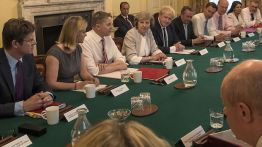
Theresa May has demonstrated this week that she isn’t interested in being continuity Cameron. Her reshuffle was, as I say in The Sun, a brutal change up from the previous Cabinet and she has shown that she is determined to take on the party of the rich tag in a way that David Cameron never could. In this reshuffle, May hasn’t bothered to disguise who her friends are and, just as importantly, who are her enemies. She was ‘wintery but courteous’ when she sacked people. Any Prime Minister who sacks more ministers than the size of her majority is taking a risk. Some of those who she sacked are already thinking about their next move. But others accept it had to be done. .

Theresa May faces an impossible test over Scotland and Brexit

From our UK edition

For some time now, and especially since September 2014, the SNP administration in Edinburgh has been inspired by a single, powerful, notion: govern as though you were enjoying the early days of a newly-independent state.  Of course, Scotland is not - or not yet - an independent state and, for the time being at least, still has two governments, one in Edinburgh and another in London. But in attitude and demeanour, the SNP behaves as though independence has already arrived in everything except the formal recognition of that fact. This is a matter of mood and framing, for sure, but it's also something which has consequences. It's why Theresa May's visit to Scotland and her meeting with Nicola Sturgeon today is a heavily symbolic matter.

Diary – 14 July 2016

From our UK edition

I first met a boyish, sunny Tony Blair more than 20 years ago. Our encounters have always been slightly tense since I reported some clumsy remarks he made about tax when he was still an apprentice PM — and he reacted much as Andrea Leadsom did against the Times last week (though via A. Campbell rather than Twitter). On Wednesday afternoon at Admiralty House he is a stricken caricature of how he was: painfully thin; waxy skin; astonishingly terrible teeth. He is a brilliant actor but not that good: he has been tormenting himself over Chilcot. But he isn’t sorry for the invasion, as he told me, and would do it again if circumstances repeated. His journey from fêted hero in 1997 to perhaps the most isolated man in Britain is a national tragedy.

Why Brexit better mean Brexit

From our UK edition

'Brexit means Brexit’, says our new Prime Minister, but that does not tell us what she thinks Brexit would involve. Given the immense resourcefulness of the EU in perpetuating itself, one must guard against solutions which appear to satisfy Brexit conditions, but leave reality little changed. They might resemble how France withdrew from the military command of Nato in 1966. This assertion of French sovereignty by De Gaulle involved, among other things, the withdrawal of non-French Nato troops from French soil. In reality, however, the secret Lemnitzer-Ailleret accords between the United States and France ensured that France remained bound into participation in Cold War hostilities. Over time, French self-exclusion became less and less significant.

Labour needs to rediscover its religious vision

From our UK edition

One of our main political parties is at an immense disadvantage. Labour is tied to a form of idealism. Socialism is a strong form of idealism. It can only gain and hold power by diluting this idealism, mixing it with realism. This is psychologically difficult, existentially unstable. When it finds a way of gaining power, it is not calmly at ease with itself, but divided. And this intensifies after a period of power: purists seek revenge on those behind the ‘successful’ compromise. Blair’s Iraq war adventure is incidental to why he is so hated by the left. He is really hated for winning all those elections. How has such a party survived thus far? How can the moderates bear to rub shoulders with the purists who so hate them?

Andrea Leadsom’s line about children? Thatcher did it first

From our UK edition

On Tuesday night in London, I spoke to Women2Win, a Conservative organisation dedicated to recruiting more women candidates. My title, suggested long ago, was ‘The Woman Who Won’. It referred to Margaret Thatcher. The day before my speech was delivered, another woman (and former chairman of Women2Win) won, so now there are two. Everyone seized the moment to compare and contrast them. There is a clear difference between Theresa May’s situation today and Mrs Thatcher’s in 1975. Mrs May, like Ted Heath in 1975, represents the side that just lost, Mrs Thatcher the side with a new idea about how to win. Mrs May is the establishment candidate: Mrs Thatcher was the insurgent.

Theresa May has just shown she really is serious about Brexit

From our UK edition

‘Brexit means Brexit’ has been Theresa May’s message since she started running for the Tory leadership. But Brexit could mean a whole variety of things. For example, a Norwegian-style deal with the EU would, technically, be ‘Brexit’. But now, Theresa May has shown real intent. She has demonstrated that she really is serious about this. She has appointed three leavers to the key Brexit-related jobs in government. David Davis will be Secretary of State for exiting the EU, Liam Fox gets the International Trade job and Boris Johnson the Foreign Office. The David Davis appointment is particularly striking. He resigned, unexpectedly, from David Cameron’s shadow Cabinet.

David Cameron’s legacy is out of his control

From our UK edition

It was a rather cruel pathetic fallacy that the Prime Minister who had to resign early after creating a political storm by accidentally taking Britain out of the European Union gave his final speech from Downing Street under rumbling, rolling storm clouds. At one point, the wind whooshed back David Cameron’s hair and rain began to splatter on the hundreds of cameras watching his statement. Cameron clearly wanted to use the statement to tell the British people what he thought his legacy was, and to highlight the ways in which he thought he had performed particularly well.

Where will Theresa May get her policies from?

From our UK edition

Theresa May takes over as Prime Minister this afternoon much sooner than she expected at the start of the week. First on her agenda is to appoint her Cabinet, which we are expecting to happen later today, but then the new Tory leader will have a great number of gaps to fill in when it comes to what she thinks about policy. A full leadership contest would have revealed this, but instead we will have to get to know May as she does the job. Those looking for clues about what sort of policies the new Prime Minister will adopt could do worse than to look at the work the 2020 Conservatives Group has started doing.

Labour and SNP join in standing ovation for David Cameron’s last PMQs

From our UK edition

David Cameron’s last PMQs was as entertaining as you’d expect. ‘The diary for the rest of my day is remarkably light,’ he said in answer to the traditional first question about his day. The Blair-worshiper in him will remember Tony Blair’s last PMQs, when he spoke about his P45 and started finished with: ‘that is that: the end’ – to enjoy a then-unprecedented  standing ovation. Cameron, then opposition leader, stood up to join in then gestured for Tory MPs to do the same. Most did. This time, Cameron had prepped his own last words: ‘Nothing is impossible. I was the future, once.’ And with that the Tory benches stood up in applause, as joined by spectator in the public gallery.

Will Mark Carney Brexit by Christmas?

From our UK edition

Critics say the Bank of England put itself under suspicion by entering the referendum fray. Now Mark Carney says its warnings are being borne out by the post-referendum economic reaction. He misses the point. By having made those warnings himself, even if he sincerely believed them, he became like a politician trying to win, rather than a public servant trying honestly to manage either outcome. The more loudly he tries to vindicate himself and attack the motives of his accusers, the more clearly this is proved. It would damage confidence if Mr Carney were to leave his job suddenly, particularly if the government pushed him; but surely he should quietly be booking a flight home to Canada by Christmas. This is an extract from Charles Moore's Notes.

Labour chief whip complains to Corbyn and Momentum about abuse of MPs

From our UK edition

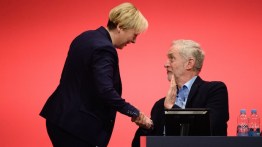
Labour MPs are becoming increasingly agitated about the amount of abuse and intimidation they are receiving, to the extent that the party’s chief whip has complained to Jeremy Corbyn and written to the head of Corbynite group Momentum to seek assurances that it is cracking down on bad behaviour in its ranks. Rosie Winterton has been writing to Jon Lansman, who chairs Momentum, over the past week about allegations from a number of Labour MPs about activists from the group. The group has officially made it clear that people shouldn’t be protesting outside MPs’ offices, or intimidating their staff. But many parliamentarians are extremely upset by the level of abuse they are receiving, not just online but at meetings too.

Victory for Corbyn as Labour’s NEC puts him on the ballot

From our UK edition

Jeremy Corbyn will be on the Labour leadership ballot. After a contentious meeting that lasted for almost six hours, the party’s National Executive Committee have ruled by 18-14 that as the incumbent his name will appear automatically on the ballot paper and so there is no need for him to gather nominations from MPs and MEPs. This is a massive victory for Corbyn and his wing of the party. He is now favourite to win this leadership election and if he does, the 172 Labour MPs who voted no confidence in him will either have to shut up or split off and form their own party. Crucially, if they leave after Corbyn has won again, it will be Corbyn and the hard left who will be left in possession of the Labour name and the party apparatus.

Thanks to the sneerocrats, the political bores are back in power

From our UK edition

Never mind bureaucracy. Forget technocracy. Put to the back of your mind the rising lawyerocracy, like those 1,000 puffed-up, demos-fearing lawyers who yesterday insisted that the EU referendum result is not binding. For there’s a worse 'ocracy than those, one which has an even greater draining effect on politics, one which leeches the life and colour from public debate. And that’s the sneerocracy, the rise of a meme-making, mick-taking, cynicism-stoking Twitterati and commentariat who never — but never — give a politician the benefit of the doubt and whose trade is snide rather than substance. Consider the fall of Andrea Leadsom. I know, I know: the only thing we’re meant to say about Leadsom is ‘Ding dong, the witch is dead’.

‘The claws are never far away’: inside the court of Theresa May

From our UK edition

There are plenty who have been left bruised by May’s decade and a half at the top of the Conservative party, but even her worst enemies concede that the woman who is to become the next Prime Minister has shown a remarkable durability in high office. She’s the longest-serving Home Secretary in half a century, and has made a success of what’s very often a career-ending job. A long-retired party grandee recalls May, then newly elected to Parliament, approaching him in 1997 to ask what she must do to succeed. ‘Ignore the little things,’ he replied. It’s advice that her critics reckon she has firmly ignored ever since.

Why We Must Have A Second Referendum – Now!

From our UK edition

Still the furore whips around. Some remain monkey showed me a bunch of pie charts 'proving' that the vote was unsound. Another described all 17.4m of us as being 'racists, bigots and xenophobes' (can you be a racist without being a xenophobe?). And no matter that the government has decided we shouldn’t have a second referendum, there are still marchers, and petitions and bile and loathing. So I have attempted to heal. Above is a video I did giving ordinary – and eminent – Remainers their say.

Labour party split over whether to split

From our UK edition

As well as all the other things that Labour MPs are anxious about at the moment, there is genuine anxiety in the party today that some MPs are considering splitting off to join a new, moderate group in politics. Certainly Labour MPs are pretty miserable about the state of their party - and about the way many of them are being treated by their own local parties. And many Labourites are starting to believe that a split is inevitable, with many arguing that it is wrong to be wary because of what happened to the SDP, as this would be a much larger chunk of MPs who would break off from the party than did in the 1980s.