Uk politics

Why do gay lefties hate Tories but ignore Corbyn’s ugly record?

Gay lefties have hated gay Tories ever since learning of their existence. The concept baffles them, like pro-life women or alcohol-free wine. Those with long memories are aware of the Conservative Party’s ugly record on gay equality. This is the party of Section 28, of differential consent laws, of fretting about children ‘being taught that they have an inalienable right to be gay’. But gay Tories, having largely rehabilitated their party and with many of the major gay rights battles settled favourably, hoped the rainbow flag might finally have space for a stripe of blue.  At London Pride over the weekend, it was clear this is a forlorn hope, for

Why Priti Patel is wrong about overseas aid and immigration

The Empire for International Development has a tough job justifying its deeply unpopular budget. In recent years, it has made out that development aid will stem the flow of migration. The following line appears in a piece that Priti Patel, the DFID Secretary, writes for the Sunday Telegraph today. We are taking immediate steps to protect our borders and tackle people smuggling. But the only way to resolve this crisis in the long term is to address the root causes. We need to create jobs across Africa and provide its growing population with a route out of poverty where they are. Her overall point – about how Africa needs more capitalism – is brave and

The Grenfell inquiry outcome must not be predetermined

Having worked flat-out to defend judges over the Article 50 case in the Supreme Court, the BBC has gone the other way, in relation to the judiciary, over Grenfell Tower. Its news coverage is working hard to displace the retired judge Sir Martin Moore-Bick from his appointment to chair the inquiry into the fire. Groups purporting to speak for the Grenfell victims are given airtime to denounce him. The idea is that they and their activist lawyers are entitled to a veto on who runs any inquiry, thus attaining effective control of what it decides. Something similar led to the hopeless, expensive collapse of chairman after chairman in Theresa May’s

The government can’t do its job properly with Theresa May in charge

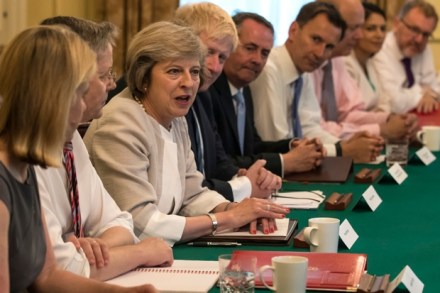
Time was when Theresa May ran such a tight ship as Prime Minister that even so much as talking off the record to journalists was seen as a bit of a risk for a Cabinet minister to take. But post-election, the Prime Minister has so little authority that a number of things that previously seemed impossible are now quite safe. The first is that it’s pretty much fine for a Cabinet minister to take a different stance to his or her colleagues. The main risk is not to the minister themselves but to the Prime Minister as her government appears to have five different stances on every important matter, with

Young people check their privilege – and feel deeply disappointed

Who would want be a member of Generation Z? Having your every youthful screw-up tracked and recorded on social media, facing the robot job apocalypse and without a lolly’s chance in hell of ever owning a home in London – even if medical advancements allow them to work until they’re 200. To top things off, they’re saddled with years of student debt after their three years learning about Whiteness and Privilege at university. As the Guardian puts it: Students from the poorest 40% of families entering university in England for the first time this September will emerge with an average debt of around £57,000, according to a new analysis by a leading

The devolution settlement has been bypassed once. Will it happen again?

The Government’s eleventh-hour political solution to Stella Creasy’s abortion amendment to the Queen’s Speech could create an unhelpful precedent within the delicate balance of the devolution settlements. I have long opposed the abhorrent abortion policies both north and south of the Irish border, so my concerns about last Thursday’s funding fudge to allow women from Northern Ireland to receive funding for abortions in England via the Government Equalities Office are purely technical. While the decision will address one form of inequality, it will also highlight the many other inequalities across the borders. The lack of understanding of our system of devolution is staggering. Devolved governments of every political persuasion, will, at some point, enact policies distasteful

How to shut down criticism of Scottish independence in four easy steps

Step One: Businessman criticises independence. In this case, Les Montgomery, chief executive of the Highland Spring mineral water brand. On Sunday, he told PA: ‘Businesses are fed up. The Scottish Government should be getting on with the job they are there to do. Focusing on employment, investment, those kinds of things. Independence isn’t the job that the Scottish Government is supposed to be doing.’ Step Two: Scottish Government calls businessman. After being told of Montgomery’s remarks, SNP economy minister Keith Brown instructed officials to contact Highland Spring to see if they would like to ‘discuss them further’. Highland Spring confirmed that it was approached by the Scottish Government but wouldn’t

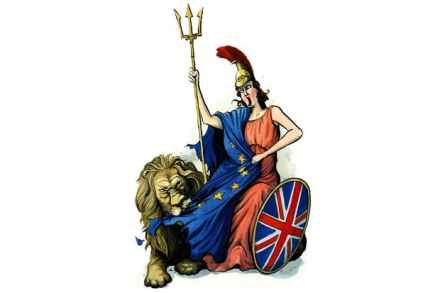
Brexit is a retreat – not a liberation

It is a mark of Britain’s estrangement from the European Union – and, at least for now, the country’s diminished standing on the international stage – that although Theresa May attended a memorial service to Helmut Kohl at the weekend, she was not invited to speak. Of course there are hierarchies of closeness on such occasions, but there is something piercing about the manner in which what this country, and its leaders, have to say now has so little resonance.  Kohl’s death should have occasioned more commentary in this country than it has. By any reasonable estimation, he was a titan of modern European history. The picture of Kohl holding

Scotland needed government. It got nationalism instead

As you approach the Scottish Parliament from the Royal Mile, a modest curve juts out from the obnoxious angles. This camber, the Canongate Wall, is studded with 26 slates of Scottish stone each bearing a quotation from the Bible and scriveners of more questionable repute. Among them is the instruction to ‘work as if you live in the early days of a better nation’, etched on Iona marble and attributed to the novelist Alasdair Gray. The words are totemic for Scottish nationalists, a rallying cry heard often during the 2014 referendum. And why not? They bear the promise of national rebirth, of hope in even the darkest days.  Inside, where

There’s a more dangerous Brexit ‘cliff-edge’ which is being ignored

People like Philip Hammond say that we must at all costs avoid a ‘cliff-edge’ in the Brexit negotiations. But the more dangerous cliff-edge is the political one. If, having voted to Leave, we do so in name but not in fact, the elites will have frustrated the ballot box, and faith in the democratic process will plunge to its death. This is Holmes versus Moriarty at the Reichenbach Falls. Just now, Moriarty has the upper hand. But remember that Holmes survived, because Conan Doyle had to revive him — by popular demand. This is an extract from Charles Moore’s Notes, which appears in this week’s Spectator

If you want to get ahead in politics, wear a tie

O tempora, o mores! The Speaker yesterday announced that men no longer have to wear ties in the House of Commons. In fact, until now it’s only been a convention – not a rule – that they should wear one. And that’s exactly as it should be. Politics is far too important to be trumped by sartorial rules. If you elect your representative, they should be allowed to wear shorts or a T-shirt in the chamber.  But not encouraged to. The thing about a suit and tie is that they just happen to make men look smarter than they do in shorts or T-shirts. A suit and tie lead to

I, Iain Duncan Smith – the ex-welfare secretary on tower blocks and work assessments

This morning, The Spectator held a series of discussions about the future of Conservative welfare reform, chaired by Andrew Neil and made possible by the sponsorship of the Joseph Rowntree Foundation. It was a sell-out invent with a stellar panel, and we’ll bring you the full reports later. But I thought it worth mentioning what our keynote speaker, Iain Duncan Smith, had to say about tower blocks and the work capability assessments made notorious in the film I, Daniel Blake. There are 4,000 tower blocks in Britain which the former Work & Pensions Secretary says represent an “architect-led” planning mistake. “Tower blocks, by and large, are not part of the housing culture of

Jeremy Corbyn: the nation’s therapist

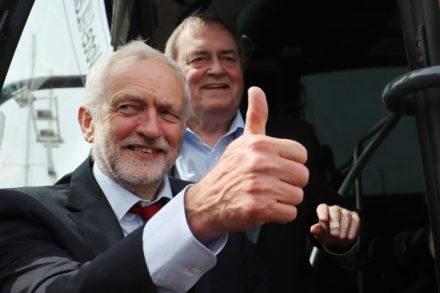
Comparisons between Jesus and Jezza became commonplace long before he chose to end his election campaign with a rally at a church in Islington. As far back as August 2015, which in today’s political currency is at least two lifetimes ago, commentators were asking, ‘Is Jeremy Corbyn The New Messiah?’. It wasn’t just the shared initials (it’s a sign!) but the crowds he drew and the tearful adulation among his audience. But Corbyn is not messiah-like – indeed his very lack of magnetism is part of his appeal. And neither does Corbynism fill some Christianity-shaped hole in British life. The old religion demanded confession, sacrifice and a commitment that extends beyond

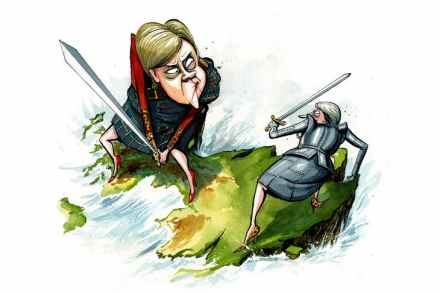
Nicola Sturgeon asks Scotland for one thing: patience

Ever since the general election Nicola Sturgeon has lurked in her tent, contemplating the future. The result of that election, in which the SNP’s share of the vote fell by 13 points and in which it lost 21 seats, demanded a period of ‘reflection’ from the first minister. Where does Scotland stand now? The answer, which was wearily predictable, is just where it stood before. Nicola Sturgeon emerged from her period of reflection yesterday with a simple message: nothing has changed. Sure, she talked about ‘resetting’ her timetable for independence, confirming that she would not this year introduce a bill at the Scottish parliament seeking the Section 30 order from

If you can’t afford a home, why vote Tory?

Back in the 90s and even early noughties, it was a cliché that middle-class English people used to talk about house prices at dinner parties. That hasn’t been the case for a good decade, if my social circles are any indicators; it would be like bringing up interesting anecdotes of people we know discovering they have cancer. For years, a handful of miserablists, such as our own Nick Cohen, have been warning that housing inflation is not the great boom it was once believed to be, but is in fact an unmitigated social disaster. For years we’ve done nothing about it. And finally, in 2017, rising house prices have proven

Grenfell Tower: a political prop in a morality play

John McDonnell’s use of the M-word in relation to the Grenfell inferno marks a new low in the political milking of this catastrophe. I’m not normally squeamish, but I must say I have found the marshalling of the Grenfell horror to political ends, the transformation of this human calamity into effectively a meme saying ‘Austerity Bad’ or ‘Tory Scum’, deeply disturbing. And now McDonnell has dragged it down to its nadir, with his claim at Glastonbury that the residents of this tragic block were ‘murdered by political decisions’. The entire setting of McDonnell’s comments feels nauseating. Here we had the shadow chancellor of the deceptively bourgeois Corbynista movement shoring up his party’s

Give the DUP a chance

A political party barely known outside Northern Ireland now holds the balance of power in Parliament. Nobody saw it coming, but then that’s the new catchphrase in politics. So who are the DUP? And do they deserve the pillorying that has been coming their way since the general election catapulted them into the spotlight? I have been watching the party up close for decades. Yet while the DUP isn’t always a pretty sight to behold, the party is much more complicated than the hysterical stereotyping makes out. It’s true that the DUP has its roots in uncompromising unionism and religion. And for many years it was little more than a one-man’s fan club: the political extension of Ian Paisley’s hardline

England, you wanted Brexit so you can pay for it

The message to be taken from today’s Downing Street proceedings is a simple one: England, you wanted Brexit so you can pay for it. That, in essence, is the meaning of the confidence and supply agreement brokered between the Conservatives and the Democratic Unionist Party. That the DUP favoured Brexit too is of no account and nothing more than a cute irony. Nobody gets between an Irish politician and their pork. ’Twas ever thus, north and south of the border, and ’twill ever be thus. This is the word of the book, you know. Enough too, please, of pretending to be shocked by the shocking discovery that politics is a

Corbynism is bigger than Glastonbury and avocado toast

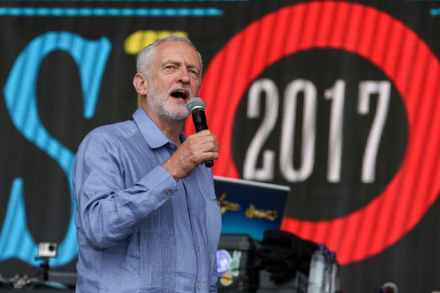
Glastonbury is notorious for being one of the most irritating spectacles in the British calendar, so it is hardly surprising that, when combined with a smattering of Jeremy Corbyn fanaticism, it has gone down badly. There is obviously something repellent about watching 100,000 yuppies – who had paid £238 for the privilege of standing in a field, listening to Ed Sheeran – chanting Corbyn’s name and extolling the virtues of a socialist utopia. But, beyond this, there is something more telling to the newspaper headlines and editorials: the right simply doesn’t have a clue what’s going on with the left. Take, for example, the so-called ‘Day of Rage’ last week (where

Britain is in desperate need of a truly national party

I am not sure I can think of any great public assembly in Britain I’d enjoy less than Glastonbury. Within reason, I’m not sure you could even pay me to go there. Glastonbury is a place for dear Hugo Rifkind not for me, and that’s the way I imagine we both prefer it.  Still, there was something worth seeing at Glastonbury this year. Jeremy Corbyn, obviously. His appearance was remarkable, even if it has also prompted a fresh outbreak of one of Britain’s under-appreciated traditional sports: members of the middle-class sneering at other members of the middle-class.  Even so, two things can be said about this. First, the Labour party