Uk politics

Philip Hammond creates a one-man Cabinet split over Brexit

Leaving Philip Hammond in charge of the government was always going to be a risk because of his habit of putting his foot in it. There was the debacle of his first budget, then his saying in Cabinet that driving a train was so easy that even a woman could do it, and his comments that public sector workers are “overpaid”. Now, with the Prime Minister walking in the Alps, Hammond is in charge and has goofed again – this time in an interview with Le Monde. “I often hear it said that the UK is considering participating in unfair competition in regulation and tax. That is neither our plan nor our vision

How the economics of cow-milking can help explain Brexit

Writing about judicial appointments, I incautiously compared a silly interview question asking a judge to cite an example of when he had acted with integrity, to asking a farmer, ‘How many times a day do you milk your cows?’ Jamie Blackett, a farmer, writes to say that, in the 21st century, it is a question to which the answer reveals much. He explains. Farmer One milks his 50 cows only once a day. He follows the Norwegian system and makes a marketable green virtue of leaving the calf on the cow. He lives near rich people and sells them his artisan cheese and yoghurt. He voted Remain. Farmer Two milks

Rupert Murdoch has helped me understand Jeremy Corbyn’s appeal

For our 16th wedding anniversary, Caroline and I went to the Almeida Theatre to see Ink, a new play about Rupert Murdoch’s purchase of the Sun in 1969 and the subsequent circulation war with the Daily Mirror. It is terrifically funny, brimming with comic characters and acerbic one-liners, as you would expect from writer James Graham, perhaps best known for This House, his play about the five-year duel between the Labour and Conservative whips during the period 1974-79. Ink is due to transfer to the Duke of York’s Theatre on 9 September and I cannot recommend it highly enough. One of the things that struck me as the Murdoch character prowls the stage, laying out his plans

Politicians are still not sure what Brexit means or whether they can make a success of it

It was only a year ago that ‘Brexit means Brexit, and we’re going to make a success of it’ seemed like a reasonably fresh phrase which could actually mean something. Now, we don’t hear so much about making a success of the thing as we do about getting through it in one piece, hopefully with Theresa May’s Cabinet agreeing on a few things along the way too. The Cabinet is slowly starting to realise that a little pragmatism on both sides wouldn’t hurt as the government burrows into the detailed negotiations with the European Union. A bit of agreement on transitional periods, if not immigration, is handy, but this is

Is the government really going to be able to make the switch to electric cars?

Don’t electric cars sound exciting? No exhaust emissions creating a toxic soup for children to breathe in as they go to school and charging at home before whizzing about in a quiet, clean car. Ministers are so excited by them that this week they announced they want to ban all new petrol and diesel cars from 2040. I already own an electric car, so you’d expect me to be excited that others will be joining the revolution that’s currently the preserve of tedious people like me who also own folding bikes and have a veg box subscription. But while my car is a dream to drive, it’s really not particularly

Bad news for the Tories: Corbyn has learned to love the centre

When Tony Blair was selling out the Labour Party by introducing a minimum wage, paid holiday leave and free nursery education, the hard left reckoned it had his measure. Semi-Trots and leftover Bennites, since decamped to one of the many exciting acronyms British Leninism has to offer, filled monochrome magazines and academish journals with tracts denouncing Blair as a Tory, a Thatcherite and both a neoliberal and a neocon. The charge sheet was echoed with righteous indignation by proud purists on the backbenches and in the columns of the Guardian and the Independent. New Labour was so far to the right it was indistinguishable from the Conservatives. What was the

I’m a Leaver who would be happy for a second referendum

To everyone’s huge surprise, Jeremy Corbyn has come out as being quite a hard-line Eurosceptic, despite his tireless campaigning last year during the referendum. He has also further cemented his party’s newfound respect for immigration restriction, attacking the importing of cheap labour from abroad. Whether any of this makes any impact on his legion of supporters, who seem to project their own vision of what he should be onto reality, I don’t know; the Labour coalition already seems so incoherent but then I’ve given up trying to understand how politics work; it’s like there’s been a writer’s strike up in heaven and nothing makes sense anymore. I suspect Corbynmania mainly comes

Cabinet agreement on Brexit doesn’t equal Tory harmony

What’s the most significant thing that Liam Fox has said today, as he begins talks with the US on a post-Brexit trade deal? Is it that he thinks the British media has an ‘obsession’ with chlorine-washed chicken (Ross takes a non-obsessive look at this here) or that he has admitted that it might be ‘optimistic’ to expect a trade deal between the UK and the EU by March 2019? It is true that the International Trade Secretary has often been the most optimistic about how hard Brexit will be (unkind people might suggest that this is because he hasn’t actually had to do much of the nitty gritty stuff since

Why are students allowed to vote where they study?

The Electoral Commission is finally sidling up to the consequences of its failure to police voting registration. It finds the thought that lots of young people may have voted twice ‘troubling’. Why is it that students are allowed to register in their place of study as well as their home? After all, they rarely stay long enough to live with the consequences of their decision. This is an extract from Charles Moore’s Notes. The full article can be found here. 

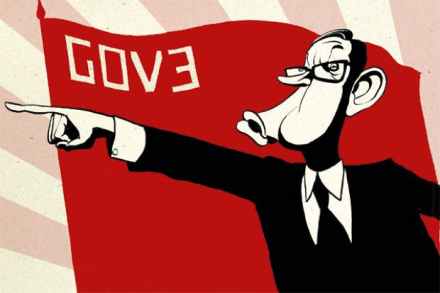
Michael Gove, ‘Green Brexit’, and what it all means for Britain’s farmers

Michael Gove’s speech this morning on his plan for a ‘Green Brexit’ is one of the first signs of what he is up to in his new role as Defra secretary. It was always a given that he would stir things up, but it remained to be seen whether his Brexit plan would be judged as a good thing or a bad thing by British famers and rural communities. So what did this morning’s speech deliver? Well, when it comes to farming, the answer is far more questions than it did answers. Of course, this was a speech to various environmental groups at the World Wildlife Fund’s headquarters, so it’s unsurprising

What will Jeremy Corbyn do next?

The Labour party has a troubling recess ahead of it. Many of its members just won’t know what to do with themselves. This is because for the first time in two years, there is no leadership contest. Those who had eschewed beach holidays in favour of spending their summer recess in windowless rooms listening to contenders for the top job fight over who would really, really nationalise the railways now have nothing to do. Even before Labour lost the election unexpectedly well, few anticipated an immediate challenge to Jeremy Corbyn. He and his allies made it clear that he would stay on whatever the result, and even those who predicted

How doing a ‘Good Thing’ can make ministers mess up

One of the few bits of legislation that the government thinks it can get past MPs is a domestic violence bill, which was announced as a draft bill in the Queen’s Speech. Yesterday the minister responsible for taking the Bill through the Commons, Sarah Newton, held a meeting with MPs, campaigners and survivors of abuse to talk about what the government is planning to do. Now, you’d think that the government might be pursuing this Bill because everyone is opposed to domestic violence and therefore no MP will vote against it. But as I’ve explained before, it’s a bit more complicated than that – both in terms of certain political

Must we politicise the Proms? Or life expectancy? Or advertising?

We went to the first night of the Proms last week. Thinking it was all over, we left the auditorium just before Igor Levit came back on for a delayed encore in which he played Beethoven’s Ode to Joy (transcribed by Liszt) as an anti-Brexit gesture. We loved Levit’s earlier rendering of a Beethoven piano concerto, but were spared his political views, so it was a perfect evening. Two nights later, Daniel Barenboim took advantage of the Proms conductor’s podium to make an unscheduled speech in which he deplored ‘isolation tendencies’. All good Brexiteers deplore isolation tendencies, which is one of the reasons we don’t like a European Union with

It’s not Theresa May who should rebuke naughty ministers. It’s her backbenchers.

Theresa May is to rebuke her Cabinet tomorrow for the way its members have been behaving over the past week. What started as ‘warm prosecco’ plotting, as Damian Green put it, has now moved to open insults being traded over top notch champagne at Westminster parties and ministers telling journalists the gory details of Cabinet meetings. The Prime Minister’s official spokesman said this morning that ‘what I would say is of course cabinet must be able to hold discussions on government policy in private and the Prime Minister will be reminding her colleagues of that at Cabinet meeting tomorrow.’ Given the way the Conservative party operates in febrile times, chances

This isn’t a Cabinet leak, it’s just good journalism

I was on the radio this morning with David Mellor who accused the Cabinet of being appallingly ill-disciplined because of ‘leaks’ in the weekend press. James Forsyth revealed on Saturday that Philip Hammond had told Cabinet that being a train driver is so easy that ‘even’ a woman could do it. Yesterday, Tim Shipman revealed in the Sunday Times that Hammond had gone on to declare that public sector workers were ‘overpaid’. But here’s the thing: that meeting took place on Tuesday. If Cabinet members were queuing up to leak to journalists then we’d have read about it in Wednesday’s newspapers. It took several days for the information to become public precisely because it was not being

Labour moderates should learn from the mistakes of Trump’s reluctant cheerleaders

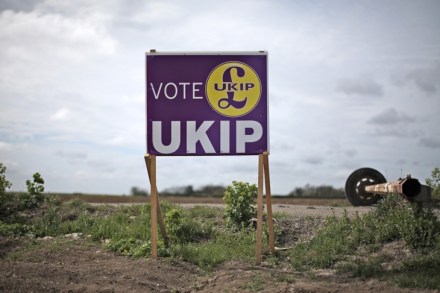
Demagogues have had a good run of late but the tide may be turning. Geert Wilders and Marine Le Pen failed to pull off widely predicted electoral coups, while the Austrian far-right fell short in presidential elections. The SNP can no longer rouse a rabble like it once did and Ukip, out-Kipped by Labour and the Tories, is now an irrelevance. But none is as dramatic as the stalling of the Donald Trump bandwagon, which could yet come off its wheels. The President faces allegations of colluding with the Russians during the 2016 election. Springing into action, his son Donald Trump Jr. tweeted out campaign emails in an effort to

Did Jeremy Corbyn really save the Labour party in Scotland?

If a line is repeated often enough it becomes true. Or true enough, anyway. This, at any rate, is one of the axiomatic rules of modern politics. He who controls the ballyhooed “narrative” owns the truth. Which is why the interpretation of any given event swiftly becomes almost as important as the actual event itself. So up-pops Matt Zarb-Cousin, formerly Jeremy Corbyn’s spokesman and now one of his more charming outriders on social media, to claim that it was Jezzah what has saved the Labour party in Scotland. As he puts it, “Corbyn’s supporters have long argued that returning Labour to its socialist roots would be necessary if the party

Theresa May’s downsizing relaunch

Every political leader and government goes through a phase when their spin doctors feel they need a relaunch. For some, the relaunch comes after a number of good years. For Theresa May, her relaunch came on the anniversary of her becoming Prime Minister – and after a rather tumultuous year. As relaunches go, this wasn’t the standard speech where a leader at least gives the impression that they are moving onwards and upwards. Instead, it felt as though May was trying to make the best of a decision to downsize that she hadn’t taken. She couldn’t even promise to implement the recommendations of the Taylor Report, which she launched alongside

If Brexit doesn’t happen, then Britain isn’t a democracy

It’s the casualness with which they’re saying it that is truly disturbing. ‘I’m beginning to think that Brexit may never happen’, said Vince Cable on Sunday morning TV, with expert nonchalance, as if he were predicting rain. He echoed Newsnight’s Nicholas Watt, who a few days earlier informed viewers that there is talk in ‘some quarters’ that ‘Brexit may not actually happen’. Leaving the EU? ‘I think that is very much open to question now’, said Lord Heseltine last month, with imperious indifference. He could have been asking a minion to pass the butter. They say it matter-of-factly, sometimes a little gleefully. As if it wouldn’t be a disgrace, a

The government should think again before scrapping its free schools plan

On the front page of today’s Times it says ministers are thinking of scrapping the free schools policy in order to give more money to schools. I hope it’s not true. Not only would it constitute a terrible loss of self-confidence on the Government’s part and confirm the narrative that the Conservatives are enacting Labour’s manifesto rather than their own. It would also be a betrayal of the thousands of people who’ve set up free schools and are in the process of setting them up. We have taken on the educational establishment and put our necks on the line at the behest of successive Conservative Education Secretaries. Are they really