Uk politics

The Spectator’s support for free trade is nothing new

From our UK edition

Free trade hasn’t always been a British tradition. When the first issue of The Spectator hit the newsstands in July 1828, the country was firmly under the thumb of the Corn Laws. Introduced in 1815 to protect the vested interests of the land-owning classes, these measures propped up the price of British grain, artificially high since the disturbance of the Napoleonic Wars. Protectionism was proving profitable: in June that year, the palatial London Corn Exchange was opened; in July, Parliament readily approved the Duke of Wellington’s Corn Bill, which introduced a sliding scale of duties that continued to prohibit free access to foreign grain.
Listen: Ed Vaizey says ‘quite a few’ MPs want May to resign

From our UK edition

Oh dear. After yesterday's calamitous leader's speech, Theresa May's position looks a little less secure than it did prior to her party's conference. Although Cabinet ministers are said to have called her to say she ought to stay in post, others take a different view. Ed Vaizey has just spoken to BBC Radio Oxford. Asked about May's future, the Cameroon said that 'quite a few want her to resign'. As for himself? EV: One of the things I would say is that I thought the Tory party conference was a great opportunity to reboot the party and therefore reboot the country and give it a clear sense of direction. That didn't happen so yes I am concerned. BBC: Do you think she should step aside now? EV: Well, I'm finding it increasingly difficult to see a way forward.

Newsnight’s Tory conference meltdown

From our UK edition

After Theresa May's leader's speech fell victim to pranks, health issues and technical glitches, the Prime Minister has received a rough ride in the media. Last night's episode of Newsnight was no exception – the programme promised to 'make sense' of the 'hitches' in May's speech: https://twitter.com/BBCNewsnight/status/915679701137575936 Alas Newsnight producers soon discovered that they weren't immune to technical glitches themselves. There were several hitches in the cutaway packages – with Theresa May even labelled as 'Jeremy Corbyn' at one point: Happily, viewers were on hand to remind producers of the irony: https://twitter.com/Tom_Hamer7/status/915695969689317376 https://twitter.com/huwthomas_Wales/status/915700589866180608 https://twitter.

May’s meltdown: the verdict in the German press

From our UK edition

Theresa May had hoped her Conservative conference speech would not only paper over the cracks within her own party but also strengthen her Brexit negotiating position ahead of a crucial EU summit later this month. In around two weeks, EU leaders will gather in Brussels to decide whether to commence trade negotiations with the UK. The key player in this decision, as always, will be Germany. However, it would seem that Theresa May’s conference speech has done little to convince the Germans of her political nous. Here’s how the German press reacted to Theresa May’s conference speech: The country’s largest broadsheet, Süddeutsche Zeitung, says Theresa May’s keynote speech should have been an ‘act of liberation’.

Theresa May’s disastrous conference speech: the newspaper verdict

From our UK edition

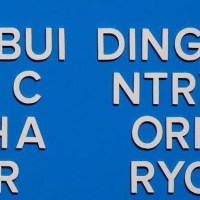
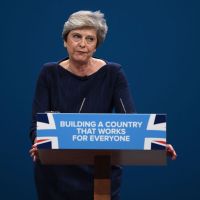
Theresa May’s Tory party conference speech was a memorable one if only for all the wrong reasons. A prankster, her faltering voice and a broken sign meant the Prime Minister’s reboot did not go to plan. Here is the newspaper verdict on May’s nightmare speech: The luck that all leaders need has ‘deserted Theresa May’, says the Times. The Prime Minister’s speech was undoubtedly a ‘presentational disaster’. Yet while ‘there will be many who see this ill-starred speech as the last straw’, whether the PM survives ‘cannot be decided on the basis of optics’.

It’s time to call it a day on this Tory government

From our UK edition

Some of you may not like this, but the BBC Ten O'Clock News last night was pretty scrupulous in its coverage of the Prime Minister’s speech, and Laura Kuenssberg – not always my favourite news bunny – delivered a very good piece indeed. She trod the line between sympathy, analysis and an acute feeling in the hall, unspoken, that this party, and this leader are most likely not long for this world. Michael Deacon in the Telegraph got it right, too, with his opening line: 'Poor woman. Poor, poor woman.' Yes, quite. None of yesterday's humiliations were really her fault. An arsehole, a deathlessly unfunny self-publicist gurning for the camera with his fatuous little stunt (how the hell did he get there?) and a bad cough.

The Tories aren’t too white. They’re too blue

From our UK edition

Why do Tories all look the same? This year, having never been to a party conference before, I went to the Labour one in Brighton, then the Tory one in Manchester. At each, the political weather was what you’d expect. What struck me most, however, was the difference in clothing. In Brighton, I saw women with pink hair and men wearing T-shirts that read ‘Stop the war’ or ‘Never kissed a Tory’; scruffy young Corbynistas rubbing up against nervous-looking Blairites. At the Conservative conference, there was only one tribe — and its uniform was a bland blue suit. I expected to find a mix of styles as at the Labour convention.

Boris Johnson’s ‘dead bodies’ critics should take a look in the mirror

From our UK edition

In what kind of moral universe would it be considered acceptable for the authors of a war, the people who voted for a war, to get on their high horses over those who make daft or jokey comments about that war? For the people who green-lighted the bombing of a foreign nation to haughtily chastise those who dare to say silly things about the bloody consequences of that bombing? In the warped moral universe of political correctness, that’s where. This is the case of Boris Johnson and his thoughtless ‘dead bodies’ comment about Sirte, the Libyan city where Gaddafi was captured and executed in 2011. At the Conservative conference, Boris was asked about Libya.

Capping energy prices will leave us all worse off

From our UK edition

We have a couple of hundred years of economic history to tell us that some things are just a really, really bad idea. Printing loads of money, for example. State control of industries. Punitive taxes. Subsidies. But of all the really terrible polices a government can put in place, the very worst of all is price controls. The trouble is, that also seems to be the most popular idea in British politics right now. Last week, Labour announced what amounts to price controls on credit cards, with a cap on the interest rate that can be charged. It is already in favour of controls on rents. Today, Theresa May stepped in with her own contribution, unveiling a plan for controlling the price of energy. And it is still only Wednesday, so who knows where we will end up by the end of the week.

The Conservative party’s existential crisis

From our UK edition

Theresa May’s conference speech — interrupted by coughing fits and with part of the set falling apart behind her — served as an unfortunate metaphor for her premiership and party. She is carrying on and in doing so, she demonstrates her resilience and sense of duty but also her frailty. The horrified faces of cabinet members watching as her voice dried up on stage seemed to sum up their wider concerns about whether their party is in a fit state to see off Labour, a party they so recently dismissed as a joke. Now, they are left wondering if their party is falling apart. https://twitter.

The torment of Theresa May

From our UK edition

It’s always easy and usually wrong to describe single political speeches as pivotal or decisive.  Always remember: almost no-one in the real world watches anything except a few clips on the news the evening the speech is given.   The amount of coverage devoted to leaders’ speeches at party conferences is usually excessive, beyond what most of the readership or audience really want or care about. But this one, this one is different.  This really is the crucible, the decisive moment.  Theresa May’s premiership turns on how this is seen. Coughing, stumbling and victim to a brutally effective visual prank by an apparent 'comedian', we have seen a British Prime Minister come as close to the brink of public unravelling as we ever have before.

Watch: Amber Rudd tells Boris to get on his feet for May

From our UK edition

It's safe to say that Theresa May's conference speech has not gone to plan after the Prime Minister came down with a bad cough – and a heckler presented her with a P45. Happily she has her Cabinet on her side. Or one Cabinet minister at least. Amber Rudd was caught on camera jumping to her feet to give May a standing ovation to help her during an awkward moment in the speech. The Home Secretary then appeared to order Boris Johnson to do the same: https://twitter.com/hansmollman/status/915536471418900480 1-0 to Rudd...

Watch: Theresa May presented with a P45 during conference speech

From our UK edition

Oh dear. Theresa May's leader's speech at conference has descended into farce. As the Prime Minister tried to unify her party, one attendee had other ideas. Simon Brodkin interrupted May's speech mid-flow and presented her with a P45. Security had to escort him out  with the 'comedian' heckled by attendees. That's the picture of conference sorted then...

Can Ruth Davidson save the Tory brand?

From our UK edition

When a bird as sagacious as Danny Finkelstein writes a column in The Times headlined 'If the Tories want to win, they’ll send for Ruth Davidson' you know something is in the water. Ruthmania is getting out of hand. The Fink accepts that his plan for how Ruth can be brought south from Scotland to save the Tory brand - and idea - in England is under-cooked but, when every other plan is impossible, whatever’s left is the best cake available.  Davidson, however, has evidently been the star of this year’s conference. That’s what will happen when you’re the only leading Conservative who could be happy with the general election result. And when you look at the cabinet Ruth’s appeal becomes really quite easy to understand.

Alan Duncan’s Brexit tantrum

From our UK edition

Alan Duncan caused a stir on Tuesday when he claimed that one of the reasons for the Brexit vote was working class voters throwing 'a bit of a tantrum' over immigration. It's fair to say that the government minister's comments have gone down like a cup of cold sick with Brexiteers. But is Duncan really one to lecture on Brexit tantrums? Mr S recalls that Duncan was accused of throwing a tantrum of his own during the EU referendum. After Duncan declared himself a Remain-er, Vote Leave’s Matthew Elliott said the Conservative MP had planned to back Brexit but switched to the other side at the last minute after his request for a position on their board was refused.

Boris is the first minister to capture the Tories’ problem so vividly

From our UK edition

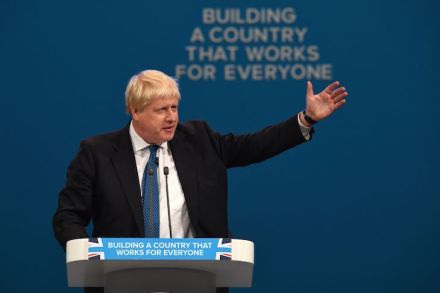
Boris Johnson came to Tory conference to do two things. First, he had to win back the Tory grassroots from the floccinaucinihilipilificating ways of Jacob Rees-Mogg. Moggmentum rises and falls with the willingness of the faithful to indulge blithe theatrical Toryism at the expense of sense and good judgement. Second, he had to address his own reputation for flippancy and remind the party that he can do serious when he wants to.  Whether he succeeded in achieving the former, we will see but he made a good effort on the latter point. It fell to Boris to remind Conservatives of their own fatal conceit — that of assuming the arguments against socialism had been won.

Amber Rudd’s Conservative conference speech, full text

From our UK edition

Conference, Standing here in Manchester it is impossible to forget the sight of this proud city, shrouded in grief, after a pop concert in May. It is impossible to forget the images of the terrified concert-goers … the images of the injured and the dead - some so very young. The toll of those who have been the victims of such violence this year is grim.  It includes those targeted outside Finsbury Park Mosque, and in London Bridge.  It includes the innocent people mown down on Westminster Bridge. It includes Police Constable Keith Palmer who paid with his life in the line of duty, trying to stop that attack. His death is a reminder of the daily danger in which our police force and intelligence agencies put themselves, to keep the rest of us safe.

Boris Johnson shows what it means to be an upbeat Conservative

From our UK edition

Boris Johnson's speech to Conservative Party conference was disloyal to the Prime Minister in the sense that unlike Theresa May, the Foreign Secretary finds it easy to be upbeat and persuasive about the benefits of Conservatism. As this morning's round of interviews showed, the Prime Minister's definition of ‘upbeat’ is talking faster. Johnson, meanwhile, uses his command of the English language and confidence in public speaking to cheer up party members who were so desperate for something to take their minds off their current general misery that they were queuing in long lines to get into the conference hall. But members already love Johnson.