Uk politics

The Conservatives have lost the ability to defend freedom

From our UK edition

The Conservatives now have a real fight on their hands. After 1979, as champions of  free-market capitalism, they seemed to embody the ruling ideology of the age. One best-selling book even called Labour leaders Blair and Brown the ‘sons of Thatcher’. Now the Labour party speaks openly of socialism and has a shadow chancellor, John McDonnell, who lists his recreations in Who’s Who as ‘fermenting the overthrow of capitalism’. It’s no idle threat; in his conference speech he advocated a ‘strategic investment board’ comprising the Chancellor, the Secretary of State for Business and the Governor of the Bank of England to ‘co-ordinate the promotion of investment, employment and real wages’.

Who will join the Grant Shapps and Ed Vaizey rebellion?

From our UK edition

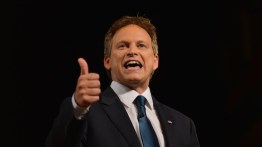
A move against Theresa May led by someone with their career in front of them might be seen as a bold attempt to shake the Cabinet into action for the good of the party. But a plot led by Grant Shapps, party chairman under David Cameron, is a rather different proposition. He doesn't seem to have much of a strategy – it looks like he’s readying the freezer bags and coming after the PM, as per George Osborne’s instructions. He blames the Tory whips for leaking his name to the press, and says it will only accelerate things. I'm not so sure.

The best way to learn about socialism is to experience it

From our UK edition

I think it's fair to say that Theresa May did not have a cracking conference, but the sympathy vote might even help her. I certainly felt sorry for the Prime Minister, and instinctively don't like the nasty playground teasing from the Men of Twitter. (She does have diabetes, too, which can't help.) But she has to go nonetheless, not because she's unlucky but because she has a tin ear; why else would she choose to raise such issues as racial discrimination in mental health, sores that can't be healed but which invariably paint the Tories as the 'Nasty Party' - a Ratnerism she coined. Ditto with tuition fees.

Will banks really leave Britain after Brexit?

From our UK edition

In the run-up to last year’s referendum, some grave-faced pundits predicted that Brexit would prompt a mass exodus of bankers from London to Frankfurt. Nonsense, said the Leavers. Everything will be fine. As with almost every aspect of the campaign, there was virtually no common ground. Depending on which side you listened to, either the Square Mile would become a wasteland or Brexit would make no difference whatsoever. So, fifteen months later, who should we believe? I’ve been talking to German bankers and it’s no surprise to find that the word on Threadneedle Street is a lot more nuanced. Project Fear wasn’t entirely fanciful, they tell me, but the timescale was all wrong.

Whether Theresa May survives depends on two things

From our UK edition

Is Theresa May now doomed after her conference speech went so badly wrong? Tory MPs were yesterday so shocked by all the mishaps that it took them a few hours to realise that underneath all the things that weren't May's fault – such as the P45 stunt and the set falling apart – were a lot of things that the Prime Minister really was responsible for. The speech was not the bold, re-energising address that May needed to give. It contained pale policies which seemed pale red, not true blue. There are ministers who see this as an opportunity to move against their leader. There are Boris allies who have recovered their bewilderment at what their man was up to this week sufficiently to start calling privately for a leadership election before Christmas.

Theresa May’s staff broke all of Machiavelli’s rules

From our UK edition

Theresa May must have woken up this morning wondering, for a split second, if yesterday was all just a very bad dream. The front pages will hammer home the reality of her situation – she was 'luckless', says one of the kinder headlines. But I wonder: how much did yesterday's shambolic performance have to do with bad luck, and how much to do with woeful preparation? May's ordeal, and especially her excruciating coughing fits, reminded me of a passage in Jonathan Powell's The New Machiavelli, a sort-of memoir about his time as Tony Blair's chief of staff.

The Spectator’s support for free trade is nothing new

From our UK edition

Free trade hasn’t always been a British tradition. When the first issue of The Spectator hit the newsstands in July 1828, the country was firmly under the thumb of the Corn Laws. Introduced in 1815 to protect the vested interests of the land-owning classes, these measures propped up the price of British grain, artificially high since the disturbance of the Napoleonic Wars. Protectionism was proving profitable: in June that year, the palatial London Corn Exchange was opened; in July, Parliament readily approved the Duke of Wellington’s Corn Bill, which introduced a sliding scale of duties that continued to prohibit free access to foreign grain.

The Tories had an election-winning conference – for Jeremy Corbyn

From our UK edition

If Labour's party conference in Brighton suggested the party was in a celebratory mood, that sense of triumphalism has been vindicated by the shambolic gathering of Conservatives in Manchester. The comparison between the two parties has been starker than ever: the buoyant Corbynistas laying out Marxism to unwavering applause, whilst bickering Conservatives can’t even sell their policies to a paying audience. If the Labour party looked in rude health last Wednesday, they look an even more attractive proposition after the Maybot suffered an all too human malfunction during her headline address yesterday.

Newsnight’s Tory conference meltdown

From our UK edition

After Theresa May's leader's speech fell victim to pranks, health issues and technical glitches, the Prime Minister has received a rough ride in the media. Last night's episode of Newsnight was no exception – the programme promised to 'make sense' of the 'hitches' in May's speech: https://twitter.com/BBCNewsnight/status/915679701137575936 Alas Newsnight producers soon discovered that they weren't immune to technical glitches themselves. There were several hitches in the cutaway packages – with Theresa May even labelled as 'Jeremy Corbyn' at one point: Happily, viewers were on hand to remind producers of the irony: https://twitter.com/Tom_Hamer7/status/915695969689317376 https://twitter.com/huwthomas_Wales/status/915700589866180608 https://twitter.

May’s meltdown: the verdict in the German press

From our UK edition

Theresa May had hoped her Conservative conference speech would not only paper over the cracks within her own party but also strengthen her Brexit negotiating position ahead of a crucial EU summit later this month. In around two weeks, EU leaders will gather in Brussels to decide whether to commence trade negotiations with the UK. The key player in this decision, as always, will be Germany. However, it would seem that Theresa May’s conference speech has done little to convince the Germans of her political nous. Here’s how the German press reacted to Theresa May’s conference speech: The country’s largest broadsheet, Süddeutsche Zeitung, says Theresa May’s keynote speech should have been an ‘act of liberation’.

Theresa May’s disastrous conference speech: the newspaper verdict

From our UK edition

Theresa May’s Tory party conference speech was a memorable one if only for all the wrong reasons. A prankster, her faltering voice and a broken sign meant the Prime Minister’s reboot did not go to plan. Here is the newspaper verdict on May’s nightmare speech: The luck that all leaders need has ‘deserted Theresa May’, says the Times. The Prime Minister’s speech was undoubtedly a ‘presentational disaster’. Yet while ‘there will be many who see this ill-starred speech as the last straw’, whether the PM survives ‘cannot be decided on the basis of optics’.

It’s time to call it a day on this Tory government

From our UK edition

Some of you may not like this, but the BBC Ten O'Clock News last night was pretty scrupulous in its coverage of the Prime Minister’s speech, and Laura Kuenssberg – not always my favourite news bunny – delivered a very good piece indeed. She trod the line between sympathy, analysis and an acute feeling in the hall, unspoken, that this party, and this leader are most likely not long for this world. Michael Deacon in the Telegraph got it right, too, with his opening line: 'Poor woman. Poor, poor woman.' Yes, quite. None of yesterday's humiliations were really her fault. An arsehole, a deathlessly unfunny self-publicist gurning for the camera with his fatuous little stunt (how the hell did he get there?) and a bad cough.

The Tories aren’t too white. They’re too blue

From our UK edition

Why do Tories all look the same? This year, having never been to a party conference before, I went to the Labour one in Brighton, then the Tory one in Manchester. At each, the political weather was what you’d expect. What struck me most, however, was the difference in clothing. In Brighton, I saw women with pink hair and men wearing T-shirts that read ‘Stop the war’ or ‘Never kissed a Tory’; scruffy young Corbynistas rubbing up against nervous-looking Blairites. At the Conservative conference, there was only one tribe — and its uniform was a bland blue suit. I expected to find a mix of styles as at the Labour convention.

Capping energy prices will leave us all worse off

From our UK edition

We have a couple of hundred years of economic history to tell us that some things are just a really, really bad idea. Printing loads of money, for example. State control of industries. Punitive taxes. Subsidies. But of all the really terrible polices a government can put in place, the very worst of all is price controls. The trouble is, that also seems to be the most popular idea in British politics right now. Last week, Labour announced what amounts to price controls on credit cards, with a cap on the interest rate that can be charged. It is already in favour of controls on rents. Today, Theresa May stepped in with her own contribution, unveiling a plan for controlling the price of energy. And it is still only Wednesday, so who knows where we will end up by the end of the week.

The Conservative party’s existential crisis

From our UK edition

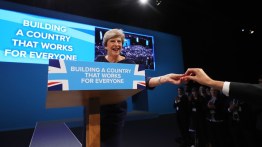
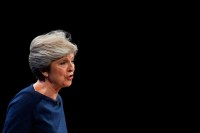
Theresa May’s conference speech — interrupted by coughing fits and with part of the set falling apart behind her — served as an unfortunate metaphor for her premiership and party. She is carrying on and in doing so, she demonstrates her resilience and sense of duty but also her frailty. The horrified faces of cabinet members watching as her voice dried up on stage seemed to sum up their wider concerns about whether their party is in a fit state to see off Labour, a party they so recently dismissed as a joke. Now, they are left wondering if their party is falling apart. https://twitter.

Theresa May’s British Nightmare

From our UK edition

Theresa May is not the first political leader to try to pitch the idea of a 'British Dream' when most British people aren't even sure if it exists in our culture. Michael Howard spoke about it in 2004, while Ed Miliband adopted the 'Promise of Britain' temporarily while he was trying to find his feet as Labour leader. So it's not just the first time that a party leader has tried to talk about the British Dream, it's also not the first time a leader whose authority is shaky has tried to talk about it. As Miliband and Howard showed, the British Dream doesn't seem to stick as a political idea. It certainly didn't work as a theme in May's speech, which turned into one of the unluckiest political nightmares in recent history.

The torment of Theresa May

From our UK edition

It’s always easy and usually wrong to describe single political speeches as pivotal or decisive.  Always remember: almost no-one in the real world watches anything except a few clips on the news the evening the speech is given.   The amount of coverage devoted to leaders’ speeches at party conferences is usually excessive, beyond what most of the readership or audience really want or care about. But this one, this one is different.  This really is the crucible, the decisive moment.  Theresa May’s premiership turns on how this is seen. Coughing, stumbling and victim to a brutally effective visual prank by an apparent 'comedian', we have seen a British Prime Minister come as close to the brink of public unravelling as we ever have before.