Uk politics

Warnings of a Romanian migrant surge were right

From our UK edition

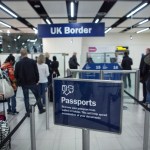
Remember when Keith Vaz got himself down to Luton Airport a few years back to greet new Romanian arrivals getting off the plane, declaring in his rather pompous way that: 'We've seen no evidence of people who have rushed out and bought tickets in order to arrive because it's the 1st of January'. This was in January 2014, when Romanians and Bulgarians were granted free movement to Britain for the first time, and on that day there was widespread guffawing among right-thinking people about how we were going to be 'swamped'; Twitter, even more so than usual, was filled with humour that was ill-disguised class contempt and status competition.

A spectre of Spanish revenge haunts Boris Johnson and the Brexit gang

From our UK edition

I used to long for mid-October when I could say goodbye to the hot rooms, cold buffets, and warm white wine of party conference season. But ever since I swapped politics for the world of museums, I have happily rediscovered those autumnal weeks of blackberries, spider webs and London returning to life after summer. At the V&A, we opened our new opera exhibition, tracing the art form’s development from Monteverdi’s Venice to Shostakovich’s Moscow. At the British Museum, the Scythians have been reviving the art of ancient Siberia. And around the capital, Frieze Art Fair has been drawing the world’s aesthetes to London. What we don’t yet know is how Brexit will affect this cultural leadership.

The embarrassing role of economists on Brexit

From our UK edition

Just when the Brexit talks were beginning to look humiliating for the UK, the position has begun to be reversed. The absurd EU negotiating framework has stretched the patience of the British side to close to breaking point and preparations are at last being made for the possibility of no deal with the EU. Australians with decades of experience in trade negotiations with the EU tell us that the EU always bargains ferociously and that the only sensible response is a tough one. A negotiating bottom-line of no-deal should have been the British position from the start but going along with the EU’s self-imposed constraints has at least exposed just how difficult the EU can be.

Sadiq Khan’s ‘Uber man’ mix-up

From our UK edition

Sadiq Khan revealed yesterday that he had never 'knowingly' used an Uber. So Mr S. was curious to find this video clip from 2015 of Khan referring to himself as an 'Uber man'. During an appearance on the BBC's Victoria Derbyshire show, Khan was asked whether he was an ‘Uber man or a black cab man’. He replied by saying: ‘I’m both an Uber and a black cab man’ Here's the video: Today Sadiq Khan said he's never "knowingly" taken an uber but told us in 2015 he's "a black cab and an uber man" @VictoriaLIVE @BBCNormanS pic.twitter.com/8jJ3Dh7fiF — Louisa Compton (@louisa_compton) October 12, 2017 So which is it, Sadiq? Maybe it's time the Mayor of London made up his mind...

Revealed: May’s haul of gifts

From our UK edition

Theresa May isn’t having much in the way of luck at the moment. Her planned Tory conference reboot ended in disaster and today’s papers are full of tales of the awkward relationship between the Prime Minister and her Chancellor. But the PM is doing rather well for herself in one way at least – the number of gifts she has been getting from the great and the good in the last few months. In the run-up to June’s bungled snap election, May’s haul included a clock and a medal from the Saudi King. She also got given a fancy fountain pen from another Arab monarch, the King of Jordan. Alas, May didn’t get to keep any of those gifts because they were too expensive, according to Cabinet Office records.

The rank hypocrisy of France’s anti-Brexit rock star

From our UK edition

One of France's most famous rock stars is soon to release a new album and last week he gave fans a taster on Twitter. It was a track from the album called 'England', in which he tears into the British for voting to leave the European Union. The country is also damned for its callous indifference towards migrants in Calais: 'You can die in the Jungle', he sings on Britain's behalf. 'We don't give a damn about you'. The singer is Bertrand Cantat, once a big shot on the Gallic grunge scene, who made global headlines in 2003 when he killed his girlfriend, the French actress Marie Trintignant. Cantat lost his temper in a Lithuanian hotel room when he discovered text messages from her former husband, so he beat the mother of four to death.

What the papers say: Ministers must publish their Brexit impact papers

From our UK edition

‘It is now blindingly obvious’, says the Sun, ‘that the EU is making impossible demands.’ Just consider how Brussels is pointing the finger at Britain for the lack of progress in Brexit talks. ‘Anyone can see’ that this standstill is more to do with the EU wanting a ‘monstrous’ payment up front without ‘anything firm in return’, argues the paper – and ‘David Davis would be out of his mind to buckle’. It's clear, too, that the EU’s chief negotiator, Michel Barnier, ‘must regret the untenable position ­Germany and France have put him in’. It's true that the deadlock could break by next week and Barnier and Britain will finally be allowed to talk trade.

George Osborne: the politically homeless ex-chancellor

From our UK edition

Did the 2007-08 financial crisis cause Brexit, the election of Donald Trump, the rise of Jeremy Corbyn? George Osborne's answer, 10 years on from it all, echoed Zhou Enlai on the French revolution: it’s too early to say. But at a Spectator event at Cadogan Hall, in conversation with Andrew Neil, Osborne defended not only his policies as chancellor, but also – by implication, and rather unexpectedly – Gordon Brown's. Looking back, he said, even if Britain wasn't particularly well prepared for the collapse of Northern Rock and all that followed that autumn a decade ago, there was nothing ‘radically different’ that could have been done to respond to the crash, either by him or his predecessor.

George Osborne: I’m just a journalist

From our UK edition

Ten years on from the financial crash and Theresa May is Prime Minister, Jeremy Corbyn is leader of the opposition and George Osborne is editor of the Evening Standard. So, were the policies enacted by Osborne during his time in government partly to blame for this? Speaking to Andrew Neil at a Spectator event, Osborne suggested that this wasn’t the case, although he did admit that a historian looking back might see some link between the economic crash - and the response to it – and the rise of both Donald Trump and Jeremy Corbyn. The economic shock to the West has thrown up many political changes, suggested Osborne. ‘But I’m just a journalist now,’ he said, before being reminded that he was also an advisor to BlackRock.

The Clean Growth Strategy is yet another dubious government target

From our UK edition

In August I wrote here about the government’s pre-announced ban on the sale of new petrol and diesel cars by 2040, and how it could turn out to be a hostage to fortune if the necessary technology fails to be developed. Today, in its Clean Growth Strategy, the government announces another dubious target: insulating a million of the leakiest homes with the aid of £3.6 billion raised through the Energy Company Obligation – which is a levy on all energy customers’ bills. The proposal seems to work on the assumption that it is possible to insulate an old property,  bringing it close to the insulation standards of a new home, at an average cost of £3,600 per home. That is hopeful, to say the least.

Watch: Lord Lawson says May should ditch Hammond

From our UK edition

Philip Hammond’s refusal to spend money preparing for a Brexit no deal has not gone down well. Now, one of his predecessors as Chancellor  – Lord Lawson – has called on Theresa May to get rid of Hammond. On the Daily Politics, Lawson said it was ‘grossly irresponsible’ for the Chancellor not to prepare for a situation where Britain walks away from the EU without an agreement. When asked whether Hammond should stay on in his job, Lawson said: ‘I fear not…I fear he is unhelpful... what he is doing is very close to sabotage.’ Hammond isn’t a politician known for his smile.

Let’s resist the Corbynist mob and celebrate corporate capitalism

From our UK edition

A reader in the FTSE boardroom world told me sternly the other day that I should resist the temptation to join the Corbynist mob and most of today’s media in sniping at corporate capitalism, and instead celebrate its positive achievements. So, here’s a parable designed to do just that.  The Kensington Aldridge Academy is a state-of-the-art secondary school that opened in 2014 next to Grenfell Tower in North Kensington, and now has 960 pupils. ‘Aldridge’ refers to a charitable foundation created by Sir Rod Aldridge, the multimillionaire former chairman of the outsourcing giant Capita, to sponsor schools with a special focus on entrepreneurship.

What the papers say: Britain’s chaotic approach to Brexit is helping the EU

From our UK edition

Britain will now almost certainly have to wait until Christmas for the start of trade talks with the EU. This wasn’t the original plan, with the initial timetable suggesting these discussions could start in October. So what’s going wrong? Some are blaming the EU - and it’s true that the leaders of France and Germany are ‘behaving mulishly’ and ‘irrationally’, says the Daily Telegraph. But maybe the blame also lies closer to home. Deputy PM Damian Green has said he would still back ‘Remain’ if the referendum took place today, Theresa May ‘refused to say whether she would now vote for Brexit’ and the Chancellor is saying he won't commit funds to prepare for a Brexit ‘no deal’.

Interview: Centrica CEO, Iain Conn, on the energy price cap

From our UK edition

Theresa May had wanted Ofgem to introduce a energy price cap: it said this would require new legislation and today the Prime Minister will promise to create them by capping the Standard Variable Tariff. The case for the prosecution is simple: about 70 per cent of energy users are not on cheap tariffs, but the ‘standard’ variable tariff which is about £300 more expensive than the best deals. Competition works for those who switch, but for those who tend not to (especially the poor and the elderly) the system is demonstrably not working for them. Centrica thinks otherwise and it sponsored a podcast, which we released yesterday, where I ask its chief executive, Iain Conn, about the market.

Donald Trump and Theresa May desperately need each other’s help

From our UK edition

In June, I mooted the possibility that Theresa May might consider emigrating to the United States to join the Trump administration, preferably as chief of staff. I’m sorry to see that she has spurned my request and that the charms of No. 10 Downing Street are proving more alluring than decamping for the White House. But I am somewhat consoled by the Telegraph’s report yesterday that May and her advisers are contemplating something even more radical—British entry into NAFTA, an accord that President Trump has dubbed the worst in the history of the American republic. This move could help make not just America, but also Britain great again.

Theresa May has yet another bad day at the office

From our UK edition

Theresa May needed to play a blinder today. But she left herself looking heartless and complacent. Jeremy Corbyn attacked her on the Universal Credit system which seems as useful as a windmill on the moon. He said UC was leading to ‘debt, poverty and homelessness.’ Mrs May replied that tremendous improvements had been achieved since January. Only 20 per cent of initial payments are late, she trumpeted, (although she used the formula '80 percent are on time’). Corbyn asked about delays twice more, and Mrs May’s patience dissolved. She did a little pantomime of being bored. Her eyes glazed over. Her chin tilted upwards. Her focus went into the middle-distance. A short breath was sucked in over her lower teeth.

Scottish nationalists need a plan B – but so do Unionists

From our UK edition

The SNP has become so accustomed to setting the agenda that the situation in which it presently finds itself - one of uncertainty tinged with the mildest dose of ennui - is modestly disconcerting. Nicola Sturgeon played all the right notes during her conference speech yesterday but there was still something perfunctory about her address. The delegates liked it but it wasn’t greeted with the kind of joyous rapture prompted by Ms Sturgeon’s previous conference speeches. She still believes in a place called independence, of course, it’s just that she doesn’t know - and, worse, cannot say - when it will next be glimpsed. It exists, of course, but seeing how you get there is harder than it used to be.  From 2011 to 2017, the nationalists set the agenda.

Theresa May’s bid to sound authoritative at PMQs falls flat

From our UK edition

Today’s Prime Minister’s Questions wasn’t exactly comfortable for Theresa May, but neither was it catastrophic. The session has been running along the same lines since the snap election result: Jeremy Corbyn has plenty of material to play with in terms of a government in disarray that isn’t confronting some of the most important domestic issues, but he never really manages to leave May looking less authoritative than when the session started. Today he focused on the problems with the roll-out of Universal Credit, which is spreading from being the concern of welfare policy specialists in parliament to being a political row.