Uk politics

The Damian Green inquiry isn’t really about porn

From the beginning, there’s been a whiff of the police state about the treatment of Damian Green. Free societies do not allow detectives to burst into an MP’s office because he or she has been embarrassing the government. That bad smell has risen to the level of a stench. The now ex-police officers, who claimed they had seen pornographic pictures on Green’s computer, raised the prospect, however fleetingly, of an authoritarian future. The police failed to find evidence that Green, then an opposition MP, had engaged in a ‘criminal conspiracy to solicit leaked information detrimental to national security’ when they raided Parliament in 2008. Not that it bothered them. Because

Jeremy Hunt’s Brexit warning misses the point

Jeremy Hunt has managed to get both Remainers and Brexiteers in a spin this weekend with his appearance on Peston on Sunday. Following reports of growing eurosceptic anger over concessions Theresa May is expected to make on the ECJ in a bid to get ‘sufficient progress’ at this month’s EU council meeting, Hunt said his Parliamentary colleagues have a simple choice – May’s Brexit or no Brexit at all: ‘I think there’s an even bigger point here, that the choice we face now is not between this Brexit and that Brexit; if we don’t back Theresa May we will have no Brexit – and she is doing an unbelievably challenging

No 10 should have seen Alan Milburn’s resignation coming

For the whole board of the Social Mobility Commission to resign with its chairman, Alan Milburn, condemning the Prime Minister’s commitment to the agenda is pretty damaging. But this attack was inevitable, for reasons that haven’t (so far) been picked up by the newspapers. Ever since Theresa May took office, she has shown almost no interest in the Social Mobility Commission, set up under the coalition years. No10’s approach seems to have been one of strategic neglect. Alan Milburn’s five-year term came up for renewal last July: Justine Greening, the minister responsible, was keen for him to stay. But No10 refused, and asked her to come up with other names.

John McDonnell’s ‘wargamer’ trolls Isabel Oakeshott

At this year’s Labour conference, John McDonnell went somewhat off message when the shadow chancellor announced at a fringe event that his party was ‘war-gaming’ for a ‘run on the pound’ if elected. Given that this hardly signs like a desirable outcome for a party of government, the shadow chancellor has since tried to retract his comments – claiming there will not be a run on the pound. But that hasn’t stopped them ‘war-gaming’. On today’s Sunday Politics, Richard Barbrook, a key member of the McDonnell’s Treasury ‘war-gaming’ team, made an appearance to explain how he is helping prepare the party for power. Barbrook, who runs an organisation called ‘Class Wargames’, said it

It’s been a bad year for Blue Labour

Not a good year for my small sector of the political sphere, Blue Labour. I say small because politically, at the moment, that is what it is: indeed, nigh on non-existent. And yet its basics – socially conservative, fiscally radical, mindful of tradition, patriotic – strikes a chord with so many voters outside London. Blue Labour’s influence in the Conservative Party was seen to have been a partial cause of Theresa May’s lamentable performance at the last election. I am not so sure that the policies promulgated by Nick Timothy were to blame, despite what my editor here may believe: presentation, arrogance and poor leadership were more crucial, I think.

The Tories’ fate is in their own hands

How will the Tory party remember 2017? Will it be the year it lost its majority, alienated key sections of the electorate and paved the way for a Jeremy Corbyn premiership? Or the year when uncertainty about Britain’s future relationship with the European Union peaked, when debt finally began to fall and the Tory party resisted the temptation of a Corn Laws-style split? We won’t know for several years. What we can say with confidence is that Brexit will prove key to determining which view of 2017 wins out. On Monday, Theresa May heads to Brussels for a meeting with the European Commission. Over lunch, she will set out what

Government getting jittery about ‘sufficient progress’

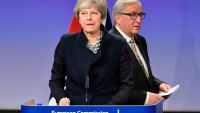
Theresa May is not one of those politicians who enjoys lengthy conversation over lunch. But her lunch on Monday with Jean-Claude Juncker on Monday will be one of the most important lunches in recent British history, I say in The Sun this morning. Earlier in the week, there was a growing confidence in Whitehall that the lunch would go well, that Juncker would throw his weight behind ‘sufficient progress’ and the UK would formally get there at the December EU Council. But there has been an outbreak of the jitters in the last day or so. I am informed that we are a ‘million miles from this being a done

Should Donald Trump be invited to the Royal Wedding?

Two golden rules of royal weddings. First, it’s always wonderful on the day. Second, there is always an almighty official spat beforehand which no one saw coming. When Prince Charles married Lady Diana Spencer, there was a Spanish boycott because the honeymoon included Gibraltar. In 2011, Prince William’s marriage plans had a crisis moment when it turned out the guest list had included the Syrian ambassador but not ex-PMs Blair and Brown. We can already spot one sensitive issue. Should Donald Trump be invited? For: the bride is American. Against: she backed Hillary. In fact, Mr Trump is unlikely to be invited because he is not a friend and this

The government’s ‘industrial strategy’ is harmless nonsense

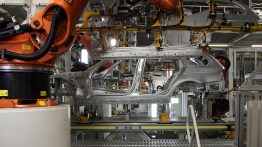
‘Industrial strategy’ must be added to this column’s collection of phrases which automatically lower the spirits. Others include ‘replacement bus service’, ‘all the toys’ and ‘smart casual’. There is literally no need for any government to have one — what industrial strategy built Silicon Valley? — and it is literally impossible to remember, when one has been announced, what it is. (If you doubt me, try reading Greg Clark’s ‘Our vision to make Britain fit for the future’ in Tuesday’s Daily Telegraph.) Its sole raison d’être is presentational: it is (sadly) considered better to claim you have a plan than to explain why you don’t. So the highest true praise for any

Come back David Cameron

We don’t hear much from David Cameron these days. He’s generally too busy. He fills his time in many ways: writing a book; making bundles of cash; playing tennis; not taking the blame for Brexit. But he’s given an interview to the Financial Times about Alzheimer’s disease and the search for a cure. It’s worth a read, and not just because it’s an important subject. It’s also a reminder of what was lost when Cameron fled Parliament last summer (I know – it seems much longer). To my mind, it is both shameful and a shame that Cameron has left the Commons, and did it in such a manner. It shames him

Jeremy Corbyn: I’m a centrist dad

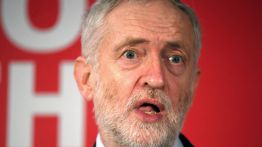
Jeremy Corbyn caused a social media flurry on Thursday after it was revealed that he is the cover star of the new issue of GQ magazine. Sticking to his socialist values, the Labour leader managed not to fall in the trap of other comrades (like Owen Jones) who put on designer gear for the glossy magazine shoot – opting to wear an M&S suit. So, what did Corbyn have to say? Well, the Labour leader discusses Corbynista slang – and specifically the term ‘centrist dad’ which is used to describe someone stuffy and out of touch – often a Blairite. However, Corbyn claims that he is a ‘centrist dad’ just one

What the papers say: Should Trump’s state visit go ahead?

Donald Trump’s January visit to Britain now looks to be in doubt following the furore over his tweets. Diplomats in the United States are said to have put the plans on ice, according to the Daily Telegraph. Good, says the Guardian in its editorial this morning: it’s time to ditch the state visit. Tump’s decision to retweet anti-Muslim videos shows ‘again that he panders to bigots and is no friend of this country’, the paper argues. Brexit already makes this a ‘dangerous’ moment for Britain, says the paper, which goes on to suggest that further allying ourselves to a ‘thuggish narcissist’ will hardly help matters. Theresa May was right to

Tulip Siddiq’s shameful silence on Bangladesh’s missing people

‘Just heartbreaking’, wrote the Labour MP Tulip Siddiq this week as she shared a picture of the daughter of Nazanin Zaghari-Ratcliffe, the British-Iranian mum who is currently imprisoned in Iran on trumped-up charges of espionage. Tulip has, quite rightly, dedicated much time to trying to free Zaghari-Ratcliffe. It’s a pity though that she doesn’t go to the same lengths to lobby Bangladesh, another repressive country, over the hundreds of people that have been secretly detained there in recent years. Unlike Iran, Bangladesh also happens to be a place where the Labour MP appears to have considerable clout: her aunt, Sheikh Hasina, is the prime minister; her uncle, Tarique Siddique, is Hasina’s security adviser; and her first cousin,

Immigration figures show that ‘Brexodus’ is still a myth

Government figures today show a sharp fall in net migration – 230,000 over the year to June, compared with 336,000 in the previous 12 months. If it keeps falling at that rate for another 18 months, Theresa May will have fulfilled David Cameron’s rash promise to reduce net migration to tens of thousands – if that, indeed, is an achievement worth trumpeting. For many it isn’t. The fall has reignited claims that the NHS, business and other employers are suffering a Brexit-induced drought of qualified staff, as EU workers desert ‘xenophobic’ Britain and are not replaced. Certainly, the bulk of the reduction in net migration – 80,000 of it –

British Europhiles should welcome Brexit. Here’s why

In the historic heart of Luxembourg, around the corner from the Grand Ducal Palace, there is a site which demonstrates why Britons will never be good Europeans. The Maison de l’Union Européenne houses the information centre for the various European institutions here in Luxembourg, and even British Remainers will find its attitudes entirely different from their own. The vision it presents is pan European, an entire continent without borders. These are the ‘citizens of nowhere’ that Mrs May warned us about. Since the referendum, British attitudes towards the EU have polarised. Either it’s a great force for good, and leaving will be a disaster (say some Remainers) or it’s a

What the papers say: The cracks could soon show in the EU’s Brexit stance

‘At last’, says the FT, Britain has ‘accepted it must pay its dues to Europe’. ‘It has been a tortuous journey’ to get to this stage and ‘months have been wasted’ along the way. Yet while progress has been made at last, the government has still failed ‘to explain to the public the…cost of leaving’. It’s also the case that while the Brexit divorce offer is now more acceptable to the EU, the bill is ‘only one of three areas in which agreement is needed to unlock talks on the future relationship’. Avoiding a hard border between Ireland and Northern Ireland remains the trickiest of these problems to find a

Tim Farron is wrong about liberalism

Tim Farron is not the ideal person to explain Christianity’s relationship to liberalism. When he resigned as leader of his party, after a poor election result, he complained about the culture’s anti-Christian bias. It’s a complicated enough issue, without sour grapes being added to the brew. He now says that British liberalism has become empty because it has departed from its Christian roots. Despite outward conformity to liberal principles, there is now ‘no unifying set of British values.’ Look under the surface and people are selfish, tribal and intolerant of difference. True liberalism is rare, and, he implies, it is part of a deeper commitment than secular people are capable