Uighurs

The battle to stop US universities aiding Chinese repression

From our US edition

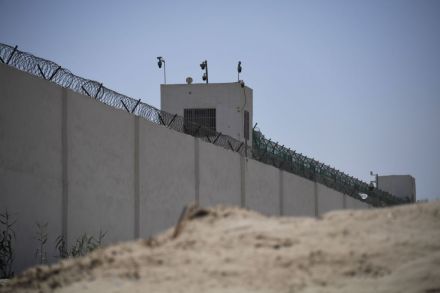
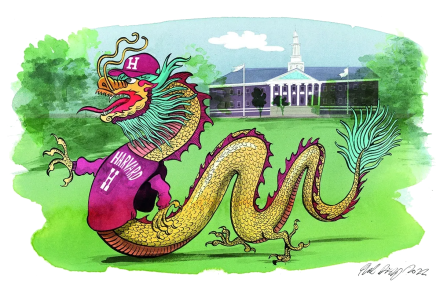
It goes by an innocuous name – “Integrated Joint Operations Platform” (IJOP) – but it’s one of the most sinister components of China’s surveillance state, managing what has been described as a genocide against the Uighurs. The IJOP combines multiple systems of repression – location, messages, contacts, social media and other data from phones, together with information from checkpoints, cameras and biometric records. It then flags “suspicious” individuals for detention and forced labor. Now leading US universities have been accused of extensive collaboration with Chinese laboratories which develop technology that may be deployed or adapted for use in this system.
China today is following Victorian Britain’s industrial pattern

On a damp Derbyshire day in 1771, Richard Arkwright watched the world’s first water-powered mill begin to turn, setting in motion a force that would remake the world. The tailor’s son from Preston had become one of Britain’s first industrialists, his spinning frames driven by water and his workers by hunger. Within those mill walls, as Edmond Smith argues in Ruthless, the modern economy took its first breath. Yet the real invention was not mechanical but social. Arkwright had helped pioneer the system that would propel Britain into the lead in the first Industrial Revolution – web of investors, miners, shippers and merchants, bound by credit, trust and the push for profit. In Smith’s phrase, it was ‘networked capital’, the invisible machine behind the visible one.

Why Gaza and not the Uighurs?

From our US edition

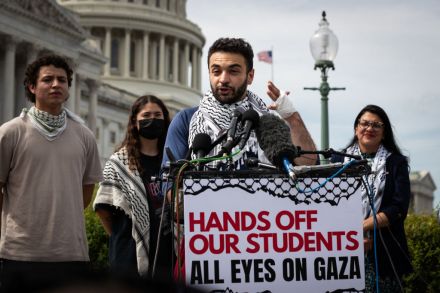
The Babylon Bee, “the newspaper of record” for anyone with a sense of humor, posed a more interesting thought about the campus demonstrations than anything you can find in the New York Times or Washington Post. The Bee’s headline proclaimed, “Uighur Slaves Struggling to Keep Up with Demand for Palestinian Headscarves.” Dark humor indeed. The headscarves, like the masks, serve one obvious function: they hide the faces of demonstrators. That’s why bank robbers wear masks, too. Students know they are breaking the rules and professional agitators know they are breaking the law, so it’s smart to hide their faces. But the scarves have one additional advantage that bank robbers’ masks don’t: the keffiyeh is a visible symbol of Palestinian identity.

gaza

Biden’s family misfortune

From our US edition

For years, it seemed as though nothing could stick when it came to the impact of Hunter Biden’s escapades on his father’s presidency. The White House could stick to its don’t-even-go-there denials. The press seemed determined not to do its job. The alleged crimes and shady business practices of the president’s son were not to be brought up in polite company.  Slowly, but perceptibly, that is changing. The sheer weight of evidence that has continued stacking up, the plea deal and the serious claims made by the IRS whistleblower this month have combined to push the Hunter Biden story into the foreground. The hand-wafting dismissals by Democrats of anyone who took the Hunter story seriously were always unpersuasive and dishonest. But that is more obvious now.

Presidential hopeful Francis Suarez: ‘What’s a Uighur?’

From our US edition

Miami mayor Francis X. Suarez should pick Gary “Aleppo” Johnson for his 2024 running mate. After a revealing interview on The Hugh Hewitt Show Tuesday morning, it seems the two are both woefully unaware of foreign policy.  Suarez was taking a hardline against China when Hewitt asked him if he would make the Uighurs a part of his campaign. “What — the what, what's a Uighur?” Suarez responded, parroting Johnson’s famous “What is Aleppo?” gaffe during the 2016 election. https://twitter.com/therecount/status/1673687808282697728 After Hewitt scolded the presidential hopeful for his ignorance, Suarez promised, “I’ll look at — what’d you call it, a 'Weeble?’” Cockburn can’t help but think Suarez’s blunder is a bit worse than Johnson.

francis suarez uighur

Enes Kanter Freedom on LeBron, Erdoğan and the earthquake

From our US edition

Basketball player and human rights activist Enes Kanter Freedom was invited as Leader Kevin McCarthy's guest of honor to the State of the Union last week, an address in which President Biden barely touched on foreign policy. The former Boston Celtics and Oklahoma City Thunder center spoke with The Spectator about democracy, autocracies and hypocrisy. John Pietro: How far does China’s influence reach into the NBA, in your estimation? Could you see the NBA ever standing up to China in the way the Women’s Tennis Association did in defense of Peng Shuai? Enes Kanter Freedom: I didn’t know how deep the relationship between the NBA and China was until Daryl Morey tweeted and said "stand with Hong Kong" and after that obviously the NBA lost millions and millions of dollars.

enes kanter freedom

Have Xinjiang’s camps been closed?

42 min listen

A few months ago, an intriguing article in the Washington Post shed light on the latest situation Xinjiang, the western region of China where the Uighur minority live. The two journalists, Eva Dou and Cate Cadell, saw on their travels around the region last summer that many of the infamous re-education camps had been shut down, or turned into quarantine centres. A new phase of Beijing’s campaign in Xinjiang seems to have started. So what’s really going on there now, and what does this mean for the lives of the Uyghur people? I’m joined by Professor James Millward from Georgetown University, author of Eurasian crossroads: a history of Xinjiang, to find out.

Why journalists shouldn’t be on TikTok

From our US edition

Americans: watch your backs. Last week, Forbes released a bombshell report that ByteDance, the parent company of TikTok, the popular video recording and meme app, was planning to monitor and track the physical location of Americans. It’s not the first time there have been national security and human rights questions swirling around ByteDance, the China-based technology company that owns all of TikTok’s offshore data and could easily be leveraged by the Chinese government. Forbes would not specifically say which Americans ByteDance was targeting, but it would not be too farfetched to assume they would be influential figures in media and politics — the same folks China tracked during Hong Kong’s volatile freedom and democracy protests.

tiktok

We love you, Uncle Xi!

In 2015, I had lunch with an old chum of Xi Jinping. He described how China’s most powerful leader since Chairman Mao was born into the Communist party’s ‘red aristocracy’ but had to toughen up fast when his father was jailed in the Cultural Revolution. The young Xi briefly became a street hoodlum who swore like a trooper, smoked like a chimney and drank like a fish. He survived by turning ‘redder than red’, climbing the party ladder from a branch secretary in a lowly village all the way up to the top job in Beijing. ‘I am fond of Xi, but he is isolated from his old friends and there is a danger of emperor syndrome,’ the friend warned me. ‘I think Xi will want to rule for 20 years.

An outcast in Xinjiang: The Backstreets, by Perhat Tursun, reviewed

Like Dostoevsky’s Underground Man, Perhat Tursun’s unnamed protagonist is an outcast. A young Uighur in an increasingly Han city (Urumchi, the capital of Xinjiang), he is alone, angry, unstable and homeless. The events of The Backstreets take place over one long night, as he looks for somewhere to stay (‘I just wanted a small space – the space a person would need in a graveyard’) or, more accurately, somewhere to belong. In this poignant and disturbing short novel, the influence of Dostoevsky and Camus, among others, is clear. It’s not meant to be comfortable reading. Identity permeates the book in the same way that a fog forever buries Urumchi. Almost everyone the narrator meets, as he walks through the smog-filled streets, seems terrified of him.

Mr. Freedom goes to Washington

From our US edition

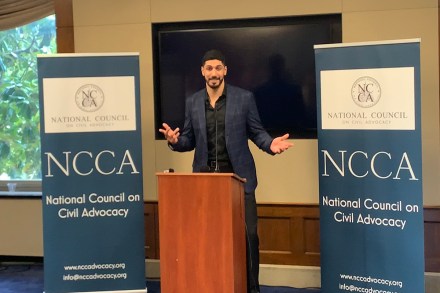
Cockburn had a sojourn through the corridors of power on Thursday — attending a congressional reception on global human rights in the Rayburn House Office Building, hosted by basketball star Enes Kanter Freedom. Freedom has a storied past when it comes to dealing with dictatorships: the Turkish government revoked his passport in 2017 and jailed his father over his support for Fethullah Gülen, a cleric who is feverishly critical of President Erdoğan. He caused a controversy at the start of this season after donning shoes highlighting the persecution of Uighur Muslims and Tibetans in China while playing for the Boston Celtics. The NBA stopped broadcasting his team’s games, and midway through the season he was cut from their roster.

kanter freedom

Sacrificing the Uighurs to the Olympics

From our US edition

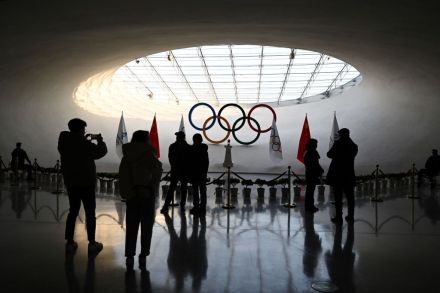
It’s hard to say what was most distressing about the opening days of the Beijing Winter Olympics. The lament of the athletes “injured” by the swabs inserted into their noses for Covid testing? French speed skater Gwendoline Daudet’s anguish under the bubble after she was eliminated from the mixed relay? The embarrassing spectacle of Uighur skier Dinigeer Yilamujiang lighting the snowflake-shaped Olympic cauldron under the gaze of Xi Jinping, an image that the spokespersons of the International Olympic Committee found “charming”? The fact that, unlike in Berlin in 1936 or Moscow in 1980, the matter of a boycott was scarcely mentioned, as “it was shown” that the topic would have a “negative impact” on the athletes’ morale?

The hypocrisy of Elon Musk

Tesla's sleek, if expensive, electric cars are leading the battle against climate change. Its batteries are moving renewable energy into the mainstream, while its founder Elon Musk, the world’s richest man, likes to present himself as a free-thinking radical. It is hard to think of a company more right on than Tesla — well, okay, perhaps Unilever — or one that depends more on its politically correct credentials. But hold on. There turns out to be one opposed minority that Tesla couldn’t care less about: China’s Uighurs. Most of the corporate world will sooner or later have to make a tough decision: do they care about human rights?

The player exposing the NBA’s hypocrisy on China

From our US edition

Remember when “Free Tibet” was a mainstay of the cool, hippie subculture that dominated the Nineties? Back when Hollywood cared about the fate of Buddhism’s Holy Land? Few will even remember that Disney — yes, the same Disney that recently filmed parts of the live-action Mulan in Xinjiang — produced a film, Kundun, about the early life of the Dalai Lama. China then retaliated by banning Disney films, causing the company to backtrack and attempt to bury the Scorsese-directed biopic. Disney's then-CEO even traveled to China to apologize. This series of events should sound familiar by now in the age of Western capitulation to China. Less commonplace these days is the sight of a celebrity sporting imagery of the Dalai Lama and any quaint talk of “freeing Tibet.

enes kanter

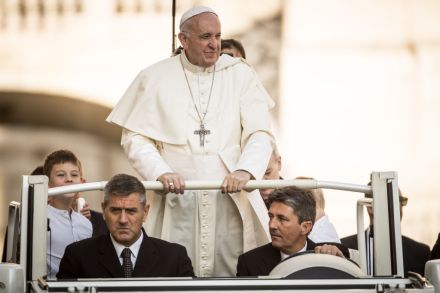
Is the Pope a Chinese asset?

From our US edition

Twenty years ago, the Catholics of a city in Alaska gathered enough money to build a church dedicated to the Sacred Heart. They presented the architectural drawings to the city council, whose non-Catholic members winced a bit. Were Gothic arches really meant to be painted the color of pale strawberries? Why were the bell towers capped with domes in cotton-candy stripes? But, what the hell, Catholics have their own funny ideas about what churches should look like. OK, they said, we’re fine with this so long as you don’t shove it in our faces. Here’s a bit of land on the outskirts of town where you can build the thing and we won’t have to look at it every time we walk down Main Street.

pope francis

A diplomatic disaster in Alaska

From our US edition

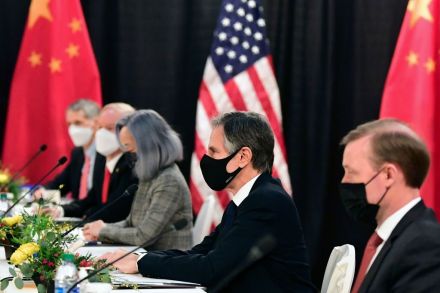
It goes without saying that when conducting high-level diplomacy, you don’t insult the other party at a joint press conference before the negotiations begin. And if you choose to do something so foolish, you must be ready when the other party retaliates in its response. It is incredible that secretary of state Antony Blinken and national security adviser Jake Sullivan did not understand this when they began talks with their Chinese counterparts in Alaska yesterday. At what was supposed to be perfunctory two-minute statements by the US and Chinese delegations to the press before the talks began, Blinken and Sullivan criticized Chinese activities against the Uighurs, in Hong Kong and Taiwan, as well as for cyber attacks on the US and economic coercion of US allies.

alaska

How China targets Uighur expats in the US

From our US edition

It has been more than two years since Ziba Murat has heard the voice of her ailing mother, Gulshan Abbas, a retired physician who was abruptly ‘disappeared’ in September 2018 in Xinjiang province, China. While exact facts and figures are hard to come by, it is widely reported that at least three million Uighurs in China have been forced into concentration camps, which Beijing calls ‘reeducation’ facilities for stamping out ‘Islamic extremism’. The scale of the ongoing atrocities is bone-chilling: from forced sterilizations and sexual violence to beatings and indoctrination. The Chinese government’s assault extends to Uighurs abroad.

uighurs

The useful idiots of TikTok

From our US edition

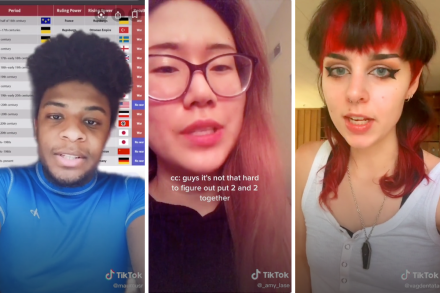
Tyrants have always had useful idiots to whitewash their crimes but few have proven as useful and idiotic as those who support China in their oppression of the Uighurs. The northwestern region of Xinjiang is where China’s Muslim minority is persecuted, and according to Human Rights Watch, this means mass arbitrary detention, torture, forced political indoctrination and surveillance using the collection of biometric data. Religious freedoms are severely curtailed under the guise of counter-terrorism measures, the charity says, with restrictions on facial hair, clothing, religious education and online speech. A bleak investigation this week by the BBC found evidence that China is forcing hundreds of thousands of Uighurs to pick cotton for the fashion industry.

tiktok

The high cost of Beijing’s demands for uniformity

From our US edition

Last month, the Vatican and the Chinese Communist party announced the renewal of a two-year agreement on the appointment of bishops in China. Under the deal in 2018, the Catholic Church lifted the excommunication of bishops hand-picked by the atheist CCP and formally recognized them. Besides interfering in such appointments, Beijing subjects Chinese Catholic congregations to state regulation and the reeducation of what it considers insubordinate priests. These methods are evidence of the party’s efforts to cull Catholicism of the traditions, doctrines, and practices that have defined the faith for millennia.  Anyone who prizes religious freedom worldwide should be disturbed. Why is Beijing so hostile toward those looking to practice their faith according to their conscience?

ccp

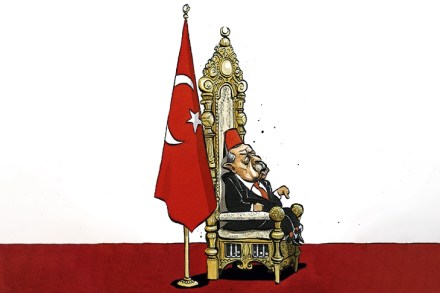
Erdogan’s game: why Turkey has turned against the West

From our US edition

Six years ago, at the opening match of the new Basaksehir Stadium in Istanbul, an unlikely soccer star emerged. The red team’s aging, six-foot center-forward lumbered toward the white team’s goal, and a delicate chip over the advancing keeper brought a goal that sent the stadium into ecstasy. The scorer was Prime Minister Recep Tayyip Erdogan. It was the run-up to an election in which he became his country’s 12th president.For Erdogan, a former semi-professional footballer, it was brilliant self-promotion. Like Fidel Castro’s baseball pitching or Chairman Mao’s ‘world-record’ Yangtze river swim, Erdogan’s contrived sporting prowess helped make him as much a cult as a politician.

erdogan