Uber

The subway deserves some respect

From our US edition

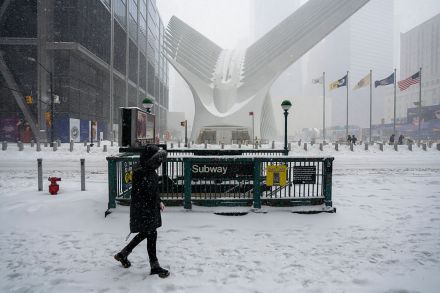
A few weeks before the end of the year, I was invited to a house party at which I had the misfortune of becoming embroiled in a conversation with a man I’ll call Joe, because his name was Joe and I don’t feel inclined to offer him the dignity of a pseudonym. There’s a theory I’ve corroborated since moving to New York in 2020. Every conversation at a party in this city eventually gravitates toward one of five subjects: traffic, the weather, real estate, sex or the mayor. The ultra-rich are among the subway’s most devoted riders Joe told me he works in finance (which he pronounced “fin-ants”) and it seemed he wasn’t bothered about the weather. He wasn’t a tax-optimizing Connecticut commuter, so had no unsolicited opinions to share about traffic.
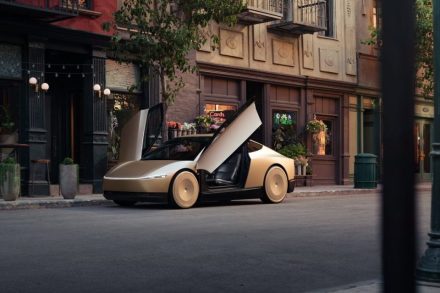
Tesla’s Cybercab promises a better future — for Elon Musk

From our US edition

Each year, more than 40,000 people die in car accidents — and most of them are caused by user error. Set aside drunk driving and texting and live-streaming while driving a McLaren in the rain; even in normal conditions, humans are just not, fundamentally, great drivers. So imagine a future without that; where death by car accident is a freak occurrence and driving is handled by expert computers instead. We don’t use elevator operators anymore and are glad for it — and autopilot systems have long made flights safer. Why not let computers drive us too? True “Level 4” autonomous cars wouldn’t just make commutes more pleasant, letting you read or sleep as your car takes you to work, but save many, many lives. I believe in that future.

tesla

How to bottle Britishness

The US crackdown on trade finance for Russia from international banks – designed to impede imports needed for the continuing assault on Ukraine – is biting hard, reports the FT, quoting an investor who thinks ‘the logical endpoint of this is turning Russia into Iran’. Quite right too: sanctions like these are a vital non-military way to hobble Vladimir Putin’s campaign. But war and finance intersect in many different ways. Consider also the fate of 400 western-owned commercial aircraft that were leased to Russian airlines before the invasion in February 2022. Now stuck in Russia or its satellites, unmaintained to western standards and unfit to fly back into our airspace, they’re a potential multibillion loss for their owners and insurers.

Has America checked out of Airbnb?

From our US edition

Airbnb is in trouble. Nick Gerli, CEO of real estate consulting firm Reventure, reports, “The Airbnb crash is real,” along with a list of the top ten cities where the company’s revenue has collapsed. “Watch out for a wave of forced selling from Airbnb owners later this year,” Gerli forbodes. https://twitter.com/nickgerli1/status/1673774695693385728 Last month the Wall Street Journal reported, “Airbnb reported higher revenue and profit in the first quarter, but customers reserved fewer-than-expected stays and the company gave a mixed outlook for the second quarter, spooking investors.” And while Investors Business Daily this week forecast “a new, more promising comeback attempt” for Airbnb stock, murmurings of an “Airbnbust” are hard to ignore.

airbnb

Je suis Karen

From our US edition

As I creep into my mid-twenties something is changing. I’m not quite young enough to be carefree, I pay my bills and taxes on time and worry about the noise pollution level in the area I’m looking to move to. I’ve swapped my six-inch heels for practical sneakers, and I tut at teenagers causing a commotion on the subway. All of which led a friend to accuse me of becoming “something of a Karen.” The charge is a serious one these days. You see, Karen is no longer a playful term used to describe your entitled aunt who complains about slow service in a restaurant, flipping her asymmetrical bob in irritation. To call someone a Karen in 2023 is to wade waist-deep into the culture wars. At some point over the last few years, the word became more than a tongue-in-cheek jibe.

karen

The Karens of Uber get their DEI chief suspended

From our US edition

Karens are, to use a leftist term, “problematic.” In use as a pejorative for four or five years now, “Karen” appropriates a common Generation X girl’s name to refer to an entitled middle-aged woman who demands exceptional treatment, undeserved deference and unearned “privilege” to make her way through life or to express power through unwarranted concern for others. Karens are generally believed to be middle-class or slightly above, sport an unsmiling no-nonsense mien and favor a pert bob hairdo that stylists now routinely call the “speak-to-the-manager,” after a request Karens commonly make when they encounter disappointment.

uber bo young lee

Biden declares war on Lyft and Uber

From our US edition

The Biden administration’s Department of Labor recently released a new interpretive rule regarding whether workers are classified as employees or independent contractors. The action reverses a Trump-era rule that simplified the classification process, and was dedicated to preserving the gig economy. Employees are much more expensive than independent contractors — possibly by as much as 30 percent. This is, in part, because independent contractors are not subject to federal minimum wage or overtime regulations, among others, and are not protected by the National Labor Relations Act, meaning it is more difficult for them to unionize. This all may seem rather trivial, but the impact on both the consumer and the worker will be significant.

The Uber scandal highlights big tech’s big failure

A few years ago the Conservatives were excited about the march of the tech giants. Uber was offering an alternative to black cabs at a far lower cost, and Airbnb enabled homeowners to rent out a spare room to tourists at a fraction of the rate charged by hotels. Politicians were no longer dependent on traditional media but could reach the public via social networks, and there seemed to be an explosion of entrepreneurs, empowered by the new tech, taking on vested interests. The Tories intended to be part of this revolution. Their enthusiasm for people power was not to last. The government now plans to give regional mayors the power to curb Airbnb to protect the hotel industry (and the government tax base).

The United States of Uber

From our US edition

I’m getting into the backseat of an Uber in Washington, DC with a cup of coffee in one hand and a tattered, floppy cloth mask in the other. I’ll make a half-assed attempt to mask up! indulging the Democrats’ last gasps of Covid political theater, only on airplanes and in Ubers, and that’s just to avoid the hassle of getting banned if you don’t. My mask — I only own one — is about as snug as a Kleenex with too-wet noodles for straps. It covers my contagion holes for only a few moments at a time when the loose cloth rests on the tip of my nose. The struggle to keep it up for the duration of the journey is my own bit of theater. “Do you need to switch that mask out?” a flight attendant once asked me. “Oh, no, I could never do that.

uber

Is this the end of the gig economy?

Before too long, news that Uber will offer 70,000 drivers holiday pay and the national living wage will be viewed less as an unmitigated triumph than a Pyrrhic victory. In the UK you can be an 'employee' with an ever-growing raft of employment rights, a 'worker' with rather fewer rights, or 'self-employed'. These statuses have different implications for tax purposes. Last month, the UK Supreme Court, ending a six-year case brought by two Uber drivers, ruling that the ride-hailing firm must classify drivers as workers rather than self-employed.

The car industry is accelerating towards an electric future

Back in November, when Downing Street’s pandemic responses looked daily more incompetent, the announcement of a ban on sales of new petrol and diesel cars by 2030, ten years earlier than originally planned, was largely greeted — along with the rest of the ‘Ten Point Plan for a Green Industrial Revolution’ — as another exercise in Johnsonian distraction and thin-air number-plucking. Auto makers responded defensively, citing the huge costs of re-engineering model ranges in short order and the shameful failure of ministers to encourage investment in plug-in networks for electric vehicles. Meanwhile, Tesla founder Elon Musk announced he would site a battery ‘gigafactory’ in Germany because Brexit made the UK ‘too risky’.

The problem with the Supreme Court’s Uber ruling

They are monitored by the firm. They don’t have the option of working for other companies. And they are entitled to all the protections that come with being an employee. The Supreme Court today potentially blew up Uber’s business model, and the model of many other fast-growing ‘gig economy’ companies as well, with a ruling that drivers for the app operator are not self-employed after all, as the company likes to claim, but staff, and should be treated as such. In truth, you can argue the case for or against that decision, as the lawyers have just done expensively in court. But in reality, this is a hugely important verdict about the kind of economy we want to create.

Who started America’s presidential debates?

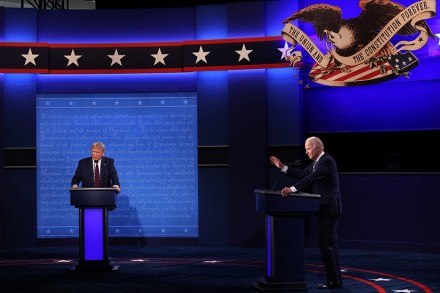
Word for word US presidential debates are often traced back to the first televised debate, between Richard Nixon and John F. Kennedy in 1960. But they were inspired by a series of seven debates held between Abraham Lincoln and Stephen Douglas while contesting an Illinois senatorial seat in 1858. The debates would have stretched a modern audience — they were each three hours long. It is hard to imagine, too, how modern candidates would have coped with the format: the first speaker was invited to speak for an hour, the second for 90 minutes, and then the first candidate was allowed a further half-hour. Douglas won the seat and, two years later, found himself again facing Lincoln for the presidency. This time, Lincoln declined to debate — and went on to win the top job.

Back to the future

From our US edition

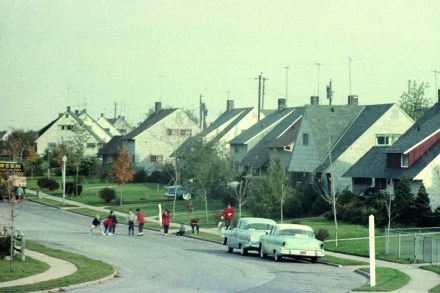
Will COVID-19 change society? If effective treatments and a vaccine are found, maybe not. After a bad year or two, the pre-pandemic status quo of dense cities, crowded subways and far-flung global supply chains might be restored, and the global plague might be forgotten as swiftly as the Spanish flu was in the subsequent Jazz Age. I don’t think so. I hope to be proven wrong, but I suspect the trauma will endure long enough to effect lasting changes in lifestyles and business models. In the United States and similar western democracies, the post-pandemic social order may seem more like that of the 1950s than the 2000s.

1950s

Letters: Why have the Conservatives decided Chesterfield is a lost cause?

Given up on Chesterfield? Sir: Matthew Parris makes some interesting and accurate points about growing Tory support in the north and Midlands (‘The Tory push north will end in failure’, 7 December). He did not mention Chesterfield in his article, but it is a good example of what he talks about. It seems to me that the Conservatives have decided Chesterfield is a lost cause, even though it would on the face of it seem promising territory for them. With an average age higher than the national average and no university, it is one of those ‘left behind’ areas with a lot of traditional working-class voters who dislike Corbyn. A good local candidate and some active canvassing could at least have made a dent in Labour support. So what did the Tories do?

Portrait of the week: Chief Rabbi speaks out, Uber loses its licence and police draw tasers at the cinema

Home The Chief Rabbi, Ephraim Mirvis, intervened in the election campaign by declaring that anti-Semitism was a ‘poison — sanctioned from the very top’ of the Labour party, whose claim to have dealt with cases was a ‘mendacious fiction’.The Archbishop of Canterbury, the Most Rev Justin Welby, said: ‘That the Chief Rabbi should be compelled to make such an unprecedented statement at this time ought to alert us to the deep sense of insecurity and fear felt by many British Jews.’ Jeremy Corbyn, the Labour leader, insisted that ‘rapid and effective’ action had been taken against offenders, and refused to apologise. Chris Moncrieff, a longtime lobby correspondent of the Press Association, died aged 88.

There’s no need to mourn the loss of Uber’s London licence

Early experiences of Uber in London did not encourage me to become a regular user. My first driver thought I wanted to go to Birmingham when the ride had been booked from Clapham to Mayfair. The next was a furious driver who would have seen off Lewis Hamilton at Hyde Park Corner. Call me old-fashioned, but I still prefer the pottering black cab with its opinionated Essex-dweller at the wheel and the possibility of paying in cash. So my own modus operandi is unaffected by Transport for London’s decision not to renew Uber’s licence in the capital and I’m not in the least upset about it. OK, life today is all about apps, cashless convenience and the individual’s right to make choices and take risks.

There’s no need to mourn the loss of Uber’s London license

From our US edition

Early experiences of Uber in London did not encourage me to become a regular user. My first driver thought I wanted to go to Birmingham when the ride had been booked from Clapham to Mayfair. The next was a furious driver who would have seen off Lewis Hamilton at Hyde Park Corner. Call me old-fashioned, but I still prefer the pottering black cab with its opinionated Essex-dweller at the wheel and the possibility of paying in cash. So my own modus operandi is unaffected by Transport for London’s decision not to renew Uber’s license in the capital and I’m not in the least upset about it. OK, life today is all about apps, cashless convenience and the individual’s right to make choices and take risks.

uber

London’s Uber ban leaves us all worse off

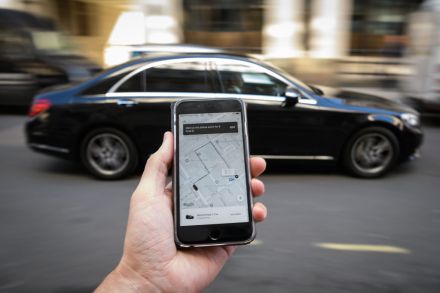
It is unregulated, arrogant, unsafe and has destroyed the livelihood of the traditional black cabs. Ever since it was launched, the ride-sharing app Uber has been as controversial as it has been popular. Now it faces a ban in London that could see the ubiquitous Toyota Priuses favoured by its drivers disappear from the capital’s streets. It won’t happen immediately, because the decision will be appealed, but it could happen very soon. True, that will be a blow to the company, and a relief both to its ride-sharing rivals and even more to the cabbies. With three million passengers and more than 45,000 drivers, London is one of the company’s biggest markets.

The Uber ban is just more pointless protectionism

Transport for London doesn’t like Uber. It doesn’t like the innovations the app has created in transport; it doesn’t like how competitive platforms like Uber have become with black cabs; and it doesn’t like that customers have completely embraced the service. That’s why they’ve effectively banned the app – again. This morning TfL ruled that it will not be expanding Uber’s licence, because it claims the platform does not meet the 'fit and proper' requirements to be a private hire operator, nor has it done enough to address rider safety over the past few years (TfL refused to renew Uber’s licence back in September 2017 as well, but a court challenge managed to get it extended for an additional fifteen months).