Turkey

Von der Leyen’s latest diplomatic faux pas

From our UK edition

Ursula von der Leyen isn't particularly keen on diplomatic protocol. Earlier this year, in a bid to get EU hands on British bound vaccines, the Commission announced its intention to implement a hard Northern Irish border — without bothering to tell either Dublin or Belfast. (Naturally, that fit of international irreverence was blamed on a Brussels subordinate).  Then we had sofagate, which overshadowed what should have been a show of European strength in the face of Turkish President Erdogan. VdL instead decided to take the opportunity to make a fuss about a chair being offered to a man — despite Council President Charles Michel's superiority to her in the EU's order of precedence.
The West should worry about Georgia’s broken democracy

From our UK edition

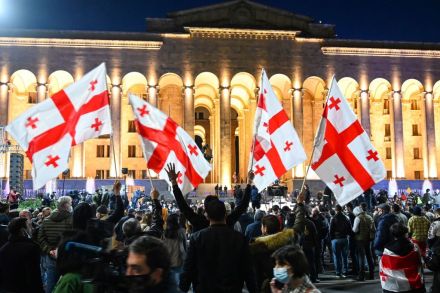
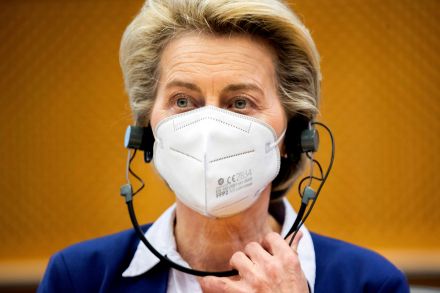
It is the first display of political instability in the Caucasus in 2021. Georgian Prime Minister Giorgi Gakharia on Thursday announced his unexpected resignation. Although his successor has yet to be confirmed, his replacement will be the country's sixth Prime Minister in eight years. All, including Gakharia, have been members of the same party, Georgian Dream, that has held parliamentary control since 2012. The founder of the party, the formerly reclusive billionaire Bidzina Ivanishvili, was the first Georgian Dream Prime Minister. He only held the post for a year, claiming he had achieved his political objectives after twelve months. This was treated with a degree of scepticism that was later proved justified.

The empty promise of Turkey’s charm offensive

From our UK edition

On Thursday, Turkey Foreign Minister Mevlüt Çavuşoğlu will land in Brussels to meet with European Union officials to start to ‘build Turkey’s future in Europe’. Next week, Turkey is expected to resume talks with Greece to resolve their maritime disputes after a five-year hiatus. The clash in the eastern Mediterranean between Ankara and Athens has brought the two states to the brink of war and is one of a long list of reasons why Turkey has so far failed to ‘build’ that ‘future in Europe’.

Thanksgiving with my illegally large family

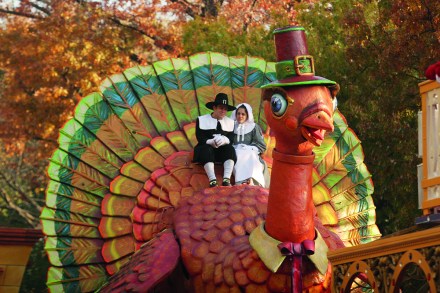
If your family is like mine, you’ve spent the time and energy normally reserved for dividing up Thanksgiving potluck assignments determining how many people may attend your holiday, and under what public-safety conditions. The truth is, some families’ scaled-back Thanksgivings this year may actually mark an improvement on the traditional meal. We all know that turkeys are bland and fussy to prepare, one reason we don’t eat them all year round. (My father has a more gruesome objection involving the perceived similarity of turkey and human flesh, which I generally prefer not to consider.) Melissa Clark’s bacon-wrapped turkey breast is surely an enormous improvement.

thanksgiving

Arab states are fighting back against Turkey’s ‘neo-Ottomanism’

From our UK edition

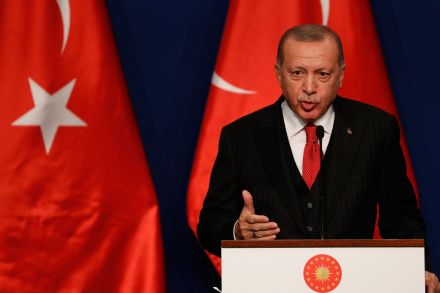
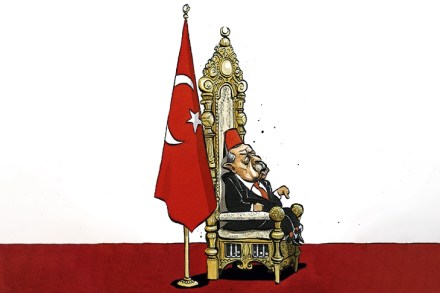
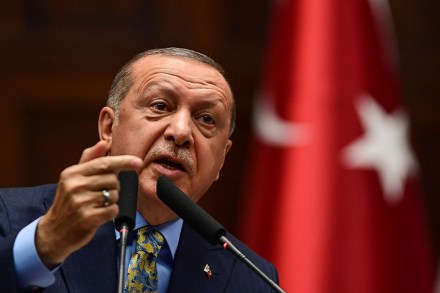
Recep Tayyip Erdoğan seems determined to reinvent the secular Muslim country he inherited as a sort of Sunni Iranian ‘Mini-Me’: draconian, Islamist and with vaunting regional ambitions. For Western powers and their allies, the urgent question is how to deal with the mutation of a Nato ally into a ‘neo-Ottoman’ threat. A hundred years ago, the Turkish Republic was founded on secularism. Ataturk banned religion from the public realm, prohibited the Arabic call to prayer, and encouraged men and women to mix. But for years, Erdoğan has done all he can to reverse the Turkish liberal consensus in favour of a new authoritarianism – and is taking on muscular adventurism abroad.

Wines of turkey

Thanksgiving is probably my favorite holiday, and not only because it offers an excuse to dine lavishly among friends. It also provides an occasion to live up to its name and give ourselves the pleasure of correcting Aristotle. Man, the old Greek said in a distracted moment, is the rational animal, ζῶον λόγον ἔχον. Clearly, what he meant to say is that man is the ungrateful animal, ζῶον αχαριστίαν ἔχον. Since Thanksgiving is all about enumerating one’s blessings, it is one of those rare opportunities in which everyone’s favorite pastime, virtue-signaling, can be indulged while thoroughly enjoying oneself.

turkey thanksgiving

The West has left Armenia to fend for itself

From our UK edition

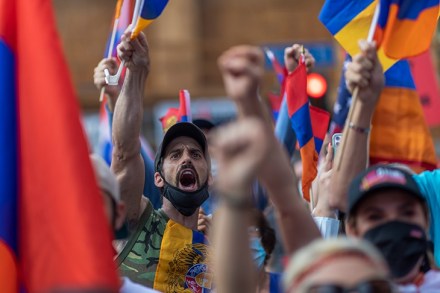
Bomb shelters have come a long way since the Blitz. As missiles from Azerbaijan rained down on Nagorno-Karabakh a few weeks ago, Hayk Harutyunyan and his family took refuge in a basement with wifi, an ensuite toilet and a makeshift mini-bar. There were 12 people crammed in there every night, he told me, ‘but we Armenians are very close as family, so we get on well’. Indeed, sipping brandy with them in their shelter, I was reminded of that other Armenian clan, the Kardashians, who spend their time sitting around and chatting. Keeping up with the Harutyunyans, however, makes for more challenging viewing. Armenia, a Christian democracy in a neighbourhood dominated by Islamists and strongmen, has been left to fend for itself by the West.

Erdogan’s game: why Turkey has turned against the West

From our UK edition

Six years ago, at the celebratory opening match of the new Basaksehir Stadium in Istanbul, an unlikely football star emerged. The red team’s ageing, six-foot tall centre-forward lumbered toward the white team’s goal; a delicate chip over the advancing keeper brought a goal that sent the stadium into ecstasy. The scorer was Prime Minister Recep Tayyip Erdogan. It was the run-up to an election in which he expected to become his country’s 12th president. For Erdogan, a former semi-professional footballer, it was brilliant self-promotion.

erdogan

Erdogan’s game: why Turkey has turned against the West

Six years ago, at the opening match of the new Basaksehir Stadium in Istanbul, an unlikely soccer star emerged. The red team’s aging, six-foot center-forward lumbered toward the white team’s goal, and a delicate chip over the advancing keeper brought a goal that sent the stadium into ecstasy. The scorer was Prime Minister Recep Tayyip Erdogan. It was the run-up to an election in which he became his country’s 12th president.For Erdogan, a former semi-professional footballer, it was brilliant self-promotion. Like Fidel Castro’s baseball pitching or Chairman Mao’s ‘world-record’ Yangtze river swim, Erdogan’s contrived sporting prowess helped make him as much a cult as a politician.

Will Turkey and Greece clash over a tiny island?

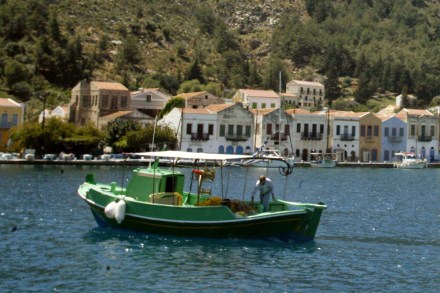
An obscure Mediterranean flashpoint may soon come to a crisis; that would be the minuscule and remote Greek island of Kastellorizo (or Megisti; Meis in Turkish). Like many other Greek islands, it lies much closer to the Turkish than the Greek mainland (1 mile vs. 357 miles). Unlike other small Greek islands, its location between Rhodes and Cyprus bestows outsized military and economic importance on it.Were Kastellorizo, with a population of under 500, to enjoy the full rights bestowed on it by the 1982 UN Convention on the Law of the Sea, Greece can claim a 200-nautical mile exclusive economic zone (EEZ) that leaves Turkey with a cramped EEZ along its shores; take away Kastellorizo and the Turkish EEZ more than doubles in size.

kastellorizo

Med alert: Greece and Turkey are in a battle for hegemony

From our UK edition

No one should fool themselves about the nature of Recep Tayyip Erdogan’s vision for Turkey. It’s an imperialist project that would see Turkey’s hegemony stretch from the Mediterranean Sea and Libya all the way to Iran. Erdogan’s plans for his country’s expansion are evident in the current stand-off in the eastern Mediterranean between Turkey and Greece. Turkish frigates are accompanying a research vessel, the Oruc Reis, as it enters disputed waters to carry out a seismic survey in search of natural gas. In its path lies a joint force of Greek and French warships, attempting to prevent the Turkish from venturing further. The two sides have almost come to blows — two frigates accidentally collided this month.

Enes Kanter on freedom and the bubble

Orlando, Florida The life of an NBA player is defined by constant travel: crisscrossing the country for away games and spending half of the year in dozens of different cities. So it’s always a great experience to play with home-court advantage before the Celtics’ fans, as well as under pressure in away games. The type of experience we were used to having pre-COVID was unparalleled, and nothing could ever replace that. Despite the 140-day interruption to our passion, the NBA has done a tremendous job creating a safe haven in Orlando for the players, coaches, staff and referees. Housing hundreds of players in a sports complex, arranging safe workout settings and creating a home-court experience for games is no easy feat.

enes kanter

The sunset of secular Turkey

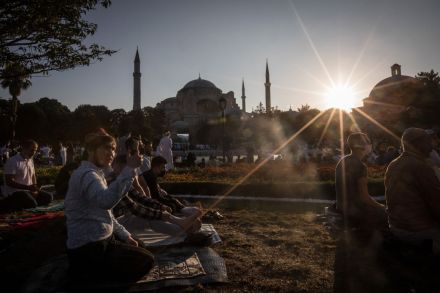
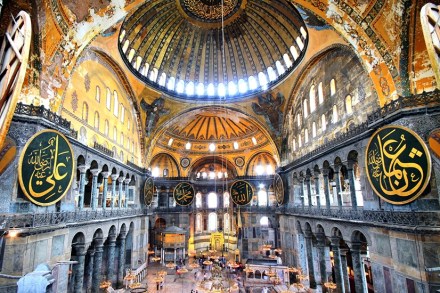
Christians around the world have been outraged by Turkey’s decision to convert the Hagia Sophia cathedral into a mosque. This astonishing architectural masterpiece was completed in 537 and is considered one of the Orthodox church’s holy sites. (The cathedral was, for 57 years after the crusades, a Roman Catholic church.) With the Ottoman conquest of Constantinople in 1453, minarets were added, and it was converted into a mosque. In 1934, the secular leader of Turkey attempted to end the religious division over the building and turned it into a museum.The reader should notice that I place the responsibility for Hagia Sophia’s conversion on the nation of Turkey, not on President Erdogan.

turkey

There is no justification for turning Hagia Sophia into a mosque

From our UK edition

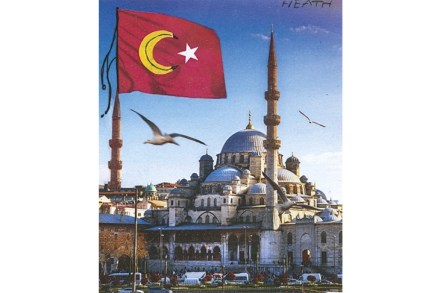
It is official: Hagia Sophia, for a thousand years the world’s largest cathedral, and since 1934 a museum, is to be turned back into a mosque. Ever since I heard of the possibility, I have been praying it would not be so because of the impact it will have on Muslim-Christian relations in Turkey, the Middle East and beyond. A suitably purged and compliant judiciary, however, has bowed to the wishes of the authoritarian President Erdogan that Turkey should become more Islamic and less secular. There has been a church on the site since 360 ad and the present building dates from the reign of Justinian in the mid-sixth century.

The way Greece has conducted itself in this pandemic is an example to us all

From our UK edition

Aristophanes was a comic genius long before the Marx Brothers, but he also gave good advice to the Athenians: stop the war! In his play Lysistrata he had the women going on strike — no more nookie — until the men stopped fighting. During the plague that killed the greatest Athenian of them all, Pericles, Aristophanes advised the young to isolate, meditate and masturbate, advice still valid to this day. Greece, with roughly the same population as Switzerland and faced with a surge of migrants turned loose by the dreaded Turks, has handled the crisis well. The American media is using the virus crisis in order to attack Trump, but the Greek people will not tolerate such craven opportunism and dishonesty.

Will the impeachment inquiry stuff Donald Trump?

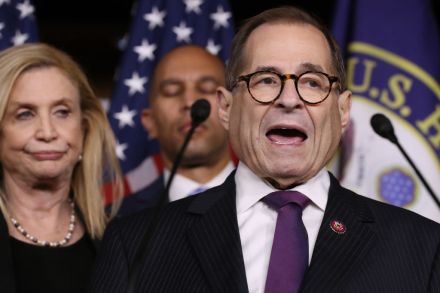
President Trump was talking turkey today. At the White House, he performed a solemn task. He pardoned what he referred to as 'the beautiful feathered friend, the noble bird'. In all, it was two turkeys that received, from the Chosen One, as his former energy secretary Rick Perry referred to Trump yesterday, his dispensation. Bread and Butter, who hail from North Carolina, can gobble further.Trump was intent on appearing in a magnanimous mood, but he couldn’t help resist throwing in a dig at Adam Schiff during his remarks, claiming that he had spared Bread and Butter from the indignity of having to appear before Adam Schiff. Indeed, a few hours before the event, Trump made it clear that another species of animal other than turkeys was really on his mind. He stated on Twitter, 'The D.

nadler impeachment

Riveting and beautifully staged analysis of totalitarianism: Arcola’s #WeAreArrested reviewed

From our UK edition

When the RSC does modern drama it usually lays on an ultra-worthy yarn with a huge cast, dozens of fancy costumes and a three-hour running time. Miraculously, its new co-production with the Arcola avoids these faults and delivers a terse, gripping 75-minute documentary drama based on the prison diary of Turkish journalist, Can Dundar. In 2015 Dundar received proof that his country’s intelligence service was attempting to supply arms to Syrian rebels. He knew that if he released the material he might face jail but he published it anyway and was threatened with life imprisonment. Peter Hamilton Dyer, well known for impersonating journalists, plays Dundar as a loveably cerebral type determined to stick to his principles.

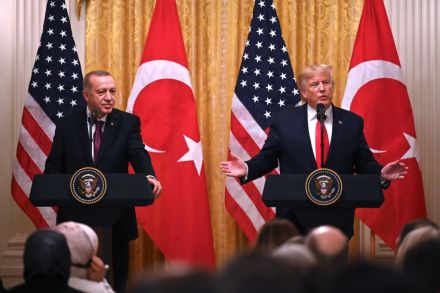
Turkish delight at the White House

President Trump’s recent moves in northern Syria are already paying off. Overshadowed as it was by the ‘impeachment' kabuki a mile down Pennsylvania Avenue, Trump’s hosting of Turkey's president Erdogan at the White House today signals progress in an area of significant US national interests.Some perspective on the hysteria over Trump’s ‘abandonment' of the Kurds last month. First, the notion that any Kurdish group represents 'the Kurds' anywhere is absurd. The world’s 30 million or so Kurds live in four countries –– Turkey, Iraq, Iran and Syria, in order of numbers.

turkish erdogan

Armenian genocide and the theater of US politics

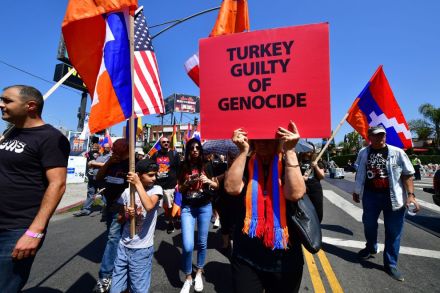
The House of Representatives passed two important bills this week amid deteriorating US-Turkey relations, one imposing sanctions on Turkish military and government officials over Ankara’s incursions against the Kurds in northeast Syria, the other officially recognizing the Armenian genocide. The latter is largely symbolic, finally acknowledging what scholars have long reached an overwhelming consensus on: that during World War One, amid the fading embers of the Ottoman Empire, 1.5 million Armenians were systematically exterminated. Turkey’s longstanding denial of this atrocity stands in stark contrast with how Germany has handled the moral stain of the Holocaust and continues to rob the Armenian people of dignity and closure.

Armenian genocide

Portrait of the week: Brexit uncertainty, Turkey in Syria and a Chinese threat

From our UK edition

Home Brexit teetered from uncertainty to uncertainty. Parliament had been summoned to sit on Saturday 19 October to debate what Boris Johnson, the Prime Minister, had brought back from a European Union summit. He had held talks before the week began with Leo Varadkar, the Taoiseach of Ireland, at Thornton Manor in the Wirral, from which optimistic noises emerged. Margaret Atwood, 79, from Ottawa, and Bernardine Evaristo, 60, from Eltham, shared the Booker Prize. The Queen wore the George IV diadem at the State Opening of Parliament instead of the heavy Imperial State Crown.