Turkey

Who cares about Syria’s earthquake victims?

From our UK edition

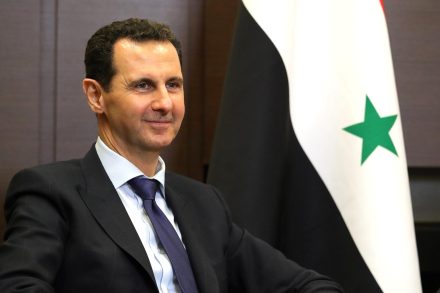
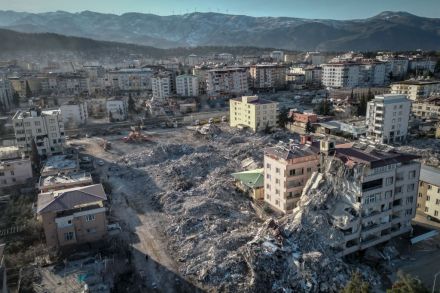
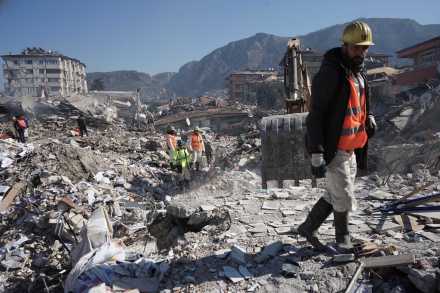
At 4 a.m. on Monday, when the earthquake hit, most of the 4.5 million people living in northwestern Syria were asleep. Thousands of buildings collapsed, burying their residents alive. The majority of those living in this small corner of Syria had already been displaced from their homes in other parts of the country by the civil war. The northwest is the final stronghold of Syria’s opposition and is the main target of president Bashar al-Assad’s grim campaign to retake full control of the country. Before the earthquake, some two thirds of the area’s basic infrastructure ­– public housing, water and sanitation, hospitals and medical clinics, roadways and power generation – was already destroyed or damaged. The people living there could not have been more vulnerable.

Turkey’s heavy price for pressuring the Russians

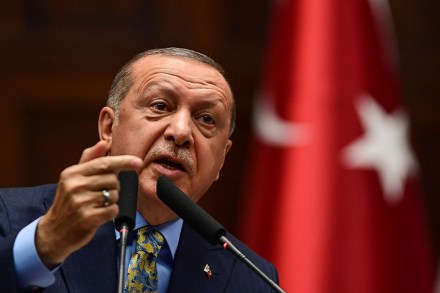
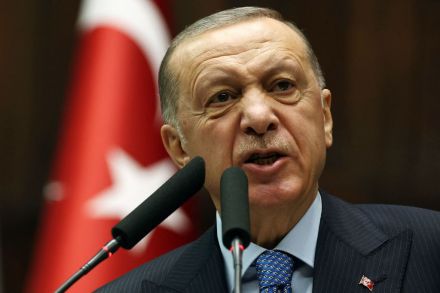
If you enjoyed the weeks-long intra-NATO spat about whether to send heavy tanks to Ukraine, then you’re going to love the ongoing kerfuffle about whether Sweden and Finland should be admitted into the transatlantic alliance. Whereas Germany was the lone holdout in the first instance, Turkey is the obstacle in the second — and going by the fiery words of Turkish President Recep Tayyip Erdogan, the squabble won’t end soon. Erdogan, in the midst of his toughest election campaign in two decades, has been using his veto over Sweden's and Finland’s NATO memberships to press both countries on one of his top priorities: cracking down on the Kurdistan Workers’ Party, a group Turkey, the US, and the European Union all label a terrorist organization.

greece

Has a Quran-burning protest ended Sweden’s Nato dream?

From our UK edition

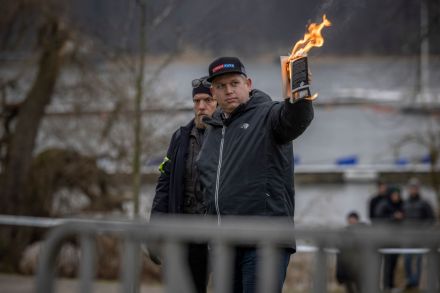
A crowd gathered outside Turkey’s embassy in Stockholm on Saturday afternoon to watch far-right politician Rasmus Paludan burn the Quran. Paludan, who leads the anti-Islam ‘Hard Line’ Danish party, was watched by dozens of photographers, police officers and bemused passers-by. Paludan is no stranger to controversy: he has previously been convicted under racism and defamation law. This latest stunt was called to show his party’s opposition to immigration and, he says, to stand up for free speech. Now, though, the stunt has become a diplomatic crisis for Sweden – and there are fears that its bid to join Nato could go up in smoke.

Erdogan’s plan for war, and peace

From our UK edition

There are ‘global issues that we both have on our plates’, US Secretary of State Anthony Blinken said, mysteriously, when he met with his Turkish counterpart last week. Foreign Minister Mevlut Cavusoglu, standing by Blinken’s side, thought the same. ‘We will focus on areas of partnership in bilateral and regional issues.’ Diplomacy as usual, then. Behind the boring platitudes lies a serious rift between Turkey and the United States. In late December, Syrian and Turkish defence ministers met in Moscow in the first proper meeting between the two governments in a decade. There are plans for another meeting between foreign ministers that could lead to a direct meeting between Turkey's leader Recep Tayyip Erdogan and Syrian president Bashar al-Assad.

Why Sweden and Finland still haven’t joined NATO

Sweden and Finland officially applied to join NATO last May, overturning their long-standing policies of neutrality. If their membership goes through, it will be one of the most consequential accessions in NATO history, bringing two technologically advanced militaries right on Russia’s doorstep into the fold. But as the eight-month mark approaches, neither nation has received the unanimous support from the other members that it needs. To date, twenty-eight members of the alliance have approved the Scandinavian nations’ memberships, with Hungary and Turkey as the two holdouts. Hungary has indicated it will vote to accept the accession in early 2023, which will leave NATO’s most undemocratic and troublesome member, Turkey, as the last hurdle.

Turkey isn’t the only option for a Christmas feast

From our UK edition

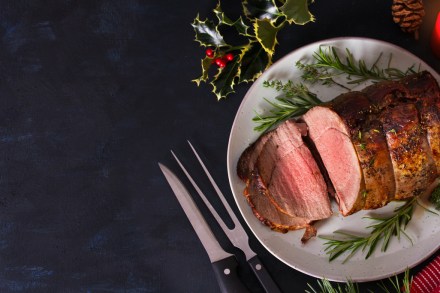
Christmas is coming – but if the geese are getting fat, the turkeys aren’t terribly happy, cooped up indoors on account of avian flu. Around half of the free-range birds produced for Christmas in the UK have been culled or died due to the illness, according to the British Poultry Council – and for those that remain, the government’s anti-infection measures mean they aren’t ranging anything like as freely as before. Some butchers, including the Ginger Pig chain, have announced they aren't selling turkey at all. So if we can’t get a happy turkey, what should we be eating on Christmas Day? Turkeys might seem like the stalwarts of the Christmas feast but they are, after all, New World birds, so latecomers to the festive table in these islands.

Why is there no great Thanksgiving movie?

In about a month’s time, one of the most boring conversations in social media discourse will begin (assuming Elon Musk hasn’t taken Twitter away from us out of pique). "X is a Christmas film." "X is not a Christmas film." And so on, as keyboard warriors angrily debate whether the eclectic likes of Die Hard, Lethal Weapon and Love, Actually qualify for this designation, as purists claim on endless Reddit threads that a Christmas movie can only be so-called if the plot and events are entirely driven by the festive season itself. Even for those of us who would argue that Die Hard and It’s A Wonderful Life make the perfect Christmas double bill — wider designations of the term be damned — there is considerably less debate as to what makes a Thanksgiving film.

It’s good to be back on the back benches

From our UK edition

After the shale gas vote, I was literally sent to Coventry – to visit the UK Battery Industrialisation Centre. It is a remarkable facility that helps take batteries from development through to production. It means companies only need the hundreds of millions of pounds in investment once they have shown that their product works and is saleable. It was funded by the Faraday Battery Challenge, and I was there to announce a further £221 million of taxpayers’ money. This is one of the rather better ways the Department for Business, Energy and Industrial Strategy spends money, while some of our policies seem designed to ruin industry. I am particularly concerned about steel, where the price of energy is, in normal times, about 60 per cent more than our competitors.

Inside the Booker Prize

From our UK edition

It’s been a great week for the powerful fantasies of fiction (see more below), but over the weekend no novel anywhere in the world could compete with the fantasy of British politics. Continental Europe watched spellbound as the Prime Minister and her Chancellor humiliated themselves and the standing of the UK. The reactions of the different nations were predictable, but none the less excruciating for that. In Germany, where journalists have disconcertingly deep knowledge of British constitutional history, the reaction was dismay, as a distracted friend inflicts yet further damage on themselves.

Runaway inflation is proving costly for Turkey’s oil-wrestlers

From our UK edition

Edirne, Turkey There is a distinctive sound that an oiled-up palm makes as it slaps against an oiled-up pair of leather shorts. Both squelchy and sharp, this noise rings around the Thracian town of Edirne each July as it hosts Turkey’s biggest oil-wrestling championship. As the name suggests, contenders are greased up with either olive, corn or sunflower oil before they start to fight. The competition begins with a languid ritual in which the wrestlers stomp around each other, touching the ground and themselves before commencing their tussle. The winner must then flip his opponent on to his back, often by reaching into his shorts and grabbing hold of a tag sewn into the lining. It may look like a novelty event put on for tourists, but oil-wrestling is centuries old.

Turkey’s grain diplomacy

From our UK edition

Recep Tayyip Erdogan is once again using Turkey's geopolitical position for his own ends, this time dictating grain shipments from Ukraine through the Black Sea. Turkish customs authorities detained a Russian cargo ship carrying Ukrainian wheat on Sunday, following a request of Kyiv. The Russian cargo ship Zhibek Zholy left the south-eastern port of Berdyansk over the weekend carrying 7,000 tons of grain, worth about £1.75 million. The Russian-appointed head of the occupied region had hailed it as the first commercial ship to leave a Ukrainian port after months of war. He said this would take desperately-needed supplies to friendly countries, according to Politico. The reality is, of course, that the shipment is a provocative move from Russia given it isn't Moscow's grain.

Nato is no longer ‘brain dead’

From our UK edition

Finland and Sweden will be formally invited to join Nato today. Them joining the alliance will bolster Nato's presence in the Baltic and make it easier to defend Latvia, Lithuania and Estonia. The alliance now has a clear, strategic purpose again Turkey had objected to the two countries joining, regarding them as too soft on Kurdish separatists, whom President Recep Tayyip Erdogan sees as 'terrorists' threatening his country. But having received some concessions on that front, Erdogan has dropped his objections. There’s also speculation that the US will sell F-16 fighter aircraft to Turkey in exchange for its cooperation on this matter.

The secret to exploring Istanbul

Two weeks before Covid began to hit Europe, I stood in the Basilica Cistern beneath Istanbul, steadily getting dripped on. Built during the reign of the Emperor Justinian I in 532, just before another deadly pandemic — the plague of Justinian — the cistern lies beneath Istanbul’s tourist hotspot, and despite it being damp, dark and having stands of 007 merchandise at its entrance and exit, it is one of the most enchanting places in a city that has captivated its visitors for over a thousand years. "If the Earth were a single state," Napoleon once pronounced, "Istanbul would be its capital," and upon visiting you begin to understand why.

istanbul

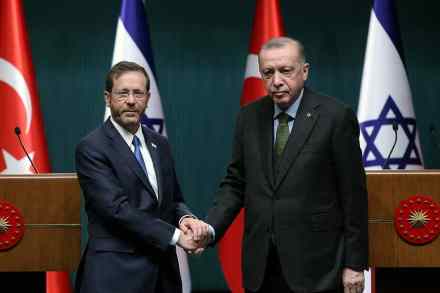
The odd couple: Israel and Turkey’s tentative alliance

From our UK edition

 Jerusalem On Friday night, when the Israeli government usually shuts down for Shabbat, the Prime Minister’s office issued an emergency briefing. An attack on Israeli tourists in Istanbul was ‘imminent’, it said. Israelis in Turkey were ordered to stay in their hotel rooms for fear of assassins, sent by Iran. There was no attack that night, as it happened, but the threat to the many Israelis in Turkey remains. Iran’s Islamic Revolutionary Guards Corps has become increasingly enraged by Mossad’s assassinations of IRGC officers in Iran, and decided that the best and easiest way to get revenge is to target the thousands of Israelis in Istanbul. Both Turkish and Israeli intelligence confirm this. This is not as strange as it might sound.

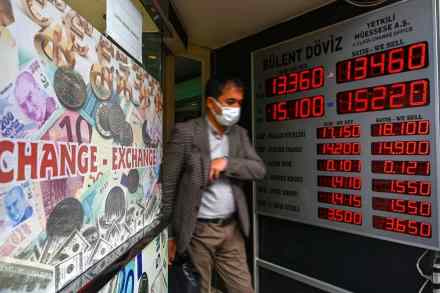
Life in an age of hyperinflation

From our UK edition

Istanbul, Turkey On Saturday mornings, Istanbul’s markets and greengrocers are packed with housewives in search of a bargain. Anxious women compare cabbages while chefs haggle over bunches of parsley, passing across thick wads of ten Lira notes – equivalent to about £5 a decade ago, now worth just 50 pence. The rising cost of food has become a national obsession in Turkey. Menemen, a staple breakfast dish of scrambled eggs with tomato, onion and fried green peppers, has seen the cost of its basic ingredients shoot up by 132 per cent in a year. Some shops in the big cities have invested in digital price tags – those little grey electronic screens you see in continental supermarkets that can be updated with the click of a mouse.

How to have the archaeological adventure of a lifetime

From our UK edition

Anyone with even a passing interest in history and archaeology has surely, at some point, asked themselves: what would it be like, to be an eye-witness to a world-shaking discovery? To walk down the Valley of the Kings, even as Howard Carter opened Tutankhamun’s Tomb. Or to visit Sutton Hoo in the week they unearthed the first glittering Anglo-Saxon treasures. Maybe you’d like to have been among the first to see marvellous walls of Troy as the great German archaeologist Heinrich Schliemann lifted away the veil of thirty centuries. Well, remarkably, you can do something like this today, by visiting the so-called Tas Tepeler ('the stone hills') in eastern Turkey.

Cold Turkey: why is Erdogan resisting Nato’s expansion?

From our UK edition

Driving a hard bargain is the Turkish President Recep Tayyip Erdogan’s chief survival skill – one that has kept him in power for nearly as long as his Russian counterpart Vladimir Putin. And the basic principles of bargaining are twofold: never give something away for nothing, and make your threats to walk away convincing. No surprise, then, that Erdogan’s buzz-killing announcement last week that Turkey would oppose Swedish and Finnish membership of Nato was made in characteristically blunt terms. Speaking of a planned visit of Nordic diplomats to Ankara, Erdogan asked: ‘Are they coming to convince us? Excuse me, but they should not tire themselves.

Is an unknown, extraordinarily ancient civilisation buried under eastern Turkey?

From our UK edition

I am staring at about a dozen, stiff, eight-foot high, orange-red penises, carved from living bedrock, and semi-enclosed in an open chamber. A strange carved head (of a man, a demon, a priest, a God?), also hewn from the living rock, gazes at the phallic totems – like a primitivist gargoyle. The expression of the stone head is doleful, to the point of grimacing, as if he, or she, or it, disapproves of all this: of everything being stripped naked under the heavens, and revealed to the world for the first time in 130 centuries. Yes, 130 centuries. Because these penises, this peculiar chamber, this entire perplexing place, known as Karahan Tepe (pronounced Kah-rah-hann Tepp-ay), which is now emerging from the dusty Plains of Harran, in eastern Turkey, is astoundingly ancient.

How Syria became another narco-state

There is a drug war brewing in the Middle East, and Syria is at its center. The country has been destroyed by its eleven-year civil war, and in the ruins of what was once a prosperous country, an entirely different economy now takes shape. It’s an economy of poverty and privation, where food and energy prices are perpetually high, and supplies of basic commodities are uncertain. The regime of Bashar al-Assad, now unlikely to be overthrown, has become the Middle East’s biggest moocher — a rent-seeking entity that begs for “reconstruction” funds from nearby monarchies to keep its own corrupt machinery in operation. Wartime brings its own economic calculations.

Turkey’s dilemma: whose side is Erdogan on?

From our UK edition

Istanbul Vladimir Putin’s ill-conceived blitzkrieg in Ukraine has failed thanks, first and foremost, to the guts of Ukrainian soldiers and civilians. British and US-supplied anti-tank weapons have played a crucial role, too. But it’s Ukraine’s Turkish--made TB2 Bayraktar drones that have been the war’s most unexpectedly effective weapon. Unexpected not just because of their battlefield killing power but because the father-in-law of the TB2’s inventor and manufacturer is Recep Tayyip Erdogan – the only European leader to have once described himself as a friend of Vladimir Putin. Erdogan, with a foot in the East and West, has emerged as the war’s key power-broker – and his loyalty is being actively courted by both Moscow and Washington.