Turkey

Pax Russica: as Trump abandons Syria’s Kurds, Russia is ready to expand its empire

From our UK edition

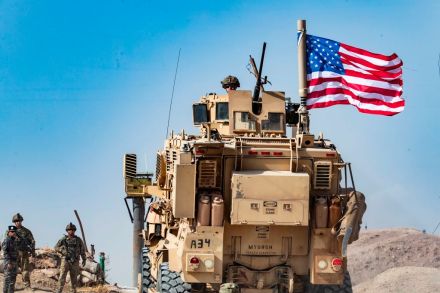
While American troops were hurriedly leaving north-eastern Syria, a young female Kurdish politician called Hervin Khalaf was pulled from her car and executed by the side of the road. Actually, the Kurdish media said she was raped and then stoned to death. They blamed one of the Arab militias being used by Turkey in its invasion. A grim video posted online shows a man holding a Kalashnikov nudging her body with the tip of his boot, as you would a dead animal. The video has not been authenticated and the militia accused of doing this says it was miles away at the time. But in Khalaf the Syrian Kurds have found a martyr to the American ‘betrayal’. She was a human rights activist who formed her own political party to bring Arabs and Kurds together.

Enes Kanter, Kim Kardashian and Turkish crimes against humanity

The Hitler of our century, Boston Celtics basketball player Enes Kanter has said, is the president of his native Turkey. In response to Lebron James playing interference for China following Rockets general manager Daryl Morey tweeting support for Hong Kong’s protesters and their struggle for liberty, Kanter responded with his experience: his outspoken criticism of Turkish president Recep Tayyip Erdogan’s human rights abuses has cost him his family and his safety. 'FREEDOM IS NOT FREE,' Kanter wrote on Twitter, also listing the consequences for his disobedience, including his father being jailed, Kanter’s attempted kidnapping, and having not seen or spoken to his family in five years. Him and his family became pariahs.

enes kanter
mike pompeo saudi arabia

How Trump cleans up the Saudi mess

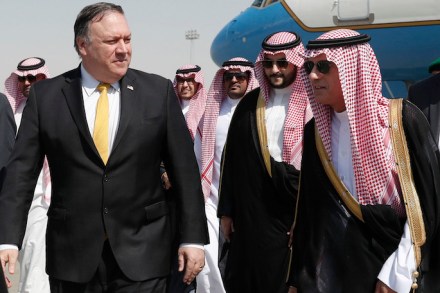
Secretary of State Mike Pompeo arrives in Saudi Arabia today, dispatched at short notice by President Donald Trump. His mission near-impossible? To help orchestrate a believable cover-up for the kingdom's brutal murder at the Saudi consulate in Istanbul two weeks ago of Muslim Brotherhood activist, and one-time Saudi intelligence officer, Jamal Khashoggi. CNN says the Saudi regime may finally be ready to admit that Khashoggi was murdered, but will portray it as an accident during an attempted abduction gone wrong. The blame will be placed on (in Trump’s words) ‘rogue elements’ in the Saudi security apparatus, who improbably undertook the task without the consent or knowledge of the Saudi leadership.

Pulling US troops out of Syria will prove to be the right decision

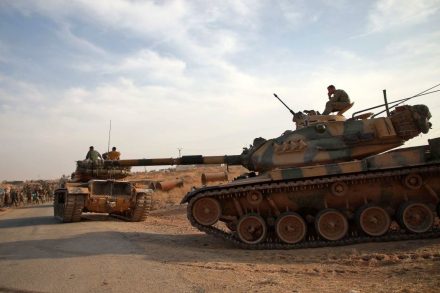
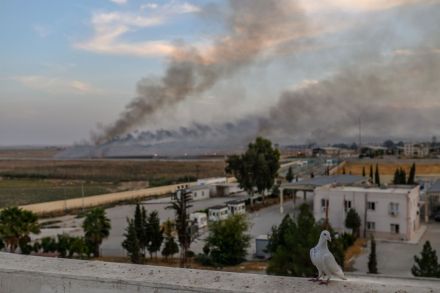
This article is in The Spectator’s November 2019 US edition. Subscribe here. Whenever neoconservatives and liberals chant in unison about American policy in the Middle East — as when they championed the Iraq invasion, for example, or the overthrow of Colonel Gaddafi in Libya, or the thwarted attempt to topple the Assad regime in Syria — it means we are being told a pack of lies. Par for the course is the hysterical response to President Donald Trump’s ‘betrayal’ of the Kurds in the wake of Turkey’s invasion of northern Syria. Turkey’s goal was to repatriate at least two million of 3.6 million Syrian refugees inside Turkey in a border zone controlled, until the invasion began, by the US-allied, Kurdish-led Syrian Democratic Forces.

turkey syria kurds

Syria’s Christians are suffering in silence

The White House’s decision to move aside and allow a Turkish assault in northeast Syria highlighted the morass that is the US’s foreign policy in the Middle East. Criticism of the decision, rebuked as ham-fisted and reckless, was bipartisan. This is the kiss of death for the Kurds (the US’s allies, who are left defenseless),  the largest ethnic minority in Syria, and one of the victims of Turkey’s human rights abuses that have spanned centuries. Lost in the turbulent tangles of the news is another one of Turkey’s victims, a population of Christians who are a distinct ethnic group that has been historically targeted by the Ottoman Empire.

syria christians

Is Trump’s Turkey distraction a miscalculation?

In pronouncing this morning in his 'great and unmatched wisdom' that it is wise for America to abandon the Kurds, Donald Trump has just slightly increased the possibility that the Senate will vote to impeach him. Fooling around in Ukraine is one thing. But dissing the Kurds is another for congressional Republicans. A chorus of Republican hawks has emerged to decry Trump’s move.Mitt Romney called it a 'betrayal'. Susan Collins told Politico, 'This is a terribly unwise decision by the president to abandon our Kurdish allies, who have been our major partner in the fight against the lslamic State.' Terribly unwise? For Collins, who usually confines herself to expressing 'concern', those are fighting words. Still, Romney and Collins have been mildly critical of Trump all along.

syria kurds
kurds

The US will pay for abandoning the Kurds

Credibility used to be an important thing in US foreign policy, a guiding principle: hundreds of thousands of Americans in uniform died to maintain it. In 1969, with half a million American troops in Vietnam, Henry Kissinger wrote this in Foreign Affairs: '[W]hat is involved now is confidence in American promises. However fashionable it is to ridicule the terms “credibility” or “prestige,” they are not empty phrases; other nations can gear their actions to ours only if they can count on our steadiness. The collapse of the American effort in Viet Nam would not mollify many critics; most of them would simply add the charge of unreliability to the accusation of bad judgment. Those whose safety or national goals depend on American commitments could only be dismayed.

The sea, the sea

From our UK edition

Walking into Fingal’s Cave, after scrambling across the rocks to reach it from the landing stage where the boat from Mull arrives, is a strangely emotional experience. It’s not just the extraordinary landscape, the precise, almost unnatural shaping of the hexagonal basalt columns that rise up high above you, the screeching of gulls and roaring of the sea as it enters and leaves the cave. That’s enough to provoke a sense of wonder. But there’s also so much history attached to the place since it was discovered by the Romantics and became the epitome of the sentimental landscape, awesome in scale, and also quite frightening.

Istanbul Notebook

From our UK edition

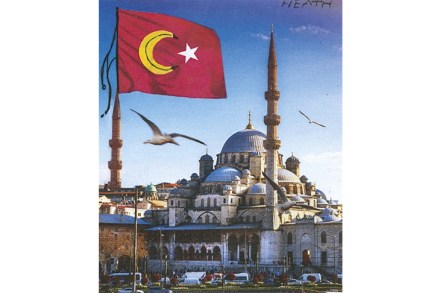
‘It’s official. Turkey is a banana republic!’ My friend Mustapha, a serial entrepreneur, sends me a flurry of doom-laden WhatsApp messages on hearing the news that Istanbul’s mayoral election is being re-run. One of them is a cartoon of President Recep Tayyip Erdogan standing in front of the national flag, crescent turned into a banana. In March, his ruling AKP lost Istanbul, the engine of what remains of the Turkish economy, together with Izmir and Ankara. It was a historic breakthrough for the opposition CHP and its victorious mayoral candidate Ekrem Imamoglu. But it was also a massive threat to Erdogan, a former mayor of Istanbul, who hasn’t lost an election since 1994. He alleged dirty tricks and leant on the election authority to order a re-run.

Rebuilding Artemis’s temple

From our UK edition

As soon as the blaze that nearly brought down Notre Dame was extinguished, two questions were asked: how did it catch fire? And how will it be rebuilt? So too with a famous Greek temple. In 560 bc in Ephesus on the west coast of modern Turkey was built a massive temple to Artemis (Roman Diana), the largest building we know of from the Greek world and the first to be constructed out of marble. It was sponsored by Croesus, king of Lydia, a man so rich you could commit suicide by jumping off his wallet. But it was intentionally burned down in 356 bc by a man called Herostratus, who set fire to the wooden roof supports. That brought down the roof, as in Notre Dame, and everything else with it. His motive? Because he wanted to become ‘famous’. How very 21st-century of him.

Who remembers the Armenians?

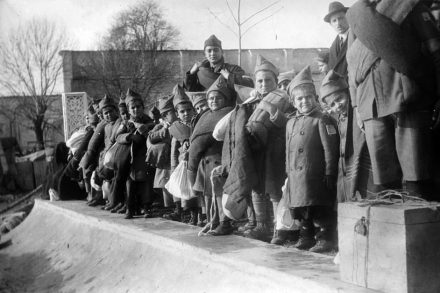
‘Who remembers the annihilation of the Armenians?’ Hitler asked in August 1939. Raphael Lemkin did. In 1944, Lemkin, a Polish-born Jew, published the theory of ‘genocide’. Lemkin’s models were the ongoing genocide of Europe’s Jews, and the Meds Yeghern, the ‘Great Calamity’ of 1915-16: the systematic murder of Armenian Christians by the Ottoman Turkish state and its local helpers. Today, on the 104th anniversary of the beginning of the genocide, we should remember the Armenians — and not forget the disgraceful denial of the genocide by the modern Turkish state. In 1915, some two million Armenians lived in Ottoman Turkey, three-quarters of them in six provinces of eastern Anatolia, on the borders of Russia and Persia. By 1918, 90 percent were gone.

armenians

My least favourite countries in the world

From our UK edition

Every year during Easter Week I draw up a chart of my least favourite countries and distribute the list to close friends and relatives. I’ve been doing this for thirty years now and I’m sure it has proved helpful to those close to me. So sure, in fact, that I intend, from now on, to post the same chart here. I hope in time my hate list will come to be seen as a familiar herald of summer, like letters to the Times about the first cuckoo or Christian names given to children. I never explain my reasoning: in most cases there is no need. And where there is need it is a case of pure, blind, prejudice. When I say “country” I dislike, sometimes I mean merely the government of that country, sometimes I mean the awful people who live in it and most usually I mean both.

Stone walls do not a prison make

From our UK edition

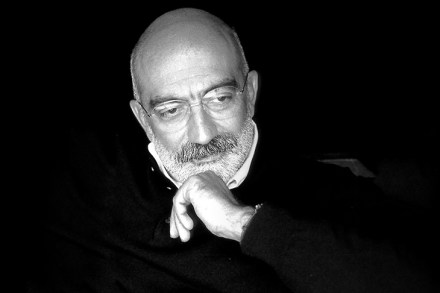
There’s no getting away from that title. I will never see the world again. It catches your eye on the bookshelf. I will never see the world again. It’s there, at the top of every page. I Will Never See the World Again. It’s a killer opening, before the book has even begun, and it’s all true. Ahmet Altan, one of Turkey’s leading writers, in 2016 was arrested on charges of providing subliminal messages to coup supporters, and has since been sentenced to life imprisonment: Never again would I be able to kiss the woman I love, embrace my kids, meet with my friends, walk the streets. I would not have my room to write in, my machine to write with, my library to reach for. I would not be able to open a door by myself.

My Christmas nightmares

From our UK edition

Christmas in our family seems to guarantee tears and tantrums as well as jingle bells and jollity. Indeed, in my childhood, ‘feeling Christmassy’ meant feeling thoroughly overwrought or bad tempered, the antithesis of the ‘Christmas Spirit’. I think my father invented it when my mother, who was a terrible cook, spent all day making marmalade to give as Christmas presents and was then beside herself with anger when she burnt the lot. My earliest Christmas disaster was my first attempt at cake icing. I’d proudly come home from school with a Christmas cake. It was covered with smooth royal icing on which I’d painted the Three Kings — but I’d omitted the teaspoon of glycerine in the icing which would have stopped it drying to concrete.

Why Erdogan is relishing making life difficult for Saudi’s crown prince

From our UK edition

Jamal Khashoggi’s murder has been dissected by the world’s press, perhaps none more so than in Turkey, where the journalist met his grisly fate. Fresh information is still being leaked about his final moments inside the Saudi Arabian consulate in Istanbul. In a recording of his murder, Khashoggi can be heard putting up a fight. He orders his killers to release him and warns they’ll be brought to account. But will they? Or are there bigger fish to fry? And what is Erdogan hoping to achieve by making life uncomfortable for Saudi's Crown Prince Mohammed Bin Salman. Khashoggi has been described by some as a Saudi dissident. Turkish media say he saw himself instead as a ‘proud patriot’ who was homesick as a result of his self-imposed exile.

Blood Brotherhood

From our UK edition

 Istanbul In another time, in another place, we might never have known about the death of Jamal Khashoggi. In a Saudi consulate, the staff are guaranteed to say nothing. The reason we know so much is that Recep Tayyip Erdogan, the President of Turkey, has been willing to tell the world not just what he knows, but what he suspects. It has been clear from the offset that this isn’t just about the death of a journalist but a battle for political leadership of the Islamic world. On Tuesday, in his first full statement on Khashoggi’s killing, Erdogan said that the perpetrators should stand trial in Turkey, and that everyone responsible should be punished ‘from the highest to the lowest’.

Erdogan is building a new Turkish empire

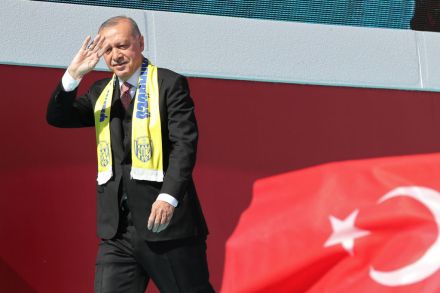
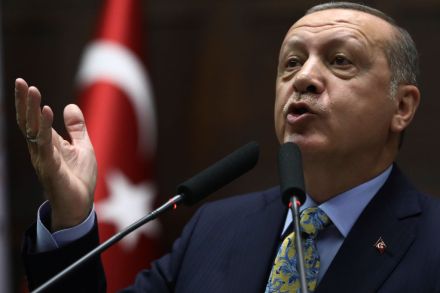
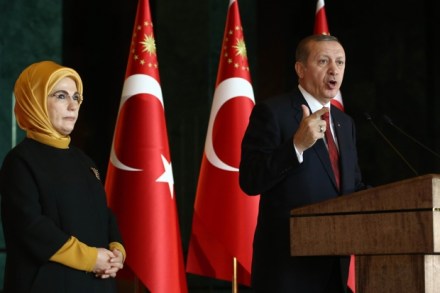
Last year, President Recep Tayyip Erdogan campaigned for a new constitution that would change from a parliamentary to a presidential system. When German officials refused to allow his ministers to travel to Germany and woo its million-strong expatriate vote, he called them Nazis. He later also accused the German Chancellor of Nazism for saying that the European Union should reconsider its relations with Turkey — a veiled threat for suspending talks to bring it into the EU. Ankara and Amsterdam withdrew their ambassadors during a spat over the same campaign.

Turkish President Tayyip Erdogan

Jamal Khashoggi was no fighter – but he was a turncoat

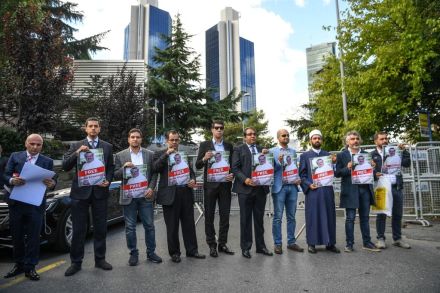
If ever a history of botched cover-ups that made things even worse for the criminal conspirators is written, the official explanation from Riyadh of why Jamal Khashoggi died in the Saudi consulate in Istanbul – it was an argument that turned into a brawl – will rank right up there with Watergate and the Dreyfus affair. The most obvious problem for the Saudis is that Turkey – Saudi Arabia’s rival for regional hegemony – has video and audio of what actually took place. And they insist that Khashoggi was slaughtered like an animal on the Saudi consul’s desk just minutes after entering the building.

jamal khashoggi

Let’s talk about how the Turkish government deals with dissidents abroad

From our UK edition

The indignation over the disappearance of the Saudi journalist Jamal Khashoggi has taken an interesting turn now that Donald Trump has promised to inflict 'severe punishment' on the Saudi government should it turn out that he was in fact tortured and killed in the Saudi embassy in Ankara – though not obviously to the point of cancelling US military contracts with the kingdom. And the indignation is entirely justified. For agents of a foreign state to infringe the human rights of its subjects in another country is a calculated insult to the country in question quite apart from the unpleasantness of exhibiting abroad the behaviour visited on critics at home.

The Mesut Özil affair is an own goal for Erdogan’s critics

From our UK edition

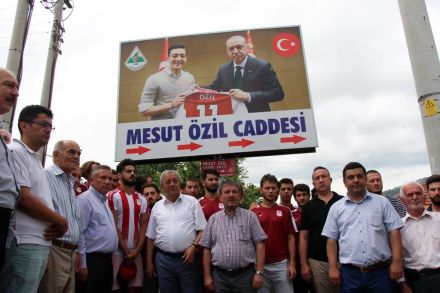
The morning after Mesut Özil’s shock resignation from the German national football team, his family’s ancestral home set to work. Enlisting the help of the local fire brigade, locals in Devrek, a small village near Turkey’s Black Sea coast, removed the large board at its entrance of the star midfielder in his Germany kit. The picture chosen as its replacement was a giant version of the image that first caused the furore – a photograph of Özil shaking hands with president Recep Tayyip Erdoğan. The response of this small village was far from unique in Turkey. Özil’s resignation has played out very differently here to how it has in Germany.