Treasury

Bank of England Brexit bust-up shows the referendum campaign is getting nastier

With a week to go until the referendum, nerves are running high in both the ‘Leave’ and ‘Remain’ campaigns. This morning, we’ve seen that nervousness manifest itself in a spat between senior Tories and the Treasury and the Bank of England. Iain Duncan Smith, Michael Howard, Lord Lamont and Lord Lawson have signed a letter saying both the BoE and Treasury have been ‘peddling phoney forecasts’ to scare people into backing ‘Remain’. In their letter to the Daily Telegraph, they go on to say that: ‘There has been startling dishonesty in the economic debate, with a woeful failure on the part of the Bank of England, the Treasury, and other
Why Brexit wouldn't leave voters out of pocket

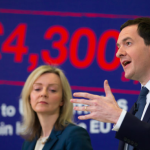
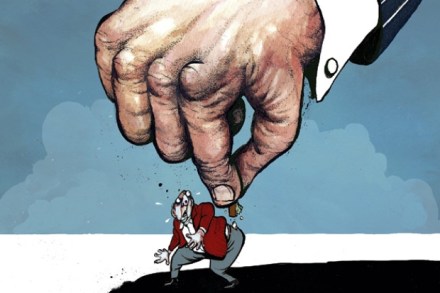
The Treasury says that the cost of the UK leaving the EU would be £4,300 per household – but compared with what? We’re not told. As a cross-bencher, I naturally take very seriously the task of checking and challenging the work of the government so I put down two Parliamentary questions which eventually elicited the response that: ‘HM Treasury did not produce a forecast of how big the economy would be in 15 years’ time….’ Really? A whole report about the impact of Brexit by the year 2030, taking in hundreds of different factors – but no estimate about how big the economy would be by then? Why on earth not? The

MPs turn Treasury Questions into extended referendum campaign session

The Commons may have rather big legislation to debate at the moment, but the government itself seems to have tuned out until after the referendum is over. There was no Cabinet meeting this morning, and ministers are busy fighting one another at campaign events, rather than bustling about in their departments. Even departmental question sessions have changed from being an opportunity for backbenchers to ask questions about the work of Whitehall and ministers to session where the two camps in the EU referendum work together to get their messages into Hansard. Treasury questions today was a prime example. Yes, there were questions about the Northern Powerhouse and cuts to disability

The Treasury's Brexit forecast is ludicrous. We're better off out of the EU

Leaving the EU should boost pay and create more jobs. Spending our own money on our own priorities ensures that is true from the first post Brexit budget onwards. The dreary gloomy predictions of Remain are all based on the absurd idea that the rest of the EU will want to impose new barriers on their trade with us, and will be able to do so. As we are more the customer than the supplier and as we and they live under World Trade Organisation rules this is pure fantasy. There is one feature of the Treasury’s ludicrous forecasts for 2030 that I agree with. They reckon the UK will

The Treasury’s Brexit short-term impacts analysis: A bit high, a lot political

The Treasury’s analysis of the short-term impact of Brexit offers us two scenarios for the two years following the referendum: a base ‘shock’ and a ‘severe shock’ scenario. The base case means 3.6pc less economic growth in the two years following Brexit, with inflation up 2.3 percentage points and house prices down 10pc. A first thing to grasp is the connection between the scenarios in this report and those in the previous Treasury report on the longer-term impact of Brexit. In its long-term impacts, the Treasury had three scenarios, for each of three options it claimed the UK had for its trade arrangements post-Brexit (all of which were very unlikely): an ‘EEA’ option; a ‘Canada’ option

Brexit might cause a short-term shock but it won't be as bad as the Treasury makes out

There’s already quite a wide consensus around the basic assumption of the Treasury’s latest report that there would be a short-term economic shock from leaving the EU. However, it’s nigh on impossible to credibly foresee the size of this shock. And by going too far on such estimates the Treasury risks undermining the consensus already in its favour. Contrary to what one may be tempted to assume, short-term economic forecasts are often harder to make than longer-term ones. Making reasonable assumptions about how policy choices a few years down the line shift economic growth from a baseline is a slightly easier exercise than trying to predict short-term market movements –

The Treasury dishes up more Brexit fearmongering. Will it work?

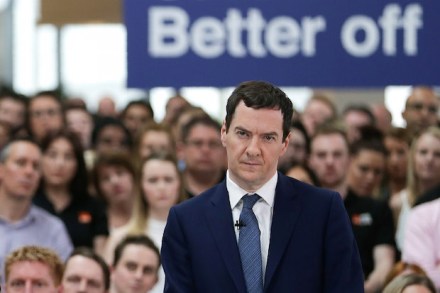
It’s now exactly one month until the EU referendum and the Treasury has marked the moment with another economic warning about the consequences of Brexit. The analysis out today claims that walking away from the European Union would kick-start a year-long recession. Brexit would also lower the country’s economic growth down by 3.6 per cent, according to the analysis. Although George Osborne must be nearing the point of running out of words to describe the economic ramifications of Brexit, in an article in the Daily Telegraph, Osborne and Cameron had this to say: ‘It is clear that there would be an immediate and profound shock to our economy. The analysis

Today's inflation figures tell us nothing about Brexit. Why does the Treasury pretend otherwise?

We’re now at the stage in the EU referendum debate where every announcement is explained in terms of its relationship to Brexit – whether relevant of not. So today we learn that inflation is still flat, dropping to 0.3pc in April. As per usual. But bizarrely, the Treasury is pretending that this tell us about the misery coming our way if Britain walks away from Europe. Here’s what a Treasury spokesman had to say about the figures: ‘Today’s inflation figure continues the trend we’ve seen over the past year. Pay is growing faster than prices, boosting families’ spending power. Last week the Bank of England’s Monetary Policy Committee warned that a vote to leave

The IMF serves up more Project Fear - and it's working

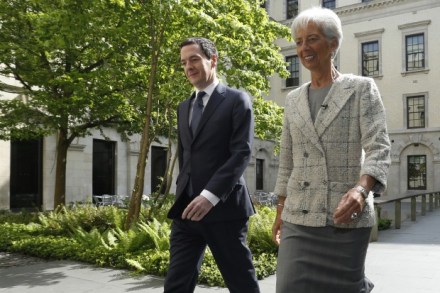
Another day, another warning about the economic bombshell which would follow Brexit. This time it’s the turn of the IMF. In a press conference at the Treasury, Christine Lagarde spoke of the outcome of a vote to leave the EU ranging from ‘bad to very bad’. Whilst the IMF’s report said: ‘A vote to leave the EU would create uncertainty about the nature of the UK’s long-term economic relationship with the EU and the rest of the world. A vote for exit would precipitate a protracted period of heightened uncertainty, leading to financial market volatility and a hit to output.’ George Osborne was clearly grateful for the support of the

Barometer | 21 April 2016

European bogeymen Michael Gove said ‘remain’ campaigners were spreading tales of bogeymen. But what is a bogeyman? Appropriately enough, the concept of an imagined monster is a pan-European concept which has exercised the right to free movement for centuries. — The boggel-mann has been terrifying children in Germanic cultures since the Middle Ages, as has the bussemand in Scandinavian countries. In Dutch, he became the boeman. — Middle English had its bugge-man and Scotland its boggarts — the latter suggesting a possible connection with marshy ground. But possibly the earliest bogeyman was bugibu, a monster in a French poem written in the 1140s. Reversed forecasts A Treasury report claimed that

The Treasury’s prophecies

The Treasury has announced that an EU exit ‘could leave households £4,300 a year worse off’. Since that only ‘could’ be the case, it could also not be the case, and given the accuracy of the Treasury’s prophecies for one year ahead, let alone 14, one wonders what odds the Treasury would offer on that outcome. The ancients had far better prophets. One was the augur: he took the auspices to determine whether a course of action was wise or not (auis ‘bird’ + spicio ‘I observe’). Marking out an area of the sky, he watched for birds that flew into it. Those flying left to right were propitious, right to

Cut the claptrap

So far the campaign for the EU referendum has resembled a contest as to which side can spin the most lurid and least plausible horror stories. On the one hand, the ‘in’ campaign claims that we’ll be £4,300 worse off if we leave; that budget airlines will stop serving Britain and that we will become more prone to terror attacks. Not to be outdone, the ‘out’ side warns that we will be crushed by a fresh avalanche of regulation and immigration, and more prone to terror attacks. The tone of the debate was summed up by Michael Gove this week when he accused the ‘in’ campaign of treating the public

Leave.EU hit back at Osborne over Brexit comments: 'if this is our economic team, we are in deep s--t'

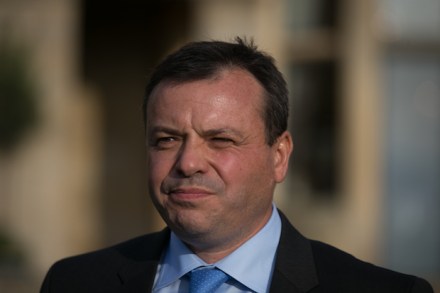
George Osborne’s claim that the Treasury thinks Brexit would make you £4,300 worse off has gone down like a cup of cold sick with the Leave camp. While many Brexiteers have hit back in less than polite terms, it’s Leave.EU who win the award for ‘most blunt response’. In light of the claims, Arron Bank’s Brexit group have added a new picture to their Facebook group. The banner reads: ‘If this is our key economic team we are in deep s–t’. It seems that now Leave.EU are out of the race in terms of winning the official designation, they are able to speak freely.

The Coffee House podcast: George Osborne's Brexit warning

George Osborne has warned today that Brexit will cost each household in the UK around £4,500. The Chancellor also said leaving the EU would make Britain ‘permanently poorer’. But is there any truth in Osborne’s claims? In this Spectator Coffee House podcast, Fraser Nelson joins Isabel Hardman and James Forsyth to discuss the figures and whether the numbers add up. Speaking on the podcast, Isabel Hardman says the Treasury report shows a change in argument by the Government in making the case for staying in the EU: ‘The really interesting thing about this is that George Osborne is doing this at all. He and his Tory colleagues at the start

The deceptions behind George Osborne's Brexit report

Sometimes, George Osborne’s dishonesty is simply breathtaking. Let’s set aside the way he has positioned himself over the years (if he believed that leaving the European Union ‘would be the most extraordinary self-inflicted wound’ he might have told us – and his constituents – earlier, rather than proceeding with the farce of renegotiation). But it’s his maths, today, which shames his office – and his use of this maths to make the entirely false suggestion that the Treasury thinks Brexit would make you £4,300 worse off. For anyone who cares about honesty in politics, and the abuse (and reporting) of statistics, this is an interesting case study. His chosen date is 2030. By then,

Watch: John McDonnell heckled in Commons debate - 'shut up your face'

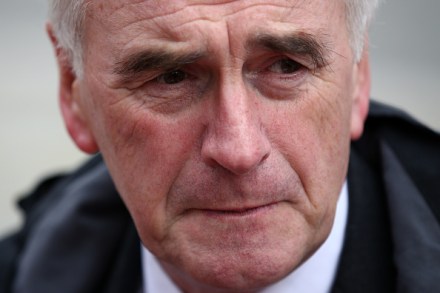
Punch and Judy politics is clearly the mood of the moment in the House of Commons. Last week, David Cameron offered Corbyn some motherly advice on his dress sense, while a Tory MP heckled Jeremy Corbyn by yelling ‘who are you?’ during an EU debate. This morning, it was Shadow Chancellor John McDonnell’s turn to be on the receiving end of some Chamber abuse. After trying to get the Government to withdraw its proposals over regulatory regimes for senior bankers, he sat back down but didn’t quite get the answer he expected. Before Chief Secretary to the Treasury Greg Hands stepped up to reply, a Tory MP on the other side

Treasury questions: knives out for George Osborne over Brexit

As expected, there was one topic which dominated Treasury Questions today and that was the EU. The Chancellor did his best to hold his nerve as he faced strong opposition — in the shape of MPs in his own party. It’s a rare occasion when George Osborne is able to find more support in the Labour benches than his own but that’s what happened today as Tory MP after Tory MP went into attack mode over the government’s handling of the EU referendum. Andrew Tyrie, the chair of the Treasury Committee, gave the criticisms an air of authority as he kicked things off by calling Osborne out on the use of Article 50

David Cameron is going to have to give the SNP what it wants

All Westminster might be agog with the latest shenanigans vis-a-vis the got-to-happen-at-some-point EU referendum but most sentient folk in this blessed land are magnificently uninterested in the matter. Not even this morning’s Telegraph splash – ‘Attorney General may back Brexit’  – can stir them from their slumber. At best the majors will have asked, over their E&B this morning, ‘Who is the Attorney General these days?’ North of the border, matters are just as quiet even though another great question remains unsettled. As yet, you see, there is no agreement on the terms of a ‘fiscal framework’ which will underpin the relationship between the finances of the devolved parliament in Edinburgh and the

More Google woes at the Treasury

Oh dear. It’s not turning out to be a great week for staff at the Treasury. After George Osborne declared that a £130m tax settlement they had reached with Google was a ‘major success’, he faced a cross-party backlash as it was pointed out that the internet giant had only paid a tax rate of three per cent. As anger grows over the arrangement, both Google and the Treasury have been attracting negative publicity on a daily basis. Now Treasury staffers have been dealt another blow. Mr S hears that internet at the Treasury cut out on Thursday morning for a number of hours — meaning staff couldn’t even use Google.

John McDonnell vs. George Osborne on tax credits: a surprisingly calm and serious affair

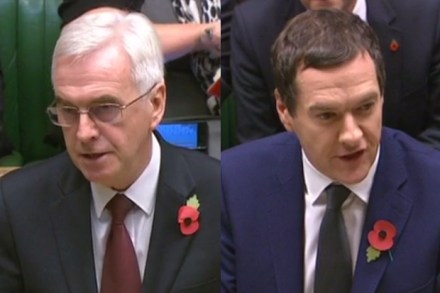
George Osborne and John McDonnell went head-to-head at Treasury Questions today and one topic predictably dominated: tax credits. There was a charged atmosphere in the Commons as the shadow chancellor explained ‘the Chancellor has a choice before him’ and outlined his proposal for reversing the planned cuts to tax credits. The plan differs somewhat from Osborne’s: ‘He can push on with the tax giveaways to multinational corporations. He can press on with tax cuts to the wealthiest few in inheritance tax that he announced in his summer budgets. Or he can reverse those tax breaks for the few and instead go for a less excessive surplus target in 2019-20 and be in