John Redwood

Will France cut taxes and boost the economy in response to the protests?

From our UK edition

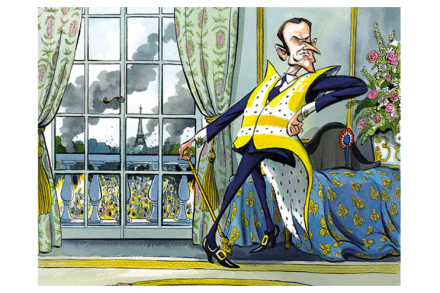
For 21 weeks now the Gilets Jaunes have taken to the streets of French cities to protest. It began as a demonstration against high and rising fuel taxes. These tax increases hit families getting children to school and the adults to work, and cut the earnings of the self-employed working from their vans and cars. The higher fuel taxes and slower speed limits were part of President Macron’s policy to curb carbon dioxide emissions. For his trouble the protesters put out of action a majority of the speed cameras, showing him what they thought of his wish to control their lives. The street actions have been stoked by some angry students and by committed protesters of the extreme left and right, but many of those protesting are doing so for the first time.
How will the markets react to Trump’s upcoming talks?

From our UK edition

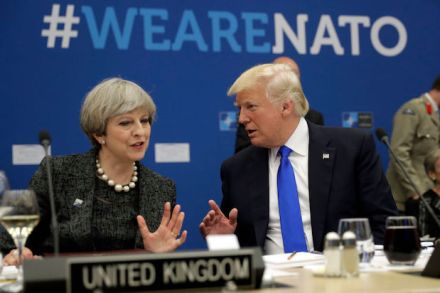
This week NATO meets. Mr Trump will want more progress with increasing spending by European allies. Many of them are still well below the 2% of GDP minimum spend they are asked to achieve to contribute to collective security. NATO will argue that members together have been increasing their spending in real terms since 2015, and have in place plans to raise it further. Markets will watch to see how far Mr Trump pushes his case, and whether he follows up on a suggestion that if a country does not meet the target it cannot rely on the NATO guarantee of protection and support. This would be seen in Europe as an unfriendly attack on the European allies and seen by many in the USA as a logical way to ensure fairer burden sharing of the costs of defence.

Since Trump became President, US share markets have performed well. We need to understand why

From our UK edition

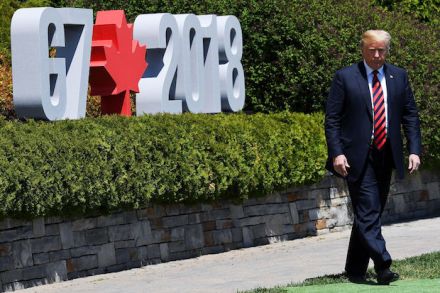
Some say that Mr Trump’s behaviour at the G7 meeting last week-end showed contempt for the international rules-based system that many people in financial markets and the media admire. It is true that Mr Trump complained Russia was not present, inserted special prose about his energy and tariff policies and decided he did not agree with the communique after it had been issued. He showed he thought going off to his bilateral meeting with the North Korean dictator was more important than the very general conclusions of the G7 summit. The G7 official statement ranged widely over world economies and affairs but lacks clout if the USA does not agree with it.

Can long-term forecasters answer these questions?

From our UK edition

I find it difficult to believe some in the media are taking these latest economic forecasts for 15 years outside the EU seriously. They have all the hallmarks of the approach that the Treasury used to get the short-term forecast for the aftermath of a Brexit vote so hopelessly wrong. The first thing to stress is the forecasts which state the UK as a whole will lose 2 percent of GDP if we stay in the single market, 5 percent if we leave with a trade deal, and 8 percent if we leave without a trade deal are not saying we will be between 2 to 8 percent worse off in 15 years time. This is an estimate of slower growth, not an absolute decline. If we carry on growing on average at 2 percent per annum over the 15 years, we will be 34.

The Treasury’s Brexit forecast is ludicrous. We’re better off out of the EU

From our UK edition

Leaving the EU should boost pay and create more jobs. Spending our own money on our own priorities ensures that is true from the first post Brexit budget onwards. The dreary gloomy predictions of Remain are all based on the absurd idea that the rest of the EU will want to impose new barriers on their trade with us, and will be able to do so. As we are more the customer than the supplier and as we and they live under World Trade Organisation rules this is pure fantasy. There is one feature of the Treasury's ludicrous forecasts for 2030 that I agree with. They reckon the UK will be better off in 2030 than today whether we are in or out of the EU.

Do we really need HS2? I’m not convinced

From our UK edition

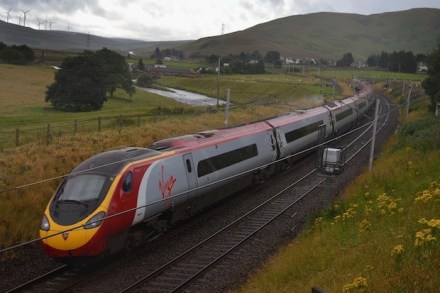
The Secretary of State for Transport asked for my views on the capacity argument for HS2. I thought I would share them with you. To establish that HS2 is needed on capacity grounds the government has to be able to demonstrate three main points. Firstly, that the current West Coast Main Line (WCML) is full or nearly full. Secondly that there are no easier or cheaper ways of adding significant capacity to the WCML or providing an alternative to tackle any future capacity problems. Thirdly, that the high forecasts of likely passenger growth and use of HS2 are realistic. I remain to be persuaded on each of these three matters. The government has been coy about current usage of the WCML.

It’s time England asserted its modern national identity

From our UK edition

Taking tea at four, strawberries and cream, Wimbledon on a hot summer’s day, Christmas carols round the tree, street parties for a Queen’s Jubilee: the images of England are often nostalgic and middle class. To some, England, our England, is summed up in the poems of Rupert Brooke, and turned into childhood mystery in the sympathetic portrait of the Shire in The Hobbit. England is The Wind in the Willows, kindness to animals, appreciation of nature’s rich and gentle abundance in a rain swept temperature island.  It is Alice in Wonderland, tales that recognise children are on their own important journey in their own right. We are seafarers and stay at home islanders, world traders who value our independence.

Time to take the thumbscrews off the banks

From our UK edition

The biggest risk to the economy is not government cuts, says John Redwood, but lack of credit. There’s plenty ministers can do to get companies, and people, borrowing again This time it is different. Normally the UK economy bounces back from a downturn, and we have several years of rising prosperity. Today there are many experts who fear another downturn hard on the heels of the big recession we have just lived through. I welcome the government’s decision this week to write about the funding gap for business, and to float ideas including more banking competition. They will need to move quickly and purposefully from consultation to remedies to fuel the recovery.