Treasury

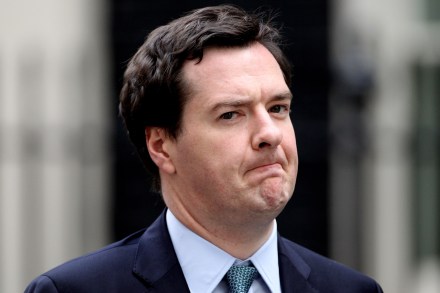
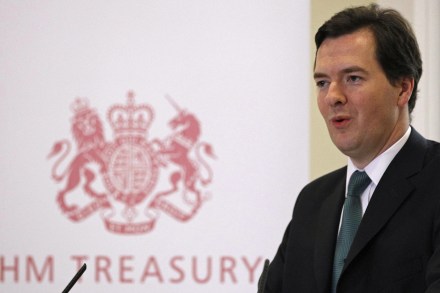
The IMF delivers a boost for George Osborne

The proclamations of economists and economic bodies shouldn’t be taken as the be-all-and-end-all of fiscal policy – for every one claiming that a decision is right, you can find another insisting that it is wrong. But the coalition will still be pleased by the influential International Monetary Fund’s latest report, here. It begins: “The UK economy is on the mend. Economic recovery is underway, unemployment has stabilized, and financial sector health has improved. The government’s strong and credible multi-year fiscal deficit reduction plan is essential to ensure debt sustainability. The plan greatly reduces the risk of a costly loss of confidence in public finances and supports a balanced recovery. Fiscal

A salesman for the cuts

One of the biggest problems facing the coaltion has been presentational: how to sell the cuts? In the absence of a coherent, vigourous message, the Balls school of economic thought has been allowed to grease onto the scene – to the extent that some polls have three-quarters of respondents rejecting the government’s deficit reduction plan. But now, at last, signs that the coalition is getting into gear. It’s a process which began last week, when Matthew Hancock – a new Tory MP and former adviser to George Osborne – highlighted falling interest rates in Parliament (column 606, here); a point he has been pushing around Westminster ever since. And today

Deferring deterrent

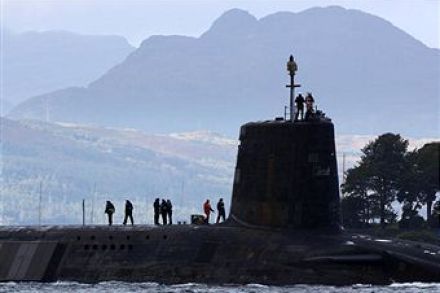
We’ve been here before: Hacker’s ‘Grand Design’, a scheme to save money by cancelling Trident. The BBC reports that the coalition plots a similar ruse – the renewal of Trident is understood to have been deferred until after the next election. This is the best of bad a situation. Britain has an independent nuclear deterrent, albeit nearing obsolescence. Trident’s renewal Is a point of contention for the coalition – with the Tories for and the Lib Dems against. Better to delay than squabble. It makes financial and strategic sense too: the upfront renewal cost is £20bn, deferring is understood to cost somewhere in the region of £750m; the suicide bombing

A worrying – but not disastrous – poll for the government

This morning’s Times/Populus poll (£) will have supporters of the coalition grimacing into their cornflakes. The headline finding is bad enough, if rather familiar, with Labour closing the gap between themselves and the Tories to only two points. But what follows is worse. According to the poll, around three-quarters of voters reject the government’s deficit reduction strategy – preferring, instead, what are loosely the approaches advocated by Labour and the unions. And, what’s more, economic pessmism is arrowing upwards. The number of respondents who think “the country as a whole will fare badly,” has risen by 13 percentage points since June. The number who think “me and my family will

A lesson from New Zealand

This is the next of our posts with REFORM looking ahead to the Spending Review. Earlier posts were on health, education, the first hundred days, welfare, the Civil Service and international experiences (New Zealand, Canada, Ireland). Ruth Richardson, the former reforming Finance Minister of New Zealand, set the benchmark for the Spending Review in a lecture for Reform on Wednesday evening. The coalition Government has framed the Review in the right way – as a chance to reshape and redefine the role of government rather than just shave a few percentage points off the existing structure with all its structural flaws. Ruth Richardson explained what that should mean, addressing each

Robert Chote is the new head of the OBR

Now this should dispel any worries that the Office for Budget Responsibility is partisan in the government’s favour. Robert Chote, director of the Institute for Fiscal Studies and scourge of Osborne’s “regressive” Budget, has been appointed as the body’s new chief. It is, in many repsects, the most sensible and obvious choice. Not only is Chote respected across the political divide, but the OBR is an attempt to institutionalise the kind of fiscal oversight that his IFS has provided for years. I can’t imagine that the Treasury Select Committee will try to block this appointment. In case you missed it first time around, Fraser interviewed Chote for the magazine back

A banking split

Blame Bob Diamond. Until the “unacceptable face of banking” (© the utterly acceptable face of politics, Peter Mandelson) was appointed chief executive of Barclays, the issue of banking reform was trundling along noiselessly in the background. But now it has spilled, violently, back out into the open. Critics of Diamond say that his very presence makes the case for splitting the retail and investmet divisions of banks – you can’t, they say, have someone who made their money via “casino banking” presiding over a high street banking chain. But the banks are warning that any such split would force them, and their tax dollars, abroad.   The government’s official position is

What you need to know ahead of the Spending Review: the Irish experience

This is the latest of our posts with Reform looking ahead to the Spending Review. The first six posts were on health, education, the coalition’s first hundred days, welfare, the Civil Service, and the New Zealand and Canadian experiences. Ireland As Colm McCarthy, Chair of Irish Special Group on Public Service Numbers and Expenditure, noted at a recent Reform conference the macroeconomic downturn in Ireland has been more severe than in almost any other European country: — The budget deficit, excluding the Exchequer cost of the banking collapse, went from near zero in 2007 to 11.5 per cent of GDP in the current year, despite fiscal cutbacks which began in

What you need to know ahead of the Spending Review: the Canadian experience

This is the latest of our posts with Reform looking ahead to the Spending Review. The first six posts were on health, education, the coalition’s first hundred days, welfare, the Civil Service, and the New Zealand experience. Canada In a forward to Reform’s alternative 2010 Budget, Rt Hon Paul Martin, Canadian Finance Minister from 1993 to 2002 and Prime Minister from 2003 to 2006, noted that when a new Liberal government was elected in Canada at the end of November 1993 the deficit and debt-to-GDP ratios were, with the sole exception of Italy, by far the worst of the G7. In 1998, just 4 years later, Canada’s deficit was no

What you need to know ahead of the Spending Review: the New Zealand experience

This is the latest of our posts with Reform looking ahead to the Spending Review. The first five posts were on health, education, the coalition’s first hundred days, welfare and the Civil Service. International examples of public finance rescue missions Other countries can provide important lessons on what does, and what does not, work in devising a plan to bring government spending down. Several countries have undertaken major programmes of reform that have set out to restore fiscal credibility and improve the quality of their public services. Examples include New Zealand, Canada and Ireland. Reform has drawn on the experiences of senior figures from these countries, and lessons from the

The stars of the spending review

Insightful work by the FT’s George Parker, who traces the choreography of the spending review in an article for the paper today. What’s striking is how much the coalition expects to achieve by what Parker calls “peer pressure”. Ministers who get through their spending settlement quickly and successfully will be held up as examples to their colleagues, and will be drafted into the the “star chamber” to cast an axeman’s eye over other departments’ plans. Ken Clarke, we are told, “can hardly wait”. According to Parker, the process is already producing its darlings. Jeremy Hunt has exceeded the Treasury’s demands by identifying 50 percent cuts in the budget for running

Clegg leads the fightback

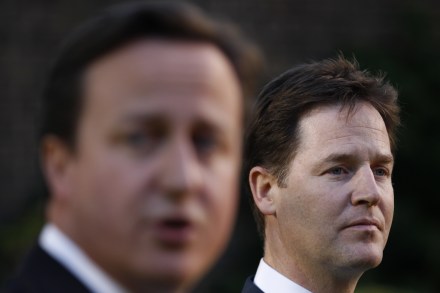
On Monday, I wrote that the question of whether the Budget is fair or not will “pursue the coalition more doggedly than any other”. Yesterday, we saw just how dogged that pursuit will be. But there’s no need for the coalition to panic as Mark Hoban did on the Today Programme yesterday. Instead, with policies from welfare reform to low taxes for low-income earners, they have built a firm redoubt from which to stage a counterattack. They can put the chase to their opponents. It is encouraging to see Nick Clegg do just that with an effective article in the FT today. He was bluntly dismissive of the IFS report

The double dip predictions

Hark, there seems to be a lot of noise about a double dip recession at the moment – added to, yesterday, by Dr Martin Weale of the Bank of England. So I thought I’d collect some of the more recent, more prominent warnings and predictions for posterity’s sake. Do let me know (either in the comments or on phoskin @ spectator.co.uk) if there are any that are worth adding: Sir Alan Budd, 16 August Sir Alan was asked on BBC Radio 4’s Today programme whether he believed Britain would avoid slipping back into negative growth. “I’m not confident of it,” he said. “Our fan charts show that it is a

Seconds out...IDS versus Osborne

Infamously, George Canning and Viscount Castlereagh fought a duel over a policy disagreement; Iain Duncan Smith and George Osborne will follow suit at this rate. I had thought they’d resolved their differences over the upfront costs of IDS’ welfare reform; but the Mail on Sunday reports otherwise, glorying in the glares, savage bon mots and expletives. This is the conundrum: if IDS doesn’t find £10bn in savings, he will not get the £3bn needed to enact his reforms to make work pay. There is something quite heart-warming about IDS’ fight against the institutionally overbearing Treasury, but George Osborne is right: it is unacceptable to give one department, however well intentioned,

What can Green achieve?

Handbags across Whitehall this morning, as Vince Cable responds to the government’s appointment of Sir Philip Green as an efficiency adviser in a disgruntled, if evasive, manner. He tells City AM: “There’s a lot I could say on this, but I’d better miss this one out … I’m tempted to comment, but I think I’d better not.”   And it’s clear why the Business Secretary, and many others, might be a little peeved. A hard-partying, perma-tanned, rotund and ostentatious figure, with question marks hanging over his tax status, Sir Philip is simply not designed for this age of austerity. He is nothing like the cadaverous technocrats who usually sift through

The questions surrounding Cameron's benefit crackdown

There were hints of toughness in his article at the weekend, but now David Cameron has rolled up his shirt sleeves and pulled out the baseball bat. In a combative piece for the Manchester Evening News the PM outlines out a zero tolerance approach to welfare fraud and administrative error. The two problems “cost the taxpayer £5.2 billion a year,” he says, “that’s the cost of more than 200 secondary schools or over 150,000 nurses. It’s absolutely outrageous and we can not stand for it.” And so IDS is going to prepare “an uncompromising strategy for tackling fraud and error,” which will be published this autumn.    Two things are

Maintaining the private sector motor

There’s a lot of economic speculation swirling around the Westminster washbowl at the momment, but little of it is as eyecatching as today’s report from the Chartered Institute of Personnel and Development. Its finding that a third of employers are expecting to cut jobs in the next quarter is bound to spark double-dip fears, even if that expectation is more keenly felt in the public sector than in the private. 36 percent of public sector employers foresee job losses, against 30 percent in the private sector. Perhaps more worryingly, both sectors are expecting more redundancies than they did in last quarter’s report. Look below the headline figures, though, and there

The Treasury's cutting difficulty

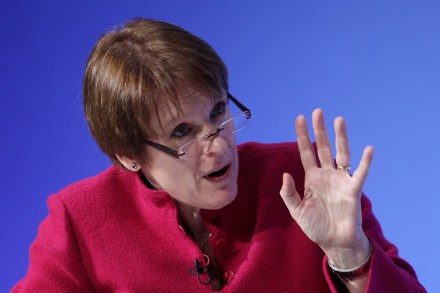
Among the most eyecatching, and potentially important, stories of the day is this one in the Telegraph. It suggests that various departments have “failed” to outline a “worst case scenario” of 40 percent cuts that was demanded by the Treasury. And it even names and shames Caroline Spelman’s Department for Environment, Farming and Rural Affairs as one of the offenders. Mrs Spelman, we’re told, has now “been forced to use the time before her holiday to work up the projections with her officials and permanent secretary.” Nothing like a last minute job, then. To be fair to Whitehall civil servants, there is a general sense that they have set about

The unions up the ante

The front cover of the Times (£) provides a dreary snapshot of what the coalition can expect once the cuts start to bite. Unison have responded to job losses in the NHS by arguing that the government is “conning” the public over the impact on frontline services. And they’re threatening to all get all litigious about it. As one of the union’s spokeswomen tells the paper, “If we are not happy with the [government’s reply], we are reserving the right to issue urgent judicial review proceedings.” You wonder whether they’d have done the same against Labour’s proposed 20 percent cuts. And this will be just the start of it. As

The equality landmines that Labour have left the coalition

Oh dear, the Treasury is mired in another controversy about equality after the Guardian published a letter which Theresa May sent to George Osborne before the Budget. In it, she warned that the government could face legal action if it is unable to show that its decisions were made with a consideration to “existing race, disability and gender equality duties.” As she puts it: “If there are no processes in place to show that equality issues have been taken into account in relate to particular decisions, there is a real risk of successful legal challenge by, for instance, recipients of public services, Trade Unions or other groups affected by these