Treasury

Tyrie asserts himself once again

Few MPs have made quite so many waves recenty as last year’s Spectator backbencher of the year, Andrew Tyrie. Under his chairmanship, the Treasury Select Committee seems to have gained a new vitality and edge. And it has certainly accumulated more powers, with the ability to veto the government’s appointments to, and dismissals from, the Office for Budget Responsibility. As he put it himself in an interview with the Independent last week, “The fight back by Parliament is beginning now.” Just how aggressively he intends to prosecute that fight back is suggested by his comments in the Times (£) today. Responding to George Osborne’s recent demands for the banks to

Dannatt's departure means one less cook stirring the defence broth

So Sir Richard Dannatt has departed the Tory fold almost as curiously as he entered it. Sure, have been no gaffes from Chris Grayling this time around – but when it was announced last October that the former head of the Army was advising David Cameron, it was widely expected that he’d graduate to become a peer and a minister in any Tory government. But today he announces his “retirement” as neither. The Tories are downplaying all this, eager to avoid a repeat of the speculation that surrounded Sir Alan Budd’s departure. And, to be fair, there are few signs, as yet, that this is a viciously unamicable split. But

There is no Cabinet rift on benefit reform

Here’s me about to go on holiday, and the welfare wars seem to be opening up. Neil O’Brien has a piece on it over at the Telegraph website. And Hopi Sen, one of the better leftie bloggers, has written a response to my post yesterday. Partly, he wants to stir: it’s not so much that the Treasury want to block IDS’s reforms, he says, but rather that they are following Osborne’s orders to reduce the deficit. And so it’s one part of the government at war with another. By contrast, the Whitehall wars I outlined are hangovers from the Brown days, where the Treasury set policy for all other departments

Getting credit flowing will be one of the coalition's toughest challenges

In interview with the Sunday Telegraph today, George Osborne stresses that the banks have got to start lending again – and he’s right to do so. The easy availability of cheap credit may have done much to get us into this mess, but now we face a converse problem. As a recent Bank of England report shows, net lending from the banks to businesses remains negative – or, in other words, more is being paid back than given out – and the situation is getting worse. With small and medium businesses so reliant on credit to get themselves off the ground, this doesn’t augur well for a powerful recovery. But

Cameron must take this chance to end the giant evil of welfare dependency

There’s been plenty political drama in these past few weeks, but the most crucial agenda – and by some margin – is Iain Duncan Smith’s proposed overhaul of welfare. It doesn’t deserve to be categorised as just another political tussle. As I say in the News of the World today, it is easily the most important issue in Britain, and it is overlooked because of an affliction which most of our political class suffers: that of moral long-sightedness. No one wears wristbands for the British poor, Prime Ministers pledge to “eradicate illiteracy” in Africa yet are strangely indifferent to the illiteracy on our own doorstep. The plight and lives of

A solid performance from Osborne

If only PMQs were more like select committee sessions. Sure, the latter aren’t completely free from tribalism, even if it takes a subtler hue – but they are still considerably more insightful than Wednesday’s pantomime in the chamber. Frequently, they play like a demonstration of how democracy can, and should, work. Such was the case with George Osborne’s appearance before the Treasury Select Committee this morning.  The questions, particularly those on whether the Budget hits the poorest hardest, were generally measured and insistent.  But Osborne stood up well through it all, pointing out how any party in power would have to implement hefty spending cuts and tax rises.  And he

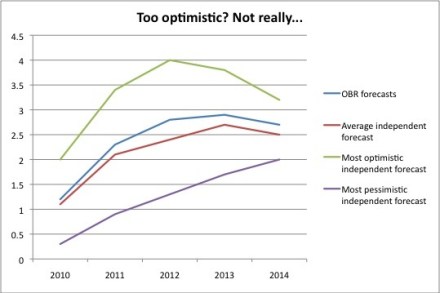
Are the OBR's growth forecasts too optimistic?

Much ado about the Office for Budget Responsibility’s growth predictions in the Treasury Select Committee earlier, especially as an OBR official admitted that the cuts and tax hikes in the Budget could conceivably tip us into a double-dip recession. So are the OBR’s official forecasts too optimistic, as some are now claiming? Only time will tell, but we can get a decent sense of things by comparing them with the independent forecasts that the Treasury collect here. And this is the result: In other words, the OBR growth forecasts stick pretty closely to the average independent forecast, although they are a touch more optimistic. Admittedly, these independent forecasts were collected

Osborne to strengthen Parliament's role in OBR appointments?

It may not be the sexiest story in today’s newspapers, but the ongoing Office for Budget Responsibility row is certainly among the most important.  After all, a great deal rests on how it is resolved.  Not only could we end up without a body capable of restoring trust in fiscal forecasts, but the government’s promising transparency agenda could be sunk before it has even had chance to sail.  Much will depend on how far George Osborne goes to reinvigorate the OBR’s independent credentials. In which case, it’s worth highlighting the Sunday Telegraph’s summary of Sir Alan Budd’s proposals to do just that.  The departing OBR chief is expected to outline

Fighting talk from IDS

Iain Duncan Smith is on a roll, and the roll continues with his interview on Straight Talk with Andrew Neil this weekend. Supporters of welfare reform will hear plenty to encourage them, even if only on a rhetorical level. Duncan Smith discuses how the fiscal climate makes this a “once in a generation opportunity and chance to change [welfare] now,” and how Beveridge’s original intentions have been subverted by a system which traps people out of work. But the most reassuring segment, by far, is this: “I, well, certainly, you know, I’ll be honest with you, there was certainly a discussion about that, everything was in the discussion, but my

A question of independence

And so this morning’s Office for Budget Responsibility story rumbles on, with various Labour figures questions whether the organisation is as independent as it should be.  The most significant intervention, though, is from the government.  As the FT reports, George Osborne’s Treasury team is hanging onto its ability to select the next head of the OBR. Of course, this doesn’t necessarily mean that the next OBR chief will be a placeman, sympathetic and mouldable to the Tories’ wishes.  In fact, my guess is that Osborne will go out of his way to find an uncontroversial, neutral replacement for Sir Alan Budd.  But with a PoliticsHome poll showing that only 16

The malleability of ringfences

Rachel Sylvester is on top form in the Times today, and I’d urge CoffeeHousers to delve behind the paywall (or borrow someone’s copy of the paper) to read her column.  Its central point?  That ministers are discovering ingenious ways to exploit and undermine the ringfenced health and international development budgets.  The Home Office is saying that drug rehab programmes should fall under health spending.  The Foreign Office is trying to pass off some of their spending as development, and so on.  And, crucially, the Treasury seems to be going along with it: “The Treasury seems to be tacitly endorsing this approach, with officials emphasising that departmental boundaries are artificial.” As

The Treasury is playing a very smart game

Picking up David Laws’ axe at the Treasury was never going to be easy – but all credit to Danny Alexander, who seems to be managing it with some degree of gusto.  After those extra savings he announced a few weeks ago, the Chief Sec has now written to ministers asking them to identify cuts of up to 40 percent in their budgets.  I repeat: 40 percent.  That’s higher than the highest roundabout figure I heard before the election (30 percent, from civil servants as it happens).  And it tops the 33 percent that the IFS suggested might be necessary last week.  Quite a few ministers will be quaking at

About those job losses…

Much ado about the Guardian’s scoop this evening: a leaked Treasury document which forecasts that up to 1.3 million jobs could be lost as a result of the spending cuts in the Budget.  Or, to put it in the words of the document itself: “100-120,000 public sector jobs and 120-140,000 private sector jobs assumed to be lost per annum for five years through cuts.” You can expect Labour to get stuck into these numbers, and the fact that they were previously hidden from public view, with no uncertain relish.  Ed Balls has already described them as “chilling”.  But it’s worth making a couple of points, by way of context: i)

What Harriet Harman won't tell you

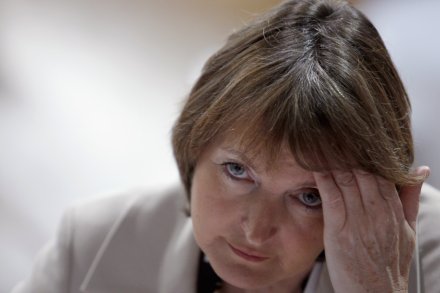
By her usual standards, Harriet Harman was quite effective in her response to George Osborne’s Budget earlier.  She was clear, direct and had a few gags at Vince Cable’s expense.  And she also benefitted from what, on the surface, was a strong central attack: the Office for Budget Responsibility, she said, has downgraded its jobs forecasts on the back of the Budget.  And so, she followed, this is a Budget which destroys jobs. But there were a few things that Harman wasn’t letting on.  First, as Jim Pickard points out at the FT, the OBR forecasts haven’t shifted by all that much from their previous incarnation.  And, second, they are

Osborne's Finest Hour?

Like many people, I’ve rarely been wholly convinced by George Osborne. So let it be said that this budget was perhaps his finest hour. Happily, there is something for everyone to complain about. It would be wrong if this were not the case. I suppose Osborne could have avoided putting up VAT (to 20%) had he not exempted the National Health Service from the consequences of his axe-wielding. Politically, however, one can see why this was a gamble too far. Nevertheless, this was, on the face of it, a good budget. Four out of every five pounds in savings come from spending restraint, not tax rises and this seems to

The Big Society reincarnated

The Big Society is a great idea. But its problem has always been that it lacks definition; voters and even some Tory MPs aren’t quite sure what it means. But an idea being floated today gives you a sense of its practical and political potential. It is being suggested that the community right to buy, the idea that the community should have first refusal on any asset being sold off, should be applied to the port of Dover. The last government wanted to privatise the port but the new MP for Dover, a Tory called Charlie Elphicke has proposed that a community trust be allowed to buy the port and

Call the committee to order

It’s committee chairmanship season in Westminster, and there are two noteworthy battles. Michael Fallon and Andrew Tyrie are scrapping over the Treasury Select Committee. The FT summarises the pros and cons of both. Fallon, who served as John McFall’s deputy, remains the front-runner, but the cerebral Tyrie has an impeccable record as an economist, committee member and constituency MP – I grew up near Chichester and Tyrie deserves credit for tackling the city’s perennial flooding problems; and, for what it’s worth, he won the Spectator’s backbencher of the year award again last year. I understand that Tyrie has the requisite number of backers, as well as ties with Nigel Lawson,

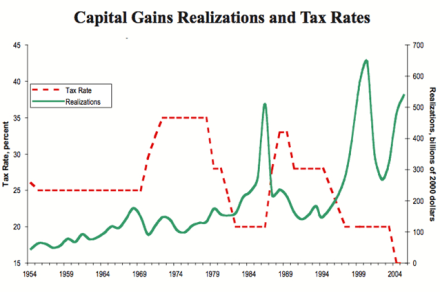
To increase capital gains revenues cut rates, don't increase them

To address the deficit, George Osborne will probably have to raise taxes. This is a grim truth to which most people are reconciled. But raising taxes and raising revenue are two different things. If the Chancellor is serious about closing that deficit, then he would doubtless be interested in the idea that a Capital Gains Tax raise from 18 per cent to 50 per cent might be a chimera tax. That is to say, one which raises no money at all. Worse, in fact, the odds are that tax revenues will fall and the deficit will be made worse by this tax rise. The international evidence is absolutely clear. As

Cameron's public debate with his backbenchers

So, did Cameron say anything particularly noteworthy during his interview on the Today programme?  In truth, not really.  Most of the answers were of the “let’s wait and see what in the Budget” variety.  The ratio of spending cuts to tax rises: wait and see.  Plans for hiking capital gains tax: wait and see, and so on.   The only answers that weren’t determined by the Budget seemed to be his racing tips for the sports bulletin.  You can hear them here. But that isn’t to say the interview wasn’t revealing.  For much of it, Cameron was quizzed about the objections that David Davis and John Redwood have raised to the

Coalition cuts: the IFS's verdict is in

So, the number-crunchers at the Institute for Fiscal Studies have worked their magic and delivered their verdict on today’s spending cuts.  You can find their summary here, although the standout line is that the £5 billion in reduced borrowing implied by today’s cuts is “less than a tenth of the fiscal repair job that Alistair Darling’s March 2010 Budget forecast suggested will be needed over the next few years”.  In terms of capturing just how much remains to to be done, it’s a sobering remark.  But it’s worth remembering that a Labour government wouldn’t have made these extra £6 billion of cuts this year.  So, by the same thinking, they