Travel

The crowd-free European city breaks to try this year

From our UK edition

Finally, it looks like we might actually be able to go on holiday in Europe again. I’ve been overseas a few times since this pesky covid business began, but it’s always been for work, not leisure, and it’s always been a nuisance: tests on the way out, tests on the way back and yet more tests when you get home… However now travel restrictions are loosening up, a trip to the Continent no longer feels quite so fraught, and that magnificent indulgence – a short-haul city-break – seems like a practical option once more. So where to go? Well, you’re bound to have your own favourite destinations - but if you fancy trying somewhere new, here are a few of mine. They’re all popular with locals, but they’re not overrun with sightseers.

Will I ever go on holiday again?

From our UK edition

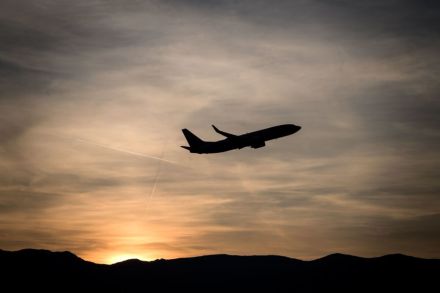
Last night I dreamt I went on holiday again. It seemed to me I stood by the departure gate, and for a while I could not enter, for I kept setting the metal detector off. Then, like all unvaccinated dreamers, I was possessed of a sudden with supernatural powers and passed through the barrier. The boarding tunnel wound away in front of me, its sides covered with weeds. As I pulled my hand luggage on squeaky wheels, I lost sight of the open door of the plane, and then it appeared again, the smiling stewardess beckoning. I came to the door suddenly with my heart thumping. There was a British Airways Boeing twin-engine jet, and my seat on it, secretive and silent as it had always been, the navy blue leather shining in the moonlight of my dream.

The Canary Islands are a Mecca for Europe’s lockdown escapees

From our UK edition

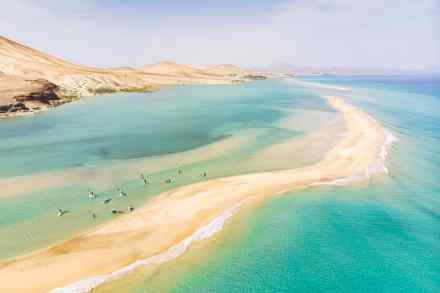
Those looking for ancient culture will find it in abundance on Fuerteventura – a canary island known more for its beaches than its heritage. I’d ended up in a hostel run by an Italian couple deep in the island's outback. Looming over the hostel was the holy mountain of Tindaya, on whose summit indigenous islanders once left their dead. It also has the most important set of podomorph engravings in the world — 300 pairs of foot-shaped engravings, the left and right soles with attendant digits flush together, carved into the rock. These simple and rather touching imprints struck a particular chord with me after my extended Camino across the Iberian Peninsula following the steps of previous pilgrims.

Why work from homers are buying in Barbados

From our UK edition

Life in the world’s newest republic is sweet. It’s peak season in Barbados, and another wave of Covid hasn’t stopped the rum sundowners flowing on the Caribbean island’s sugar-sand beaches. Given half the chance, many of us might well prefer to spend January wafting between beachfront restaurants and sun loungers, as the packed front-end of planes heading there during December have proved. Many of the island’s predominantly British holiday home owners have been heading to their properties on the West Coast of the island – and there will be no doubt a few villas changing hands too.

Italy: where to combine culture and coast

From our UK edition

Holiday makers tend to divide themselves into two camps – those seeking culture and those for whom a holiday is not a holiday without a chance to flop on the beach or by the pool (with a good book and a cocktail for company). The good news is that in Italy you rarely have to sacrifice the former for the latter. Travel abroad has been slowly cranking into action again since September. And, whilst Omicron might have put a dampener on immediate holiday plans there's still plenty of opportunity to dream about next summer. Fully vaccinated travellers are currently allowed into Italy without the need to isolate which bodes well for a 2022 getaway.

Europe’s secret beaches: from Constanta to De Haan

From our UK edition

As winter drags on and on, and warm sunny days become distant memories, discussions in our family always turn to summer holidays. We only go away together once a year so our trip has to tick all the boxes. My daughter won’t fly long haul, my son craves excitement, I like exploring places that are off the beaten track and my wife just wants to drop and flop. It’s a tricky combination but, as we’ve found out down the years, there are plenty of European seaside towns in unexpected places – places where you can do all the usual seaside stuff and still have a few adventures while you’re there. Here are our family favourites, plus a couple of offbeat resorts I’ve ended up in on my travels for The Spectator.

How to drive to Greece

From our UK edition

Readers of a certain age might recall the days when people 'went for a drive' as a form of pleasure. Yes, as unbelievable as it sounds now that combustion-engined cars are demonised, fuel prices are at an all-time high and unwittingly straying into a 'low emission zone' can cost you the price of a plane ticket to New York, there really was a time when people got behind the wheel and went somewhere simply for the joy of it. And do you know what? I still do. Yes. I am shameless. I still love that feeling of slipping into the driving seat, shutting the door and heading off on a vehicular adventure.I don't mean, I hasten to add, some soul-destroying commute into London in which every tedious mile is overshadowed by thoughts of Sadiq Khan's looming visage.

The windswept Devon island adored by Agatha Christie

From our UK edition

Burgh Island certainly knows how to make an entrance. As you descend the hill at dusk into Bigbury-on-Sea the white hotel drinks up all the light. Like a flashy piece of costume jewellery, it’s the only thing you notice on the skyline. But, then again, it's used to making good first impressions. Despite its diminutive size, the island appears in Agatha Christie's Evil Under the Sun before any of the novel’s characters, upstaging even Hercule Poirot. The reader is never in any doubt that the book's murder will hinge entirely on ‘the little windswept gull-haunted promontory – cut off from land at each high tide’ and the ‘comfortable and most exclusive hotel’ on its most northerly shore.

How to spend 48 hours in Rome

From our UK edition

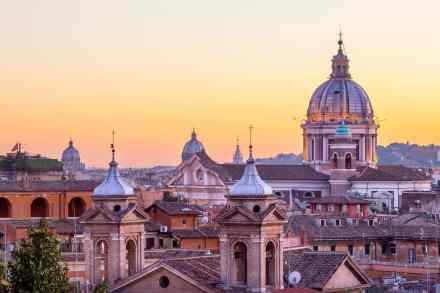
Contrary to the title of this article, do not spend 48 hours in Rome on your first attempt. Unless you have legs of steel, high levels of determination and a desire for non-stop sightseeing. The two pivots about which the city’s history turns – the Vatican and the Roman Forum – are best taken a day each and visited early, fuelled by €1 coffees and sweet, crumbly pasticcini off sticky local bar counters: 48 hours, done. But to focus on these titanic monuments of European history alone is to miss the real chatter of the city: couples meeting for Monday drinks by the Ponte Sisto, watching the sun go down on the Tiber from the Isola Tiberina, lingering under the vaults of (some) of Rome’s more than 900 churches.

The secret to exploring Istanbul

From our UK edition

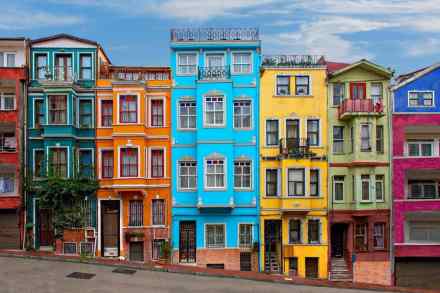
Two weeks before Covid began to hit Europe, I stood in the Basilica Cistern beneath Istanbul, steadily getting dripped on. Built during the reign of the Emperor Justinian I in 532, just before another deadly pandemic – the plague of Justinian – the cistern lies beneath Istanbul’s tourist hotspot, and despite it being damp, dark and having stands of 007 merchandise at its entrance and exit, it is one of the most enchanting places in a city that has captivated its visitors for over a thousand years. 'If the Earth were a single state,' Napoleon once pronounced, 'Istanbul would be its capital,’ and upon visiting you begin to understand why.

Fit for 007: the filmic destinations that feature in Bond

From our UK edition

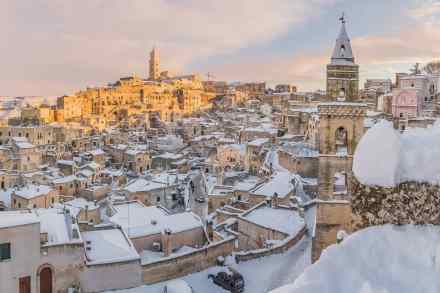
Birds eye shots of Aston Martins cruising along hairpin roads, steamy scenes on chalk-white beaches: the choice of James Bond filming locations has the power to put new holiday destinations on the map. Here we round up the best places to visit from No Time To Die - and rediscover old favourites from the archive. Puglia, Italy Some of the most nail biting scenes in the latest film involve Bond jumping from an aqueduct into a ravine to escape his pursuers then hurtling round the sidestreets of an ancient Italian town on a motorbike. Most of the scenes are shot around the UNESCO World Heritage Site of Matera in southern Italy. Known as The City of Caves, it sits on a rocky outcrop with troglodyte settlements carved into its base.

Scotland by sleeper

Traveling internationally these days is a bit like how Dicky Umfraville, a character in Anthony Powell’s Dance to the Music of Time, describes aging: being punished for a crime one hasn’t committed. After taking my pre-departure COVID test, alerting the British government to my whereabouts for the next week (no small undertaking given I’d be in a different bed every night), and proving all this plus my vaccination status to the British Airways check-in desk at JFK, I finally settled in my seat and supplemented my mandatory mouth-muzzle with an eye mask as though bound for Gitmo, not Heathrow. An hour into the flight, the woman in front of me started bawling: a panic attack brought on by mild turbulence.

scotland

Who let the dog out?

From our UK edition

Caroline and I are just back from a weekend break in Scotland and, nice though it was, I hadn’t realised how difficult travelling anywhere is at the moment. We had originally planned to drive, but the fuel crisis put paid to that, so we had to book a last-minute flight. EasyJet from Luton to Edinburgh was £475.92 for the two of us — ye gods! — and three days in the mid-stay car park was a whopping £128. To cap it all, the bus that takes you from the car park to the airport wasn’t running — Covid, obviously — so we had to walk about half a mile carrying our luggage. We stayed with some friends in the Highlands for a couple of days and I went stalking — but needless to say I buggered that up.

The thrill of running late

From our UK edition

‘Dad, why is it that whenever we go anywhere, we’re always running to catch a train?’ asked Charlie, my 13-year-old. This was just over a week ago and Charlie and I, along with 16-year-old Ludo, were running from the Holiday Inn Express in Birmingham to Snow Hill station in the hope of catching the 7.25 p.m. to the Hawthorns. Miss that and we’d be in trouble because the next one wasn’t until 7.57 p.m. and we’d be late for kick-off. We were there to watch QPR play West Brom and the match started at 8 p.m. Charlie’s right.

End of the line: it’s time to rethink the queue

From our UK edition

Flying to Kalamata this week, I did my own little bit to reduce the terrible queues at Heathrow Terminal 5. Heroically, I stacked up the grey luggage trays once they’d been emptied by passengers coming through security. As a result, there were more loaded trays for people to pick up, and a smaller tailback of passengers — including me — waiting to pick up their unloaded trays. It was just a tiny example of the hundreds of things that could be done to reduce queues in airports, hospitals, train stations, supermarkets… The British may be famous for their patient queueing but it doesn’t mean we actually like doing it. So why hasn’t more been done to eradicate queues?

Portrait of the week: Gas prices soar, cabinet reshuffled and a green light for travel

From our UK edition

Home To prevent a shortage of meat, which relies on carbon dioxide in its packaging, the government gave millions of taxpayers’ money to an American company to reopen a fertiliser works at Stockton, Co. Durham, that produces the gas as a by-product. The plant had been shut down because of a rise in wholesale gas prices caused by calm weather preventing rival wind-energy production, a fire at an interconnector reducing electricity supplies from France, and Russia putting up the price of its gas exports. Gas-supply companies began to go bust because the government price-cap prevented them from charging as much as they paid for gas. There was clamour for money from the government, either for gas companies or to keep down consumers’ bills next year.

At last, Biden’s cruel travel ban is ending

From our UK edition

For many Brits and Europeans with ties to America, human relationships have been put on hold for an insufferably long time during the Covid-19 crisis. Today, at last, that changed. White House advisor Jeffrey Zients announced that anyone fully vaccinated from anywhere in the world will be able to enter the U.S. with a negative test result from November. To say this was a comfort to millions who felt trapped in or outside of the US seems to trivialise the consequences. Look at the Twitter hashtag #LoveIsNotTourism to see the real-world effects of enforced separation.  Upon hearing the possibility of the ban’s lifting, I booked a UK trip for November, almost two years since my last visit.

The United States of Fear

We recently left the country for the first time since the pandemic began. I could say that we’d always wanted to go to Iceland, but the truth is, we’d wanted to go to Iceland ever since we heard how sanely they handle visitors. Even at the height of the pandemic in 2020, they didn’t require COVID tests for children. They still don’t. Iceland is the world’s most vaccinated nation, with 86 percent of the country having gotten the jab. A recent ‘spike’ (they peaked at 170 cases per day in mid-August) led to an indoor mask mandate, but it doesn’t apply to kids. The mandate is also very loosely enforced. There are no Karens shrieking at people to mask up in shops, and I saw many unmasked Icelanders indoors.

travel

Only Iain Sinclair could glimpse Hackney in the wilds of Peru

From our UK edition

It seemed like a preposterous proposition. For decades, Iain Sinclair has been an assiduous psychogeographer of London, an eldritch cartographer mapping ley lines between Hawksmoor churches and Ripper tours, skulking around the torque of the M25 and fulminating about the Millennium Dome and the gentrification (and gerrymandering) around the Olympic Stadium. So when I learned that his new book was about a journey to Peru, I sarcastically imagined he would be attempting to find the grave of Paddington Bear. Not so, and this is vintage Sinclair. His great-grandfather, Arthur, was a botanist and author. After sojourns in Ceylon and Tasmania, he was sent to assess an area by the ‘corporate predators’ of the Peruvian Corporation of London.

Say yes to Yerevan

The Iranians, here for the booze and the vaccine, are impossible to miss. But Armenians reminisce that, only a few years ago, you couldn’t throw a stone in Yerevan, their zestful, rhubarb-hued capital, without injuring a Californian or a New Yorker. Americans, they say, used to be ubiquitous in Armenia. This is a claim animated more by nostalgia than fact. The truth is, even prior to the pandemic and last autumn’s horrific war with Azerbaijan and Turkey, Americans accounted for only a fraction of the tourists who flocked to Armenia: in 2019, only 63,000 among the nearly two million foreign tourists, and a majority of those members of the Armenian diaspora. I mention this to say that Americans really are missing out.

yerevan