Travel

Has Covid turned us into a nation of cyclists?

From our UK edition

On this day Would 19 July make a suitable ‘freedom day’ (assuming Covid restrictions are lifted even then)? There is an ominous warning from history. In 1919, 19 July was designated ‘Peace Day’, on which victory in the Great War would be celebrated with parades and banquets, three weeks after the signing of the Treaty of Versailles. In London 20,000 service men and women marched on a seven-mile route past the temporary Cenotaph. Many demobbed servicemen felt aggrieved, however, that so much money was being spent on celebrations when many of them were out of work and still without the housing they had been promised.

A second home in Cornwall is nothing to be proud of

From our UK edition

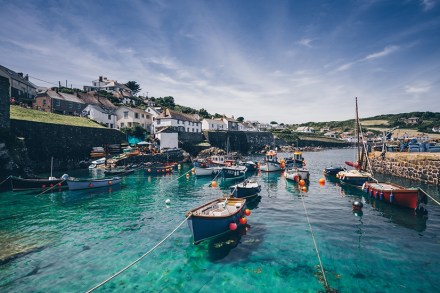
Last week there was a public toilet for sale on the coast of Cornwall. The Kent-based auctioneer called it ‘an exciting and rare opportunity’, although its video tour of the property did not even undo the padlock on the security door. It was on the market for £20,000, which was a bargain — the last exciting and rare toilet block to be auctioned in Cornwall went for five times its asking price, even though it didn’t have as nice a view. It did, however, have windows. It’s undeniable that the property market in Cornwall is overheating. The backlash to the toilet auction was such that it was withdrawn from sale, but house prices in parts of the county are increasing at double the national average.

The forgotten joy of spontaneity

From our UK edition

If you ask people what they’ve missed out on since the pandemic, they’ll probably lament their cancelled plans. Weddings postponed, birthday parties axed and family reunions moved to Zoom. Me, I’ve missed the unplanned. The spontaneity that knocks your routine, muddles your diary and lands you tipsy in the pub on a Monday night when you were supposed to be at the gym. For more than a year, our lives have been ruled by the principle of ‘safety first’. Accidents — even the fun ones — have been avoided at all costs. It has been illegal to act on a whim or at least, in the better times, very strictly regulated.

Why Britain must unlock on 21 June

From our UK edition

The scare over the Indian variant of coronavirus this week is a taste of what to expect over the next few weeks, months or even years. Like all RNA viruses, Covid-19 mutates and has done so thousands of times already. New strains supplant old ones and, for a while, questions will be raised when one mutation comes to dominate. Is it more lethal? Is there a chance it could evade vaccines? Every time so far, there has been no significant reason to doubt the efficacy of the vaccines. So the government’s timetable for lifting Covid restrictions holds firm. How far should Britain go to try to fend off new variants?

The international travel ban is cruel and unscientific

A man can cry in public. What can I say, I was raised in a Western-European feminist household in the 1970s. But as a middle-aged guy I did feel deeply uncomfortable the other day with my abundant display of tears. It happened at Schiphol Airport in Holland, holding on tightly to my mother before saying goodbye. She was sobbing just as hard. After the long era of separation we all experienced, I had decided to fly from Los Angeles to Amsterdam on my Dutch passport. Armed with documents proving two Moderna shots and a negative COVID test I felt completely safe to make the trip. The plan was to grab my parents, who are also vaccinated, then fly them home to LA using my American passport. Given their ages and health issues, they would need some help during the trip.

travel ban

Travel podcasts to fuel your wanderlust

From our UK edition

After a miserable year for would-be globetrotters, international travel is finally returning - albeit slowly - with the unveiling of the (rather short) green list. What better time, then, to stoke up your wanderlust by listening to one of these excellent travel podcasts: The Trip Former TIME foreign editor Nathan Thornburgh has a pretty cushy gig: flying across the world to imbibe the local toast with what he succinctly describes as ‘exceptional people’. Whether it’s sipping mezcal with former cartel fixers in Tijuana or dishing the dirt with corruption-busters in Kensington (over knock-off Russian vodka), The Trip is the perfect podcast for the raffish and adventurous.

Into the wild: hidden campsites to explore this summer

From our UK edition

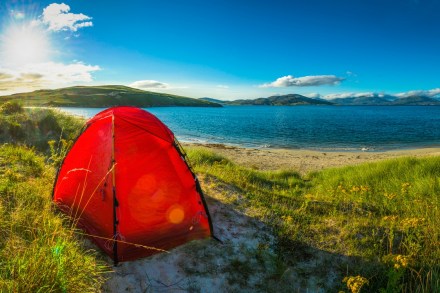
We all know it’s going to be another bumper year for the UK’s tourism sector. With confidence in international travel still not yet fully in-place, and staycation options booked out, camping is a fantastic alternative, giving you the flexibility to follow the weather and families the ability to meet again in a socially distant way with the backdrop of some of the UK’s most stunning landscapes. We’ve put together this list of some of the best campsites in the UK to book this summer, with a focus on wild spaces and access to coast paths and hill walks. Here are eight recommendations for the best campsites to book this summer.

Secret sea air: where to beat the crowds this summer

From our UK edition

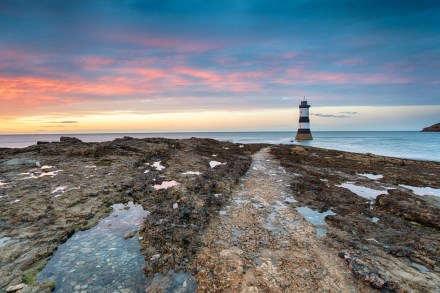
With foreign travel still a tricky prospect, it looks like being a bumper summer for the British seaside. And yet that means the most popular places are bound to get very busy indeed. To avoid the queues and traffic jams, I’ll be revisiting some of Britain’s less familiar seaside towns. Of course, these places are very familiar to folk who are lucky enough to live nearby, but they don’t attract the bumper crowds you get in big resorts like Blackpool or Skegness. Nor are they terribly fashionable, like Padstow or St Ives. Some of them are a bit offbeat, but they’re all places where I’ve had great days out. You’re bound to have your own favourites, but if you fancy trying somewhere new this summer, here’s my personal top ten.

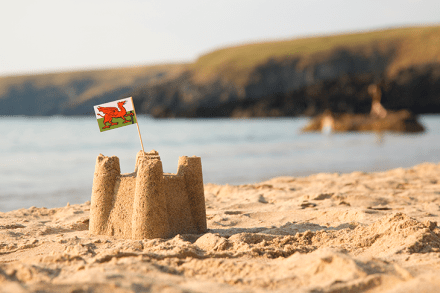
Am I really paying £3,000 for six days in Wales?

From our UK edition

Has it ever been more difficult to plan a family holiday? At the time of writing, it is illegal to travel abroad from the UK for non-work purposes. That restriction is expected to be lifted in due course, although not before 17 May, and replaced by a traffic light system, with countries ranked green, amber or red depending on how they’re coping with the virus. Only eight places are expected to be on the green list — Australia, New Zealand, Ireland, Israel, Gibraltar, Iceland, Malta and the USA — and holidaymakers will be required to take a PCR test before boarding a plane home and another within 48 hours of returning.

Why vaccinated Israel is worth a visit

From our UK edition

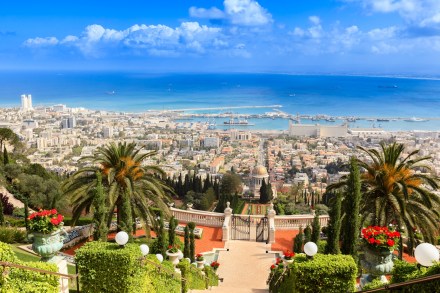
Have you been watching Shtisel during lockdown? Or maybe you are just one of the hundreds (thousands?) of us eyeing vaccination rates and realising the obvious candidate for this year’s summer holiday green list: Israel. Land of mountains, sea, multiple religions, ancient and knotty history, and copious amounts of houmous. Whether the 8,550 square mile country, just a fifth of the width of England and its widest point, can fit us all is another matter but if you are searching for more or less any type of holiday, it’s likely that Israel can provide. Historic city break The Western Wall, Jerusalem (iStock) No prizes for guessing Israel’s most storied city. Legends, tales and parables seem to hum from Jerusalem’s old town walls.

Britain’s travel ban brings risks of its own

From our UK edition

No one knows for sure how many cars are on the road without insurance. The Motor Insurers Bureau puts it as high as one million, and a good number of these won’t have a valid MOT either. Come to think of it, many such uninsured cars without MOTs are likely to be in the hands of drivers who don’t even have licences. And yet it’s never suggested that only those who have a ‘reasonable excuse’ to drive should be allowed to do so, just in case of encounters with revved-up lawbreakers. We know there’s a risk — but we don’t close down all the roads in the country. We get on with our lives. But when it comes to international travel 12 months on from the start of this grisly pandemic, we are not allowed to get on with our lives.

The Great British Getaway: unusual staycations for the summer

From our UK edition

Bookings for summer staycations have boomed since Boris Johnson said that domestic holidays would be possible from as early as April 12. There has been no mention yet of when overseas travel restrictions may be lifted, so it is looking like a very British summer. But a staycation doesn’t have to mean sitting in a dreary caravan park. Make your summer holiday a memorable one by booking one of these unique breaks: Port Lympne Safari Park, Kent Guests at Port Lympne will often wake up to a tiger rubbing its face against their window or a giraffe resting its nose on their balcony. The safari park offers a number of accommodation types, including glamping tents, wigwams, shepherd's huts and coming soon, Giraffe Hall (pictured above).

Why Elon Musk should fly me to the moon

From our UK edition

I have just applied to fly around the moon. My chances of being selected are slim, but is it impossible? Hopefully the explosion of Elon Musk’s test rocket shortly after landing in Texas last week may have winnowed down the competition for a place on Yusaku Maezawa’s flight to the moon and back, scheduled for 2023. That Texas landing was in fact a success, proving it’s possible for a rocket of this size to launch and return intact: third time lucky, the first two rockets tested having exploded on impact.

The West has lost its moral high ground

From our UK edition

International travellers running the gauntlet of English airports must already test negative for Covid before the flight, and on return to the UK get tested again before boarding, fill out a locator form, quarantine for ten days and test negative twice more. But that’s not enough oppression for Boris Johnson’s government. As of this week, outbound intrepids have also to fill out ‘declaration forms’ explaining why their trip is essential. Not doing so is a criminal offence. This new hoop to jump is obnoxious on a host of levels. The declaration form came in on the very day the first few lockdown restrictions were eased, with hospitalisations and deaths dramatically down and more than a third of the adult population vaccinated.

Do gender studies departments have a gender problem?

From our UK edition

Target practice The government hit its target of giving a first Covid vaccine to 15 million of the most vulnerable people by the middle of February. Some other government targets which have been met (sort of): — 100,000 Covid tests a day by the end of April. The government did claim to have achieved this — but did so by counting testing kits which had been posted out and not necessarily returned. — There was a rise of 7,600 people applying for teacher training courses last year, which meant that the government hit its target for secondary school teachers to the tune of 106% and primary school teachers by 130%. — The target of spending 0.7% of GDP on aid has been achieved every year since 2013. The target has now been temporarily reduced to 0.5%.

Critics of the 10-year Covid jail sentence are right, but out of touch

From our UK edition

Not for the first time, metropolitan-based commentators and MPs have proved themselves to be out of kilter with the wider population. But there is an especially interesting disparity over the government’s proposals for ten-year jail sentences for travellers who try to conceal they have travelled from one of 33 ‘red list’ countries in order to avoid hotel quarantine. The proposal caused outrage among Conservative MPs as well as legal commentators such as Jonathan Sumption. Sir Charles Walker, vice-chairman of the 1922 Committee, accused the government of going ‘full North Korea’.

Hancock launches his quarantine crackdown

From our UK edition

The search for the right balance on border policy continues, as Health Secretary Matt Hancock announced this afternoon a host of new measures that travellers coming to the UK will face. From Monday, all arrivals will need to take two PCR tests: one on day two and another on day eight of self-isolation. This will apply to everyone, regardless of where they are travelling in from or whether they are quarantining in a hotel or in their home. This means anyone arriving in the UK will now be taking a total of three Covid-19 tests, as a negative test within 72 hours of travel is also required.

Quarantine heralds the death of Mid-Atlantic Man

From our UK edition

As an ambitious journalist making my way in Fleet Street, I dreamed of becoming a Mid-Atlantic Man. Tom Wolfe came up with the term in the mid-1960s to describe someone who divided his life between London and New York. Not for social reasons, but because his career required him to spend time in both cities. Wolfe said the typical Mid-Atlantic Man worked in a field like advertising, public relations, television, commercial art, motion pictures or consulting. But journalists could join this exalted tribe too. David Frost, who was a kind of journalist, was the ultimate Mid-Atlantic Man. He practically had a permanent berth on Concorde. I failed, obviously, but for a couple of years I came tantalisingly close.

Bad influence: Instagramming from Dubai isn’t ‘work’

From our UK edition

January is when the difference between the rich and the poor becomes most evident. Whereas many people face a month plagued by the three Ds — debt, divorce and doldrums — the famous tend to take off for more clement climes. Simon Cowell famously frolics at the Sandy Lane Hotel in Barbados at the start of each new year, and I myself have spent many January days at the Ritz-Carlton — but only the one in Tenerife, because I believe in keeping it real. This winter, subdued British airports have also seen a mass exodus of a particular youth tribe recognisable by their bright white teeth and deep mahogany tans — the hordes of youngsters who are reality TV stars and/or create content for Instagram. And most of them are going to Dubai.

The three-day Covid travel loophole

From our UK edition

The government has finally attempted to crack down on the problem of people bringing Covid back into the UK, a mere 11 months after the pandemic began. The transport minister Grant Shapps has announced that from Monday, for the first time, travellers will be required to present a negative Covid test at the border, to ensure new variants aren’t brought into the country. The rules will apply equally to British and foreign nationals, which means holidaymakers will be forced to seek out a Covid test abroad before they return to the UK. But has Shapps missed a trick when it comes to the new testing regime? According to the rules, travellers will have to present a negative Covid test which has been taken 3 days before they arrive at the border.