Travel

Le Sirenuse: the loveliest hotel in the world

Look out from the balcony of your room at Le Sirenuse and you’ll see the trio of rocks jutting out of the Tyrrhenian Sea that gave the hotel, one of the last true greats in the world, its name. The three jagged islets form an archipelago, which is said by the Greeks to have been the home of sirens whose enchanting songs lured sailors to their deaths. Le Sirenuse, a scarlet palazzo wedged into the cliff-face of Positano, boasts similar powers of attraction. In a place known around the world for its beauty, Le Sirenuse stands out. It has developed a reputation as the loveliest hotel in the world; somehow, it exceeds that billing.

The Anthony Bourdain Reader leaves a reader hungry

Charismatic, handsome and with a great white shark’s feral cool, Anthony Bourdain was someone that everyone wanted to be. The chef, writer and TV presenter described the premise of his award-winning shows, No Reservations and Parts Unknown, as “I travel around the world, eat a lot of shit and basically do whatever the fuck I want.” They cemented his image as a gadabouting, kamikaze gourmand. Bourdain scarfed down andouillette and warthog anus, drank sun-bear bile and polished off the still-beating heart of a cobra, plonked into a shooter of Vietnamese firewater. He showed Barack Obama the correct way to slurp bún chả noodles on a steamy Hanoi side street, and he and his team watched from their hotel pool as Israeli jets strafed downtown Beirut during the 2006 invasion.

anthony bourdain

How Trader Joe’s became a way of life

A young woman recently approached me as I stood outside Trader Joe’s on the corner of 93rd Street and Columbus Avenue in Manhattan. “Excuse me,” she said, “I’m visiting from the UK and I’m just wondering if there’s anything worth seeing around here.” This is not an unusual occurrence. It’s always tourist season in New York. People come for the cherry blossoms in Central Park, for the magic of the Rockefeller Center Christmas tree and for the vague hope of running into Timothée Chalamet at a downtown brunch place. They even come in the sweltering heat of summer when I, personally, would rather be anywhere else – ideally somewhere without the pungent smell of hot garbage and misplaced ambition.

trader joe's

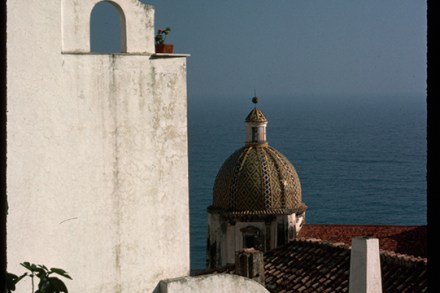
Franco Zeffirelli’s slice of paradise in Positano

If you say the name Franco Zeffirelli to anyone under about 40, you’re likely to be met with bemusement. Find any opera or film lover over that age, however, and you will be greeted with a warm exclamation – “Ah!” – followed by a recitation of the Italian director’s greatest achievements. From his emergence in international culture in the 1960s with his seminal film of Romeo and Juliet to his legendary work on stage with such operatic titans as Maria Callas and Plácido Domingo, Zeffirelli became synonymous with tasteful, intelligent productions of the classics, all of which made him, for a time, the best-known cultural figure in Italy. It is fair to say that Zeffirelli, who died in 2019, didn’t always get it right, personally or politically.

In Cuba, a revolution is over

If you’ve ever thought of visiting the crocodile-shaped island of Cuba, or run into someone recently returned from sultry nights in the country’s salsa halls, there’s a good chance you’ll have heard the phrase “See it before it changes.” And I don’t mean because of Hurricane Melissa. The idea is that the centrally planned communist state, one of the last on Earth, will soon morph into America and a balmy Brigadoon full of people unencumbered by money, modern cars or Alexa will evaporate. I think most people, if they knew what Cubans have endured, wouldn’t use that phrase, which is up there in its lack of tact with “they’re poor but they’re happy.

cuba havana

Uzbekistan by high-speed rail

I am in Tashkent, the capital of Uzbekistan. I am standing in a historic complex of madrasas and mosques, courtyards and dusty roses and I am staring at the “oldest Quran in the world.” It is a strange and enormous thing: written in bold Kufic script on deerskin parchment; it was supposedly compiled by Uthman ibn Affan, the third Caliph of Islam, who was murdered while reading it. And so it is, as I linger here and reverently regard the Book, while scrolling my phone for more fascinating info, that I discover the world’s oldest Quran is actually in Birmingham. Yes, that’s right, Birmingham, England. It’s probably in some obscure library, lodged between a thesis on post-colonial emojis and a flyer for Falafel Night.

chinese banquet

How to survive a Chinese banquet

When heading to China on a business trip, I was somewhat bemused to be warned about the banquets I would be attending. Do not sit next to the host, I was told. I was to find out why. Learning the rituals of banquets is an essential part of doing business in China. I was treated to at least one every day on a ten-day trip around the country – and sometimes two or three. There is no such thing as a casual business lunch. Any meal will turn into a semiformal event held in a private room and hosted by the most senior person in the organization. The meal starts slowly, with a few rather unappealing cold dishes laid out on a lazy Susan that sits on a round table, though initially no one sits down.

In awe of Fuji-san

My personal version of hell? Shibuya station, Tokyo. Shibuya Scramble is one thing: the busiest pedestrian intersection on the planet, it sees two million people elbow each other, every day. But the train station that thousands of them are trying to get to? That’s where my hopes go to die. A place where you’ll find me near tears, wondering if I’ll ever see my loved ones again. It’s almost impossible to navigate, spread across a dizzying number of floors and stuffed with throngs of human beings speaking a dozen languages. New platforms spring up all the time, often at the top of an unassuming escalator, or via a tiny hidden exit of the Hikarie shopping mall. There are (one or two) signposts, sure, but my Japanese leaves much to be desired.

Fuji

The theater of the Galápagos Islands

It was stiflingly hot in the middle of the Pacific Ocean. I was exploring the eastern Galápagos Islands, living cheek-by-jowl on a former casino ship with a cast of characters plucked straight from a murder mystery novel: a former British supermodel, an Ecuadorian presidential candidate, the ex-drummer of a band who once supported the Who and an influencer couple who looked like they had stumbled off the set of Triangle of Sadness. The stars of the show – and boy did they know it –were the sea lions While the trip had all the ingredients to cook up an irresistible whodunit, I was not just there to inspect the wildlife on board but to observe the wildlife off it.

Fresh tracks in ancient territories

By complete fluke, my delayed shuttle bus rose through the Coast Mountains at dusk. I pressed against the window, outing myself as a tourist amid seasonaires snoozing through another spectacular sunset. Hot pinks and deep purples streaked between towering pines, transforming the outline of snow-capped peaks. I’d crash with local friends for a month, with support from Vail Resorts to explore stories beyond the slopes. Tales of Whistler Kids ski school were already family lore – I’d once visited as a 10-year-old, buzzing to see snow. Stuck at Vancouver International, I’d pulled up a chair at Salmon n’ Bannock on the Fly – Canada’s only Indigenous restaurant in an airport. As travelers, how often do we pause to ask whose land we’re actually on?

Snowshoeing with septuagenarians

Wading through breakup grief, I’d hit the haziest stage of recovery, somewhere between lying horizontal in dark rooms, and shaving my head. Short of purchasing clippers, I’d resolved to write about wellness travel. Clad in regulation white cotton pajamas in the Western Ghats of India, my lifestyle habits had been judged (hard) and my thoughts about aging, recalibrated. A vigorous wellbeing regimen had revealed my 34-year-old body to be pushing 40, metabolically. Confronting? Yes. Salvageable? Also yes. (More mindfulness, fewer cigarettes, and – my addition – no men). Next stop: I’d pull on my hiking boots for a flight out of sweltering Mumbai, to icy Tokyo.  Post-Covid, Japan dominates algorithms and bucket lists.

Exploring Edinburgh, from Princes Street to Pitlochry

I’m blinking through floor-to-ceiling windows that perfectly frame a pristine view of Edinburgh Castle, standing magnificent against an improbably cloudless Scottish sky. The elegant writing desk in the Archibald Signature Suite at 100 Princes Street hotel has all the makings of an elevated “work-from-home” set up, but the scenery – and the collection of aged single malt I know to be upstairs – make concentration an uphill battle. This luxury townhouse right on, you guessed it, iconic Princes Street was made for luxuriating, not hunching over laptops. Ducking into the entrance on Princes Street feels exclusive, like knowing a secret.

pitlochry

An epic journey on horseback through Kyrgyzstan’s mountains

If you tell friends you are going to Kyrgyzstan, they look blank, or think you are talking about Kurdistan, although the two are 2,000 miles apart. If you get the choice, choose Kyrgyzstan. Like so many, I first learned of the place because of Alexandra Tolstoy: writer, adventurer, horsewoman and cousin of the author of War and Peace. She discovered the romance and beauty of the place for herself when she rode 5,000 miles of the Silk Road by horse and camel in 1999. Since then, she has ridden in Kyrgyzstan most years, taking parties of 12 or so into the lower slopes of the vast Tian Shan mountains, the highest range west of the Himalayas. Blonde, fearless and always elegantly turned out, she leads. We follow.

Kyrgyzstan

Plastic-free paradise

“Welcome to Wayanad. From here, all plastic is banned.” Prasanth was on a mission, belly pressed to the carpet of his car, legs sticking out on the roadside. He emerged triumphant, brandishing a forgotten Coca-Cola bottle and carrier bag before starting the ignition. Crossing into the high-altitude, hilly state of Kerala, he pulled up at a designated recycling spot.  Ephemera rained out of my upturned tote bag upon strict instruction to hand over any plastics. At Wayanad’s border, two impassive security guards eyed my friend and me as we instinctively sank back in our seats. A regular driver for tourists, Prasanth shrugged off the routine check, pointing to a sign as we were waved on.  “1,000 rupees fine! See?

india

On holiday with Goya

When I’m first invited to a sojourn in Madrid to learn about the life and work of Francisco Goya and the conservation work of Factum Arte, I’m thrilled but also a little apprehensive. While art-themed travel is right up my street and I live a mere train trip from the Spanish capital, Goya’s work is known for being a little, well, dark – particularly during his later years. As a fan of the Botticellis of this world, spending a few days with the artist famous for his "black paintings" was not something I was sure I’d enjoy.  And yet, three days later, as I stand in front of Goya’s grave in La Ermita de San Antonio de la Florida, I find myself moved in a way I never could’ve anticipated.

Goya

Why I’m ditching ‘authentic’ travel

I’ve always heard Americans describe the food in Rome as “authentic,” though maybe that’s only relative to our three square meals of Little Debbies, reconstituted meat and freeze-dried astronaut food. The things we eat are not authentic food. But abroad, authenticity means anything sourced locally and served by a very small old woman with limited English. If a nonna told me she’d fished anchovies out of the Trevi Fountain and plucked chicory from cracks in the sidewalk, I’d swoon and think: they really know how to do it right in Europe. Authenticity, to me, also means a little discomfort. Bones in your rabbit stew. Lugging a suitcase up a dirt road. Getting pickpocketed.

authentic

A journey through Edinburgh’s gothic past

When Guillermo del Toro’s new film adaptation of Frankenstein makes its bloody advent on Netflix later this year, the backdrop for 19th-century body snatching and resurrection may look familiar to many viewers. It was shot last year on Edinburgh’s Royal Mile and images from the set suggest that, as ever with del Toro, this will be a hallucinatory and haunting exercise in Gothic extravagance. If so, he has picked the perfect city on which to unleash Frankenstein’s monster. Edinburgh is a place that wears its long and often violent history like a velvet cloak.

Edinburgh

The polished edges of Colorado’s ski resorts

“Arnold Schwarzenegger was sitting exactly where you are,” the boot fitter said, as he handed me K2 Anthems at Aspen Collection, perhaps the world’s most sophisticated ski rental shop and café. “He was drinking Sancerre.” It’s an impossibly “Aspen” anecdote – where else would the Terminator sip French wine, but the resort famous for Champagne showers and fresh powder? Such a scene seemed perfectly fitting in Colorado, where I have come to explore Aspen and Vail – two titans of American skiing. Vail remains the more accessible of the two, its European-inspired village just 120 miles from Denver, while Aspen's extra hundred miles of mountain road maintain that coveted layer of exclusivity. Bouncing between the resorts, I’ve discovered a season of transformations.

Trump’s security, dress codes and airport romance in Palm Beach

With President Trump spending so much time away from Washington at his home and club, Mar-a-Lago, in Palm Beach, there are good spin-offs and not-so-good spin-offs for Palm Beachers. One of the good ones is for the local hotels: his security guard is of such a size that they are being billeted all over town. Less good is the sheer cost of security. The city council has this month had to transfer $20 million to the sheriff’s department for the costs incurred so far, and anticipates a further $25 million expenditure in the course of the year. It expects to be reimbursed by the federal government, as it was during Trump’s first term as president, but it won’t be paid before the next financial year.

Palm
train

Taking the fast train back to imperialism

I’m on a high-speed train. Forty years ago, such a statement would have been notable and specific: essentially, it meant you were in Japan or France. Nowadays, being on a high-speed train is barely a geographical indicator at all. Most of Europe has them, from Spain to Italy to Poland. Morocco has high-speed trains. Uzbekistan has high-speed trains. Even Egypt, Vietnam, Turkey, Thailand and the USA either have high-speed railways, or will have them in the next year or two. Just about the only country not powering ahead with high-speed rail is the birthplace of the railway — the United Kingdom — a fact that can either make you sob, or despair, or perform a kind of double sob etched with despair. What makes my experience unusual is that my high-speed journey is happening in Laos.