Tories

Do the Tory whips have Boris’s back?

From our UK edition

Whips are made for leadership crises. They are a party leader's early warning system; they can sniff out plots before they get going. So it is, as I report in this week's magazine, far from ideal for Boris Johnson that relations between him and the whips office remain strained. The problem dates back to the Owen Paterson affair. The whips were furious that their chief, Mark Spencer, received so much of the blame when they felt he was just following orders from No. 10. The result, one Johnson ministerial loyalist complains, is that ‘the whips’ office are on a go-slow’. When Labour went on the attack with an urgent question on Tuesday, the whips made little effort to get ministers and backbenchers into the chamber: the empty Tory benches spoke volumes.

The jury’s still out for Boris Johnson among MPs

From our UK edition

When Michael Gove addressed Tory MPs on Wednesday evening at a meeting of the 1922 committee, he began with a tribute to Boris Johnson. After a rocky few days for the Prime Minister in which he has apologised to the House for attending a drinks party in the Downing Street garden during lockdown and faced calls from his own side to resign, Gove took the opportunity to remind MPs of Johnson's selling points. The levelling up secretary told MPs that their leader 'gets the big calls right' citing Brexit, vaccines and Johnson's recent decision not to bring in extra Covid restrictions over Christmas.

Boris Johnson is running out of road

From our UK edition

There has been no good news for Boris Johnson today. After an email leaked on Monday evening showing that the Prime Minister's Principal Private Secretary Martin Reynolds invited over 100 staff to a drinks party in the No. 10 garden in May 2020, the Prime Minister has come under fire from his own side. Downing Street has refused to deny reports that both Boris Johnson and his wife Carrie were present at the event. Instead, all No. 10 will say is that Sue Gray's inquiry into alleged Covid rule breaking at various Downing Street parties is ongoing.  The atmosphere in the Commons has been notably muted. The Tory benches were rather quiet when Michael Ellis — Paymaster General — was sent to field an Urgent Question on the issue.

Rayner hits Johnson where it hurts

From our UK edition

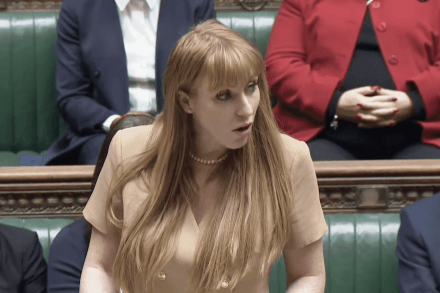
The first PMQs of the year gave us a preview of the political debate we’ll be having for the next few months. Labour went after the government on inflation. Angela Rayner asked Boris Johnson why he had dismissed fears over it as unfounded back in October: Johnson denied he had said it — which is an odd claim given what he said in that interview. She then punched the Tory bruise, by asking why Johnson wasn’t cutting VAT on fuel, as he had said he would do during the EU referendum. Johnson made the point that this help wouldn’t be well targeted, which is true. But the political pressure for this from Labour and his own backbenchers are going to make it very hard for him to resist.

The joy of Boris’s bungled by-election

From our UK edition

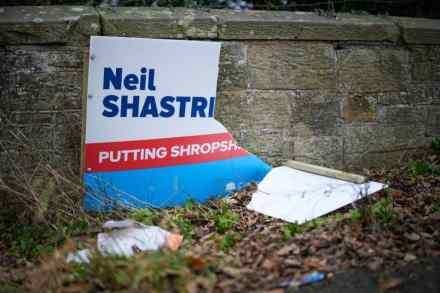
By any reasonable standard the result in the North Shropshire by-election must be reckoned the funniest in years. Perhaps even decades. All governments need checking from time to time and desserts are always served justly. So this is a welcome result and not just because it is, viewed objectively, hilarious. Nevertheless, it is quite an achievement to lose a seat held by the Conservatives, in one shape of another, for 120 years. To do so just two years after winning more than 60 per cent of the vote and a majority of almost 23,000 votes is quite something. To do so to the Liberal Democrats, who took just ten per cent of the vote in 2019, is really quite something.

Boris is in deep trouble

From our UK edition

This evening feels eerily familiar to anyone who remembers the meaningful votes of Theresa May’s premiership. The Tory rebellion on the Covid measures is bigger than expected; the rebels are claiming to be the mainstream of the parliamentary party; the cabinet ministers loyalists to the PM are blaming the whips office; there are mutterings about how long this can go on for. There is, of course, one crucial difference: thanks to Labour, Boris Johnson won tonight’s vote. But it is clear that if he wants to tighten restrictions further, he will be reliant on Starmer’s party’s support in doing so. Relying on the opposition to get their business through is never a comfortable place for a Prime Minister to be.

Watch: No. 10 staff joking about Downing Street Christmas party

From our UK edition

Downing Street have spent the week trying to play down reports of a secret No. 10 party last Christmas when the rest of the country was under restrictions. They have tried a few tactics: at Prime Minister's Questions last week, Boris Johnson didn't deny the event had taken place but insisted all Covid guidance had been followed. When that failed, the Prime Minister's spokesman went on the record saying there had been no party. Then today the blame shifted to civil servants: with briefings that it was an event mainly made up of officials rather than political appointees. Those responses are unlikely to hold much weight going forward.

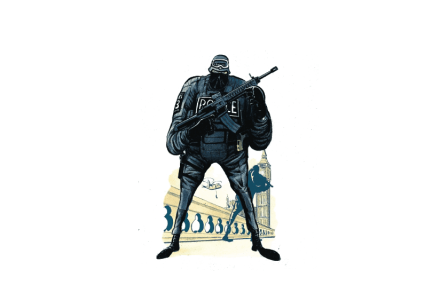
The Tories’ crime crackdown

From our UK edition

Dealing with crime is a political necessity for the Tories, I say in the Times today. Whenever Labour outflanks them on the issue, as Tony Blair did, the Conservatives are in trouble. But law and order has taken on even more importance for this government because of its link to levelling up: Boris Johnson is convinced you can level up only if you deal with crime. He believes that places are poor because of crime, rather than the other way round. So, next week we’ll see a slew of announcements, with a particular focus on increasing drug rehabilitation efforts. Tackling crime and antisocial behaviour can show rapid progress The public are not sure what levelling up means but, as far as anyone can guess, dealing with disorder is seen to be part of it.

Tories hold Old Bexley and Sidcup – with reduced majority

From our UK edition

Boris Johnson can breathe a sign of relief this morning after the Conservatives held Old Bexley and Sidcup. In a by-election triggered by the death of the former MP and cabinet minister James Brokenshire, Tory candidate Louie French won over 50 per cent of the vote, with Labour coming in second. However, despite this victory, the Tory majority has been reduced from 19,000 to 4,478. Even taking into account the reduced turn out, the Tory vote share has fallen Both the Tories and Labour are claiming the result as a success this morning – with members of the shadow cabinet pointing to the swing towards Labour as proof they are back in business.

When will the Tories do something about house prices?

From our UK edition

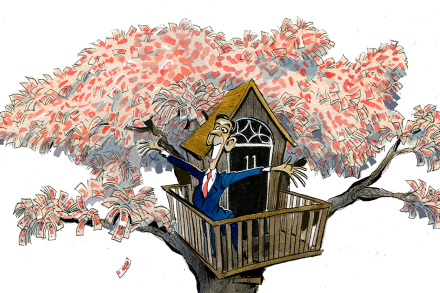
Anyone who doubts that the fiscal response to the pandemic has stoked inflation needs to look at the latest figures from the Nationwide on the housing market. Yet again they confirm that the deepest recession in modern history has been accompanied by a boom in house prices. Moreover, the inflation does not seem to have been reined-in by the ending of the stamp duty holiday. The price of the average home, according to the building society, rose by a further 0.9 per cent in November to reach £252,687. This is ten per cent up on last November and 15 per cent up on March 2020, at the beginning of the pandemic. How can a global crisis which temporarily put several million people out of work in Britain have resulted in a housing boom?

Even Boris’s supporters are turning against him

From our UK edition

Perhaps the past seven chaotic weeks are best regarded as an experiment by the Tories. Boris Johnson's intention appears to be to establish just how badly he can run the country while remaining on course for re-election. Despite calamity after calamity hitting Boris’s administration, things are still looking rosy for the party: Politico's poll of polls shows that we are basically back where we were this time last year – at pretty much level-pegging between the Conservatives and Labour. There is no sign of the kind of positive surge in support for the opposition that would indicate the electorate is considering putting it into power.

Why the Channel migrant crisis is spooking Boris

From our UK edition

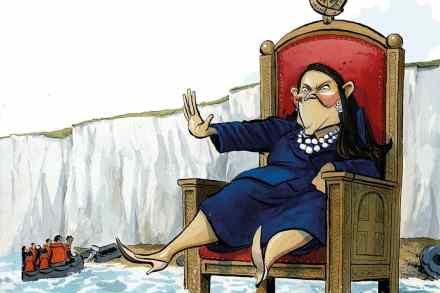
The Tory position in the polls is weakening. Partly this is because of the vaccine bounce wearing off and a fortnight or so of sleaze stories. But, as I write in the Times today, ministers thinks that there’s another issue harming the government: small boats. ‘The sleaze is bad, but the issue that causes me most trouble with my constituents is the boats,’ says one cabinet member. Johnson himself has long been concerned about this problem. He worries about the sense of disorder that the small boats convey: he thinks they make a mockery of ‘taking back control’ of the borders. A long-serving No. 10 aide says that ‘other than Covid, no issue has taken up more of the PM’s time’.

Tory MPs are furious at ‘missing-in-action’ Boris

From our UK edition

Why did Boris Johnson avoid the Commons chamber on Monday? The official reason for the Prime Minister skipping an emergency debate on MPs' standards is that he has a pre-planned visit. The problem for Johnson is that many of his MPs are taking it as another sign that he is missing in action when it comes to the escalating row over Tory sleaze, following the botched attempt to spare former MP Owen Paterson a 30-day suspension. While opposition MPs had plenty to shout about in that debate – with Labour leader Keir Starmer accusing the government of 'giving a green light to corruption' – it's the Tory benches where Downing Street has the most to worry about.

Rishi Sunak’s new age fantasy and the great Tory con

From our UK edition

Failure corrupts as much as power does, and when the powerful fail they make others pay for their disappointment. To understand why this government lashes out at all who contradict it like a drunk throwing haymakers in a pub car park, remember that, by their own standards, today’s Tory ministers are abject failures. Nothing about their time in office has turned out the way they expected. Traditionally, the left accuses Labour governments of selling out. In front of the mirror, when nobody is watching, today’s Conservative ministers can accuse themselves.

Don’t bet on the EFFing crisis bringing down Boris

From our UK edition

Boris Johnson is taking one heck of a risk by making labour shortages a deliberate part of his economic strategy. That, at least, is the conventional wisdom about the Prime Minister in the wake of party conference season.  If things go well, then businesses will raise productivity by investing heavily in new machinery and more training for home-grown workers who currently lack key skills. And then all will be fine for Johnson. But if things go badly, labour shortages will merely fuel rampant inflation, while gaps on shop shelves will become endemic. Key groups of voters will turn on the PM, hastening his demise.

Boris’s speech was comedy, not policy

From our UK edition

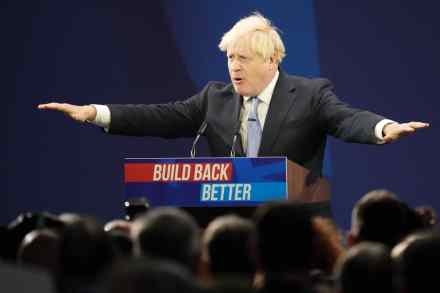
Last week, Keir Starmer derided Boris Johnson as a 'trivial man' in his Labour conference speech. Today in his own address to his party in Manchester, the Prime Minister decided to lean into that description. He didn't bother to give a serious speech He didn't bother to give a serious speech groaning under the weight of meaty policies. There was just one announcement in the whole 45-minute offering: a £3,000 'levelling up premium' to send maths and science teachers to schools in deprived areas.

A short history of political violence

From our UK edition

The ugly attack on Iain Duncan Smith by five protestors at the Tory conference in Manchester has been widely seen as another illustration of how dangerously embittered British politics has become. We now live, it is often said, in a world of deepening friction, hate and intolerance. Angela Rayner’s now notorious rant about Tory ‘scum’ was also seen as a prime example of the spread of ‘cancel culture’, or the way Twitter rage has ruined civilised debate. Ditto the alarming story of Labour’s MP for Canterbury, who refused to attend her own party’s conference in Brighton last week after she received a number of threats. It’s all very unpleasant.

Sunak faces the free-marketeers

From our UK edition

Rishi Sunak didn’t give too much away tonight when he spoke in the 'ThinkTent' at Conservative Party Conference. The Chancellor is known for being cautious with his words, and has been increasingly tight-lipped in the weeks leading up to his October Budget. But his presence at the fringe event was telling in itself. Sunak was only billed for one public fringe event this year, co-hosted by the Institute of Economic Affairs and Taxpayers’ Alliance. Their ‘ThinkTent’ boasts some of the most free-market, libertarian events you’ll find at conference: both organisations are strong advocates for a low-tax, smaller state. So, not necessarily an obvious place to find the Chancellor who has overseen record peacetime spending over the past 18 months.

How the Tories can ‘level up’ without annoying Nimbys

From our UK edition

Have the Conservatives lost their nerve on planning reform? Not quite, but a couple of small interventions at the Conservative party conference in Manchester point in a new direction. If anything, they suggest more ambition, not less, on the part of the ministerial team involved – though less opportunity for a falling out with southern voters. The first, by Michael Gove, was yesterday in a Policy Exchange fringe event with Sebastian Payne on the latter’s new book, Broken Heartlands.

What’s the matter with Boris?

From our UK edition

The Tories are ahead in the polls, the pandemic is easing, and the Prime Minister’s position is secure. And yet, for all the thronging crowds and warm white wine being guzzled at this year’s Conservative party conference, a strange gloom fills the air – and it has something to do with the dear leader, Boris Johnson. Having been so ebullient for so long, and for many years the cheerleader for Tory optimism at every conference, Johnson seems weirdly subdued, even grumpy. Around the fringes of the conference, a question is being quietly asked: is something wrong with Boris? The Prime Minister has been on a media blitz – but he’s looked and sounded tired. His interview with Andrew Marr on Sunday was notably tetchy.