Tories

WhatsApp collapse throws Tory plots into chaos

From our UK edition

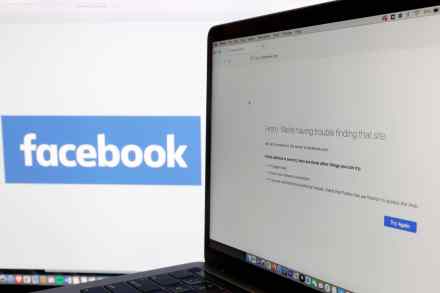
The world’s oldest democratic party has had a few problems with technology in recent years. Famously it was the 2018 Tory conference which saw a security breach where the official party app allowed anyone to access the private phone numbers of members of the Cabinet – or in the case of Boris Johnson change his profile picture to that of a pig. Once again, tech issues are plaguing Tory conference, with three of the world’s most popular apps – Facebook, Instagram and WhatsApp – all being offline since 4:30 p.m. today. The last of these is the favoured platform for disloyal backbenchers and scheming hacks to conspire mischievously to make life harder for long-suffering Tory whips.
How Labour wins

From our UK edition

Labour can win the next election. The winds that blew apart their electoral coalition in 2019 can change in their favour; Brexit has destroyed old certainties but also made anything possible. The party needs first to analyse honestly what went wrong and then conjure up a new, yet old-fashioned progressivism to fix it. The most popular narrative is that Labour was undone by a mix of Jeremy Corbyn and Brexit: Corbyn was too radical and inept; Brexit drove the patriotic working-class into the arms of BoJo and the populist Right.  At this week’s conference, this story will be endorsed by several factions.

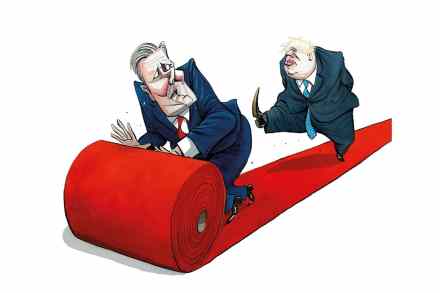
Starmer’s essay is gold dust for Boris

From our UK edition

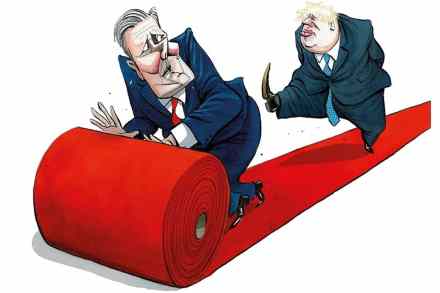
Keir Starmer’s incredible shrinking pamphlet was initially said to run to 14,000 words, then 13,000, then 12,500 and now 11,000 is even being mentioned. As someone who has read it from start to finish, let me assure you that whichever of those word counts is accurate, it’s still much too long. But those who are disparaging the document as useless are nevertheless barking up the wrong tree. In fact, it is a tremendously useful document – but useful to the Conservatives rather than Labour. Because while earnest Sir Keir has failed to come up with anything that will produce the kind of visceral connection with the electorate that could presage political momentum, he has nonetheless telegraphed to the Tories his basic plan of attack.

Boris is a mini-Biden

From our UK edition

It’s been said far too many times that Boris Johnson and Donald Trump have a lot in common. Trump himself called the Prime Minister ‘Britain Trump’ – to Donald’s mind, the greatest compliment any man could give. Others use the Trump-Boris analogy to pour scorn. French newspapers have called him ‘mini-Trump’. Or ‘Trump with a thesaurus,’ is how Nick Clegg, the former deputy prime minister who now works for Facebook, put it. To most international media, Brexit and Trump, and therefore Boris and Trump, were part of the same horrid phenomenon. Both men were called populists, nationalists, demagogues, liars – yet they kept winning.

Does Liz Truss have what it takes to be Foreign Secretary?

From our UK edition

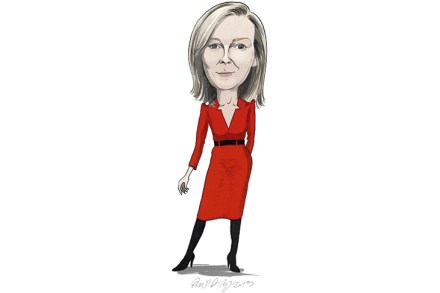
In the dying days of Theresa May’s benighted premiership I spotted a long-serving Tory MP on the same weekend train as me, a few rows down. This old whips office hand had naturally bagged a table of four for himself and spread out documents and newspapers across it to deter all-comers. But he seemed most focused on a smaller piece of writing paper on which he periodically scrawled a note. After a few minutes he got up and headed to the buffet car so I did what most of those trained in my trade would have done in the circumstances and sauntered past his vacated table to take a sneaky look. The notepaper was his own House of Commons headed variety and contained a list of about 20 Tory MPs. At the top was one name underlined twice: Liz Truss.

Tories brace for more tax rises to fund NHS

From our UK edition

Any Tory rebellion on social care is unlikely to be very big this evening when the Commons votes on a resolution introducing it. There are a number of reasons for this, not least that voting against a money resolution, particularly one on an issue that is as big as a budget, is a much bigger deal than rebelling on normal legislation. Then there's the prospect of a reshuffle, with everyone in Westminster busily trying to read runes about whether Boris Johnson will move around his front bench tomorrow. If it doesn't happen, disappointed MPs are hardly going to complain in public that they'd supported the policy in the hope of career glory. If the NHS won't willingly stop spending money, and the new care policy requires that money after three years, what's going to happen?

Even Tories should be wary of Gove’s election stitch-up

From our UK edition

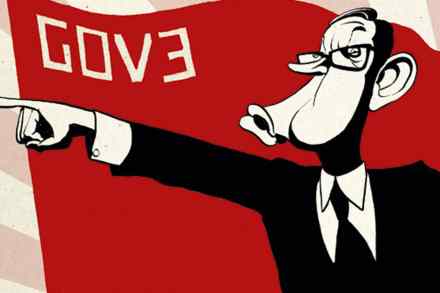
Conservative politicians appear willing to revolt on every issue: tax rises, China, lockdowns. But on the accumulation of power by their party they remain silent. The system is being rigged to their advantage, and on that shady objective they are happy to give the Johnson administration a free pass. Imagine a football club giving itself the right to decide when the referee can grant a penalty – or a gang of potential criminals having a veto over police investigations – and you will understand the impact of the government’s latest proposals perfectly. Its Elections Bill places the referee under the control of the ruling party and the cops in the usual suspects’ pockets.

Boris and Priti can’t blame France for the Channel migrant crisis

From our UK edition

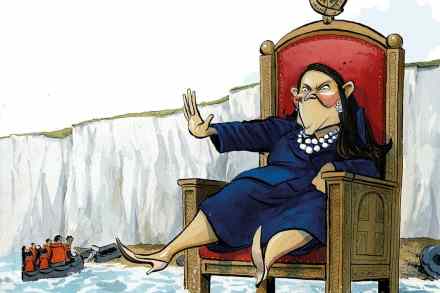
The sun is beating down again, the waves are less choppy in the English Channel and the small boats full of irregular migrants are pouring across once more. At least 1,000 men, women and children were reportedly spotted landing on the south coast yesterday. If these numbers are correct, it would have shattered the previous daily record of 828, recorded on 21 August. But Home Office sources were today briefing that was an over-estimate and the likely official number will be about 740, merely the second highest daily total ever. The graphs plotting the staggering acceleration of this traffic make grim reading indeed – this is one curve that has never been flattened.

Has David Cameron any shame?

From our UK edition

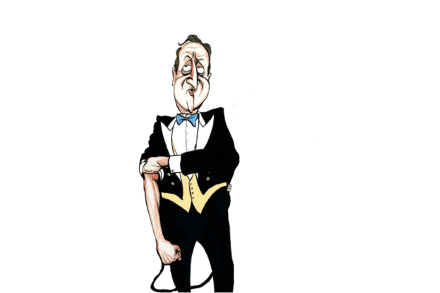
$10million, or £7million. That’s what David Cameron is now reported to have made from Greensill Capital, the company he helped lead to ruin. The number, reported by the BBC, is news, not least because Cameron himself had refused to disclose it. Speaking to a Commons committee investigating his failed lobbying for the failed company, the failed former PM would say only that he had been paid a 'generous' sum by Greensill. That one word, 'generous', speaks volumes about Cameron and the Greensill episode. Let’s start with the obvious fact that Cameron used a word rather than a number to describe the money he got (I’m not sure 'earned' is the right term) from Greensill. It seems fair to ask if that was because he was in some way embarrassed by it.

Boris’s Thatcher coal mine quip infuriates Tory MPs

From our UK edition

During the Scottish parliament election campaign, Boris Johnson was criticised by the SNP for failing to visit Scotland. His absence wasn't seen as such a bad thing, however, by Scottish Tories who took the view that a visit from the Prime Minister was a risky bet and could actually prove a voter turn off when it came to a winning electoral pitch. So the very fact Johnson this week embarked on a visit north of the border ought to be taken as a sign that the independence situation is improving for unionists.  After Nicola Sturgeon fell one short of a majority in the Holyrood elections, an effort is underway to use this opportunity to boost support for the union.

Boris’s poll slump isn’t such good news for Starmer

From our UK edition

Labour narrowing the poll gap with the Conservatives has got to be good news for Keir Starmer, right? Wrong, actually. Let me tell you why it isn’t and why the recent tightening of the polls should leave us more convinced than ever that the Conservatives are on course for a comfortable victory at the next general election. First off, let’s take the headline data. Politico Europe's poll of polls is as good a place to find it as any and it tells us that on 23 June the Tories were averaging 43 per cent, to Labour’s 33 per cent. By 29 July, the Tories were scoring 40 per cent to Labour’s 35 per cent. So a ten point average Tory lead has halved to a five point average Tory lead in the space of five weeks.

How do the Tories stop the rise of an ever-bigger state?

From our UK edition

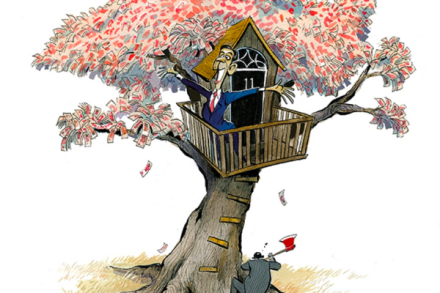
When Gordon Brown raised National Insurance in 2002 to put more money into the health service, it was seen as a huge political gamble. The Tories — including one Boris Johnson — denounced the move in furious terms. In a sign of how far to the left the country has moved, the Tories are planning to do something very similar to cover the cost of a social care cap and dealing with the NHS backlog. If the Tories do this, it will put Labour in a tricky position. How do they respond when a Tory government raises taxes to put more money into the NHS? If the Tories do this, it will put Labour in a tricky position But there is a political, as well as an economic, danger to the Tories in such an approach.

What are the limits of Boris’s ‘levelling-up’ agenda?

From our UK edition

No doubt Boris Johnson has many qualities but the only one that comes to mind is this: he is not a conservative. That realisation may be dawning a little late on his more spirited supporters, who gave short shrift to anyone making this point during the flaxen-haired dauphin’s campaign for the crown, but it sunk in some time ago with his savvier opponents.  Boris’s non-conservatism is not the primary obstacle to the Labour party (or the broader left) regaining parliamentary power. But it is an added hindrance that could be done without. However, it also presents an opportunity to use a nominally Tory government to advance policies that wouldn’t ordinarily appear in a Tory election manifesto.

Boris Johnson’s sombre ‘freedom day’ press conference

From our UK edition

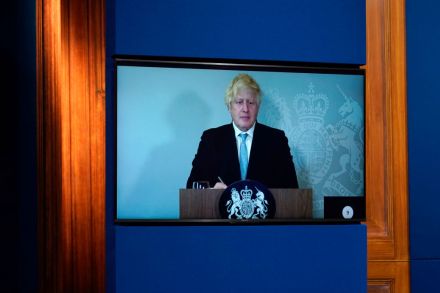
On the day that nearly all legal Covid restrictions go, one could be forgiven for presuming ministers would be in the mood for celebration. Instead the press conference Boris Johnson led this afternoon to mark so-called freedom day proved a sombre affair. The Prime Minister was forced to dial in remotely after having to self isolate as a result of coming into close contact with the Health Secretary last week, who has since tested positive for Covid. From his self isolation, Johnson went on to unveil plans for vaccine passports for nightclubs and contingency plans to keep the country moving as millions face self isolation in the coming weeks.

Why do those who abuse Priti Patel get a free pass?

From our UK edition

Remember when Labour MP Clive Lewis got into trouble for saying, ‘On your knees, bitch’? It was at a fringe event hosted by Momentum during the Labour conference in Brighton in 2017. Lewis uttered the line as a joke to the actress Sam Swann. People went nuts. Labour bigwigs accused Lewis of misogyny. He eventually ‘apologised unreservedly’ for his ‘offensive’ language. That phrase — ‘On your knees, bitch’ — sprung back into my mind this week as I read an exchange between Alastair Campbell and Priti Patel. No, Campbell did not use the B-word. He is far too civilised for that. But he did tell Patel to get on her knees.

Johnny Mercer and the Tory loyalty problem

From our UK edition

Following his re-election as Chairman of the 1922 Committee, Sir Graham Brady would be well advised to start banging a few heads together. Because the Conservative parliamentary party has turned into a thoroughgoing disgrace. We’ve all read about the 'transactional' relationship between most Tory MPs and Boris Johnson – i.e. they will only continue to back him if he keeps winning. But what the past few days has highlighted is the transactional relationship Tory MPs have with each other. There is almost no semblance of basic team loyalty, let alone that higher level of solidarity known as esprit de corps.

It’s time for Rishi Sunak to stand up to Boris Johnson

From our UK edition

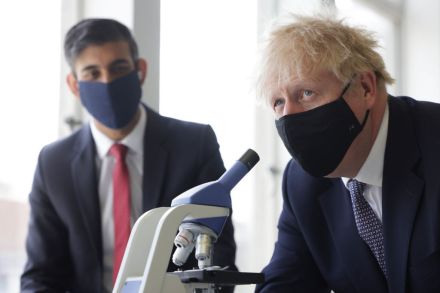
Finally the pandemic fog is lifting and the outlines of post-Covid politics are starting to take shape. While the Government is perfectly capable of generating many more unfortunate headlines by mishandling the Covid exit wave – or indeed, in the case of Matt Hancock, ignoring the 'hands, face, space' rule – it is clear that one key relationship will largely determine its longer-term fortunes. It is that between off-the-cuff scruff Boris Johnson and his immaculately turned-out Chancellor, Rishi Sunak – the man in the ironed mask.

Boris is in danger of becoming Britain’s François Hollande

From our UK edition

Last week's by-election result in Chesham and Amersham was a slap in the face for Boris Johnson. Fortunately it was a figurative one, unlike the punishment dished out to Emmanuel Macron by a disgruntled voter the previous week during a presidential walkabout. But it's the fate of Macron's predecessor in the Elysee that should focus Conservative minds in the wake of their chastisement in Chesham. A decade ago, François Hollande was in the early stage of campaigning for the 2012 presidential election. He styled himself as 'Monsieur Normal', a welcome contrast to Dominique Strauss-Kahn, long tipped as the man who would lead the Socialists to victory in the election. That was before he disgraced himself in a New York hotel room in May 2011.

Boris must face the truth about the ‘triple lock’ pensions promise

From our UK edition

The Tories have a pension problem – and it’s not strictly financial. Over the coming weeks, the cost of pension promises is likely to be in the spotlight. The pensions ‘triple lock’, which the Prime Minister reportedly refuses to scrap, means that the state pension is upgraded each year in line with average earnings, the Consumer Price Index or by 2.5 per cent – whichever is higher. This year, it’s likely that earnings will be the highest of these figures by a long way. Here we encounter a problem: the triple lock was not designed with a pandemic in mind. The crazy world of 'Coronomics' has led to the biggest recession in 300 years, yet average wages increased quite dramatically; they are currently up 5.6 per cent on the year.

Johnson vs Sunak: The political battle of the autumn?

From our UK edition

As ministers grow increasingly confident that they will be able to unlock by 19 July, Boris Johnson is facing a series of other political problems coming up the track. After the party lost the Chesham and Amersham by-election to the Liberal Democrats, Tory MPs with seats in the south are particularly restive. CCHQ has spent the weekend reaching out to these MPs in a bid to offer reassurance that the party has not forgotten about them. Yet the biggest problem Johnson faces is on spending. The spending review in the autumn will see all these various debates playing out Over the weekend, there have been a series of reports of a rift between the Prime Minister and his Chancellor on the Covid recovery. Figures in the Treasury are growing frustrated with a No.