Thriller

The uncertainty principle: The Interpreter’s Secret, by Andrew Rosenheim, reviewed

From our UK edition

You can’t really make this stuff up any more, political reality having long since outpaced fiction, but thank goodness there are people who continue to try. Recent history has supplied more than enough intrigue, misinformation, diplomatic doublespeak and sheer zone-flooding mad shit to challenge even the most inventive writer of political thrillers, but fortunately Andrew Rosenheim is more than up for it.

Nagging doubts: Twenty Minutes of Silence, by Hélène Bessette, reviewed

From our UK edition

One critic memorably described Waiting for Godot as a play in which nothing happens, twice. Twenty Minutes of Silence is a novel in which something happens, repeatedly. Ina luxurious villa in northern France a man lies dead, surrounded by disorder – apparently a robbery gone wrong. When the police arrive, they find he was shot with his own gun and the murder weapon is missing. His wife and 15-year-old son become suspects. What is really going on here? Again and again we are taken through the night’s events, starting afresh each time. The dead man was a multi-millionaire with dubious associates. The marriage relationship seems ambiguous: the wife could have been deceived or unfaithful.

Thank god for Jodie Foster

From our UK edition

A Private Life is a French film starring Jodie Foster as a psychoanalyst navigating what might be a murder mystery. It’s a psychological thriller (kind of), and a complex character study, and while it is très, très French, with elements that feel like a fever dream, Foster’s presence will keep you glued. She has a face you could watch for ever. It moves. It’s expressive. It captivates. She hasn’t meddled with it. ‘I don’t want to be some Botoxed weirdo,’ she has said. It makes such a refreshing change to see a 63-year-old woman who looks like a 63-year-old woman rather than a haunted doll. In fact, if it weren’t for her and Frances McDormand, it would probably be game over.

Another thriller, another teenage incel

From our UK edition

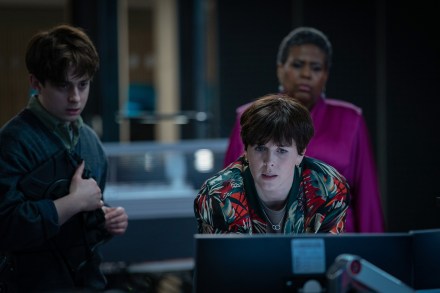
At just over two hours, Martin Scorsese’s 1991 remake of Cape Fear was 20 minutes longer than the 1962 original. It also added some moral complexity. Instead of a total psycho (Robert Mitchum) menacing a lawyer’s very nice family, we got a total psycho (Robert De Niro) menacing a lawyer’s slightly messed-up one. But how do you stretch the story to ten hours? That’s the challenge faced by Apple TV – and, after two episodes, the answer’s already clear: by throwing in any number of subplots, strenuously referencing as many contemporary anxieties as possible and not worrying too much whether some of the characters seem quite stupid in their willingness to ignore the obvious threat.

A searching question: Heartwood, by Amity Gaige, reviewed

From our UK edition

The Appalachian Trail is America’s secular version of the Camino de Santiago but more than twice as long. In Amity Gaige’s Heartwood, Valerie Gillis is a 42-year-old nurse and experienced trail-walker who nonetheless vanishes one day in the northern stretch, in Maine, the wildest of the New England states. Heading the search for her is Beverly Miller, a senior game warden, who stands out among her colleagues because she is 6ft, female and not a native Mainer. As the days go by, and despite the impressive number of volunteers looking for Gillis, the chances of finding her alive diminish. Miller, a veteran of similar searches, has to continue to motivate her teams, even as her own appraisal of the situation grows gloomy.

Tantalisingly ambiguous – or just plain baffling: Hallow Road reviewed

From our UK edition

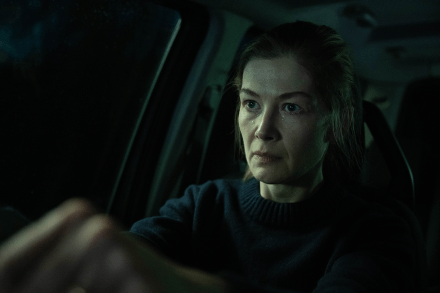
An 80-minute film which for almost all of the time features two people in a car mightn’t sound particularly ambitious. In fact, though, Hallow Road is bursting with so many ideas and genres that by the end they risk blowing it apart completely. At first, it looks as if we’re in for a mix of family drama, psychological thriller and anxiety dream – which indeed we are, but only for starters. After some characteristically disorientating (it turns out) shots of an apparent crime scene – an abandoned meal, glass strewn across the floor – Maddy Finch (Rosamund Pike) receives a 2 a.m. phone call from her distraught daughter Alice (the voice of Megan McDonnell). Following a row over dinner, Alice has driven off in her dad’s car.

Black Bag is about as good as mainstream filmmaking gets

If you would like to see that rarest of endangered species — a smart, witty and original 90-minute thriller aimed at adults — then stop reading this review immediately and go and see Steven Soderbergh’s Black Bag. It is a film that is probably best enjoyed by going in entirely blind, where the bare bones of the premise, revolving around a husband-and-wife pair of British spies who find themselves under suspicion of treachery, possibly by one another, is all you need to know. Yet if you need further convincing, then rest assured that this a one-of-a-kind blend of Mission: Impossible, Private Lives and Tinker, Tailor, Soldier, Spy, with a little Mr. and Mrs. Smith thrown into the mix, to season.

black bag

Scott Turow’s latest novel attempts to understand humanity

Scott Turow’s Presumed Innocent burst into the world in 1987, zinging out of bookstores into bestseller-dom like nobody’s business. It concerned Rusty Sabich, a lawyer who became a suspect in the case he was prosecuting. There were enough twists and turns to satisfy the most Daedalian of labyrinth-makers, and its longevity was demonstrated by its being adapted into a new, Jake Gyllenhaal-starring show last year on Apple TV+. Presumed Guilty’s title plays nicely on its predecessor’s, and also points toward this new book’s consideration of racism within the American justice system. Sabich is now an old man, nearing his eighties. But boy, is he active. We know this because he likes to canoe while stripped to the waist. He chops wood in the outdoors!

Turow

Bad vibrations: Lazarus Man, by Richard Price, reviewed

From our UK edition

Richard Price’s tenth novel follows four characters in the wake of a tenement building collapse in Harlem that kills six people and leaves others missing. Detective Mary Roe is on a mission to find a missing resident whose wife was among the dead. Royal Davis is a funeral home director hoping to drum up much-needed business from the tragedy, going so far as to dispatch his young son to hand out business cards at the site. Felix Pearl is a freelance photographer searching for meaning as he documents the aftermath. The titular resurrected man is Anthony Carter, a 42-year-old former schoolteacher, six months clean of a cocaine addiction that has cost him his job and relationship with his wife and stepdaughter.

This month in culture: January 2025

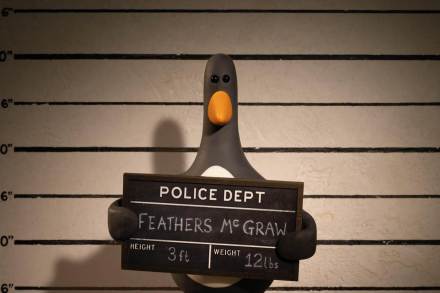
Wallace and Gromit: Vengeance Most Fowl January 3, Netflix The panic that gripped the McMorris household in November 2023 was rivaled by that of the great toilet paper shortage of 2020. Greater even, for this crisis could not be solved with a credit card and the willingness to fight hand-to-hand against fellow Costco members. Aardman Animations, the last bearable producer of children’s entertainment, was running out of clay. The sole remaining British factory that produced the stuff behind Wallace and Gromit and Shaun the Sheep had shuttered. Only a pitchfork would suffice. The advent of CGI has fried parental eyeballs with neon ever since Toy Story and only Aardman has resisted the trend, delivering us stop-motion Stan and Ollie routines.

culture

The late Quincy Jones, a man of many talents

The death of Quincy Jones, at the considerable age of ninety-one, represents not just the passing of a great American musical icon, but the departure of a truly remarkable man from the stage. The winner of an astounding twenty-eight Grammy awards, he excelled in so many different areas of music — from record production and film soundtrack composition to big band jazz and multi-instrumental playing — that it would not have been particularly surprising to discover that he had written operas or symphonies on his days off.

quincy jones

You’ll even hate the cat: Disclaimer, on Apple TV+, reviewed

From our UK edition

Sometimes spoilers can be your friend. For example, I have just cheated and looked up on the internet the shocking final plot twist in Disclaimer and now I have been relieved of a massive burden. No longer need I watch any more episodes of this weird, creepy, pretentious, contrived and prurient series just to see how it ends.

Small-town mysteries: A Case of Matricide, by Graeme MacRae Burnet, reviewed

From our UK edition

The gifted writer Graeme Macrae Burnet makes a mockery of the genres publishers impose on credulous readers. The author of two ostensibly literary novels (both longlisted for the Booker prize), Burnet has also written a trilogy of self-declared thrillers. Yet the concluding volume, A Case of Matricide, demonstrates literary talent of the highest order. It features the same protagonist as in the two earlier volumes – Inspector Georges Gorski, chef de police in Saint-Louis, a provincial French town near the Swiss border. Divorced from his wealthy wife, whose father is the corrupt and powerful mayor of Saint-Louis, Gorski lives rather sadly with his mother, who suffers from increasing dementia.

More Airplane! than Speed: Nightsleeper reviewed

From our UK edition

Earlier this year, ITV brought us Red Eye, a six-part drama set mainly on an overnight plane from London to Beijing. Displaying a heroic indifference to plausibility, the show was an increasingly deranged mash-up of every thriller convention known to man – while still posing (when it remembered to) as a thoughtful exploration of realpolitik. By the end, it was all so daft that the biggest influence no longer seemed to be Speed, but Airplane! Funnily enough, this week’s Nightsleeper was much the same thing – only this time on an overnight train from Glasgow to London. The first sign that the passengers wouldn’t get a restful sleep before Euston came when a mysterious beeping device with lots of wires was discovered in the guardroom floor.

A haunting apparition: Bonehead, by Mo Hayder, reviewed

From our UK edition

It is well established that women are happy to read novels written by men but that male readers rarely extend a reciprocal courtesy. The late Mo Hayder is a case in point, since despite the extraordinary sales of the novels she wrote before her premature death in 2021, her fan base remains overwhelmingly female. It may be that the extreme violence often found in her books (‘lurid’ would not be unfair) strikes men as a trespass on what has traditionally been a male preserve. Whatever the reason, male reviewers tended to shy away – I know that, since I was one of them. Yet just ten pages into Bonehead, her posthumously published novel, I found myself completely drawn into Hayder’s story and the haunted creepy world it depicts.

Minor Linklater but fun: Hit Man reviewed

From our UK edition

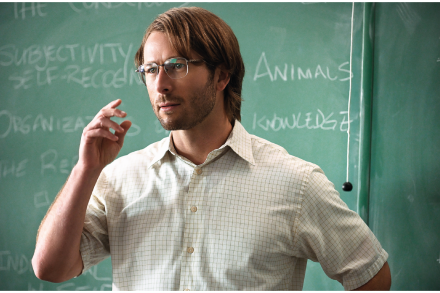
Richard Linklater’s Hit Man is a minor Linklater but a minor Linklater is still an event. Also, after all those contemplative, existential films (Boyhood, the Before trilogy), who can blame him for letting his hair down with a sexy rom-com thriller that’s not concerned with deep questions. Though the film doesn’t add up to much, it is ‘based on a somewhat true story’ and it is a fun ride – somewhat. The ‘somewhat true story’ is extraordinary, even if it’s only the starting point. The person it’s based on is Gary Johnson, who died in 2022, just before filming began. He was a Houston college professor (psychology) who also worked part-time for the police as an undercover (fake) hit man.

Nowhere near as miserable as I remember it: The Beatles – Let It Be reviewed

From our UK edition

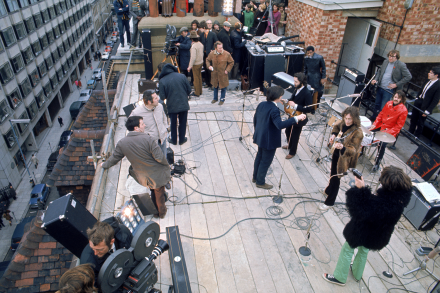
Beatles lore has long held that the film Let It Be was a depressing portrait of the band falling apart. According to the same lore, that’s why Peter Jackson’s Get Back was such a revelation. Revisiting Michael Lindsay-Hogg’s footage of the group at work in January 1969, Jackson discovered there was far more joy around than anyone suspected – including the surviving Beatles. Yoko remains a darkly brooding presence (the revisionism that sees her as benign needs its own revision) All of which, it now turns out, only goes to prove the ever-reliable power of suggestion. I vaguely remember seeing Let It Be on TV in the 1970s, before it disappeared until last week – and finding it as miserable as I already knew everybody said it was. Except that it really isn’t.

Mediterranean Gothic: The Sleepwalkers, by Scarlett Thomas, reviewed

From our UK edition

Scarlett Thomas likes islands: either literal sea-girt territories or closed enclaves where this wickedly inventive novelist practises her richly enjoyable experiments in plot and form. If her recent Oligarchy found its sour-sweet spot in a grisly girls’ boarding school, The Sleepwalkers creates another insular possession: the Greek island of ‘Kathos’, which almost resembles Samos. Here, within sight of the Turkish coast, the newlyweds Evelyn and Richard arrive as late-September storms brew to undergo their honeymoon from hell. Ever since novels such as Bright Young Things (also island-set) and PopCo, Thomas has known how to fuse an acidly satirical streak of observation with storytelling artifice that keeps her readers pleasurably unsettled and alert.

The last battle: The Future, by Naomi Alderman, reviewed

From our UK edition

The sirens sound in the street. The lockdown order comes. The images on the television are of chaos and illness, total societal collapse. The apocalypse is here, and where are the rich? Already holed up in their survival compounds, ready to ride out the end of the world before emerging to take control of what’s left of it for themselves. Billionaire preppers and their plans for Bond-villain bunkers have now pervaded the public imagination to the extent that this year we have two novels dealing with the phenomenon. First there was Eleanor Catton’s Birnam Wood, which took inspiration from Peter Thiel’s efforts to build a bunker in New Zealand.

Only goodwill will get you through this reboot: Paramount+’s Frasier reviewed

From our UK edition

Remember the groans of dismay, possibly including your own, which greeted John Cleese’s announcement in February that he was reviving Fawlty Towers? Happily, there appears to be much more goodwill behind the return of Frasier – the bad news being that, judging from the first three episodes, it might well need it. Kelsey Grammer’s entrance – 39 years after Frasier Crane showed up in Cheers – received a huge audience ovation. All references, however straightforward, to his earlier incarnations got a guaranteed laugh. Nonetheless, for those of us desperately hoping the new series won’t be a letdown, the result so far has required an increasingly effortful keeping of the faith.