Thriller

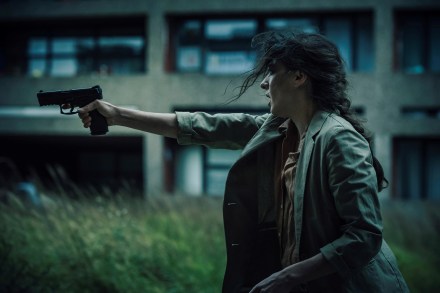
The makers of Fauda have another hit on their hands: Sky Atlantic’s Munich Games reviewed

From our UK edition

You’d have to pay me an awful lot more than I get for this column to review Monster: The Jeffrey Dahmer Story. As I write, it’s the number one trending show on Netflix, but the most I’m prepared to stomach is that snatch of footage you get forced to watch (because of Netflix’s impertinent and intrusive automatic play function) if you linger over the title image for too long. It shows two cops at an interview desk gradually revealing to Dahmer’s increasingly aghast dad (Richard Jenkins) that his son Jeffrey might not be quite the straight upstanding citizen he imagined. https://www.youtube.com/watch?

Well-meaning thriller with moments of implausibility: BBC1’s Crossfire reviewed

From our UK edition

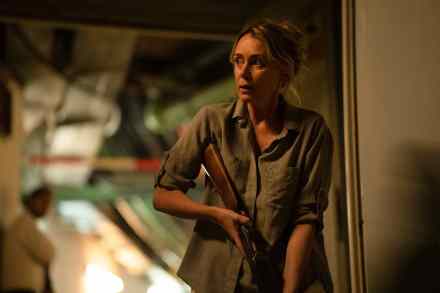
Crossfire was a three-part drama in more ways than one. Running every night from Tuesday to Thursday, it brought together a Die Hard-style thriller, an exploration of the complexities of family life (with particular reference to middle-aged womanhood) and a meditation on the nature of time. Odder still, it worked pretty well on the whole – though it was not without moments of frank implausibility. https://www.youtube.com/watch?v=4-oS6WIJFdw Keeley Hawes played Jo, whose decision to book a holiday in the Canary Islands for her family and two others seemed a good idea at the time. Granted, her marriage wasn’t in top shape, what with her habit of falling for any man who paid her more attention than her husband did (making it not her fault really).

The invisible man: The Glass Pearls, by Emeric Pressburger, reviewed

From our UK edition

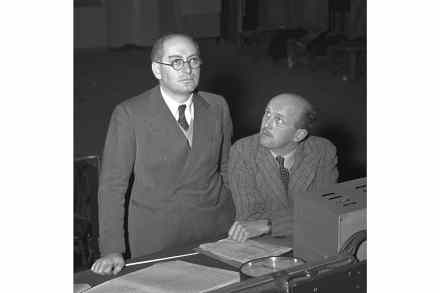
Not all Germans were swayed by Hitler, but the majority were. Karl Braun, the fugitive Nazi doctor at the heart of Emeric Pressburger’s 1966 novel The Glass Pearls, was devoted to the furtherance of so-called ‘science’ under the Führer. In the interests of research he cut up the brains of a number of concentration camp inmates. His chosen victims – Jews and other ‘useless mouths’ – were crematorium fodder. Yet Braun sees himself as a decent, God-fearing family man. Undoubtedly he had to carry out unpleasant work, but does that mean he has no conscience? Pressburger, a Hungarian-born Jewish émigré, had reason to dislike the Germans: his mother and other close relatives were murdered at Auschwitz.

A very classy thriller indeed: C4’s The Undeclared War reviewed

From our UK edition

The Undeclared War has many of the traditional signifiers of a classy thriller: the assiduous letter-by-letter captioning of every location; the weirdly precise time-checks (‘Sunday 09.47’); above all, the frankly baffling opening scene. In it, a young woman walked around a deserted fairground, broke into a beach hut that turned into a gym and spotted a door in the ceiling which led into a stately home. https://www.youtube.com/watch?v=jIqRL3xIypY Gradually, the fact that the first episode interspersed this with the same woman typing computer code made it clear what was going on: writer/director Peter Kosminsky was making a plucky attempt to solve his main challenge here.

Dangerous liaisons: Bad Eminence, by James Greer, reviewed

From our UK edition

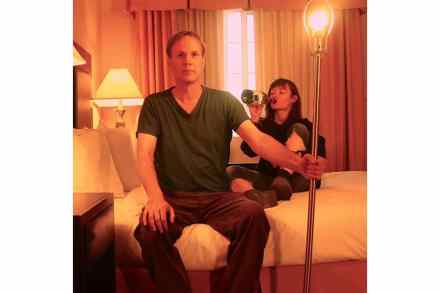
Vanessa Salomon is an internationally successful translator. Clever, beautiful, privileged – ‘born in a trilingual household: French, English and money’ – she can indulge herself professionally with obscure, neglected books. About to embark on a forgotten nouveau roman by Alain Robbe-Grillet, she’s offered an irresistible assignment. A bestselling French novelist who is definitely not Michel Houellebecq wants to pay her an extravagant fee to translate his next book – before he’s written it. Vanessa accepts, and her life free-falls into a nightmare of dangerous, sadistic games, involving two possible Not-Houellebecqs, but which is the imposter? She herself is a very unreliable narrator.

‘Slow Horses’ is thriller television at its best

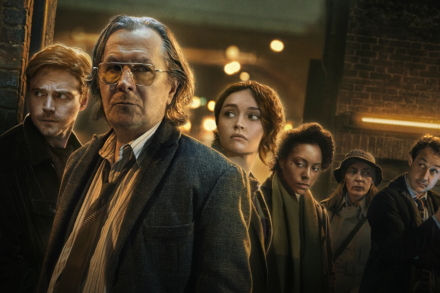
It may come as a surprise to anyone who has read Mick Herron’s peerless Slough House novels, but Slow Horses, Apple TV’s high-profile adaptation of the first book in the series, is not funny. Instead, it takes Herron’s uproariously comic premise — that a group of misfit British spies, cast out of MI5 for misdemeanors exaggerated and accurate alike, have been reduced to grubbing about in a grim office on the periphery of the City of London — and plays it almost entirely straight. Gone are the laugh-out-loud one-liners and endearingly witty pieces of throwaway badinage. Instead, we have a big-budget spy thriller, polished and scripted to within an inch of its life. It’s a bit like seeing the Fresh Prince of Bel-Air reinvented as a gritty urban drama.

horses

Shades of Tony Soprano: BBC1’s The Responder reviewed

From our UK edition

Older readers may remember a time when people signalled their cultural superiority with the weird boast that they didn’t watch television. These days the same mistaken sense of superiority is more likely to rely on the equally weird one that they don’t watch terrestrial television. So now that the BBC and ITV find themselves in the historically improbable role of plucky underdogs, it’s pleasing to report that this week saw the launch of two terrific new terrestrial shows — one of which already looks set to be as good as anything on Netflix, Amazon or Disney+ (except for Get Back of course). The programme in question is The Responder.

Colson Whitehead celebrates old Harlem in a hardboiled thriller that’s also a morality tale

From our UK edition

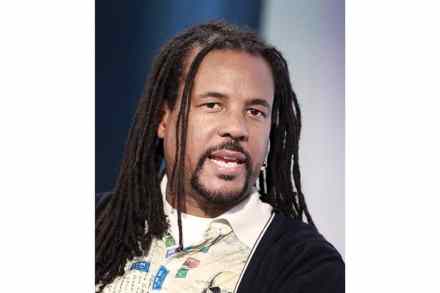
For modern America, Harlem is a once maligned, now much vaunted literary totem, which continues to occupy a gargantuan place both in the psychogeography of New York and the soul of the nation. Langston Hughes, Claude McKay, Zora Neale Hurston, Nella Larsen, James Baldwin and Chester Himes are just a few of the writers whose names are associated with the 50-odd blocks heading uptown from 110th Street at the northern end of Manhattan. Their echoes, traces and spirits can all be discerned in Colson Whitehead’s outstanding new novel Harlem Shuffle — a genre-defying blast from a bygone era, set between 1959 and 1964, yet one which urgently speaks to the present.

The best Cold War thriller I’ve seen that I fully understand: The Courier reviewed

From our UK edition

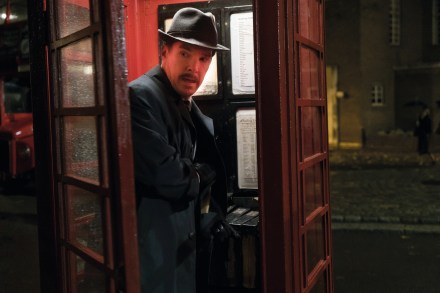
The Courier is a Cold War spy thriller and the prospect of a Cold War spy thriller always makes my heart sink. There will be agents. There will be double agents and triple agents and maybe even quadruple agents. Is he working for our side while pretending to work for the Soviets as someone pretending to be working for us? After any Le Carré adaptation, for example, I also need debriefing in a wood-panelled room filled with cigarette smoke and there is still no saying I’ll emerge any the wiser. But The Courier isn’t like that. This is a damn good, explosively tense story that focuses on the friendship that develops between two men on opposite sides. And it is plainly wonderful.

Affluent white female killer

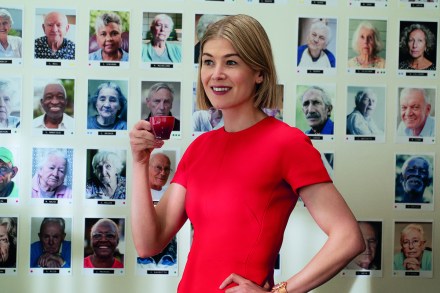
The poster for I Care a Lot, now available on Netflix and Amazon Prime, has a pull quote from a Collider review: ‘DELICIOUSLY NASTY’. In a better world, perhaps this would be true. But here on Earth, we have J Blakeson’s film, starring Rosamund Pike as Marla Grayson, a predatory professional legal guardian convincing crooked courts to grant her the right to put old people in nursing homes against their will, regardless of their health or mental capacity. This allows her to cash in on their homes, jewelry, valuables and anything else that she can vacuum up. Near the beginning of the film, shortly before she picks up ‘a cherry’ in the form of Jennifer Peterson (Dianne Wiest), we see Marla before a wall of her wards, all taped up and looking miserable in their intake headshots.

care

Much smarter than your average podcast: Passenger List reviewed

From our UK edition

Passenger List opens with a carefully structured ripple of breaking news bulletins: a mysterious catastrophe, an unconvincing official explanation, the repetitive stupidity that surrounds disaster. A plane has disappeared, no wreckage has been found. A woman whose brother was on board begins to search for the truth. The authorities say it was a bird strike: a flock of geese was shredded in the engines and 200 passengers crumpled on impact with the Atlantic ocean. Of course, the authorities’ story doesn’t make sense. So we follow our hero, Caitlin, a lone citizen searching indefatigably for answers in a shadow world of half-truth and paranoia. It seems that we never tire of this subject matter.

Quietly radiates a wholly justified confidence: BBC 1’s The Pact reviewed

From our UK edition

There was certainly no lack of variety among new TV dramas this week, with a standard British thriller up against more glamorous American competition in the shape of some extravagant Victorian sci-fi and an adaption by an Oscar-winning director of a Pulitzer-winning novel. (All three, mind you, did naturally feature a one-dimensional white bloke as the embodiment of sexist and/or racist villainy.) The surprising thing at this stage is that it’s the plucky British show that looks most promising. The Pact began, like many a thriller before it, with a frightened woman running through some dark woods. So far we still don’t know why — unless it was just force of TV habit.

Stacey Abrams’s new novel is a love letter to lawyers

A politician publishing a novel is a bit like the lead singer of a rock band declaring that not only are they going to release a solo album but it is going to express their newfound interest in electronica. Expectations are low — or high depending on your appetite for other people’s failure. Still, for all the mean things you could say about Stacey Abrams’s new legal thriller While Justice Sleeps, you could say some kind things as well, the foremost being that it is not cynical. This is not some kind of botched cash-in. (For that, look forward to my editors asking me to review Hillary Clinton’s forthcoming novel State of Terror.) Abrams loves to write.

stacey abrams

On the track of a mysterious recluse: Maxwell’s Demon, by Steven Hall, reviewed

From our UK edition

This is not the age of experimental fiction — it’s Franzen’s, not Foster Wallace’s. That shift was on its cusp in 2007, when the critic James Wood had declared in favour of realism, and Steven Hall published his debut, The Raw Shark Texts. It was a British metafictional novel that created a big splash. Noted for its innovative design, it transformed into a flick book in which a text-block shark menaced the reader. In the years since its publication, mainstream experimentalism has paled into the cosy, metafiction-lite of Matt Haig, though there’s quality stuff on the fringes — Rob Doyle’s Threshold, for example. Hall has been undeterred by shifting fashions, and his follow-up shares many of the features of his debut.

Superb but depraved: BBC1’s The Serpent reviewed

From our UK edition

The Serpent is the best BBC drama series in ages — god knows how it slipped through the net — but I still think it most unlikely that I shall stick it through to the final episode. It’s not the style that’s wrong but the subject matter: do we really want to spend eight hours of life in the company of a smug, ruthless serial killer who murders at least 12 people — and more or less gets away with it? Up to a point The Serpent has addressed this problem by trying to make the central figure not the killer, Charles Sobhraj, but the persistent Dutch junior diplomat, Herman Knippenberg, who eventually nabs him.

An extraordinary debut: Make Up reviewed

From our UK edition

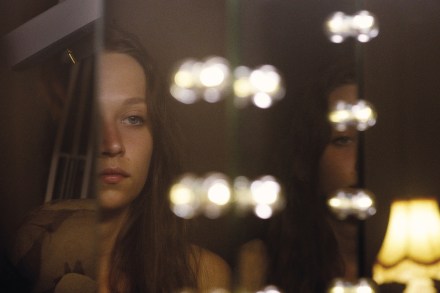
Make Up is the first full-length film from writer--director Claire Oakley, set in an out-of-season holiday park on the Cornish coast where the wind blows, waves crash, rain lashes and gulls screech so you know it’s not a rom-com (foxes shriek in the night too). But while it’s easy to say what it isn’t, it’s harder to say what it is. It’s a thriller but not quite a thriller, and a horror flick but not quite a horror flick, and a psychosexual fantasy but not wholly a psychosexual fantasy… It may be we can settle only on one thing, and the one thing is this: it is very, very good.

Why does anyone still rate Vertigo and its creepy, wonky plot?

From our UK edition

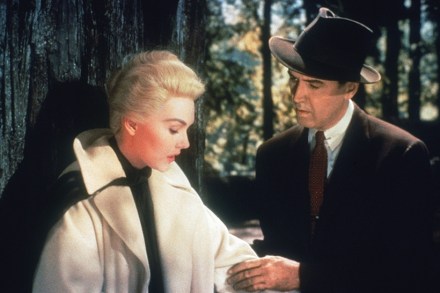
Here’s something that may interest you. Or not. (Could go either way.) I was looking over Sight & Sound’s ‘100 Greatest Films of All Time’, which has Alfred Hitchcock’s Vertigo (1958) at number one, having knocked Citizen Kane from the top spot in 2012. (That film always did need a more exciting reveal; would it have helped if Rosebud had turned out to be a massive fireball or dinosaur egg?) But back to Vertigo, which is now the best film ever made. Really? That worried away at me. Who rates this film and why? The storytelling isn’t up to much. It drags and drags. (The first half is a dull schlep around San Francisco as we follow the world’s most obvious stalker.) It’s riddled with plot holes. It’s creepy, but not in a good way.

10 short thrillers that are worth a watch

From our UK edition

As the lockdown grinds on, how about taking a look at these widely available, relatively low-budget and overlooked thrillers, all featuring twists in the lead characters story arc – played by actors who normally essay more ‘vanilla’-type roles. They’re all pretty watchable and generally don’t tend to overstay their welcome, ideal post 10.30pm fodder. Here we go then, in order of release: Brick (2005) https://www.youtube.com/watch?v=4Zfw8__A7ps Director Rian Johnson (Looper/Last Jedi/Knives Out) went onto bigger, but not necessarily better things after Brick, his 2005 debut picture.

Classic tangled thriller: Sky’s Gangs of London reviewed

From our UK edition

There were plenty of TV shows around this week designed to cheer us up. Sky Atlantic’s Gangs of London, however, wasn’t one of them. After decades of desensitisation, it’s not easy for any film or television programme these days to make its screen violence genuinely horrifying. Yet, by my reckoning, Thursday’s first episode managed to do it at least twice before the opening credits had even rolled. By the time they did, it was clear that two terrified Welsh lowlifes from some kind of travellers’ camp had been tricked into carrying out a hit on Finn Wallace (Colm Meaney), London’s most powerful criminal boss — rather than, as they’d fondly imagined, ‘just some paedo’. But that was clear only to us.

The best Terminator film since the first: Terminator Six reviewed

From our UK edition

The first Terminator film, which came out in 1984, was a high-concept sci-fi serial killer thriller. You can just imagine its director, James Cameron, pitching it to the suits: ‘Arnold Schwarzenegger arrives from the future. He’s naked. We haven’t decided why, but he’s definitely going to be naked. And there’s only one thing on his mind, which is to tear some chick to pieces.’ Yet as sequel followed sequel, it became clear that this franchise about a dystopian war between humans and machines was really a metaphor for the war taking place within Hollywood itself. The machines won. Cinematically speaking, we now inhabit that post-apocalyptic landscape so often glimpsed in Terminator films. The grim perma-dusk is streaked with laser gunfire.