Theresa may

What can Theresa May do to deport Abu Qatada?

From our UK edition

Theresa May gave a defiant statement to the house on the Special Immigration Appeals Committee’s (SIAC)  decision to uphold Abu Qatada’s appeal against deportation to Jordan on grounds that he would not receive a fair trial. She vowed to fight on by ‘appealing the decision’, which prompts the question: how will she do that? It’s necessary to understand what the SIAC considered (here is its judgment and here is a précis). First, it examined whether or not evidence given by Qatada’s former co-defendants in an earlier trial (from which Qatada was absent), Abu Hawsher and Al-Hamasher, is admissible in Qatada’s retrial.

Abu Qatada evades deportation, again

From our UK edition

On any normal day, the fact that Abu Qatada has won his appeal against deportation would be a major news story. But today it has been pushed down the running order by the slew of BBC stories. The court’s reason for granting his appeal is that Qatada, in its judgement, would not receive a fair trial in Jordan. The government, which negotiated extensively with Amman to try and satisfy the courts on this point, will appeal. I suspect that Theresa May’s statement to the Commons on the matter later this afternoon will be defiant. It does seem absurd that someone who is not a British citizen, came here illegally and is believed by the government to be a dangerous individual cannot be removed from the country.

Theresa May won’t deny she told Andrew Mitchell to go

From our UK edition

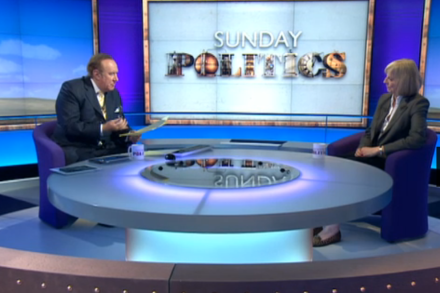
Theresa May’s political stock has risen this week. Announcing an intention to opt-out of EU law and order directives pleased Tory MPs while her decision not to extradite Gary McKinnon was popular. But we’ve also seen the Home Secretary operating -rarely for her - beyond her brief. She played a key role in pushing Andrew Mitchell out, something she effectively confirmed on the Sunday Politics. When Andrew Neil pressed her on this, she simply replied ‘I’m not going to talk about private conversations’.

Briefing: What today’s extradition announcement means

From our UK edition

As well as announcing that Gary McKinnon will not be extradited to the US on charges of computer hacking, the Home Secretary today announced a number of changes to the way extradition is handled in this country. These changes will mean: 1. The Home Secretary is introducing a 'forum bar', which allows a British court to prevent prosecution overseas if it believes a trial in Britain would be fairer. 2. Future Home Secretaries will not be able to exercise discretion on human rights grounds as Theresa May did today. May said the matter should be for the High Court, and that the government will introduce primary legislation to enable this change. 3.

Gary McKinnon case: campaigners accuse Theresa May of double standards

From our UK edition

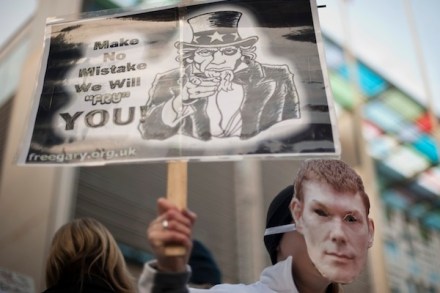
The Home Secretary blocked the extradition of Gary McKinnon to the United States earlier today, arguing that it would infringe his human rights because he has Asperger’s Syndrome. Moreover, Theresa May has said she will introduce a forum bar which means that judges can block extradition in cases where the alleged offence is deemed to have been committed in the UK. The Crown Prosecution Service has already been instructed to draw up guidance relating to this. This is a significant victory for campaigners against Britain’s lopsided extradition treaty with the United States but many are also questioning its timing. Babar Ahmad and Talha Ahsan were deported to the United States to face terrorism charges two weeks ago. The parallels with the McKinnon case are uncanny.

The Home Office hokey-cokey on EU law and order opt-outs

From our UK edition

Yvette Cooper was in a stern mood this afternoon when she responded to the Home Secretary's announcement about plans to opt-out of 130 European law and order measures and then re-adopt those which it fancies. Her main gripe was that she hadn't been sent Theresa May's statement about the plans until 45 minutes before it was delivered in the Commons, but she was also peeved about the content. The Shadow Home Secretary argued that ministers 'haven't actually told us anything today at all', arguing that the different limbs of the coalition were doing entirely different things on this matter. While David Cameron had spoken about an opt-out, Nick Clegg had said the government was 'minded' to opt out, and May had only given the 'current thinking, Cooper complained.

David Cameron’s big European week

From our UK edition

David Cameron's plan for this autumn was to largely avoid the topic of Europe at his party's conference, then to focus on the issue later in the year. It's only a few days since the Tories gathered in Birmingham, and the Prime Minister is already facing a big week on Europe. Home Secretary Theresa May will kick things off by announcing today that she wants Britain to opt out of more than 130 European Union measures on law and order, including the European Arrest Warrant. The opt-out itself, which the Home Secretary is expected to say Britain is 'minded' to do, is not the tricky bit: it's which measures to then opt back into.

Joining Harriet Harman’s feminist club

From our UK edition

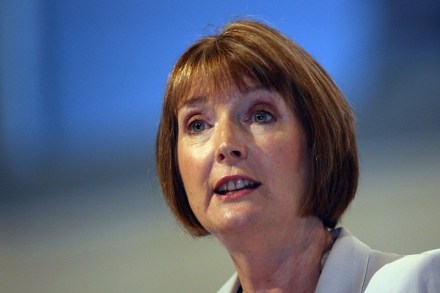
If feminism is 'a creed of women’s solidarity', do you pick and choose about which women you’re in solidarity with? In the case of Harriet Harman, the answer is, well obviously. If you’re a Tory you can’t really join in the creed. In an interview with Total Politics magazine she was incredulous at the notion that the Home Secretary, Theresa May describes herself as a feminist. 'If you’re actually political, you can’t be a Conservative and a feminist,' she said. So there you have it. But why? Because it’s 'all about equality and fairness'. 'Ultimately, delivering for women in this country – in equality, childcare, helping with the elderly, maternity pay and leave – is Labour’s mission, not the Tories.

The secret seven

From our UK edition

David Cameron’s decision to convene an inner Cabinet of seven Tories to advise him is a sensible move. As I say in the Mail on Sunday, calling this group together shows that Cameron knows he needs help handling his party. I understand that it meets regularly with a particular emphasis on the Conservative party side of coalition management. One Cabinet minister told me recently that the Prime Minister spends more time on coalition management than any other subject. To date, this has too often been at the expense of party management. Inevitably, if you spend most of the time thinking about what the Liberal Democrats will accept you begin to lose touch with your own party.

The race to secure the Olympics

From our UK edition

G4S' security arrangements for the Olympic games are turning into the story that keeps on giving, which is a good thing for journalists only, given the opening ceremony is just weeks away. The headlines this morning aren't just about the 'Olympic chaos' that Theresa May tried to address when she made a statement to the Commons yesterday, but contain more revelations: staff failing to notice dummy explosives during test exercises, 18 and 19-year-old 'yobs' being recruited to fill the spaces, and the firm not being penalised for failing to recruit enough staff. That last revelation is awkward for May, as she implied yesterday that there was a chance G4S could face penalties.

Winsor — the outsider

From our UK edition

In nominating the lawyer and former rail regulator Tom Winsor as her choice to be the next chief inspector of constabulary, the home secretary has stoked more discontent among the ranks of the Police Federation. Not only is he the first non-police officer ever to be nominated to the role, but he is also the author of a bold review of pay and conditions that made long-overdue recommendations to modernise the police workforce. For this reason alone, the Police Federation is dismayed by the nomination, and MPs on the Home Affairs Select Committee (meeting today) may yet try to block him.

Theresa May and the right to family life

From our UK edition

Theresa May has been in the news recently, as she introduces plans to stop spouses coming to Britain unless they have savings of £18,000 and an additional £2,400 for each foreign born child they bring with them. The Home Secretary told Andrew Marr earlier this morning:  ‘It is important that we say you should be able to support yourselves and not be reliant on the state.’     She also reiterated her intention to stop foreign prisoners, whose family live in Britain, from using article 8 of the European Convention on Human Rights, which includes the right to ‘private and family life’, to resist deportation. She is going call a vote in the Commons next week to determine the balance between the interests of prisoners and the wider public.

Post-Jubilee, it’s back to a new European reality

From our UK edition

As the Jubilee celebrations draw to a close, attention once more returns to events in Europe. There’s a distinct sense among politicians, and especially coalition ministers, that what is happening there will change British politics in a huge way. As one senior MP said to me over the weekend, if a country leaves the Euro then the economic crisis that follows will reset the rules of the politics.   Measures that would have been deemed impossible six months ago will suddenly be on the cards. We’ve already seen a flash of this with Theresa May’s suggestion that the freedom of movement across the European Union could be suspended in the wake of a Eurozone break-up.

A shift in the government’s thinking about the Eurocrisis

From our UK edition

Theresa May’s suggestion that Britain could suspend the free movement of people in the event of a Eurozone break up is a reminder of just how transformative an event the falling apart of the single currency would be. The Home Secretary is a cautious politician who picks her word carefully, so when she says that the government ‘will be doing contingency planning’ about the immigration implications of a Eurozone break-up you know it is serious. One of the things that makes this such an intriguing development is that it suggests a shift in government thinking on the severity of the crisis that could be coming.

May backs gay marriage

From our UK edition

So Theresa May has voiced her support for same-sex marriage, joining Lynne Featherstone, Yvette Cooper and the PM’s Parliamentary Private Secretary Desmond Swayne in recording an Out4Marriage video. Of course, we shouldn’t be too surprised. It’s May’s own department that’s put forward the proposals for same-sex marriage, with a foreword signed by both the Home Secretary and Featherstone saying: ‘We do not think that the ban on same-sex couples getting married should continue. Put simply, it’s not right that a couple who love each other and want to formalise a commitment to each other should be denied the right to marry.

ASBOs weren’t much cop, but what about their replacement?

From our UK edition

Brace yourselves for a new crime wave sweeping across the country — the government is doing away with ASBOs. Or, rather, don't. The truth about ASBOs is that they were rather less significant than Labour would have you believe. As reports such as this one from Policy Exchange suggest, they've probably cropped up more frequently in newspaper articles than they have in real life. Only 20,335 ASBOs have been issued to date, covering less than one per cent of all incidences of anti-social behaviour. What’s more, there’s little evidence to suggest that those ASBOs that were issued made much difference. As the graph below shows, 57 per cent of all ASBOs have been breached at least once by their recipients. 42 per cent have been breached more than once.

The case for ignoring Strasbourg

From our UK edition

If Theresa May loses her job over this kerfuffle over Abu Qatada’s appeals deadline, would anyone in the Cabinet be safe? If you were to rank the blunders this government has made, it wouldn’t even make the top 20. The Home Office is notoriously dysfunctional, and the real surprise is that May has made it thus far with only two or three major skirmishes. It’s fun for her enemies to claim she made a basic mistake, but it’s not clear-cut. In the weird world of European law, the number of days in a three month period can vary depending on things like the estimated postal time between London and Luxembourg. Far simpler if British justice was decided in Britain – precisely what the founders of the European Convention on Human Rights envisaged.

ECHR reform won’t happen

From our UK edition

In Westminster, the debate about the European Convention on Human Rights and the European Court of Human Rights is all being seen through the prism of the Abu Qatada case. Undoubtedly, the whole debate over how many days had elapsed is something Theresa May and the Home Office would have liked to avoid. It has also come at a particularly unfortunate time for the government when people are prepared to believe it has been incompetent even when it hasn't been. But what, I expect, is more significant in the long term than Abu Qatada is the fact that the Brighton conference on the ECHR is not going to deliver the meaningful reforms that David Cameron wants. It is becoming increasingly clear that the aim of reforming the ECHR from within is a pipe dream.

After Abu Qatada

From our UK edition

It has been a mixed news day so far as Britain's relationship with the ECHR is concerned. There's been the good stuff: Abu Qatada has been arrested and is set to be deported, with the government now confident that he can be shipped to Jordan without provoking the ire of Europe's legal class. And then there has been the less than good stuff: according to the Times, which has a leaked document in its possession, Britain's official proposals for reforming the ECHR have been diluted ahead of the Council of Europe meeting in Brighton this week. This outcome, as I suggested back in February, is hardly surprising — but it could nonetheless make life a little bit more difficult for David Cameron.

What today’s Abu Hamza ruling means

From our UK edition

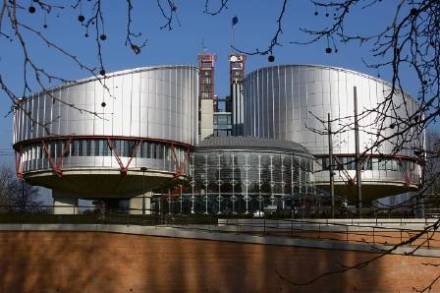
The European Court of Human Rights has ruled that five terror suspects, including notorious Islamist cleric Abu Hamza, can be deported to the United States — a decision welcomed by both David Cameron and Theresa May. Last year, Hamza and three of the other men appealed to the ECtHR against extradition to the US on a whole host of grounds — including that they might face the death penalty and that their trials would be prejudiced.