Theresa may

What is being done in the name of ‘national security’?

From our UK edition

The liberty versus security debate has returned to Westminster, and it's just like old times. David Davis is having great fun beating up the government, except this time it's a Tory-led one. And as so often, Davis has a point. Much rot is spoken in the name of 'national security,' which can be used by the right as 'health and safety' is used by the left: a verbal trump card, to win any debate and justify any policy. So it has proved with this bun fight over the snooping powers about to go through parliament. It has split the coalition, and even the Tory party. In my Telegraph column today, I try to work out what's going on. First, what isn't going on: the idea that MI5 or MI6 want secret trials, or to read all our emails, is bonkers.

Web surveillance plan divides the coalition

From our UK edition

The government’s under fire from members of both coalition parties over its plans to extend the state’s investigatory powers to cover new means of communication. Currently, under section 22 of the Regulation of Investigatory Powers Act 2000 (RIPA), public bodies can obtain communications data without the need of a warrant or any external authorisation. This gives them access to a wide array of information including the location, time, date and duration of a phone call or the IP address from which an email was sent.

May’s quiet revolution

From our UK edition

Do you remember the great parliamentary battle over privatisation of police services? Me neither, which is why Theresa May, the Home Secretary, is proving a better minister than Andrew Lansley, the Health Secretary. The drive for savings in the police budget is leading two constabularies, West Midlands and Surrey, to outsource certain services. The Guardian has got hold of the tender documents and splashed with the story today. Yvette Cooper is angry — but, crucially, there’s nothing she can do. Theresa May doesn’t need legislation to enact this reform; it’s not even being done under orders of the Home Office. This is two police forces who would rather save money by outsourcing back office functions than cut at the frontline.

The implications of today’s border security report

From our UK edition

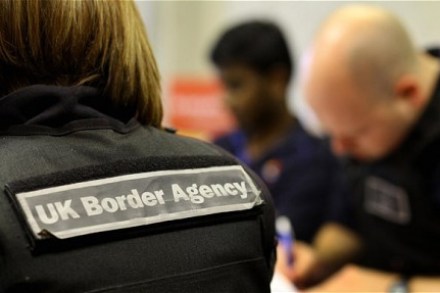
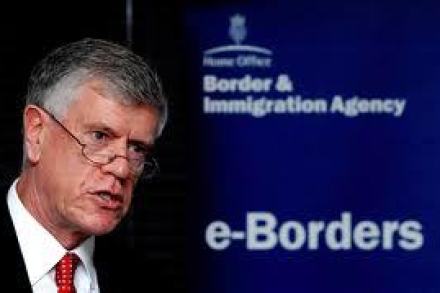
Today brought closure of a kind to last year’s border fiasco (which I covered for Coffee House here and here), with the publication of the report by the Chief Inspector of the UK Border Agency, John Vine. On first reading, there is no ‘smoking gun’ which would trigger a ministerial resignation. The report does find that, in early 2011, the immigration minister Damian Green had authorised the relaxation of one of the checks at the centre of the controversy: ‘Secure ID’, which verifies the fingerprints of foreign travellers with visas. But the report also finds that Green’s authorisation should have been superseded by later instructions from the Home Secretary Theresa May.

Cameron’s ECHR problems won’t end with a Qatada deal

From our UK edition

The news that Theresa May will fly to Jordan to continue talks about Abu Qatada shows how close the government thinks it is to a deal with the Jordanians that might satisfy the European Court of Human Rights and allow his deportation. One government source explained to me earlier that the problem is the Jordanians are offended by being asked to provide these guarantees about a fair trial and no evidence being obtained by torture. For this reason, there needs to be a fair amount of diplomatic stroking. A deal with Jordan on Abu Qatada is becoming increasingly necessary if Cameron is get out of this bind on the ECHR, with the Lib Dems on one side and the Tory right on the other.

Trigger happy policy

From our UK edition

There have been signs recently that ministers are slipping back into the policy-by-headline mindset that defined the last Labour government. We're seeing the sorts of policies that lack evidence, are launched without any detail on timetables or implementation, and are usually geared around an initiative — if possible, a pilot or a local trial that is short-lived and guaranteed not to alter very much. Today the Home Office brought us a classic of the kind: the ‘community trigger’ to address anti-social behaviour. The Home Secretary’s motivation is sincere, but the method — devised by her officials — is deeply flawed.

The Home Office still hasn’t cleared up its border issues

From our UK edition

Remember Theresa May's border skirmish against Brodie Clark back in November? This morning the Home Affairs Select Committee published their report into the whole affair. Ideally it would have cleared up some of the confusions over who was responsible for waiving various security checks at our borders last summer, and whether they were right to do so — but it doesn't really manage it. This is not really the fault of the committee: some of the crucial questions they put to the Home Office remain unanswered, and key documents have not been released to them.

The Tories may have left it too late for that realistic debate about border security

From our UK edition

Another day of bad headlines about border security is, in the end, a bad day for the Home Secretary, whoever ends up getting the blame. Yesterday morning brought further revelations in the newspapers; and then at lunchtime, Brodie Clark, the senior official who was first suspended and then resigned over the affair, made his much anticipated appearance before the Home Affairs Select Committee. Meanwhile, over in the House of Commons, the immigration minister Damian Green had been summoned to answer an urgent question about further alleged border lapses. By the evening, the story was once again leading the national news. Nevertheless, as the dust settles, Theresa May is still there — and, if anything, slightly less vulnerable than before.

Clark versus May, round 2

From our UK edition

The simmering feud between Brodie Clark and Theresa May has boiled over today. Speaking to the home affairs select committee earlier, the former border official didn't just repeat the substance of his resignation statement from last week, but ramped it up into a rhetorical assault on the home secretary. ‘I never went rogue and I never extended the trial without the Home Secretary’s advice,’ he said of the recent easing of border controls. ‘I’m just very conscious that over 40 years I’ve built up a reputation and over two days that reputation has been destroyed and I believe that has been largely due to the contributions of the Home Secretary,’ he added for emphasis.

The Italian domino effect

From our UK edition

For all the debate about Theresa May and border security, the big news has not been at Westminster today. Instead, people have been watching what is happening in Italy. For it is far from certain that Europe, or the Western world for that matter, has a bucket bigger enough to bail out a country that owes more than Greece, Ireland, Portugal and Spain do combined. As the New York Times reports, the European Central Bank is reluctant to step in and start buying Italian bonds because it fears that its previous bond buying efforts have simply enabled the Italians to avoid necessary reforms. It feels that only market pressure will make the Italians actually act. But this is a dangerous game to play because if Italy falls, France will be left teetering on the brink. BNP Paribas has 12.

The return of Ed Nauseam

From our UK edition

Hot summer, drippy autumn. Ed Miliband’s performances have declined steeply after the heady highs of July. He came to PMQs today badly needing to fight like a champion. Things looked rosy for him at the weekend. And they got better overnight. We learned that a pilot scheme to fast-track incoming tourists last summer had allowed Britain’s border controls to slip so far that visiting bombers and convicted sex-criminals were being greeted at Heathrow with high-fives, goody-bags and a slice of Theresa May’s blueberry tart. Or so it seemed. Worse still, a suspended UKBA official, Brodie Clark, had contradicted the Home Secretary’s statement and was threatening her with unfair dismissal proceedings. Useful stuff for Labour.

Miliband’s immigration attack no threat to Cameron

From our UK edition

Ed Miliband broke with his post-conference policy of always asking about the economy at PMQs to devote all six questions to the whole Brodie Clark/Theresa May border dispute. Miliband, though, had no new killer fact or question. Instead, he stuck to general criticisms of the government’s approach. This gave Cameron an easy ride. He simpy backed the Home Secretary unequivocally before turning on Labour's immigration record. By the end, Cameron was at his most disdainful towards Miliband. Indeed, the most interesting element of the exchange was how the Liberal Democrats looked at their feet as Cameron rattled off the coalition's greatest hits on immigration. The rest of the session was relatively quiet.

Clark rounds on May

From our UK edition

Has anyone used the “Mayday” gag yet? Perhaps it's too cheap and obvious, but it's certainly applicable today. Not only are Theresa May's troubles still splayed across the newspapers — sure to come up in PMQs later — but they have also been aggravated by the man who just quit as head of the UK Border Agency's border force. So far as the bookies are concerned, the Home Secretary is now second-favourite (behind Chris Huhne) to be the Cabinet's next ejectee. As for how the former head of the UK Border Agency's border force, Brodie Clark, has made things difficult for May, I'd suggest you read his resignation statement here. In effect, he accuses May of misleading the Commons about his role in reducing border queues.

Immigration headlines spell trouble for Cameron

From our UK edition

So soon after taking on the right over the European Union, David Cameron didn't want to be seeing negative headlines on another of their hot-button issues. But that's just what he's woken up to this morning, thanks to the revelations that the Home Secretary authorised the relaxation of border checks. As James said, May's performance in the House of Commons yesterday left her looking safe for the time being – not least because of Cameron's support for her, as evidenced by his sitting alongside the Home Secretary during her statement. But immigration is as potent an issue as ever. Unlike the EU, it's one that the general public does think is important: immigration ranks third on Ipsos MORI's latest Issues Index, behind only the economy and unemployment.

May takes some hits, but looks safe for now

From our UK edition

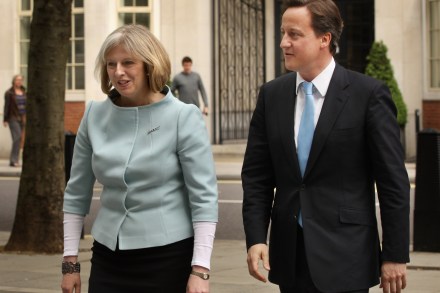
David Cameron provided a reassuring presence for the Home Secretary today, sitting supportively next to her throughout her statement and Yvette Cooper's response. May, who didn't sound or look like someone who thinks their career is in danger, stressed that she "did not give my consent or authorisation to any of these actions". But she had to concede that we'll never know how many people came in who shouldn't have because of the relaxation of checks on those arriving in this country. In an aggressive reply, Yvette Cooper demanded that the various inquiries May has set up report much earlier than the New Year. She also said that she had been warned by UKBA staff that the shredders were running there and that there was a ban on internal email.

May caught in immigration row

From our UK edition

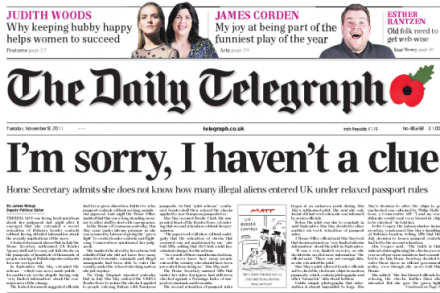
Theresa May has up to now proved remarkably adept at avoiding the political bear-traps that have ensnared so many Home Secretaries in recent years. But she now finds herself caught in a classic Home Office row over who allowed the UK Border Agency to ease passport checks to cut queues during the summer months. James Kirkup has the scoop that ministers approved this decision. Given May’s reputation for keeping her ministerial team on the tightest of leashes, this creates a problem for the Home Secretary. Labour will go at this issue hard. They know it provides them with a populist way to claim that the cuts are endangering the country's security. But May's position is bolstered by the fact that the Prime Minister is her biggest fan.

The post-riots landscape

From our UK edition

Back in August, the riots were being talked about as an event that would redefine our politics. But the economic news has been so relentless that the post-riots issues have received minimal coverage. This, though, doesn’t make them any less important. This week, we’re seeing two strands of the government’s response. First, Louise Casey starts work at the DCLG on dealing with the 100,000 problem families that the government has identified. Second, the May and IDS report on gangs comes out. So far what’s been trailed from the report is the proposal to create a new offence of intent to supply fire-arms.

Chris Huhne: an apology

From our UK edition

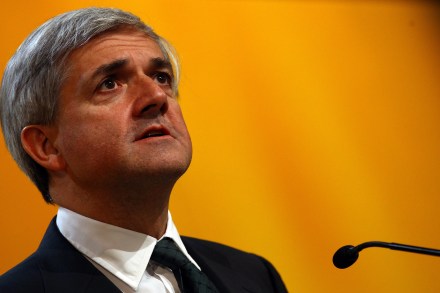
I have apology to make. I wrote on Friday that I suspected Chris Huhne's mistweet “fine, but I don’t want my fingerprints on the story” was the Climate Change Secretary briefing against a Cabinet colleague to a Sunday newspaper. This was a horrid allegation to make, suggesting that a member of Her Majesty's Government would spend his time and energy trying to ridicule a colleague for the benefit of a Sunday newspaper. I now accept that he was not. It was for the Saturday edition of The Guardian. Huhne has just fessed up to Jon Sopel the Politics Show on BBC One: “In the Eastleigh News website is a recording of Theresa May, a recording from a few months previously of the leader of UKIP, Nigel Farage and it’s exactly the same.

Cat-flap, day five

From our UK edition

‘Cat-flap’ is the story that just won’t go away. A report in today’s Guardian claims that the whole story may have been lifted from a speech made by Nigel Farage, the leader of the UK Independence Party. One colleague of May’s tells the paper that "Not only has Ms May been caught out making up stories about the Human Rights Act for cheap laughs, she has been plagiarising her clap lines from the UK Independence party." In the grand scheme of things, this is hardly the most serious charge. There’s just enough truth to the cat anecdote for May to have some ground to stand on and most Tories, understandably, want to see the Human Right Act scrapped.

The Cabinet cat-flap continues

From our UK edition

The Ken Clarke and Theresa May cat-flap has sparked up again this morning, with the Justice Secretary accusing the Home Secretary of using "laughable child-like examples" to attack the Human Right Act. In some ways, it's hard to take a political row about a cat particularly seriously. But this back and forth between May and Clarke is actually exposing something very important: the Liberal Democrats are not the only brake on Tory radicalism. At the moment, lots of Tory ministers – up to and including the Prime Minister – like to imply that they'd be doing far more on Europe, immigration and the Human Rights Act if it wasn't for the Lib Dems.