Theresa may

Prepare for the arrival of the super cops

From our UK edition

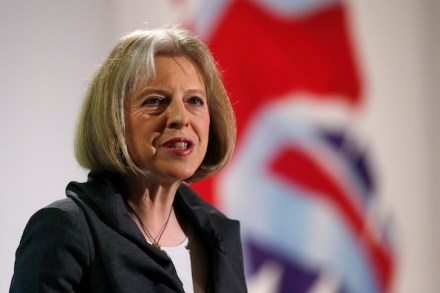
Theresa May’s police reform agenda will take a big step forward tomorrow with the announcement that Police and Crime Commissioners will be able to appoint overseas officers as chief constables. As I say in the Mail on Sunday, this’ll mean that successful foreign police chiefs, such as Bill Bratton the former head of the New York and Los Angeles Police Departments, can come to Britain. If Police and Crime Commissioners take advantage of this change, the world’s most innovative police chiefs will put their skills to work in this country. This will drive up standards by bringing in the best practices from around the world.

Theresa May’s Immigration Bill is another contemptible piece of legislation

From our UK edition

Say this for the government, they are at least consistent. Their contemptible lobbying bill is now followed by their equally contemptible immigration bill. Sometimes you think that if it weren't for Michael Gove and for the fact that David Cameron isn't Ed Miliband there'd be few reasons to support this government at all. And this immigration bill really is contemptible. Politics is often a question of signalling and what this bill signals, alas, is that the government prefers the presumption of guilt to the presumption of innocence. It is a bill that turns ordinary Britons into snitches for central government. A bill that will make life more inconvenient for millions of residents while, almost certainly, achieving few, if any of its aims.

Theresa May, action woman

From our UK edition

The Sunday Times p1 today reveals (to people who don’t read the Daily Telegraph or CoffeeHouse) that Theresa May is planning a Modern Slavery Bill. The Home Secretary writes about its details in the newspaper and in so doing exhibits a very peculiar trait. She appears to belong to a tiny subcategory of politicians: those who want to be known by what they do rather than what they say. The Home Office is normally a politician’s graveyard. But she is enacting reform after reform and her quiet momentum has seen her overtake Boris to become the bookmakers’ favourite to succeed David Cameron as Tory leader (when the time comes). Abu Qatada has been put in the catapault many times before: only May managed to release the elastic.

It’s time to end slavery in Britain – again

From our UK edition

Today is the United Nations day for he Remembrance of the Slave Trade and its Abolition – and the school packs have been readied to tell pupils about Britain’s part in this great evil. But the way we tend to remember (and, occasionally, apologise for) slavery has two main problems.  Yes, British traders played a full and shameful part in the slave trade. But what marks Britain out is out objection to it. As Thomas Sowell has pointed out, slavery was a worldwide institution for thousands of years – yet nowhere in the world was slavery controversial until the 1780s when some Brits started kicking up a fuss about it. White slaves were being sold in the Ottoman empire long after American slaves were freed.

Letters: James Whitaker’s widow answers Toby Young

From our UK edition

Absent friends Sir: Alec Marsh (‘Welcome to Big Venice’, 10 August) accurately observes that Londoners are priced out of central London by largely foreign buyers of second homes. Wealthy foreigners not only buy, they also rent, often living in London for a few years, during which they frequently return to their first home for weeks or months at a time. In Marylebone, where I have lived for 43 years, an average earner can neither buy nor rent. Moreover, rentals are only short hold. This contributes to the death of communities: it is not their foreignness which makes the new residents bad neighbours, nor their love of the convenient transport and vastly expensive shops and restaurants, but their transience and consequent lack of interest in local people, history and customs.

The View from 22 — Twitter abuse wars, Theresa vs Boris and Egypt’s Arab winter

From our UK edition

Will online abuse and trolling ever be stopped? On this week's View from 22 podcast, Hugo Rifkind discusses his Spectator column on the subject with Helen Lewis of the New Statesman. They ask if trolling has got better or worse? What, if anything, can or should be done about 'morons' who mindlessly attack people? And should politicians — like Stella Creasy — be influencing the moderation policies of social networks like Twitter? James Forsyth and Toby Young discuss the next Tory leadership battle: Theresa May vs. Boris Johnson. James reports that these two top Tories are jostling to succeed David Cameron, even though the PM is expected to be in situ after 2015: Boris isn’t even going to stand in the 2015 election. Who is most likely to be successful?

EXCLUSIVE: Boris Johnson will not be standing in 2015

From our UK edition

Boris Johnson will not stand for parliament at the next election, The Spectator understands. The Mayor of London has told the Cameron circle that he will not seek to return to the Commons in a pre-2015 by-election, nor will he stand at the general election. Boris's decision not to be a candidate in 2015 indicates that he expects Cameron still to be Prime Minister and party leader after the general election. He has told friends that he has no desire to spend three years serving under Cameron. He reasons that if Cameron loses, creating a Tory leadership vacancy, he'll be able to persuade an MP to rapidly stand aside for him. The news that Boris is not standing in 2015 will come as a relief to Cameron's allies.

Commons committee worsens the Tories’ immigration headache

From our UK edition

Yesterday saw a spate of articles about the government’s immigration van pilot scheme. And today the Public Administration Select Committee (PASC) damns immigration figures as a ‘blunt instrument’ and not ‘fit for purpose’. The nub of the problem is that the methodology is outdated, having been designed in a time when migration was in the 10,000s a year rather than the 100,000s. A sample size of 5,000 identified through the International Passenger Survey, which is drawn from UK ports and airports, is not sufficiently broad to construct accurate estimates. New methodology is required, PASC says. You can read the whole thing here.

Theresa May’s stop and search review hits target

From our UK edition

One of the more significant - but still rather underreported - shifts in Conservative policy in the past few months has been Theresa May's review of stop and search powers. The Home Secretary told parliament at the start of this month that she could understand why some communities felt stop and search was used unfairly. As James wrote at the time, the consultation was a signal from the Conservatives that they do understand the concerns of black and ethnic minority voters. May's announcement seems to have gone down very well indeed: the latest issue of black newspaper The Voice carries a feature examining which party should get the black vote, with a front page splash asking 'Is Labour losing the black vote?

Tory MPs see gains on justice and home affairs opt-outs

From our UK edition

Justice and Home Affairs ministers have spent a muggy afternoon in the Commons slogging through several hours of tetchy questions from backbenchers about the government's plan to opt out of European Union justice and home affairs measures, before opting back in to the ones the government has decided it likes. It's at times like this that anyone other than Theresa May, who spent a considerable amount of time hopping up and down to take endless interventions from her own Tory colleagues, would start to wonder whether the party leadership really was a prize worth working so hard for, given the amount of reassurance MPs need on just one policy area. But the Home Secretary and her colleague Chris Grayling remained extraordinarily patient throughout.

Can Theresa May avoid a Tory row on the European Arrest Warrant?

From our UK edition

Walk down a corridor in the Palace of Westminster today and you’ll likely be taken aside by a Tory backbencher who wants to vent their frustration about Britain opting back into the European Arrest Warrant. At the moment, the mood is of concern rather than rebellion — a reflection of the fact that Tory MPs are in a fairly positive frame of mind after a good couple of political weeks for the party. But what should alarm Downing Street is that it isn’t just the usual Eurosceptic crowd expressing concern. Indeed, some of those who are most concerned are those who David Cameron has relied on recently to defend his European policy. Off the record, Number 10’s view is that with Theresa May’s help they can avoid a full-on row.

The long-term political benefit for both Coalition parties of Abu Qatada’s deportation

From our UK edition

If you had the misfortune to miss Theresa May's statement on the deportation of Abu Qatada this afternoon, it would hardly stretch your imagination to work out how the occasion went. It involved MPs cheering May, May making it clear that the government has done very well and then pointing out (again) that she does want reform (which the Lib Dems disagree with). MPs took care to praise the Home Secretary, mindful of all the chatter about Qatada's departure being good for her own leadership ambitions. Even if you're not on the TM4PM bandwagon, you might as well ingratiate yourself with her in case something unexpected happens. All pretty formulaic stuff.

Theresa May’s modernising moment on stop and search

From our UK edition

Theresa May’s statement in the Commons today on stop and search strikes me as an important moment. Here, we had a Tory Home Secretary standing up and saying that she understood why some communities felt that stop and search was used unfairly and announcing a review of it. This is, as I said on Sunday, is quite a change in Tory attitudes. William Hague, who was Tory leader at the time, criticised the Macpherson report for making police reluctant to use stop and search. Just five years ago, David Cameron was emphasising the need to ‘free the police to do far more stopping and far more searching’. Now, May doesn’t want to scrap stop and search. But her concerns about its use are a reminder that Tory modernisation is not finished yet.

Cant phrase of the moment: community cohesion

From our UK edition

Ever since the Woolwich murder I’ve noticed an upsurge in the use of what is now my least favourite cant phrase – 'community cohesion'. Political cant proliferates when theory fails to match reality, and today we have a diverse and vibrant array of words and phrases that mean two contradictory things at once, and also nothing. It’s important to talk about community cohesion because diversity is our strength, and also our weakness, and should be celebrated, and policed. Community cohesion also has a darker Singaporean edge. In Singapore, the world’s first truly multicultural modern state, speeches and broadcasts can be arbitrarily shut down if community leaders believe them to be offensive or threatening, so that no real criticism of religion is permitted.

Theresa May’s Reform speech: full text

From our UK edition

This is the full text of a speech delivered this week by Home Secretary Theresa May to the Reform think tank. We’re delivering more with less – so let’s have the courage of our convictions Thank you.  A year or two ago I appeared on ‘Question Time’, and before the filming Shirley Williams introduced me to somebody.  “This is Theresa May,” she said, “our first female Home Secretary.”  I pointed out to Shirley that Jacqui Smith was Home Secretary in 2007, three years before me.  So Shirley immediately looked at her friend and said, “This is Theresa May, our first tall female Home Secretary.” Thank you, Chris, for your more conventional introduction.

The View from 22 — Theresa May’s terrorist trap, Universal Credit in crisis and saving the British Museum

From our UK edition

How will Theresa May deal with the calls to tackle Islamism in the wake of the Woolwich murder? In this week's Spectator cover feature, Douglas Murray argues the steps the Home Secretary needs to take are 'not hard' but her hands are tied by the problematic mixture of European law and her colleagues. On the latest View from 22 podcast, Douglas discusses why politicians offer the same response to terrorist incidents, the need to take radical steps now and why Britain should step away from the ECHR to deal with controversial figures such as Abu Qatada and Anjem Choudary. Christian Guy of the Centre for Social Justice also joins to discuss this week's political column on the potential crisis looming with Universal Credit.

After Woolwich, what will change?

From our UK edition

The decapitation of a British soldier on a street in London is the latest disgusting new low in this country’s experience of Islamist terror. But everything else in the aftermath of the killing of Drummer Lee Rigby is hideously familiar. What the country has gone through since last Wednesday is the same endless turning over of clichés about terror which we have now heard for years. But one thing is clear. Nothing will be done. This country simply will not deal with the extremists. Not just because part of our political leadership does not want us to, but because those who do want to do something cannot. As on each occasion before and since 7/7, the debate in recent days has covered the usual familiar terrain.

Wisecracking May announces new treaty with Jordan for Qatada deportation

From our UK edition

So in spite of great excitement beforehand, Theresa May didn't confirm that the UK will seek a temporary withdrawal from the European Convention on Human Rights. Instead, she announced a new treaty - a mutual legal assistance agreement - with Jordan in order to enable Abu Qatada's deportation. This wasn't nearly exciting enough for Tory MPs, who started demanding that the UK ignore the Convention and jolly well put Qatada on a plane today. May decided the best way to respond to this would be to crack a joke using Mark Reckless' surname while explaining to him why the government must abide by the laws to which it is currently subject.

How far will the government go to deport Abu Qatada?

From our UK edition

This morning, after the Sun and the Mail reported that ministers might go as far as to leave the European Convention on Human Rights in order to get their way, the Prime Minister's official spokesman refused to rule out such a move. He said: 'The government will explore every option in seeking to deport this dangerous individual and that's what we are going to keep doing. 'The Prime Minister met with the Home Secretary, the Justice Secretary and the Attorney General yesterday to discuss the case. I'm not going to get into specifics as to what the Government is considering, as I say, we are going to explore every option.