Theresa may

After Brexit defeat, Downing Street insists nothing has changed

After Theresa May mysteriously evaporated from the Commons following tonight's government defeat, Downing Street has issued a statement insisting that nothing has changed. The official line is, somewhat tortuously, that the previous set of indicative votes from MPs were the ones that mattered, whereas this one didn't. A No.10 spokesman said: 'While we didn't secure the support of the Commons this evening, the Prime Minister continues too believe, and the debate itself indicated, that far from objecting to securing changes to the backstop that will allow us to leave with a deal, there was a concern from some Conservative colleagues about taking no deal off the table at this stage.

Why we are still no closer to a Brexit prognosis

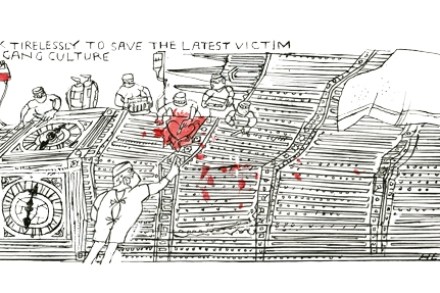
I have this mental image of Brexit Britain on a hospital ward waiting for treatment that never comes. We are hanging on for an operation that is supposed to make us stronger and happier, but we still don’t know what kind of procedure it will be – or even when or whether it will definitely happen. This coming Thursday was supposed to be a big day. It was billed as when MPs would vote on whether Brexit should be postponed, and what kind of Brexit they might eventually support. But it now looks as though the consultant in charge of our treatment, the prime minister, will announce on Tuesday or Wednesday that she would dearly love them to hold fire.

Corbyn has complicated May’s Brexit strategy

Number 10 had hoped that if it could hold off the Cooper amendment again next week, then it could eke out a concession from the EU on the backstop. But as I say in The Sun this weekend, this approach has been complicated by Jeremy Corbyn’s soft Brexit plan. This scheme, obviously, appeals to the EU: it would keep Britain in the customs union and following many of the rules of the single market. ‘The Labour party and the EU are operating in tandem to some extent, which is worrying for us’ frets one Cabinet Minister. So, May needs to persuade Brussels that such a deal couldn’t get through because her government would collapse as soon as she proposed it.

Portrait of the week | 7 February 2019

Home Theresa May, the Prime Minister, went off to Brussels again to talk about ‘alternative arrangements’, for which parliament had voted, to the Irish backstop in her EU withdrawal agreement, which parliament had rejected. First she gave a speech in Northern Ireland, saying: ‘There is no suggestion that we are not going to ensure in the future there is provision for this insurance policy… the backstop.’ Lord Trimble (once an Ulster Unionist, now Conservative), the winner of a Nobel Peace Prize, said he was ‘exploring’ the possibility of a legal challenge to May’s deal on the grounds that it undermines the Belfast Agreement of 1998.

Forget the backstop. Business is doing what it does best: making decisions and investing

With 31 working days until negotiations time out, Theresa May has been selling her vision for post-Brexit Britain to businesses in Northern Ireland. The Prime Minister is hoping her visit will reaffirm the government’s commitment to thwarting any chance of a hard border and sell an agreement that Northern Ireland can get behind, all the while searching for the key to unlock the Westminster stalemate. Those addressed by May – a business community in Northern Ireland that has endured years of uncertainty on the future of trade with their neighbours – has thus far been drowned out by the political noise. Yet while our politicians talk, businesses in Ireland have been quietly doing what they do best: making decisions and going for growth.

Don’t expect much on Brexit before Valentine’s Day

Don’t expect much movement on Brexit this side of Valentine’s Day, I say in The Sun this morning. There are two reasons for this. First, EU leaders are irritated with Theresa May. She signed off on a deal with them, assured them it could get through the Commons and then lost by a record margin. They are now sceptical when the British indicate that this or that change could get the deal through parliament. Despite the Brady amendment passing, the EU are still doubtful about what would get a deal over the line. But there is another reason beyond their irritation why the EU are holding off from engaging with Mrs May. They want to see what happens when the Commons next votes on Brexit on the 14th of February.

May’s final mission

Theresa May will soon arrive in Brussels with a series of unlikely demands. She must tell the European Union that she wants to re-open a deal that she was hailing as not just the best, but the ‘only deal possible’ a few weeks ago. Parliament has now made her eat her words. It is a testament to her predicament that this counts as a triumph for her. She has narrowly avoided a far worse fate. Had parliament voted another way — rejecting Graham Brady’s amendment and passing Yvette Cooper’s — she would have been sent into the negotiating chamber with nothing to say. She wouldn’t have been able to tell the EU what the Commons wanted.

The Brady amendment gives Theresa May the strength to kick the can down the road

You could tell that the result of tonight's vote on the Brady amendment (which calls for alternative arrangements to replace the Northern Irish backstop) came as a surprise to those at the top of government from the look on Chief Whip Julian Smith's face as he re-entered the Commons. He looked as though he had spent the past few hours trapped in a ghost house of horrors at a funfair. Smith had, like his colleagues in Downing Street, thought that this amendment was going to fail with a narrow margin until minutes before the result was announced. Instead, it passed with a surprising majority of 16.

May urges Tory MPs to give her something to battle for

Theresa May has met Tory MPs tonight in a last-ditch effort to try and persuade them to vote for the Brady amendment tomorrow. She said that she would go back to Brussels and push for ‘fundamental changes’ to the backstop. But to do that, she needed to be able to show the EU that parliament was behind her—and so, MPs had to vote for the Brady amendment. May said that the government would whip in favour of Brady, essentially making it government policy. (Some in the room, though, say that May suggested in one answer that this would be subject to Cabinet agreement). Getting the Brady amendment through will be an uphill task. As Katy reported earlier, the ERG is currently not planning to vote for it.

Can Theresa May get any Brexit plan through the Commons?

Tuesday is the last chance for those MPs who want to secure as meaningful a Brexit as possible, I write in The Sun this morning. That evening, MPs will vote on a series of Brexit amendments designed to show the EU what kind of withdrawal agreement the Commons would accept. If one of them passes, then Theresa May can go back to Brussels and say: look, this is what will get the deal through my parliament. It would give her a decent chance of getting the EU to engage. But if none of these amendments can muster a majority, then the EU will simply sit tight. It knows that this parliament is fiercely opposed to no deal, and so isn’t concerned that the UK will actually go down that route. So far, there are a variety of amendments down.

The Tory coup that could bring down Theresa May

I learned two things yesterday that will give extra frisson to those votes on Tuesday, when MPs attempt to wrest control of Brexit from the PM. First is that the six Tory MPs on the executive of the 1922 committee that comprises all Tory MPs, and who are led by Sir Graham Brady, hope and expect the Prime Minister to give official backing to the amendment to her motion that they have all signed. It “requires the Northern Ireland backstop to be replaced with alternative arrangements to avoid a hard border; supports leaving the European Union with a deal and would therefore support the Withdrawal Agreement subject to this change”.

Theresa May is using Jeremy Corbyn to avoid blame for her Brexit mess

The Commons has grown rather used to Theresa May giving an update on Brexit each Monday afternoon, and still more used to the Prime Minister offering precious little in the way of new information each time she does so. Today's statement was a little different, in that May is now asking MPs for more information, rather than MPs turning on her and accusing her of not telling them anything. She laboured rather heavily on the point that Jeremy Corbyn has so far refused to attend the cross-party talks designed to work out an agreement that the Commons can stomach, introducing it early in her statement, and returning to the point again after the Labour leader had finished talking.

May goes back to the backstop

Today’s Cabinet conference call was more illuminating in terms of direction of travel than the details of what Theresa May is actually going to do. It is now clear that May’s approach is to try and put the Tory DUP alliance back together by getting something on the backstop rather than trying to find some cross party consensus. One of the reasons for this is that the Labour leadership’s reluctance to play ball makes it very hard to get the numbers for any compromise deal. I am told that David Lidington, who had been leading the cross party talks, reluctantly acknowledged this point. As one Cabinet Minister put it to me, ‘This kills the system’s desire for a customs-union style solution.

Portrait of the week | 17 January 2019

Home Brexit threw politics into unpredictable chaos. The government was defeated by an unparalleled majority of 230 — 432 to 202 — on the withdrawal agreement it had negotiated with the EU. The result was greeted by cheers from demonstrators outside the House, both those in favour and those against Brexit. Labour tabled a motion of no confidence for the following day. Theresa May, the Prime Minister, said in the House after the vote: ‘The House has spoken and this government will listen.’ She said she would talk to senior parliamentarians and that the government would return to the House on Monday with proposals. This arrangement was in line with a business amendment by Dominic Grieve that the Speaker had allowed the week before.

The vote on May’s deal was less important than you might think

Now that the Prime Minister’s withdrawal agreement has been decisively rejected by Parliament, the challenge, as Theresa May said last night, is to find an alternative way forward. But the reality is that the fall of the agreement is less important for the UK than widely assumed. It did not pin down any long-term trade arrangements. Even in the short term, the main gain to the UK was a transition period which now looks less essential than was the case when it was first mooted over a year ago. It is true that there is now a possibility of tariffs from March 30th but these tariffs are mostly small and the EU has stronger reasons for avoiding them than the UK. The EU exports £54.

The rebel alliance

Straight after the government’s epic defeat in the House of Commons on Tuesday night, the Chancellor, Philip Hammond, the Business Secretary, Greg Clark, and the Brexit Secretary, Steve Barclay, held a conference call with business leaders to try to reassure them. The principal worry was about ‘no deal’. The Chancellor’s message of comfort was revealing of where power has shifted to. He emphasised how backbenchers are manoeuvring to stop no deal. In other words, they needn’t take his word that it wasn’t going to happen; they should take parliament’s. It was an admission that the government is no longer in control of Brexit.

Why did Theresa May bother giving a statement in Downing Street tonight?

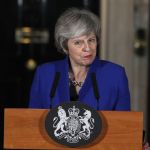
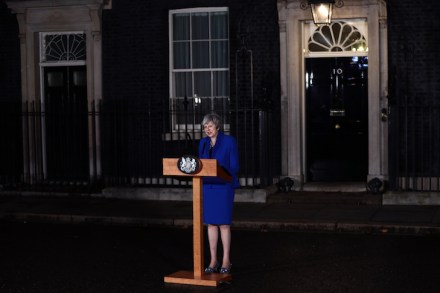
Theresa May has just given a statement in Downing Street in which she apparently said absolutely nothing. The Prime Minister walked out to the lectern outside No.10 and offered the sort of update on her diary that is normally sent out by email from the Downing Street press office. She said that she had held talks this evening 'with the leader of the Liberal Democrats, and the Westminster leaders of the SNP and Plaid Cymru', adding that 'I am disappointed that the leader of the Labour Party has not so far chosen to take part'. After a day of complaining that the Prime Minister hadn't yet picked up the phone to him, Jeremy Corbyn has refused to meet May until she rules out a no-deal Brexit.

Corbyn gives May an easy ride at Prime Minister’s Questions

Jeremy Corbyn decided to re-release his greatest hits at Prime Minister's Questions today, starting with Brexit but then moving on to poverty, education, police cuts and 'burning i justices'. We've heard these questions many times before, and often in the same sequence, but today the Labour leader was using them once again to try to underline that Theresa May's government is failing not just on Brexit but on everything else too. This didn't work, though, because Corbyn only tried to tie the topics together in his very last question, and that question was particularly rambling. Last night the Labour leader's spokesman delivered a crisp line about the government being unable to govern because it couldn't get its main business through.

Who can spare us from this Brexit disaster? | 16 January 2019

God help us all, because no-one else can or will in these present circumstances. If you wished to apportion some blame for the shambolic state of British politics these days you will not be short of candidates to bear some measure of the opprobrium they all, to one degree or another, deserve.  Spare us from Theresa May whose definition of Brexit hemmed her in from the very beginning. Spare us from a Prime Minister who learnt nothing from David Cameron’s failures and continued to prize Tory unity above almost everything else and continued to do so long past the point at which it became obvious to everyone else that Tory unity was both unattainable and, more importantly, undesirable.

What will be May’s Plan B?

The Cabinet aren’t even waiting for the meaningful vote to be lost to start discussing Plan Bs. As I say in The Sun this morning, multiple ministers are expecting a major row when Cabinet meets on Tuesday morning—ahead of the meaningful vote. The row will be about what to do once the government has lost. One faction in the Cabinet believes that, in the words of one Secretary of State, ‘the only realistic route to go down is to force it into the EU’s hands’. This would involve devising a motion that made clear under what conditions parliament would back the deal. Then saying to the EU, if you want to avoid no deal this is what we need to address.