Theresa may

Selective education can tackle inequality. Here’s how

From our UK edition

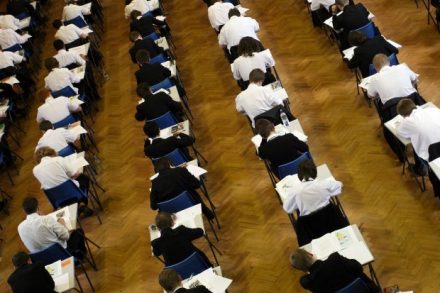
You know the figures: seven per cent of children in the UK attend fee-paying schools but they win 42 per cent of Oxbridge places and 70 per cent of jobs in private equity banking; they also make up 30 per cent of places in the cabinet. This is a significant decrease from previous cabinets - 50 per cent of David Cameron’s, 70 per cent of Sir John Major’s and 90 per cent of Margaret Thatcher’s were privately educated - but it is still worryingly high. Grammar schools are suggested by some as a solution, but they have a poor record of improving social mobility. Children with educated, comparatively wealthy parents are better placed to get over the hurdles of 11+ tests and catchment areas. This means clever children from poor homes are all too often frozen out.

Philip Hammond, the frankest man in the Cabinet

From our UK edition

On Thursday, the Cabinet’s Economic and Industrial Strategy committee met. There were, as I write in The Sun this morning, controversial issues on the agenda: new rules on foreign takeovers of British companies, executive pay and workers on boards. May made clear her views on these questions in the last speech of her leadership campaign. But in this meeting, the members of the committee didn’t simply echo May’s views back at her. One of those present tells me that Philip Hammond made a ‘fearless’ intervention setting out his own, distinct take on these questions. Hammond was then supported by several Cabinet colleagues.

Portrait of the week | 15 September 2016

From our UK edition

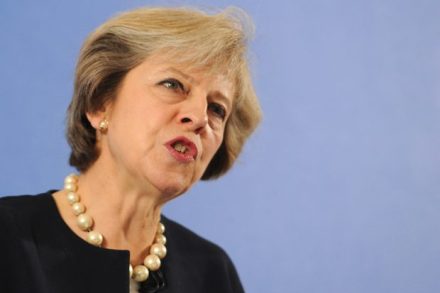
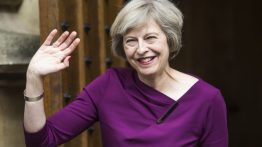
Home Schools in England would have the right to select pupils by ability, under plans outlined by Theresa May, the Prime Minister. New grammar schools would take quotas of poor pupils or help run other schools, a Green Paper proposed. ‘We already have selection in our school system — and it’s selection by house price, selection by wealth. That is simply unfair,’ Mrs May said in a speech. Sir Michael Wilshaw, the chief inspector of schools, said the idea that poor children would benefit from a return of grammar schools was ‘tosh’. Oversubscribed Catholic schools which wished to expand would be able to choose all their additional pupils on grounds of faith.

Theresa May has made the wrong call on Hinkley Point

From our UK edition

Today’s decision to give the go-ahead for Hinkley C after a six-week review seems to confirm what was indicated in July: that Theresa May’s problem with the project was mostly concerned with security issues. What has been announced today is that the government will take a special share in all future nuclear power projects to prevent the plants being sold to unapproved investors. There is no indication that ministers have sought to renegotiate the price. Consumers will still pay EDF for the electricity generated by Hinkley for the next 35 years: £92.50 for every MWh – around double the current wholesale market price.

Inside David Cameron’s personal Brexit

From our UK edition

In the days following David Cameron’s resignation as prime minister, Michael Gove tried to persuade the Cameroons to back Boris Johnson for the job. He argued that the former London mayor was the real continuity candidate. While Johnson would strike a very different path on Europe, Gove argued, he would keep Cameron’s domestic agenda going in a way that Theresa May would not. This was something Gove got right. But the referendum result was far too raw for this argument to work. The rest, as they say, is history. Since May became Prime Minister, it’s been clear that she does not represent continuity. May is her own woman.

In a Birmingham jail, I found the point of Michael Gove

From our UK edition

I went to prison last week, in Birmingham. Early start, off on a train from Euston. It was my kids’ first day back at school, as well, so I called them just before I went through the gates. ‘Daddy’s in prison?’ said my seven-year-old, incredulously. ‘Listen,’ I said to my wife. ‘She’s not allowed to turn up in her classroom and tell everybody that her daddy’s in prison.

PMQs sketch: Politics without fear

From our UK edition

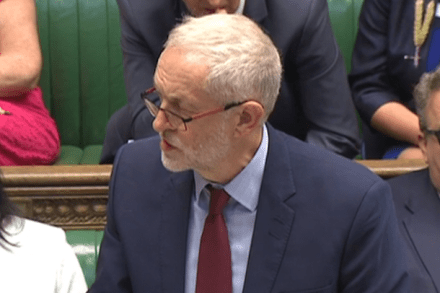
Remember how it was? Many fans of Westminster still recall with fondness the happy afternoons when the Tories used to greet Ed Miliband at PMQs with a storm of ironic contempt. Nowadays the Labour-shambles is barely worth a half-hearted jeer let alone a burst of orchestrated scoffing. When Corbyn stands up at the despatch box, with his Oxfam suit and his whopping tofu-tum, he gets something close to library-silence from the Conservatives. There’s a Chinese whisper of resentment, a few chuntering snuffles, the odd yawned harrumph. That’s all. It’s the sound of 300 well-fed hogs resettling themselves during an afternoon nap. What politics needs is the intoxicating roar of crack-troops moving in for the kill. Something crucial has gone missing from PMQs. Fear.

Jeremy Corbyn comes out on top at PMQs over grammar schools

From our UK edition

Today Jeremy Corbyn used PMQs to go on the attack over Theresa May's plan to bring back grammar schools -- a topic many had hoped he would lead on last week. Better late than never, the Labour leader put in his best performance to date as he used all six questions to take the Prime Minister to task over her proposals. Given that Corbyn separated from his ex-wife over her desire to send their son to a grammar, he was in his element as he argued that selection 'can only let children down'. When May replied that she wanted a society with 'opportunity for all', Corbyn snapped back that 'equality of opportunity is not segregating children at age eleven'.

Coffee House shots: David Cameron quits backbenches and Witney

From our UK edition

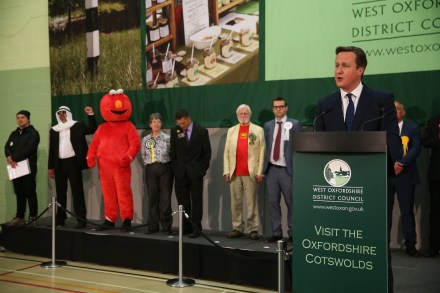
David Cameron chose a rather blustery Oxfordshire afternoon to announce that he was stepping down as MP for Witney with 'immediate effect'. Cameron had previously suggested that he would stay on in Parliament, telling the BBC it was 'very much [his] intention' to continue as an MP. Pundits have linked Cameron's surprise u-turn to Theresa May's announcements about grammar schools at the end of last week, which undermined a key feature of Cameron's social policy. So what should we make of this move? And where does it leave May and the remaining Cameroons in the Commons? In this edition of Coffee House shots, Fraser Nelson tells Isabel Hardman that: 'I guess he's stopped caring about what people think about him. He's checked out from politics mentally.

Before anyone sounds off about grammar schools, ask first where their children go to school

From our UK edition

There’s a good reason and a bad reason why David Cameron hasn’t added his mite to the argument about the reintroduction of grammars, which his Education Secretary, Nicky Morgan, sounded off about yesterday. The good reason is that it would be the worst of form for the former Tory PM to diss his successor, even if he disagrees with her. The bad reason is that he’s got a dog in this fight; his son Elwen. You remember all the fuss about the rumour that little Elwen might be going to a feeder prep to St Paul’s, the private school? The Camerons invoked media privacy to see off discussion of that topic. Well, if true, and I haven’t checked since, it gives Mr Cameron a very particular take on the matter of academic selection.

Cameroons fume about May’s grammar school plans

From our UK edition

Theresa May has picked the first defining fight of her leadership—and it is the same one that David Cameron chose. But, as I say in The Sun today, she has picked the opposite side from him: in favour of, not against, more grammar schools. Cameron’s opposition to more grammar schools infuriated many Tories, particularly those who were grammar school educated. They objected to a privileged public school boy telling them that they couldn’t be more of the schools that had done so much for them. May, by backing grammars, is sending out a very different message. She is showing these Tories that she’s one of them, a grammar school girl. As one Number 10 source puts it, ‘It is a bit of red—or blue—meat for the party’.

Could Theresa May’s grammar school plans trigger an early election?

From our UK edition

Predictably, Theresa May’s speech on new grammar schools and expanding selection across the education system has attracted some strong criticism from within her own party, particularly from former Education Secretary Nicky Morgan. The controversial nature of the reforms announced today - and let’s not forget the proposal to lift the cap on the proportion of pupils that faith schools can admit from their own religion, which will cause a Commons row for a number of reasons - means the Tory whips are going to be very busy indeed over the next few months.

Coffee House shots: Is Theresa May right to expand grammar schools?

From our UK edition

With her first major speech since standing on the steps of No. 10, Theresa May has set out plans to radically reform the education system. Introduced by new Education Secretary Justine Greening, May outlined overhauls to the grammar school system, offering expansion to existing ones and giving state schools the opportunity to select. Her policy ambitions also touched on allowing faith schools to be filled entirely on grounds of religion. And she wants to make private schools justify their charitable status. But how revolutionary are these plans? And are selective schools really the way to go?

Theresa May makes her grammar schools pitch

From our UK edition

Theresa May spoke for almost half an hour before she actually mentioned the 'G' word: Grammar schools. But before she did so, the Prime Minister repeatedly uttered another word nearly a dozen times: meritocracy. May said she wanted Britain to become 'the great meritocracy of the world' and she said schools were the place to kick start that change. Her speech was a sometimes-reheated version of her first Downing Street address, but her message was clear: this is a bold shake-up of Britain's education system. The PM said grammar schools would be encouraged to grow and she vowed as well to kick over the obstacles in the way of new grammar schools opening. Yet it seems May spent longer justifying her policy than actually clarifying it.

Theresa May’s grammar school revolution starts today

From our UK edition

Theresa May made it clear when she became Prime Minister that she wanted to be defined by more than just Brexit. With the launch of her Government's policy on grammar schools this morning, today is the day she puts her money where her mouth is. After snippets of detail slowly saw the light of day this week, Theresa May's plans for selective schools are appearing to be much more radical and dramatic than many will have imagined. As well as the opening of new grammar schools, the PM will say that hundreds of comprehensive schools will be allowed to convert to a system of selecting their intake (so long as they pick a certain number from poorer backgrounds).

Do ‘tutor-proof’ grammar school tests exist?

From our UK edition

As part of its plan to expand the number of grammar schools, the Government has proposed making 'tutor-proof' tests. Unfortunately, this is more difficult to accomplish than Theresa May imagines and even if it were realistic, it might not solve the problem of under-representation of poor children in grammar schools. It's possible to make this argument thanks to the large amount of scientific literature on the effects of practice and coaching on cognitive test performance. This is based on the popularity of such tests in job and educational selection over the decades and the results are both clear and consistent. Practice and coaching do have positive effects. What's more, coaching has an effect over and above that of practice alone.

Tory backbenchers toe the line on grammar schools – for now

From our UK edition

There were two striking things about today’s urgent question on grammar schools. The first was that MPs were told far less by Education Secretary Justine Greening than the 1922 Committee of backbench Conservative MPs was told by the Prime Minister last night. As James revealed yesterday, Theresa May explained the policymaking process for new grammars to her MPs, but today Greening would merely say that: ‘We are looking at a range of options, and I expect any new proposals to focus on what we can do to help everyone go as far as their individual talents and capacity for hard work can take them.

Theresa May’s grammar school plans provoke a mixed reaction

From our UK edition

Theresa May has told Tory MPs she won't 'turn back the clock' on grammar schools. But she also didn't rule out some expansion in the system of selective schools. How those two thoughts reconcile with each together will become clearer when the Government reveals its plans for school reform soon (this being Theresa May, we won't be expecting a running commentary). Yet even the scant details which have emerged so far have provoked a predictably mixed reaction. Shadow Education Secretary Angela Rayner said the plans were 'shambolic'. You can listen to her criticism here: And Alan Milburn, who chairs the government’s social mobility commission, is perhaps the most outspoken voice this morning. In the Guardian, he says that these plans would be 'disastrous'.

After Brexit, who should Britain let in?

From our UK edition

Why has ‘trust’ became such a dominant issue in British politics in the early 21st century? Is it the failure to find weapons of mass destruction in Iraq? Or the arrogant ineptitude that led to the financial crisis and the bank bailouts? Or the parliamentary expenses scandal? Or is it, more than the above, the failure of successive governments to meet their immigration targets? Trust in politics will fall to dangerously low levels if-immigration continues as is following this year’s referendum. This is why the government has acknowledged that some control over EU immigration must be part of the Brexit deal. The extent of these restrictions will be key to our agreement with the rest of the EU. The relationship between the Brexit vote and immigration is complex.