Theresa may

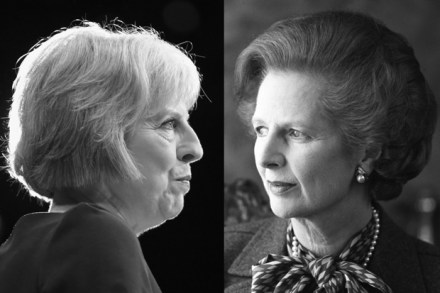
Theresa May’s love of class politics shows she’s no heir to Blair

From our UK edition

One of the professional drawbacks of coming from Scotland and then moving to London is that I don’t really know an awful lot about England. True, I spent a few years in East Anglia on my way south, but it was a particular part of East Anglia that possibly has rather more dreaming Gothic spires, rusted bicycles and robotics labs than the norm, so I’m not sure it was wholly representative. Still, I know the cities. I have spent enough time in Birmingham, Manchester, Newcastle, Nottingham and Sheffield, say, to know that they are not so terribly different from Glasgow, Aberdeen, Inverness or even the bits of Edinburgh without the cobbles.

May’s Brexit offering

From our UK edition

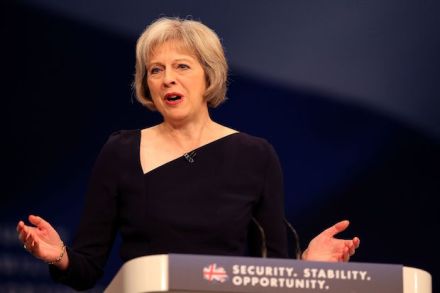
Theresa May’s biggest conference dilemma was what to say about Brexit. She doesn’t want to trigger Article 50 yet, or even say when she will do so. Why, because the government hopes that the longer it waits, the more the rest of the EU will be inclined to have preliminary discussions before the actual negotiations start. But May had to have something to say to conference on Brexit. So, May’s team have come up with an announcement that doesn’t involve Article 50 but does enable her to show ‘momentum’, and to claim she is getting on with things. It is a ‘Great Repeal Bill’ which will repeal the 1972 European Communities Act, but only when Britain actually leaves the EU.

May will have to say more on what Brexit means — and soon

From our UK edition

Theresa May will receive a rapturous reception from Tory activists tomorrow. She is not just their new leader, but—as I say in The Sun today—someone they see as one of their own. She joined the party as a teenager, met her husband at a Tory disco and still goes out canvassing most weekends. She’s also much closer to the activists in age than Cameron was when he became leader: she turns 60 today, Cameron was 39 when he became party leader. But May should enjoy the applause on Sunday because her job is about to get harder. She is taking the unusual step of speaking on the opening day of conference to try and get Brexit out of the way.

What is Theresa May’s greatest weakness?

From our UK edition

What is Theresa May’s greatest weakness as she goes into conference season? The Prime Minister had such a good start to the job that it’s easy to forget that she has the same problems that David Cameron did in terms of parliamentary arithmetic and fractures in her party over Europe. For Cameron, the parliamentary arithmetic was most difficult because there was a hardened core of eurosceptics who distrusted him, and because he and George Osborne had a habit of trying to sneak half-baked policies such as huge cuts to tax credits past MPs and hope that they wouldn’t notice (which they nearly didn’t).

Theresa May’s Brexit silence isn’t going down well

From our UK edition

Theresa May has said she won’t be providing a ‘running commentary’ on Brexit. That refusal, the Prime Minister insisted, was to ensure the Government did not reveal its 'hand prematurely’ to other European countries in its negotiations. But how is May’s Brexit reticence going down closer to home? Not well, it seems: only one in six people think the Prime Minister is doing a good job in the early stages of negotiations. While half of voters think May is doing badly. May’s reputation is particularly miserable among ‘Remain’ voters: just one in ten thinking she is doing a good job so far. You might say that none of this is much of a surprise.

Deadly silence

From our UK edition

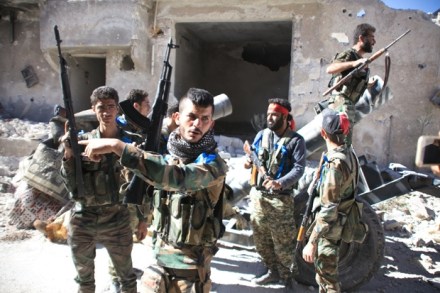
There was a time when the humanitarian crisis in Aleppo would have featured strongly in political debate in Britain. Just two weeks after a negotiated ceasefire appeared to have provided some respite, a war of attrition in Syria’s second largest city is escalating into a vast human tragedy. Last Saturday, a bomb dropped by Syrian government forces knocked out a pumping station which had been supplying water to two million people, 250,000 of whom are besieged in the rebel-held east of the city. On the same day, at least 45 people, many of them children, were killed by barrel bombs dropped indiscriminately on civilians — a now common occurrence. Food supplies had already been running low, supply lines to rebel areas having been severed in early September.

The May machine

From our UK edition

Theresa May isn’t much given to shows of emotion. When Andrea Leadsom called her to concede in the Tory leadership race, May was preparing for the first event of her nationwide campaign. She went ahead and delivered her speech, giving nothing away. But even May might be tempted to do a victory jig upon entering the leader’s suite at the Conservative party conference. Only a year ago, her leadership chances were being written off. Her ambition was a source of much amusement to Cameroons and her cabinet colleagues (including some now holding very senior jobs in her government). They thought her speech warning that ‘it’s impossible to build a cohesive society’ when immigration is too high was at odds with the one-nation, optimistic theme of that conference.

Doctor’s orders

From our UK edition

Second acts in British politics are vanishingly rare these days and Liam Fox, restored to the cabinet by Theresa May, is determined to make the most of his. We meet at his central London flat at half-past four on Sunday afternoon and even then the International Trade Secretary is beavering away: preparing for his meetings at the World Trade Organisation in Geneva the following day and finishing off his conference speech. He offers us a drink — red wine? pink champagne? — but pours a cup of tea for himself. Fox, as ever, is full of fizz. He clearly loves being back at the centre of things, and immediately starts contrasting Theresa May’s premiership with that of David Cameron. ‘We think similarly,’ he says.

In search of Mayism

From our UK edition

What does Theresa May believe? The new Prime Minister has had the summer to settle into her job and has a chance next week to tell us more about her plans for government. Had she come to power after a general election, or even a proper leadership race, we’d know more about her. Instead, she has the Tory party conference to introduce voters to their new government. We know already that her focus is on those who are ‘just managing’, a phrase that trips off the tongue far more lightly than ‘the squeezed middle’ (Ed Miliband) or ‘alarm-clock Britain’ (Nick Clegg).

We know who Theresa May is against. But who is she for?

From our UK edition

One of the professional drawbacks of coming from Scotland and then moving to London is that I don’t really know an awful lot about England. True, I spent a few years in East Anglia on my way south, but it was a particular part of East Anglia that possibly has rather more dreaming Gothic spires, rusted bicycles and robotics labs than the norm, so I’m not sure it was wholly representative. Still, I know the cities. I have spent enough time in Birmingham, Manchester, Newcastle, Nottingham and Sheffield, say, to know that they are not so terribly different from Glasgow, Aberdeen, Inverness or even the bits of Edinburgh without the cobbles.

May’s beard

From our UK edition

This week, the Tory party conference ought to be gripped by the question, who the hell is Nick Timothy, the vizier with all the power? To suggest that Theresa May’s joint chief of staff is the man behind our new PM’s manoeuvres is apparently misogynistic, but I’m a woman and I’ll say what I like. May’s regime change has been riveting, yet a core mystery remains: who precisely is in charge? We endured endless TV debates before last year’s election, but the person currently running the country was not on the podium. Now he’s in a Downing Street back office, luxuriating behind his lavish beard. And it’s the beard that really mesmerises me. Nobody seems to know anything about Timothy, and he is shy of public statements.

Lessons for the Prime Minister’s speech-writer

From our UK edition

To a new Prime Minister’s speech-writer the party conference approaches like a bullet train. If my friend, Sir Ronald Millar, were still alive he would be working flat out on Theresa May’s speech by now. With the date of delivery advancing and the drafts on her desk ever more undeliverable, the need for ‘Ronnification’ must be overwhelming. It always was. Ronnie is best known today as the playwright who wrote ‘U-turn if you want to: the lady’s not for turning’ for Margaret Thatcher in 1980, and gave this paper’s former editor, Charles Moore the title for the second volume of his great biography.

David Cameron can’t blame Theresa May for his awful deal with the EU

From our UK edition

Tim Shipman’s book about the EU referendum campaign, All Out War, is serialised today in the Sunday Times. The newspaper today leads on the remarkable disclosure that David Cameron blames Theresa May for the paucity of the deal he negotiated in those 30 sleepless hours with Brussels. Here’s the extract:- Before the speech, conscious that immigration was likely to be an explosive issue in the referendum campaign, Cameron had floated with Merkel the idea of an annual cap on the number of national insurance numbers handed to EU migrants or an emergency brake on numbers. But the German leader said she would not agree to changes to free movement for EU citizens.

Labour women attack Theresa May as ‘no sister’. How very un-feminist.

From our UK edition

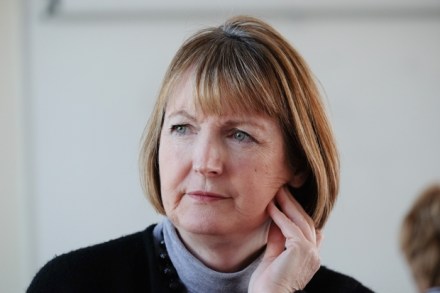
The Labour Party is in a sour mood at present, that much we already know. Usually, most of the sourness expressed by MPs is directed at their own party comrades. But this afternoon, at the Labour Women’s Conference, speaker after speaker decided to turn fire on Theresa May. Angela Rayner congratulated her on being the second female Prime Minister of this country, but said ‘I cannot celebrate her arrival’. Kezia Dugdale attacked both May and Nicola Sturgeon for not being real feminists, saying: ‘Look at Theresa May - she has the audacity to wear a ‘this is what a feminist looks like’ T-shirt.

It’s time for Theresa May to answer the airport question

From our UK edition

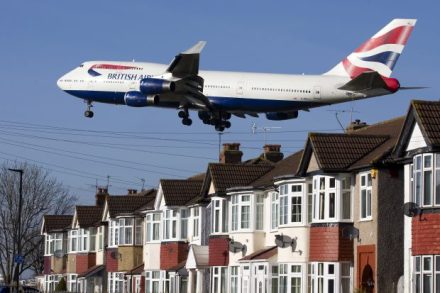
Hinkley Point — for all its flaws and the whiffs of suspicion around its Chinese investors — has finally received Downing Street’s blessing. Meanwhile, ministers hold the party line that High Speed 2 will go ahead according to plan, backed by news that the project has already bought £2 billion worth of land; and investors hunt for shares in the construction sector that might benefit from the multi-billion-pound infrastructure spree widely expected in Chancellor Philip Hammond’s autumn statement. But still no decision on a new airport runway for London — the one piece of digger work, short of tunnelling under the Atlantic, that would signal Britain’s raging post-Brexit appetite for global business.

Is Boris worrying that Brexit will never happen?

From our UK edition

Theresa May has made one thing clear: Brexit mean Brexit. But when will the Prime Minister actually pull the trigger and invoke Article 50? Boris Johnson gave his take last night: 'The Government is working towards an Article 50 letter which as you know will be produced, probably, in the early part of next year. That's still subject for discussion but what is clear I think to our friends and partners in the EU is two broad principles: we are not leaving Europe; Although we are leaving the EU treaties, we do want to have the closest possible trading relationship and it's very much in their interests to achieve that... it's very much in their interests to do a great free trade deal with us, and I think that will happen.

Borderline sanity

From our UK edition

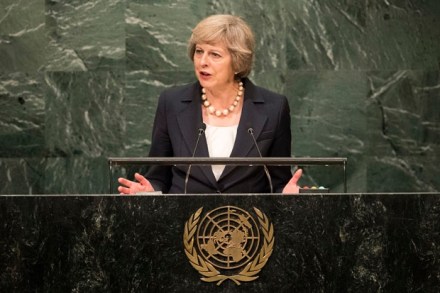
Only now does Angela Merkel concede that her admitting a million refugees last year was a mistake. It was obvious to most people in Europe at the time that her warm-hearted gesture would lead to catastrophic results. In declaring that all Syrian refugees would be welcome if they made it to Germany, she doubled the fortunes of the human trafficking industry. The asylum seekers came from Syria and North Africa through Austria and Hungary, having landed on the shores of Italy and Greece. Thousands died on the way. When Theresa May addressed the United Nations this week in New York, she was able to point to a British way of handling the crisis.

A free vote on the Heathrow runway? Don’t be so wet, Prime Minister

From our UK edition

Hinkley Point — for all its flaws and the whiffs of suspicion around its Chinese investors — has finally received Downing Street’s blessing. Meanwhile, ministers hold the party line that High Speed 2 will go ahead according to plan, backed by news that the project has already bought £2 billion worth of land; and investors hunt for shares in the construction sector that might benefit from the multi-billion-pound infrastructure spree widely expected in Chancellor Philip Hammond’s autumn statement. But still no decision on a new airport runway for London — the one piece of digger work, short of tunnelling under the Atlantic, that would signal Britain’s raging post-Brexit appetite for global business.

Britain has shown Germany how to handle a migrant crisis

From our UK edition

Only now does Angela Merkel concede that she made mistakes when admitting a million refugees last year. It was obvious to most people in Europe at the time that her undoubtedly warm-hearted gesture would lead to catastrophic results. In declaring that all Syrian refugees would be welcome if they made it to Germany, she doubled the fortunes of the human trafficking industry. The asylum seekers came from Syria and North Africa through Austria and Hungary, having landed on the shores of Italy and Greece. Thousands died on the way. When Theresa May addressed the United Nations in New York yesterday, she was able to point to a British way of handling the crisis.