Theresa may

Coffee House Shots: The verdict on Theresa May’s conference speech

From our UK edition

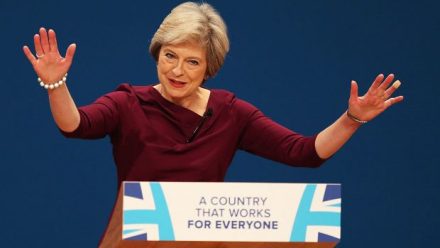
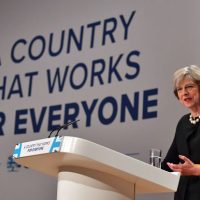
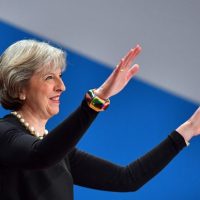
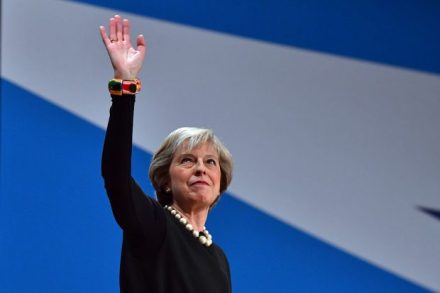
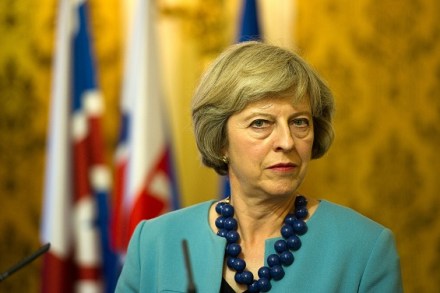
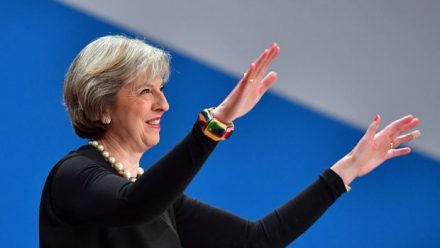
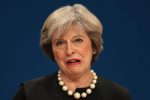
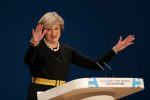
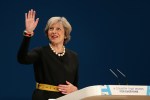
Theresa May has brought the curtain down on this year's Tory party conference with a speech in which she made a snatch for the centre ground. The Prime Minister pledged to stick up for the working class and went on the attack against the 'sneering elite', who May said looked down on others. But how successful was her speech? And did it tell us anything more about May? On the Spectator's Coffee House Shots podcast, James Forsyth says: I think she is keener on the state than most Conservatives are. I think there was a lot of aim taken at the liberal elite. There was a lot of vicar's daughter style emphasis on the obligations you owe to the other people in your family and the other people in your community.

Full text: Theresa May’s conference speech

From our UK edition

When we came to Birmingham this week, some big questions were hanging in the air. Do we have a plan for Brexit? We do. Are we ready for the effort it will take to see it through? We are. Can Boris Johnson stay on message for a full four days? Just about. But I know there’s another big question people want me to answer. What’s my vision for Britain? My philosophy? My approach? Today I want to answer that question very directly. I want to set out my vision for Britain after Brexit. I want to lay out my approach – the things I believe. I want to explain what a country that works for everyone means.

Conference party round-up: Theresa’s kiss is put on hold

From our UK edition

After four days of speeches and panels at Tory conference, there is now at least a little consensus over what Brexit means Brexit means and much concern over the quality of Philip Hammond's jokes. However, while a number of conference speeches proved dry, Mr S is glad to report that the after hours soirees were free-flowing. At the Sun's conference party -- where guests were offered teetotal May Day cocktails -- tributes were paid to two men who were unable to make it to Birmingham this year. The paper's editor Tony Gallagher recalled what David Cameron and George Osborne had said to him ahead of the paper backing Brexit.

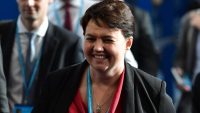
Full text: Ruth Davidson’s Conservative party conference speech

From our UK edition

Friends, five years ago I came to this conference, seeking to win the leadership of our party in Scotland. We’d just had our worst ever Scottish election result on the back of two decades of decline. As career moves went, the omens didn’t look exactly ideal. We were being kicked around by our opponents. And the media was calling us a corpse that wouldn’t twitch. And that was on a good day. But conference, you always kept the faith. When I argued we could win again as Conservatives, you granted me the privilege of allowing me to lead. We weren’t being credited with much in the way of prospects but we had our values, we had heart and we had belief.

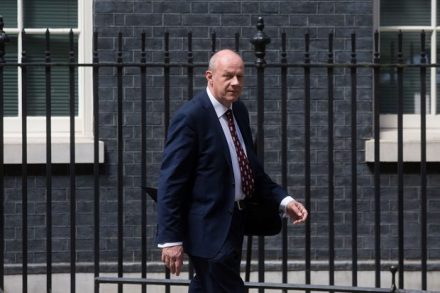
Damian Green strikes a softer tone on welfare

From our UK edition

Under David Cameron, it was sometimes tricky to tell who was in charge at the DWP. Iain Duncan Smith favoured a softer approach to welfare reform while over at the Treasury, George Osborne’s interventions were more nakedly political. It all came to a head in March when IDS resigned after Osborne announced £4bn of cuts to disability benefits. That was just over six months ago and seems like a distant memory in the pre-referendum haze. Yet it’s rapidly becoming clear that under Damian Green, things will be very different at the DWP. As with other areas of Government, Theresa May’s work and pensions secretary has marked a signal departure with what came before. For one, Green is in charge.

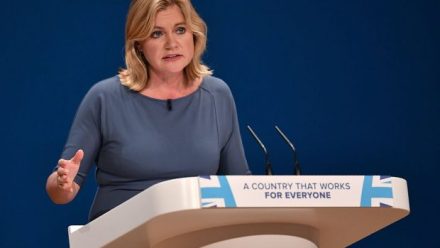
Justine Greening goes on the offensive over grammar schools

From our UK edition

Although Nicky Morgan suggested yesterday that the government could be about to water down its grammar school proposals, Justine Greening showed no such signs in her conference speech. The Education Secretary received a standing ovation as she went on the offensive in defending Theresa May's plans for a return to selective education. In a sea change from her claim this summer that she was simply 'open minded' to the idea, Greening put in a fiery defence of the proposal to lift the grammar school ban. After paying tribute to her own comprehensive roots – as the first ever Education Secretary to attend a non-selective state -- Greening explained that education was at the heart of the government's plan to create a meritocracy.

The Brexit bounce continues

From our UK edition

Just when you thought economists might finally have got the message about their doom-laden predictions for the economy following the vote for Brexit, along comes another statistic showing they are still getting it hopelessly wrong. I wrote here last month about how the Markit/CIPS Purchasing Managers Index – an early indicator of economic growth – had moved into positive territory in August, defying predictions that it would stay below 50, a level which suggests a shrinking economy. There was then, however, still one black cloud – the construction industry element of the index stood at 49.3 in August.

Full text: Amber Rudd’s conference speech

From our UK edition

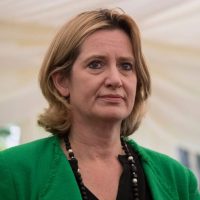
I succeed one of the most successful Home Secretaries of modern times. You may define success as holding the post for longer than any prior Conservative incumbent since World War Two. You may judge it by introducing the Modern Slavery Act … Which has delivered tough new penalties to put slave masters behind bars. Or, you may judge it by the eventual, hard-won deportation of Abu Qatada – and the message that sent. Well, Theresa May is now Prime Minister, and I am honoured to be Home Secretary in her Conservative-only Government. It’s no secret that earlier this year I campaigned on behalf of the Remain side in the EU Referendum. I travelled the country setting out my views and reasons.

Theresa May’s Brexit vision gets the thumbs-up from the traditional Tory troublemakers

From our UK edition

Theresa May hasn’t been Prime Minister for 100 days yet but already she’s achieved what few other Tory leaders before her have done: get her eurosceptic backbenchers on board. In doing this, May will have made the likes of David Cameron green with envy. So how did she succeed in this task? It seems her speech on Sunday lived up to the high expectations of the Brexiteers and managed to warm even the stoniest of hearts among the traditional Tory troublemakers. In return, they’ve spent this year’s conference determined to sing the joys of May. That show of support was on display last night from two of the biggest names in the Brexit band. Jacob Rees-Mogg and John Redwood couldn’t have been clearer: they were fully behind Theresa May’s Brexit vision.

Theresa May’s passion isn’t yet matched by her policies

From our UK edition

Theresa May has done enough, for now, to put Brexit into its box. The Prime Minister hasn’t offered up much, but the piecemeal announcements she has made at the Tory party conference - including setting out a rough Article 50 timetable - have helped stave off uncertainty. Crucially, they’ve also kept the Brexit band happy: with the traditional Tory troublemakers using their conference platforms to sing the PM's praises for once rather than stick the knife in. Yet it’s clear that Theresa May wants her time in office to be about more than just the referendum. When she was asked about the Brexit vote, the PM had this to say on the Today show: ‘The vote on 23rd June was not just about leaving the European Union.

Nicky Morgan in the naughty corner

From our UK edition

With Nicky Morgan the new Peter Bone of the Conservative party, the former Education Secretary is making her mark at this year's conference as a Cameroon without a brief. Her opposition to Theresa May's grammar school plans has not gone down well with No.10. Today Patrick McLoughlin used his interview with the Mirror to question why Morgan had allowed a grammar school to expand during her tenure if she was so against the idea. So, perhaps that's why May has decided to keep a close eye on Morgan at this year's event. Morgan was part of a panel discussion this morning titled 'inequality in education'. While she used the session to re-iterate her concerns, it didn't go unnoticed that she had some special attendees in the audience. 'I’ve got the whips.

Theresa May’s honeymoon isn’t over yet

From our UK edition

This Tory conference is making clear quite how topsy-turvy politics has become over the past few months. David Davis is sweeping around with a ministerial entourage. The Cameroons are largely absent. Nicky Morgan, who started the year as an ultra-loyal Cabinet minister prepared to help the Prime Minister out and soothe any row, has become a vociferous critic of the government, the new Peter Bone of the Tory party (without the luminous green tie). Meanwhile, the former rebels on the eurosceptic right of the party such as Steve Baker and Bernard Jenkin are walking around in a sunny state of happiness. So the rebels are now happy. And the loyalists are now grumpy.

Theresa May responds to Labour’s sisterhood

From our UK edition

While Scottish Labour struggle to fill their events with supporters, the Scottish Conservatives can take heart that their resurgence is still going strong. Attendees for the Scottish Conservative and Unionist party reception queued around the bend to hear Ruth Davidson speak. Davidson spoke of her surprise that officials had put the Scots in a room where they could break things, before moving on to the F-word. After Labour's women conference saw Harriet Harman and her comrades describe Theresa May as a non-sister, Davidson struck back -- suggesting that it is the Conservatives who did the best for women's equality. 'People often ask what we do for women in this country, and I say "well we make them Prime Minister".' However, it was Theresa May who had the last word.

Theresa May’s ‘hard Brexit’ hint

From our UK edition

We had heard a great deal of Theresa May’s Brexit speech to the Conservative party conference before - to the word, in fact, with the Prime Minister using the same scripted soundbites that she’s deployed as a shield against having to answer questions about Brexit directly. ‘We will not be able to give a running commentary or a blow-by-blow account of the negotiations,’ she told the hall, warning that ‘history is littered with negotiations that failed when the interlocutors predicted the outcome in detail and in advance’. It was difficult not to think of the most recent negotiation where this has happened: David Cameron’s attempt to change Britain’s relationship with Brussels and keep the country in the EU.

Full speech: Theresa May on ‘Britain after Brexit’

From our UK edition

81 days ago, I stood in front of Ten Downing Street for the first time as Prime Minister, and I made a promise to the country. I said that the Government I lead will be driven not by the interests of a privileged few, but by the interests of ordinary, working-class families. People who have a job, but don’t always have job security. People who own their own home, but worry about paying the mortgage. People who can just about manage, but worry about the cost of living and getting their kids into a good school. And this week, we’re going to show the country that we mean business. But first, today, we’re going to talk about Global Britain, our ambitious vision for Britain after Brexit. Because 100 days ago, that is what the country voted for.

Why didn’t Theresa May campaign for Brexit?

From our UK edition

According to Theresa May, interviewed by Tim Shipman in today's Sunday Times, Brexit will make the United Kingdom 'a sovereign and independent nation' once again. I know we are all supposed to be impressed by our new Prime Minister and much enthused by her Matron Gragrind approach to politics that is, again, such a refreshing change from the soft-furnished Call me Dave years but, really, can we pause for a moment to note that this is twaddle. Because if it were true - and if it were true that Mrs May believes this - then we are asked to believe that Britain was not, before its blessed liberation in June, a sovereign or independent nation. And if she really believed that, we might pause to ask why she did not campaign for Brexit?

Theresa May: Brexit will begin in March 2017

From our UK edition

As Conservative conference begins, we are finally starting to find out a little more about what Brexit means. But only a little. In her interview on Marr this morning, Theresa May confirmed that she would trigger Article 50, which starts the process of taking Britain out of the European Union, before the end of March 2017. She said: 'I’ve been saying that we wouldn’t trigger it before the end of the year so that we get some preparation in place. But yes, I will be saying in my speech today that we will trigger before the end of the March next year.' But when it came to hard vs soft Brexit, the Prime Minister was rather more coy, merely repeating what she had said on the British people voting for controls on immigration in the referendum.

Conservative party conference, day one: The Spectator guide

From our UK edition

The opening day of party conferences can often be a dull affair - not so at the Conservative's annual gathering this year. Theresa May will be giving a speech on 'Making a success of Brexit' this afternoon. And while the Prime Minister has vowed not to provide a 'running commentary' on negotiations, we should expect a few more glimmers of detail to emerge about the Government's Brexit plan. Boris Johnson and David Davis will also be following in the footsteps of the Prime Minister and taking to the stage today. Here’s the full run-through of what’s on today: Conference: 2pm - 4.