Theresa may

Theresa May’s passage to India

From our UK edition

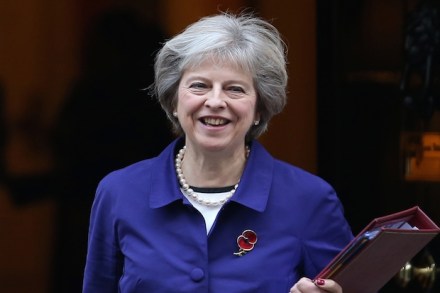
When a Prime Minister flies off abroad with a few business-leaders it is seldom worthy of comment. Such trade missions tend to achieve little, beyond generating headlines intended to flaunt politicians’ pro-business credentials. But with the impending departure of Britain from the European Union,-Theresa May’s visit to India this week, accompanied by Sir James Dyson and others, has huge significance. For the first time in four decades, a British Prime Minister can discuss doing trade deals — something which we have until now been forced to contract out to officials in Brussels. Mrs May chose her destination shrewdly. With its rapidly expanding economy and the gradual liberalisation of economic policy, India is everything that the EU isn’t.

What the papers say: The Brexit backlash continues

From our UK edition

The row over last week’s High Court ruling on Article 50 rumbles on this morning. Theresa May has given her backing to the judiciary, with the PM saying she 'values the independence of our judiciary’. Yet some of this morning’s newspaper editorials are in much less forgiving mood. The Daily Telegraph points out the distinction between the rule of law and the rule of judges and says that Lord Thomas, the Lord Chief Justice, Sir Terence Etherton, the Master of the Rolls and Lord Justice Sales quite simply got it wrong last week. The paper says the government is right to appeal the decision, pointing out that it’s not uncommon for the Supreme Court to overturn rulings made by other courts.

Britain’s troubled housing market is fuelling social immobility and resentment

From our UK edition

‘Prefabs to solve housing crisis,’ screamed the front page of the Sunday Telegraph last weekend. Can the shortage of homes in Britain really be so bad that ministers are floating plans to encourage the first new generation of temporary, pre-packed houses since the great reconstruction drive which followed the second world war? The UK is in the midst of a housing shortage that numerous credible experts now describe as ‘chronic’ and ‘acute’. While it’s widely recognised that we need 250,000 new homes each year to meet population growth and household formation, house-building hasn’t reached that level since the late 1970s. During the Thatcher era, as fewer council houses were built, an average of 190,900 new homes were constructed each year.

Government’s high court defeat sparks election chatter

From our UK edition

What worries government ministers, as I say in The Sun this morning, is not the actual vote on the Article 50 bill—voting against the bill as whole would be akin to rejecting the referendum result—but attempts to tie Theresa May’s hands ahead of the negotiation through amendments to the bill. One senior Cabinet Minister tells me that peers and MPs ‘won’t be able to resist’ trying to amend the bill. Though, it is worth noting that because of public concern about free movement there probably isn’t a Commons majority for staying in the single market, post referendum. Downing Street is adamant that they don’t want an early election, and that if they lose their appeal to the supreme court they can get this bill through clean.

The unhinged backlash to the High Court’s Brexit ruling

From our UK edition

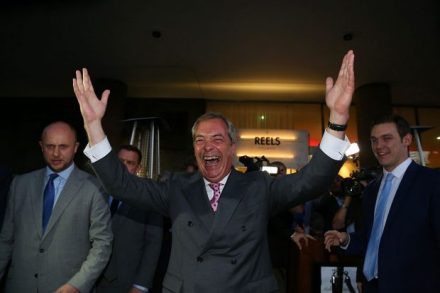
As a general rule, any day the government loses in court is a good day. So yesterday was an especially fine day. A delicious one, too, obviously, in as much as the fist-clenched, foot-stamping, whining of so many Brexiteers was so overblown and ludicrous it toppled into hilarity. People who shouted for months about the urgent need to restore parliamentary sovereignty now reacted in horror to the restoration of parliamentary sovereignty. 'That's not what we meant', they spluttered. We meant governmental supremacy only when it suits us. Well, tough. A certain amount of squealing was only to be expected since, if Nigel Farage has taught us anything, it is that the Brexit-minded really don't like it up 'em. But, still.

Tory MP quits over Theresa May’s approach to Brexit

From our UK edition

Stephen Phillips is resigning as a Tory MP in protest at the government’s reluctance to engage with Parliament over Brexit. Phillips, a lawyer by profession, voted Out in the referendum. But he has repeatedly argued that parliamentary sovereignty means that the executive must come to parliament before triggering Article 50 and consult with parliament over its negotiating aims. He blames his resignation on the fact that ‘growing and very significant policy differences with the current Government mean that I am unable properly to represent the people who elected me.' Phillips is quitting with immediate effect, meaning that there is another by-election coming. Phillips’s Lincolnshire seat voted heavily to Leave, so a pro-Brexit candidate will almost certainly win the seat.

A passage to India | 3 November 2016

From our UK edition

When a Prime Minister flies off abroad with a few business-leaders it is seldom worthy of comment. Such trade missions tend to achieve little, beyond generating headlines intended to flaunt politicians’ pro-business credentials. But with the impending departure of Britain from the European Union,-Theresa May’s visit to India next week, accompanied by Sir James Dyson and others, has huge significance. For the first time in four decades, a British Prime Minister can discuss doing trade deals — something which we have until now been forced to contract out to officials in Brussels. Mrs May has chosen her destination shrewdly. With its rapidly expanding economy and the gradual liberalisation of economic policy, India is everything that the EU isn’t.

The Spectator podcast: Breaking the Bank

From our UK edition

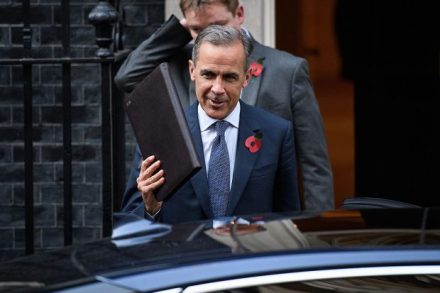
On this week's podcast, we discuss the fraught relationship between Mark Carney and Theresa May, the similarities between the sieges in Mosul and Aleppo, and why we all have to wait so long at the airport. First up, this week saw Bank of England Governor Mark Carney announce that he would be stepping down from his post in June 2019. This was the conclusion to a troubled few weeks that started with the Prime Minister’s party conference speech, in which she spoke of the ‘bad side effects’ to recent monetary policy. So what’s the future for Carney and the Bank of England? And will May need to recalibrate her relationship with the central bank?

Full text: George Osborne’s speech at the Spectator Parliamentarian awards

From our UK edition

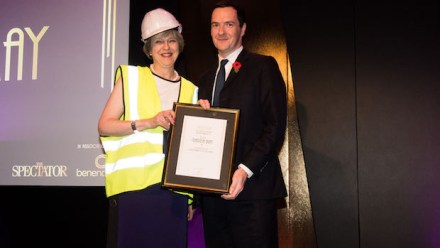
I am honoured to be invited to present these awards. Thank you very much for taking me out of my unemployment. When I read the Spectator front cover on the eve of the referendum, I thought it was advice on how to vote: ‘Out - and into the world’. But it turned out to be career advice to me. And of course, normally these annual awards are presented by last year’s winner of ‘Politician of the year’, David Cameron. And it’s another example of where he’s disappeared and left me holding the baby. I wanted to support the Spectator magazine - a brilliant weekly compendium on the arts, on politics, on society. Yours for only £4.25 - or $4 because of the policies of the Spectator.

Full text: Theresa May’s ‘Politician of the year’ acceptance speech

From our UK edition

Oh come on, we’re all builders now. Thank you very much indeed and it’s a great pleasure to receive this award. I am particularly pleased to receive the award from George, because I gather when it came to the voting it actually got very tight and I owe it to George - he just nudged me over the line because he told all the other members of the jury that if they didn’t vote for me, the economy would collapse and world war three would start. I feel I just have to make a comment or an intervention on a previous speech: Boris, the dog was put down, when it’s master decided it wasn’t needed any more. I have to say... the new job is very interesting, there's a lot to do but I am discovering some side effects of it.

Breaking the Bank

From our UK edition

The exchange of letters this week between Mark Carney and Philip Hammond made it very clear who the supplicant was. The Governor of the Bank of England informed the Chancellor of the Exchequer that he was prepared to extend his term by one year. Carney pointed out that while the personal circumstances that had made him want to limit his term to five years had not changed, this country’s circumstances had. So he would be here a little longer. Things had seemed very different a few weeks ago, when Theresa May bemoaned the consequences of the Bank’s monetary policy in her party conference speech. ‘A change has got to come,’ she had warned. ‘And we are going to deliver it.

PMQs Sketch: Flabby Corbyn flounders with potent weapons

From our UK edition

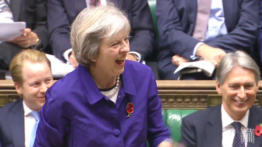
Early bloopers at PMQs. The session began with Theresa May offering Jeremy Corbyn her congratulations on becoming a grandfather. A mistake. The tribute was due elsewhere. But the improvised hilarities that accompanied this blunder burned up several minutes. Corbyn chose to attack on welfare. Over the last week Labour’s sound-bite factory has supplied their leader with some decent phrases. ‘Institutional barbarity’ is their name for giving a timetable to welfare claimants. Changes to invalidity payments are called ‘imposing poverty on the most vulnerable.’ But flabby Corbyn floundered with these potent weapons and failed to deploy them effectively. A bit like his tie.

Theresa May eviscerates Craig Oliver

From our UK edition

This time last year, George Osborne was the Chancellor of the Exchequer and tipped to be the next Prime Minister. One year on and -- in the aftermath of the Brexit result -- the MP for Tatton is now a backbencher. Happily, Osborne had a chance to reunite with his old Cabinet friends, aka 'besties' -- as the host of the Spectator's Parliamentarian of the Year awards. Like or loathe Osborne, his speech was sensational. Following a turbulent year in politics, tonight's gongs made for some interesting acceptance speeches. While Sadiq Khan paid tribute to his mayoral rival Zac Goldsmith for helping him to achieve his large mandate, Boris Johnson promised to make a 'titanic success' of Brexit. This led to cries of "it sank!" as the Prime Minister buried her head in her hands.

Theresa May offers a lame defence of Louis Smith

From our UK edition

Neither Jeremy Corbyn nor Theresa May are PMQs naturals. The jokes and the ad-libs that have become such a feature of the session don’t come easily to them. In recent weeks, Corbyn has started with a parish notice to try and win the chamber over. Today, he congratulated Labour MP Conor McGinn on the birth of his daughter. But the PM got the wrong end of the stick and congratulated Corbyn on the birth of his grandchild, cue much hilarity. But it was all very in-joke. In many ways, this was the most memorable moment of a distinctly unmemorable PMQs. Corbyn and May clashed over universal credit, but the exchange didn’t reveal anything we didn’t know already.

Watch: Theresa May’s embarrassment after PMQs grandad gaffe

From our UK edition

Poor old Theresa May. The Prime Minister did her best to try and share some good feeling with those on the opposite benches by congratulating Jeremy Corbyn on the birth of his grandchild. Although it seemed like a rare moment of kindness at PMQs, there was a problem: Corbyn isn't a granddad. Instead, it was Conor McGinn, the MP for St Helens North , who did have some happy news last week when his wife gave birth to a baby which the brave MP even helped to deliver. Still, Mr S is pleased to report that the PM did eventually manage to regain her composure and turn her gaffe into a jibe at Jeremy Corbyn. After she blamed the former chief whip Patrick McLoughlin for her blunder, she said that he did at least still have a job - unlike Labour's former whip, Conor McGinn.

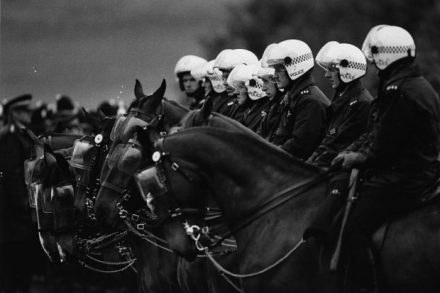
Amber Rudd is right, Orgreave is best consigned to the history books

From our UK edition

So, there will be no public inquiry into the Battle of Orgreave in 1984, and no left-wing lawyers making a fortune. Maybe Andy Burnham, who seems to have appointed himself as Shadow Minister for Ancient Grievances, would have got further had he demanded an inquiry that was less overtly political, and looked at the violence of striking miners as well as misconduct by the police, but do we really have to trawl back through all of that? No-one died at Orgreave, unlike in South Wales where taxi driver David Wilkie was killed when a concrete block was dropped on his car while taking a ‘scab’ to work. The striking miners responsible ended up serving just four years in jail, their murder sentence reduced to manslaughter on appeal.

What the papers say: The ‘posturing governor’ stays put

From our UK edition

Mark Carney’s decision to stay on as Bank of England Governor until 2019 has been widely welcomed. But not everyone is happy about the news. The Daily Mail accuses Carney of being a ‘posturing governor’ and says the staging of his announcement yesterday was in line with much of his conduct: ‘designed to generate maximum publicity’. The paper says that while some were concerned at the possibility of uncertainty in the markets if he'd walked away, would it be any worse than ‘his relentless doom-mongering’?

What the papers say: Nissan’s Brexit boost for Britain

From our UK edition

Theresa May hailed Nissan’s decision to stay put in Sunderland and build its new Qashqai and X-Trail models at its plant in the north-east as a ‘vote of confidence’ in the UK. But was this just the PM drumming up the deal or is it really such good news for Britain? The Times suggests the agreement may have come at a price. The newspaper says a ‘written promise’ was made to the company that it wouldn’t lose out from Brexit. Some have said it smacks of a sweetheart deal between the Government and the carmaker - something business secretary Greg Clarke, who insisted no cheque book was waved at the car giant, has denied.

Watch: John McDonnell’s ‘chaotic breakfast’ Brexit gaffe

From our UK edition

Spare a thought for John McDonnell. The shadow chancellor was up and about early this morning to criticise Theresa May on the airwaves for her stance on Brexit. But while McDonnell was eager to get his message across, Mr S wonders whether he might have forgotten something before he left the house. It seems by the time he got around to delivering his actual speech this morning, it was breakfast, rather than Brexit, which was on his mind. Here's what he said: 'The Government is hurtling towards a chaotic breakfast that will damage our economy and hurt the poorest and most vulnerable most of all.' Still, at least McDonnell can console himself with the fact that he isn't the first politician to confuse breakfast and Brexit.