Theresa may

Can Boris finally ‘fix’ social care?

From our UK edition

It's been almost a year since Boris Johnson said he would not wait to 'fix the problem of social care that every government has flunked for the last 30 years'. With a green paper detailing the government's plan finally due, we'll soon learn whether the Prime Minister is as good as his word. We'll also see whether Johnson succeeds in avoiding the pitfalls encountered by his predecessors. Might he tumble into the same trap that blew up Theresa May's bungled snap election? The wrecks of those previous attempts – sent out with such high hopes – are plentiful. Talking to the politicians in charge of those efforts from three different parties and five administrations for Engage Britain common themes emerge.

Alan Duncan rants about ‘idiot’ parliamentary colleagues and Britain’s waning influence

From our UK edition

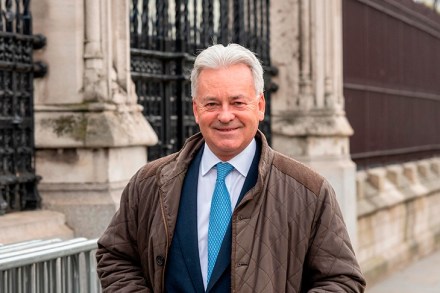
As a budding political apparatchik, my first job out of university was as a junior parliamentary assistant to Alan Duncan MP. Working for him was never taxing because it was never boring. Nicknamed ‘Hunky Dunky’, he was well known in the Tory fraternity. Too young to be a grandee and too old to be a rising star, he occupied a special space in the parliamentary party, never part of a clique yet consistently present during his 27 years in parliament. We’d often remark — to his annoyance — that he was the Chips Channon of his generation, since both often ended up on the wrong side of the winning team. How apt, then, that the updated Channon diaries and Duncan’s own should appear within weeks of each other.

Watch: Theresa May roasts Gavin Williamson

From our UK edition

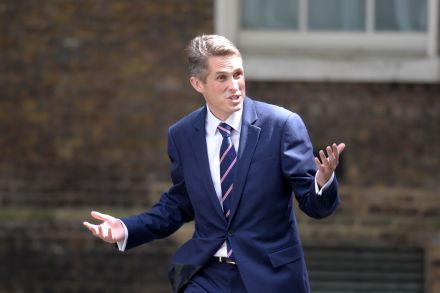
While the rest of SW1 was distracted this afternoon by the findings of the Hamilton report, Mr S tuned in to see Theresa May appear before the National Security Strategy Committee. The former PM remains the master of the withering putdown, as poor Gavin Williamson will have discovered to his cost on watching the meeting back.  Former foreign secretary Margaret Beckett inquired as to how Williamson's alleged leaking (and subsequent sacking) impacted meetings of the National Security Council and May did not hold back. https://www.youtube.com/watch?v=_7hybp218Js May replied: 'I think we then got back into the rhythm of people recognising that they could speak as freely as they had done previously.

How did an enigma like Theresa May become PM?

From our UK edition

Theresa May is not the easiest person to speak to in Westminster. She is reluctant to get drawn into a conversation unless she knows what the outcome of it is going to be. But it is still surprising to find the lengths that her colleagues had to go to, to get an understanding of what she wanted to do as Prime Minister. In an interview with Britain in a Changing Europe, Gavin Barwell recalls going to see her after the 2017 election – which had seen May lose her majority and Barwell his seat. In an attempt to reset her premiership, May had invited him to be her chief of staff. So, he travelled to her constituency home to see her. But the talk hardly flowed, he says: You can imagine, knowing Theresa, that was not an easy conversation to have initially.

Philip Hammond’s Brexit muddle

From our UK edition

You won't be surprised to learn that Philip Hammond was no big fan of Brexit. But Mr S was still somewhat taken aback by just how little the former chancellor made of Theresa May's 'Brexit means Brexit' strategy: 'My assessment of Theresa May’s Prime Ministership, in terms of Brexit, is that she dug a 20-foot-deep hole in October 2016 in making that speech' Hammond was, of course, referring to the speech May made to Tory party conference in her first year as prime minister. But Hammond's interview, released this week by UK in a changing Europe, has opened up something of a riddle.

Theresa May gives Starmer a lesson in Brexit hindsight

From our UK edition

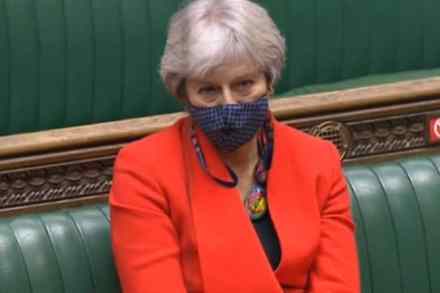
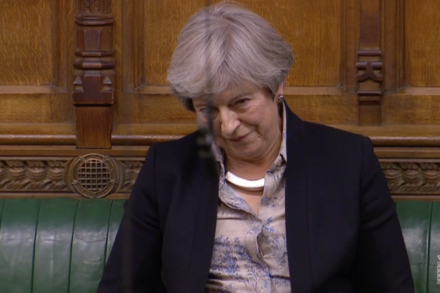
During the debate over Boris Johnson's Brexit agreement in the House of Commons today, Theresa May chastised the Labour leader over his criticism of both her deal and the current deal.  Appearing to be the only MP in the chamber wearing a mask while waiting to speak, the former Prime Minister heard Starmer wish for a better Brexit agreement, while accepting that he will whip his MPs to vote for Boris’s ‘thin deal’. These words stirred something within May as she thought back to the numerous painful meaningful Brexit votes under her watch. Back then, Starmer was shadow Brexit secretary and played a key role in moving the official Labour position to backing a second referendum rather than May's deal.

Why medical history is the best history

From our UK edition

Spectator contributors were asked: Which moment from history seems most significant or interesting? Here is Justin Webb's answer: A gloomy January day in the Canadian city of Toronto. The year is 1922 and a 14-year-old boy called Leonard Thompson is lying in the hospital. Leonard weighs under five stone. He has been on a starvation diet to try to keep his death at bay but he is close now to the end. Every Type 1 diabetic in human history has so far faced the same death; with no working pancreas they faded away, their bodies unable to cope with the processing of food.  But on 11 January of that year Leonard was selected for a lone experiment.

Boris’s Brexit gamble faces its next challenge

From our UK edition

This country will end the Brexit transition period with a zero tariff, zero quota deal with the EU. Four and a half years after the Brexit vote, the issue that has so convulsed British politics is settled. We are still awaiting the text of the deal. But from what both sides have said it is clear that this is a pretty full fat Brexit: Britain leaves the single market and the customs union and there’ll be no dynamic alignment with EU rules in the future. On the three key tests of money, borders and laws – it looks like the deal passes The two sides will be able to put tariffs on each other if they feel that they have raised their standards and the others refusal to follow suit puts them at a trading disadvantage.

Watch: Theresa May glares at Michael Gove

From our UK edition

It can be a hard task adjusting to life on the backbenches after leaving front-line politics. One minute you’re running the country, the next you’re being batted away by busy ministers. Former Prime Minister Theresa May appeared to learn that lesson this afternoon in the Commons, when submitting a question on Brexit to Michael Gove. May was quizzing the Chancellor of the Duchy of Lancaster on security arrangements after Britain leaves the EU and wanted to make sure the UK is still able to access European police databases in the event of no deal. But the former PM appeared less than pleased with Gove’s response, when he suggested that we could police our borders more effectively outside of the EU. A glowering May could even be spotted mouthing ‘What?

Is Donald Trump really anti-abortion?

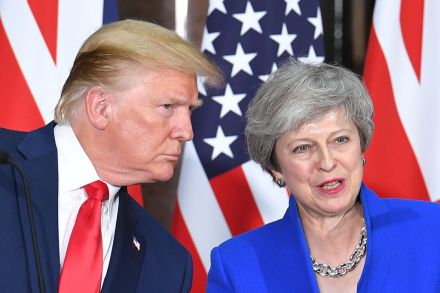
At the Republican National Convention last month, Donald Trump was repeatedly described as the ‘most pro-life President ever’. According to some rather sensational leaked official notes in Sunday’s Daily Telegraph, however, Trump has said he regards abortion as ‘such a tough issue’. Addressing the then British prime minister Theresa May, who is childless, Trump said in January 2017: ‘Imagine some animal with tattoos raping your daughter, and then she gets pregnant.’ Aside from the staggering crassness of this remark to a woman who is on the record about her inability to have children, it also suggests that Trump is not as pro-life as many in his party would have voters believe.

trump abortion

Which former prime minister earns the most for corporate speeches?

From our UK edition

Voyage into history How did the Labour government respond to the arrival of the Empire Windrush on 22 June 1948? While the ship was at sea, Prime Minister Clement Attlee tried but failed to have it diverted to East Africa so that its passengers could work on the groundnut scheme. He later wrote to concerned MPs that it was ‘a great mistake to regard these people as undesirable or unemployables. The majority of them are honest workers, who can make a genuine contribution to our labour difficulties at the present time.

How big business failed in its plot to stop Brexit

From our UK edition

A little over a year ago, at the nadir of the May administration’s excruciating bungling of Brexit, the Daily Telegraph landed a dynamite exclusive. The Chancellor, Philip Hammond, and Business Secretary Greg Clark had hosted a confidential conference call for corporate bosses in which they said the threat of a no-deal Brexit was effectively off the table. And the Telegraph had obtained a tape recording of the whole thing. Behind the backs of the British people, the well-upholstered felines of big business were being told that a huge Commons defeat for May’s withdrawal agreement (it had just lost by 230 votes) did not mean that Brexit would go ahead on WTO terms at the end of March.

How to run Number 10: An insider’s guide

From our UK edition

Gavin Barwell was Theresa May's chief of staff between 2017 and 2019. He was the MP for Croydon Central between 2010 and 2017 and served May as secretary of state for housing. He was made a life peer last year. This is a transcript of a speech he gave to the Institute for Government last night. I became chief of staff to the prime minister in the immediate aftermath of the 2017 election. I had lost my seat, the result was declared in the early hours of Friday morning. I went back to bed because I'd been up for about 30 hours at that point. And then I did a media interview on the Saturday morning, talking about why I thought the election had gone wrong. As I came out of BBC New Broadcasting House, the No. 10 switchboard called me and said the prime minister wanted to talk to me.

Portrait of the year: From May to a December election

From our UK edition

January ‘If parliament backs a deal, Britain can turn a corner,’ Theresa May, the Prime Minister, said. The Commons defeated her withdrawal agreement with the EU by 432 to 202. Patrols found 15 people on inflatable craft off Kent. The Argentine footballer, Emiliano Sala, 28, died when a light aircraft crashed into the Channel. Off Libya and Morocco, 170 migrants drowned in two shipwrecks. Patisserie Valerie went into administration. US President Donald Trump refused to approve a federal budget without funds for a wall with Mexico. A fatberg 210ft long was found blocking a sewer beneath Sidmouth. February Seven MPs resigned from the Labour party, objecting to anti-Semitism and lukewarmness towards a second referendum on Brexit.

Viral videos, not leaders’ debates, could decide this election

From our UK edition

You might well expect the final election debate, Johnson vs Corbyn head-to-head on primetime BBC, to provide the most watched moment of the election campaign. In fact, the clip on course to win that accolade has never even been aired on television, and if it were, some of its claims might fall well short of Ofcom broadcasting rules. This video shows an actor called Rob Delaney, American star of the Channel 4 sitcom Catastrophe, promising to offer some home truths on the future of the NHS.

Nick Timothy: Theresa May folded like a Brompton bike during the Brexit negotiations

From our UK edition

As my train hurtles northward, my phone starts to buzz. Jeremy Corbyn has agreed to hold a December election. So: a Tory prime minister, miles ahead in the polls, fighting an election pledging to get Brexit done — and facing a useless opposition. It all feels very familiar. And yet comparisons with 2017 are not so simple. Last time round, Labour successfully faced both ways on Brexit. Now their indecision means they are being squeezed between pro-Leave Tories and pro-Remain Liberals. Last time, Corbyn won the consolidated anti-Tory vote, but today it is fragmenting. And the differences continue. Boris Johnson is a born campaigner, whereas Theresa May wilted under pressure. Boris has ended austerity, while Theresa refused to change fiscal policy.

Tacitus knew how to handle stories from ‘insiders’ and ‘sources’

From our UK edition

We read much about ‘fake news’ these days and of efforts to rid the internet of it. But what of media that report dodgy stories derived from ‘insiders’ and ‘government sources’ and ‘contacts’? The great Roman historian Tacitus knew what to make of such sources. The first Roman emperor Augustus died in ad 14. It was a critical moment: who would succeed — Augustus’s grandson Postumus Agrippa, banished (by his wife Livia) or Tiberius, Livia’s son by her first marriage? Tacitus reported that Augustus and a companion, Fabius, arranged a reconciliation with Agrippa; that Fabius leaked and paid the price; and Livia at once recalled Tiberius from abroad, and then ‘saw to’ Augustus.

Theresa May’s honours list makes me sick

From our UK edition

The BBC featured a gay wedding on Songs of Praise recently. Of course it did. The thinking was, I assume: ‘We hate this programme and wish we could get rid of it, but there would be the usual moaning from the near-dead reactionaries. So let’s rub their noses in it, instead.’ The broadcast attracted 1,200 complaints, including one from God himself, my sources tell me. God also complained, I’m told, about the programme’s failure to include the hymn ‘Onward, Christian Soldiers’, of which He is rather fond. The BBC will not take any notice of the complaints — certainly not from God, whom the producers believe they easily outrank these days.

The three numbers that measure Britain’s constitutional crisis

From our UK edition

Here in a few numbers is the measure of the catastrophic mess we are in; caused by failing to resolve how, when and whether we are leaving the EU some 1,174 days after British people voted for Brexit. MPs are being locked out of the Commons chamber for 34 days and nights, because the prime minister does not trust them not to thwart his plans to extract the UK from the EU 'do or die' on October 31. That is an insult to our parliamentary democracy, some would say. Former Prime Minister Theresa May has rewarded 31 of her officials, fellow ministers and MPs. Gongs rank from MBEs to peerages. Almost all have been given to those implicated in various ways in May's failure to achieve the one task she had - to execute the referendum result.

The vices and virtues of Theresa May’s honours list

From our UK edition

An awful lot of Theresa May’s resignation honours list is awful. In no particular order: Knighting Geoff Boycott would be a horrible act for any PM, let alone one who actually did some good on domestic violence. Who cares if he punched a woman repeatedly in the face, he played great cricket, eh? A gruesome choice, even though he continues to deny the offence. Knighting the communications Director who failed to communicate your central policy would be a misjudgement at the best of times. But Theresa May adds hypocrisy to the mix: she once cruelly and very publicly mocked David Cameron’s press chief for precisely the same honour.