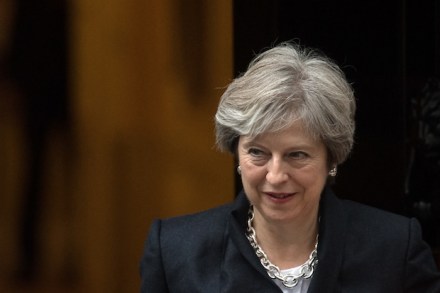
Theresa may

Theresa May is losing the PR battle on Syria

From our UK edition

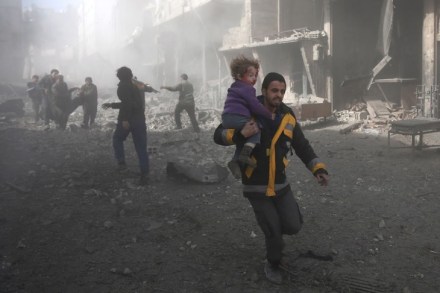
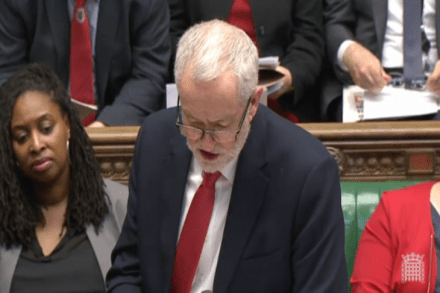
After Theresa May's Cabinet agreed on the 'need to take action' in Syria, it seems a matter of when, not if, military strikes against the Assad regime take place. But the strikes won't be the end of the matter politically. Labour have been quick to stir up trouble, with Jeremy Corbyn describing the government as 'waiting for instructions' from Donald Trump. The British government is also struggling to keep up with a Russian propaganda barrage.

Not all Tories are gung-ho for intervention in Syria

From our UK edition

As Theresa May meets with her Cabinet to discuss a possible response to the suspected chemical weapons attack in Syria, it's widely expected that any action she does take will be actioned without a vote in Parliament. The Prime Minister does not need to have approval through a Commons vote but recent precedent means that a lot of MPs think that she should. In that vein, today Jeremy Corbyn warned that MPs must be consulted on any UK military action. This is unsurprising but May's bigger problem is that a sizeable portion of the Tory party is also sceptical of the merits of intervention. Were the decision to go to Parliament, May would almost certainly have to rely on Labour rebels’ votes for her majority in this instance.

What will Theresa May do on Syria?

From our UK edition

The suspected poison gas attack in Syria that killed dozens of people at the weekend continues to send shockwaves through Westminster. Speaking on an official trip to Sweden, the Prime Minister said she 'utterly' condemned the 'barbaric' attack. As for what action to take, Theresa May said that if it was confirmed as the doing of President Bashar al-Assad both his regime and its backers, including Russia, must be 'held to account'. May said Britain is 'discussing with our allies what action is necessary'. But just as news of a chemical attack in Syria comes with a sense of déjà vu, so does the UK response. Ever since MPs rejected David Cameron's call to intervene in 2013, inaction has been the best word to describe the British policy.

Labour’s capital gains

From our UK edition

Ever since last year’s general election, when Jeremy Corbyn inspired the strongest Labour surge since 1945, the Conservatives have been unsure if this was a freak occurrence or the start of something bigger. As they have learnt to their cost, opinion polls aren’t as reliable as they once were: only election results matter. There will be plenty next month, with seats on more than 150 councils all over England up for grabs. The Tories are nervous in lots of areas. But what terrifies them is London. The capital has served as the incubator of Corbynism, a brand of politics once laughed off as a niche Islington interest, yet now with an undeniable national appeal. All 32 London boroughs are up for election, and nothing is certain.

There is no crack in Theresa May’s case against Russia

From our UK edition

Theresa May has never published her case blaming Russia for the Salisbury poisoning. She has reason to be wary of Blair-style intelligence dossiers, and she didn’t need to make everything public to win the support of allies. But as things stand, her case against Russia is open to misinterpretation by the Kremlin. As we have seen with this morning’s headlines. Yesterday, Sky News interviewed Gary Aitkenhead, chief executive of Porton Down, who said: “We were able to identify it as Novichok, to identify it was a military-grade nerve agent. We have not verified the precise source, but we have provided the scientific information to the government, who have then used a number of other sources to piece together the conclusions that they have come to.

The political weather has changed

From our UK edition

It might be raining outside but the political weather has changed, I say in The Sun this morning. Theresa May is now in the strongest position she’s been in since the general election, and Jeremy Corbyn the weakest. When May addressed the 1922 Committee of Tory backbenchers on Wednesday, she received a—rather unusual—standing ovation. She herself was in upbeat form telling the meeting that the economy had turned a corner. This, perhaps, explains why the government is now prepared to talk about extra money for the NHS and defence. The Prime Minister who cut such a reduced figure after the election is now marshalling the Western coalition that is pushing back against Russian President Vladimir Putin.

May announces NHS funding boost

From our UK edition

Who is the most powerful person in government at the moment? In normal times, the automatic answer would be the Prime Minister, but things are rather more complicated at the moment. Theresa May's stock has risen in recent weeks, thanks to her confident handling of the Salisbury attack - and partly because Labour is in a terrible mess. But today we learned a little bit more about quite how influential one of her ministers has become. The Prime Minister spent this afternoon giving evidence to the Commons Liaison Committee, the powerful group of select committee chairs who grill the Prime Minister periodically. She was in her usual defensive mode of not giving anything away for much of the session. But then, towards the end, she announced that the NHS would be getting more money.

Theresa May takes a swipe at herself

From our UK edition

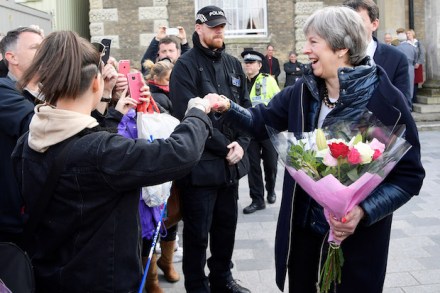
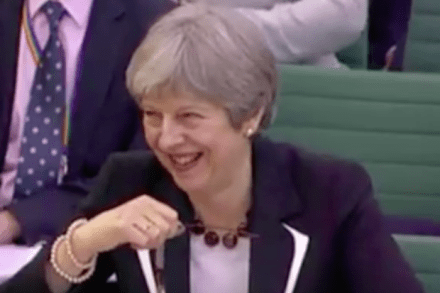
Over the past few weeks, Mr S has detected the faint whiff of May-mania on the horizon. The Prime Minister's handling of the poisoning of a former Russian double agent on British soil has seen her popularity rise again. What's more, she learnt a new trick – recently fist-bumping a Salisbury resident. Now she can add cracking jokes to that list. At her appearance before the Liaison Committee this afternoon, May was asked about the importance of the agriculture industry in Wales to the community. Here she pointed out that she had seen this herself on her many walking trips in Wales – only not everyone would appreciate this: 'I'm tempted to point out that I do see value of Welsh agriculture to the Welsh landscape quite often when I go walking in Wales.

May praises ‘solidarity’ from EU and US on Russia, and backs her aide in outing row

From our UK edition

Theresa May covered a fair bit of ground in her statement to the Commons on last week's European Council meeting. She talked about how EU leaders were supporting Britain in the stand-off with Russia following the Salisbury attack, on the agreement that leaders reached on the next stage of Brexit negotiations, steel tariffs, and on allegations that her own political secretary Stephen Parkinson outed his former partner as gay. On Russia, the Prime Minister told the House that 'I have found great solidarity from our friends and partners in the EU, North America, Nato and beyond over the past three weeks as we have confronted the aftermath of the Salisbury incident'.

Why no deal preparations must continue

From our UK edition

Theresa May has had by far her most successful EU Council this week. The terms of the transition deal were signed off and, in a genuine diplomatic achievement, she got the EU to collectively recognise that no one other than Russia could have been responsible for the Salisbury attack. But as I say in The Sun today, that doesn’t mean the government should ease off on ‘no deal’ planning. There is a sense in Whitehall that with the negotiations progressing well, there’s not much point in rocking the boat by preparing for a no deal scenario or spending money on things that might not ultimately be needed. One of those intimately involved in no deal planning complains that ‘there is an institutional reluctance to continue working on contingency in Whitehall’.

Philip May goes green

From our UK edition

Since Michael Gove took over Defra, the Conservatives have been on a mission to rebrand as the party of the environment. However, some have questioned whether it's a move that comes from the heart – or one which is down to more cynical reasoning. Theresa May's former director of communications Kate Perrior said in the Times that her former boss's enthusiasm for protecting the environment 'may not be insincere but it is certainly new': 'When I was at No 10, Andrea Leadsom, then the environment secretary, was told to make the plan as boring as possible.' However, times are a'changing in the May household. May's husband Philip took part in a phone canvassing session at CCHQ last night where he presented a canvasser with a Conservative-branded reusable cup.

Jeremy Corbyn shows why he shouldn’t stick to the script at PMQs

From our UK edition

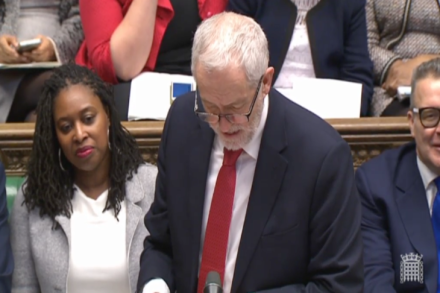
Brexit is going well, apparently. And the prime minister seemed in chipper mood at PMQs. She was even enjoying herself. To neutrals this is a distressing sight. To fans of the Tory leader it must seem downright dangerous. History has taught us that when May feels she’s on top the world, the world promptly lands on top of May. Corbyn raised council tax. His theme was Tory misrule, higher bills and vanishing services. Privatisation fetishists at Northamptonshire, he said, had caused the council to implode entirely. May felt herself on solid ground as she fought back by cataloguing Corbyn’s troubles at council level which have led to two recent Labour defections to the Tories. She seemed to relish the thunderous dissent raised by the opposition benches.

Can Corbyn keep up the pressure on May on council cuts?

From our UK edition

Jeremy Corbyn had a good line of attack at today's Prime Minister's Questions, choosing to focus on the financial crisis at Northamptonshire Council. When the Labour leader chooses a less-obvious topic, he has the benefit of surprise, but also the disadvantage of appearing to be avoiding talking about something more important. Today, though, Corbyn had also worked out a smart introductory question, which ended with him asking if what was happening at Northamptonshire was down to 'incompetence at a local level of national level'. This was a difficult question for Theresa May to answer, as it would involve either criticising her own government, or suggesting that Tories weren't very good at a local level.

Watch: Theresa May’s fist bumps a Salisbury resident

From our UK edition

Although Theresa May has earned a reputation for being robotic and predictable, today she did something that took almost everyone by surprise. On a visit to Salisbury in the wake of the poisoning of a Russian double agent, May met with locals. When one put out their fist to greet her, May went in for a fist bump: https://www.youtube.com/watch?v=KsUHDIoklWg Perhaps there's hope for the Maybot yet...

Gavin Williamson was right to be paranoid about Russia

From our UK edition

In responding to the Salisbury attack, Theresa May was in little danger of over-reacting. Her challenge was more to come up with a response which would not have Vladimir Putin laughing. As soon as the nerve agent used against Sergei Skripal and his daughter was identified as Novichok – a chemical developed by the Russian military – it became clear that there was going to be no chance of fudging the issue – of doing what the Labour government did after the death of Andrei Litvinenko in 2006: calling an inquiry which concluded the Russian state was ‘probably’ to blame. Unlike the Polonium used to kill Litvinenko, there is really is no other possible source for Novichok.

Jeremy Corbyn puts himself on the back foot at PMQs

From our UK edition

Today’s Prime Minister’s Questions ran along such familiar lines that it almost felt like a glitch in the Matrix. Jeremy Corbyn decided to peg his oft-asked questions about the NHS to Stephen Hawking’s death, pointing out that the world-famous scientist was also a passionate defender of the health service.  As usual, those questions weren’t great. You’d think that given the amount of practice the Labour leader has had in asking questions about healthcare in this session, he might have worked out how to do it. But instead he offered a mix of case studies and general questions about funding that allowed Theresa May to glide through the exchanges and also to bring up not just the NHS in Wales but also Labour’s handling of the Mid-Staffs scandal.

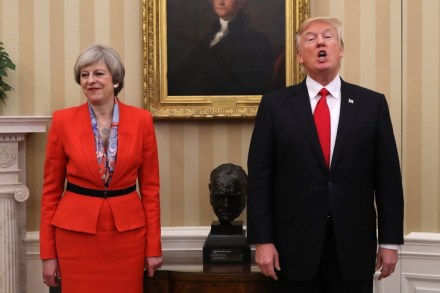
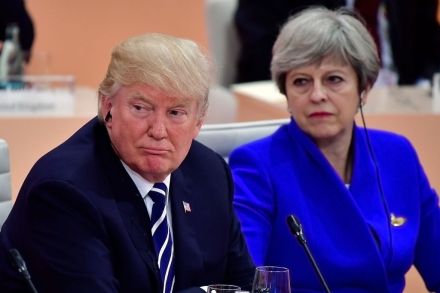
Trump to May: I’m with you ‘all the way’ on Russia

From our UK edition

Theresa May has been continuing to call Britain's allies today to discuss the poisoning of Sergei Skripal. She is expected to give a statement to the Commons tomorrow about Russia's response to the allegation that the state was responsible for the attack, and has been seeking assurances that countries such as France, Germany and the United States are on her side. This evening, she spoke to Donald Trump, who told her that 'the US was with the UK all the way, agreeing that the Russian Government must provide unambiguous answers as to how this nerve agent came to be used', according to the Downing Street read-out. You can almost hear Trump saying the words 'all the way', but May was probably listening more keenly for things the President doesn't appear to have said.

Theresa May steps up to the plate at British Kebab Awards

From our UK edition

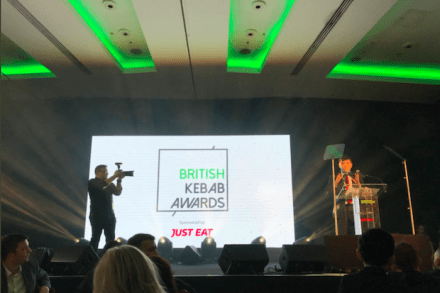
Forget secret dining societies, last night the inhabitants of SW1 descended on the Westminster Park Plaza for the British Kebab Awards. The annual event saw the likes of Angela Rayner and outgoing Labour General-Secretary Iain McNicol join forces with Tory MPs Paul Scully and Rehman Chishti to take a break from Russian espionage in order to chow down on some meat and raise a glass to the British kebab industry. The event's host İbrahim Doğuş, a Labour candidate in the snap election, told the well-hydrated crowd: 'In an otherwise darkened street, the kebab shop is the light that never goes out'. While there were some mentions of Brexit concerns, the event was not a partisan one.

What is behind the British PM’s threat to Russia?

British Prime Minister Theresa May has given Russia until Wednesday to explain why a nerve agent that it has developed was used in an attack in Salisbury, Wiltshire. She told the House of Commons that it was ‘highly likely’ that Russia was responsible for the poisoning of Sergei Skripal and his daughter. She said that Foreign Secretary Boris Johnson had summoned the Russian Ambassador and put it to him that were only two explanations for what had happened, one that the Russian government itself was responsible or that Moscow has lost control of its stock of deadly nerve agents. I think it is safe to assume that no explanation, at least not one that would satisfy a reasonable observer, will be provided before Wednesday.

Will Theresa May invoke Nato’s Article 5 on collective defence?

From our UK edition

There was a striking use of language in Theresa May's statement to the House of Commons on the Salisbury nerve agent attack. Pointing an accusatory finger at Moscow, the Prime Minister declared: Mr Speaker, on Wednesday we will consider in detail the response from the Russian State. Should there be no credible response, we will conclude that this action amounts to an unlawful use of force by the Russian State against the United Kingdom. And I will come back to this House and set out the full range of measures that we will take in response. This is quite something. It suggests the government is treating this as far more than a murder attempt on a former spy that happened to take place on UK soil. Unless the Russian ambassador can come up with a convincing alibi (e.g.